Designs on a new emergency department for children at CUH
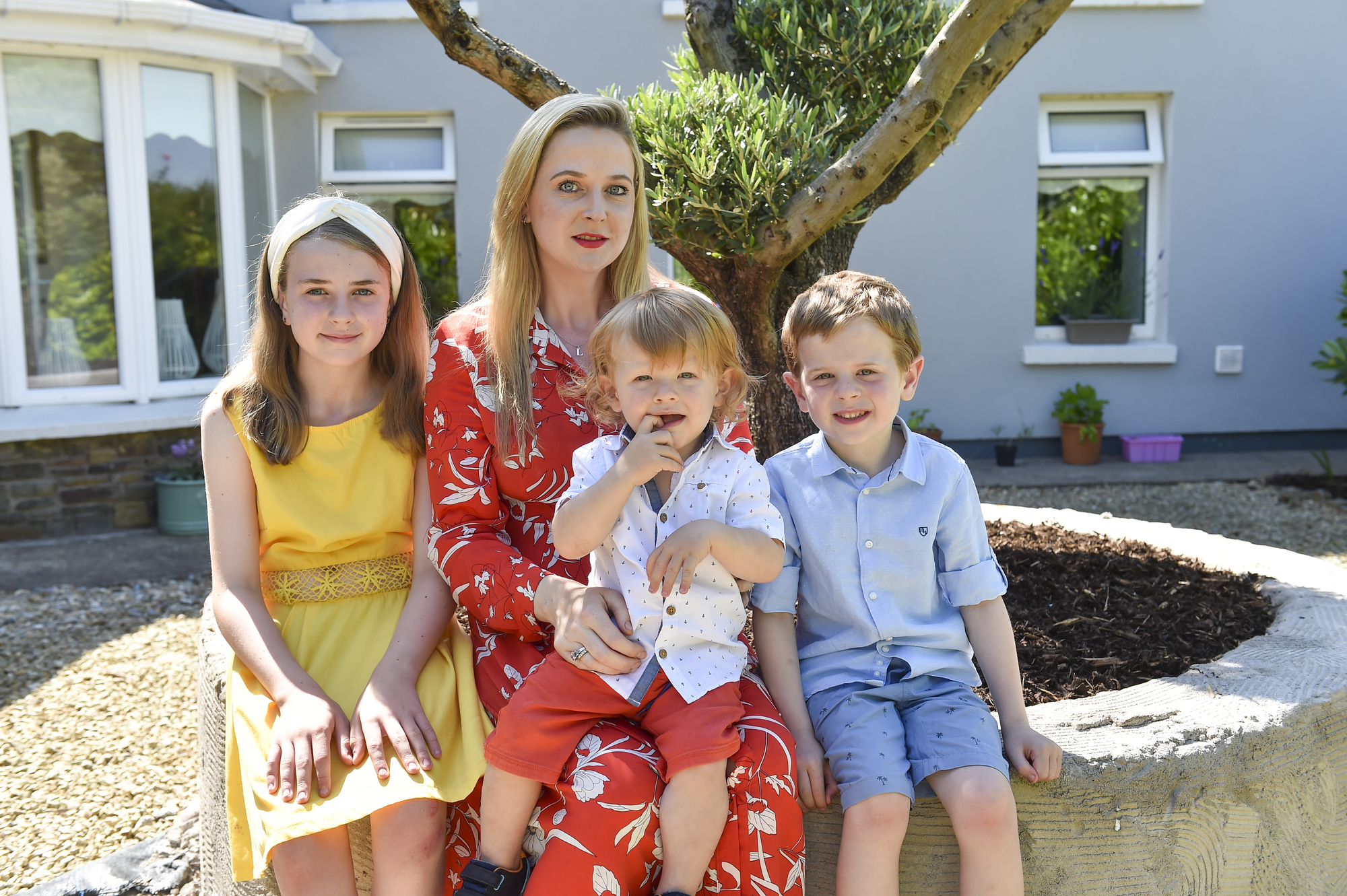
Louise O’Regan with her daughter Isabelle and sons Jack and Alex, who was rushed to CUH due to a severe allergic reaction. Picture: Dan Linehan
There are few experiences more panic-inducing than rushing your sick or injured child to the emergency department of your local hospital. Staff at Cork University Hospital understand this better than most. As Ireland’s busiest ED, it sees more than 65,000 patients every year and approximately 20% - or 13,000 – of those are children.
The staff work hard to deliver the best possible care to those children and this currently extends to campaigning for the development of a new ED designed exclusively for them.
Such an ED would transform the hospital experience for children and their families, according to Dr Rory O’Brien, clinical lead and consultant in paediatric emergency medicine at CUH.
“At the moment, when you arrive at the main emergency department with a sick or injured child, you register at the front desk and are triaged by a nurse,” he says. “This process helps decide who we need to tend to next. Because our space and staff are finite resources, it means you can’t necessarily be seen as soon as you arrive.”
Critically ill children are rushed through to resuscitation cubicles and those who must wait are sent to one of two areas. There’s a small cordoned-off waiting room for children and families or a protected isolation area for babies or for children who have what appear to be infectious coughs, fevers, or other conditions.
The main issue with the current set-up is lack of space. “It’s cramped and despite their size, small children can take up a lot of space,” says Dr O’Brien. “What with buggies, car seats, changing bags, parents, and other family members, it can quickly get crowded.”
This has multiple knock-on effects for staff and for patients. The first is its impact on waiting times.
“What we’re working in now is small and noisy, which can frighten some children,” says Dr O’Brien. “A scared child can make assessment difficult and slow down the process. What we’re hoping to build will involve cubicles for all children, with everyone in isolation. These will be quiet and appropriately lit, allowing us to assess them more effectively and quickly.”
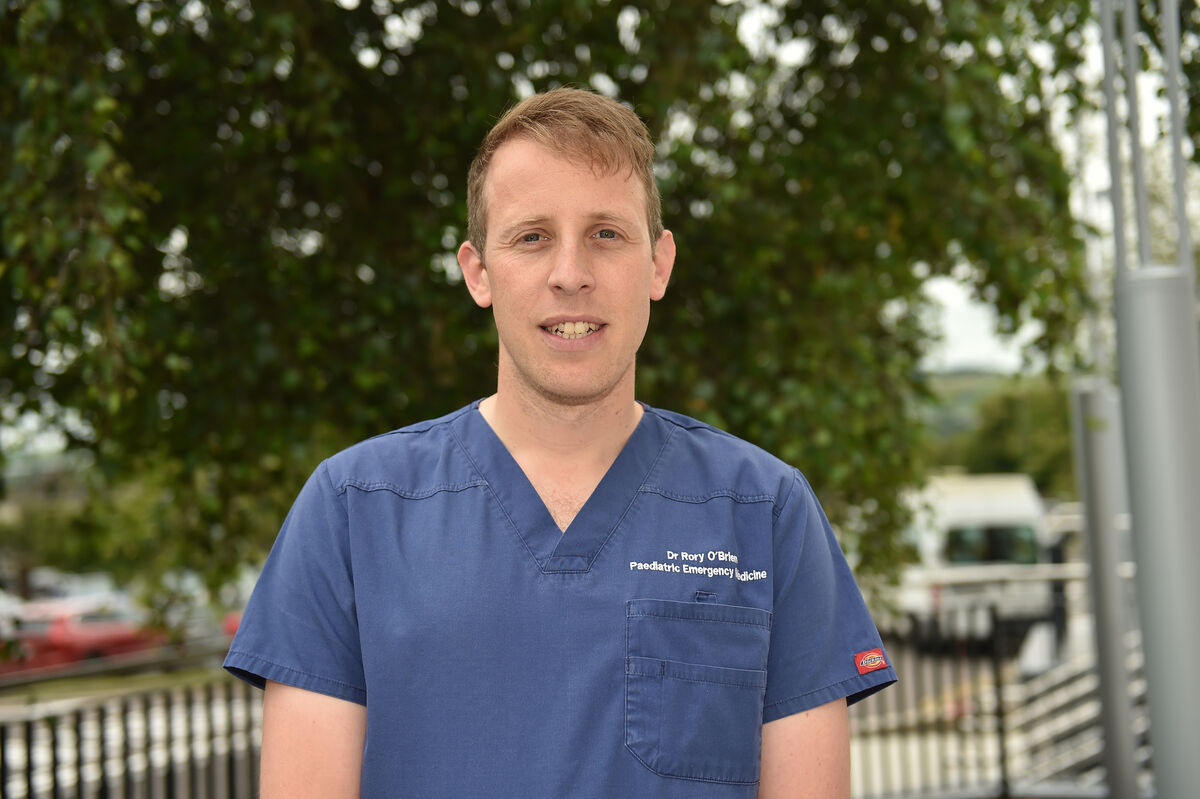
The new ED will be located in the old out-patients part of the hospital. Its floor space of approximately 250sqm will be divided into a waiting area and nine isolation cubicles. “We have six now and five of those are in a cramped open ward, so it’s a significant uplift on what we have at the moment,” says Dr O’Brien.
The additional space will also allow medical staff to offer procedural sedation. “We do this when children need to undergo what might be a frightening or painful procedure like stitches or relocating a shoulder joint,” says Dr O’Brien. “We give them strong medication to make them sleepy, which means they are relaxed during the procedure.”
The children must be monitored afterwards but there isn’t always enough space for this in the current ED. This means that children and their families are required to wait for longer than necessary.
Efficiency will also be prioritised in the new ED. “For example, our current resuscitation area is far from the children’s assessment area, which means time is wasted travelling from one to the other,” says Dr O’Brien. “That won’t happen in future.”
How far in the future this will be is uncertain as progress has stalled due to a shortfall in funding of between €500,000 and €750,000. Initial plans have been drawn up by the architect, but the new ED has yet to move beyond the consultation process.
That process has been a comprehensive one. “We’ve taken all suggestions on board,” says Dr O’Brien. “The hospital’s autism group has made recommendations as to how to create a space and process of care appropriate for children with neuro-sensory issues. Frontline medical staff have contributed and so have housekeepers and parent advocates. What’s being done in other hospitals nationally and internationally has also been taken into consideration.”
Having this multitude of perspectives has helped identify priorities in terms of design. “Our new ED will have multifunctional rooms that are designed for safety and space,” says Dr O’Brien.
“Children will be assessed and treated in individual cubicles centred around a staff base that will allow for a constant line of sight on all children while those children are kept safely isolated from one another to protect them from infection.” There will also be a space designed specifically for adolescent mental health. “It will be safe and appropriate for their needs,” says Dr O’Brien.
CUH staff have been campaigning for this new ED for over a decade. While waiting, they have also worked on streamlining their procedures so that children are cared for more efficiently in their current one.
“We have established defined clinical pathways for all the different conditions we see, thereby ensuring safety and quality of care for all patients,” he says. “For example, if a child presents with an asthma-related issue, there’s a specific outline of everything that needs to be done in assessing and treating that child.”
Another emergency medicine consultant at CUH, Dr Iomhar O’Sullivan, has created www.emed.ie, a free and open resource for clinicians, patients and their families that describes all the conditions and ailments commonly seen in the hospital and how they should be treated.
Further improvements are planned, including a new paediatric unit that will be located behind the current Seahorse unit on the main concourse of the hospital. “That plan is currently at an advanced stage of drawings,” says Dr O’Brien.
While Dr O’Brien and his colleagues continue to push for the opening of a more spacious children’s ED at CUH, he reminds parents to use their common sense when deciding whether to bring their child to hospital for treatment.
“We’re open 24/7 but our resources are finite,” he says. “If your child has a fever or rash or something that is of mild concern to you, bring them to your GP. But if you’re very worried, if they’re breathing rapidly, lethargic, cold to the touch, have a poor colour, or if they’ve had a major accident, don’t hesitate to call an ambulance. We’re here to help.”
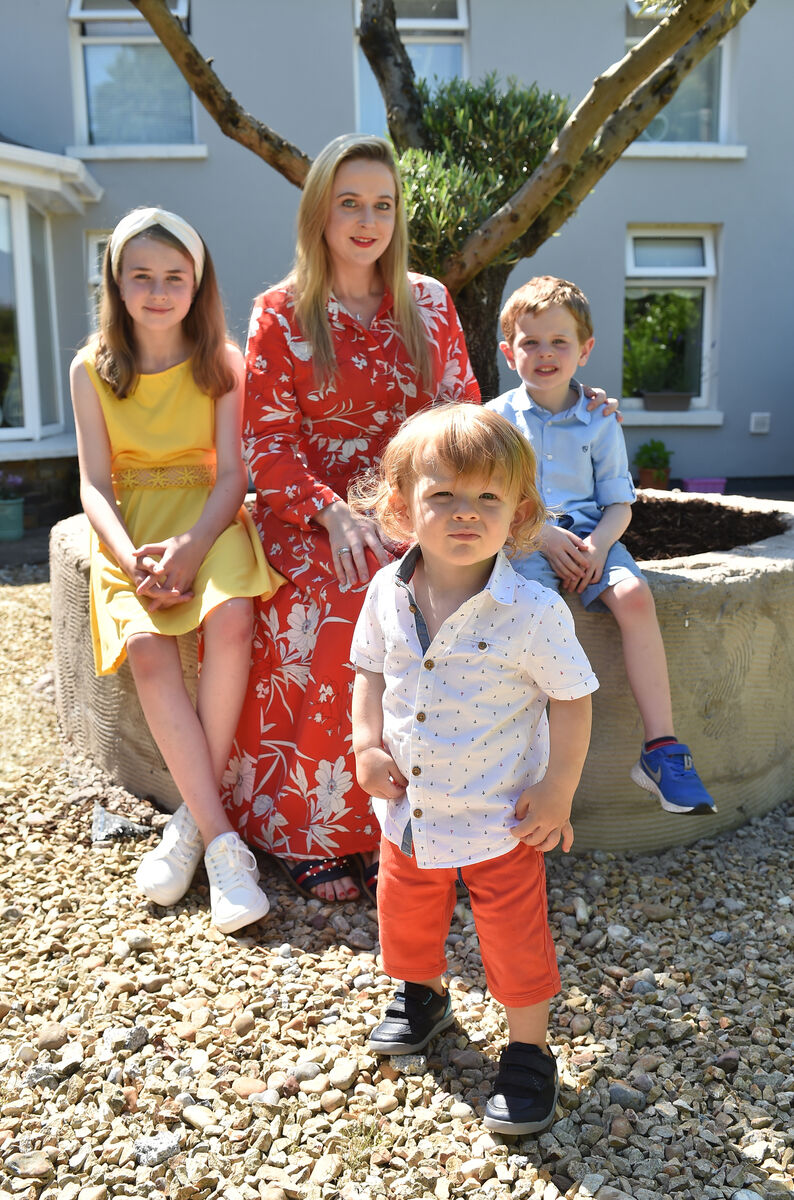
Louise O’Regan, 37, and a mother of three from Inniscarra in Cork, knows exactly how terrifying it is to rush to hospital with a gravely ill child. She can also testify to the high level of professional care at the CUH ED.
“Alex, our 16-month-old, is the youngest and back in November 2020, I gave him a boiled egg to eat for the first time,” she says. “Later that night, he went into anaphylactic shock.” This is a rare but severe allergic reaction that can be fatal if not treated quickly.
“I’m a dentist and my husband is a vet,” says O’Regan. It was midnight and we had to bundle our other two children into the car and rush to hospital.”
Fortunately, they arrived in time and Alex is now being treated for his allergy.
“I have to say that the level of care we got was excellent,” says O’Regan. “We were blown away by the care and reassurance we were given, especially by an exceptional nurse called Karen Lynch.”
However, the facility itself simply didn’t match that level of care. “The area is so cramped,” says O’Regan. “It hinders the staff in their work and makes the process of waiting for accessing care uncomfortable for children and their families. The staff of CUH and the children and families of Munster deserve better.”

Olympic athlete, author, coach, and mother of two Derval O’Rourke is raising funds for the new children’s ED in CUH.
She has always appreciated the work done by the hospital. “They are incredibly important in Munster and do an amazing job,” she says.
“As a mother, I’m so grateful my kids are happy and healthy, but I know accidents can happen. Having an environment that provides the best support to kids in those difficult situations is vital. That’s why I’ve worked with CUH charity over the years and it’s why I’m throwing my support behind a campaign to raise funds for the new children’s emergency department.”
O’Rourke believes it will make a huge difference to children and their families. “A&E can be a scary environment but creating an area that’s just for children will make it an easier and safer experience,” she says. “It will make what is a stressful situation a little easier for everyone.”
O’Rourke decided to theme her fundraising campaign around the Olympics. “I want people to join my team in tracking their steps to help cover the distance between Cork and Tokyo in time for the closing ceremony of the Olympics,” she says. “You can walk, jog, or cycle. It’s up to you but all funds raised will go towards the new children’s emergency department.
You can become a fundraiser by clicking here. Or you can donate at idonate.ie. Links can also be found on Derval O’Rourke’s Instagram and Facebook pages as well as on the CUH Charity page.
“All support is incredibly appreciated,” says O’Rourke. “Just imagine the difference it will make to children and their families.”
CONNECT WITH US TODAY



Be the first to know the latest news and updates