Ciara Begley picked up her 13-month-old, said goodbye to her partner, and headed off to Liberia
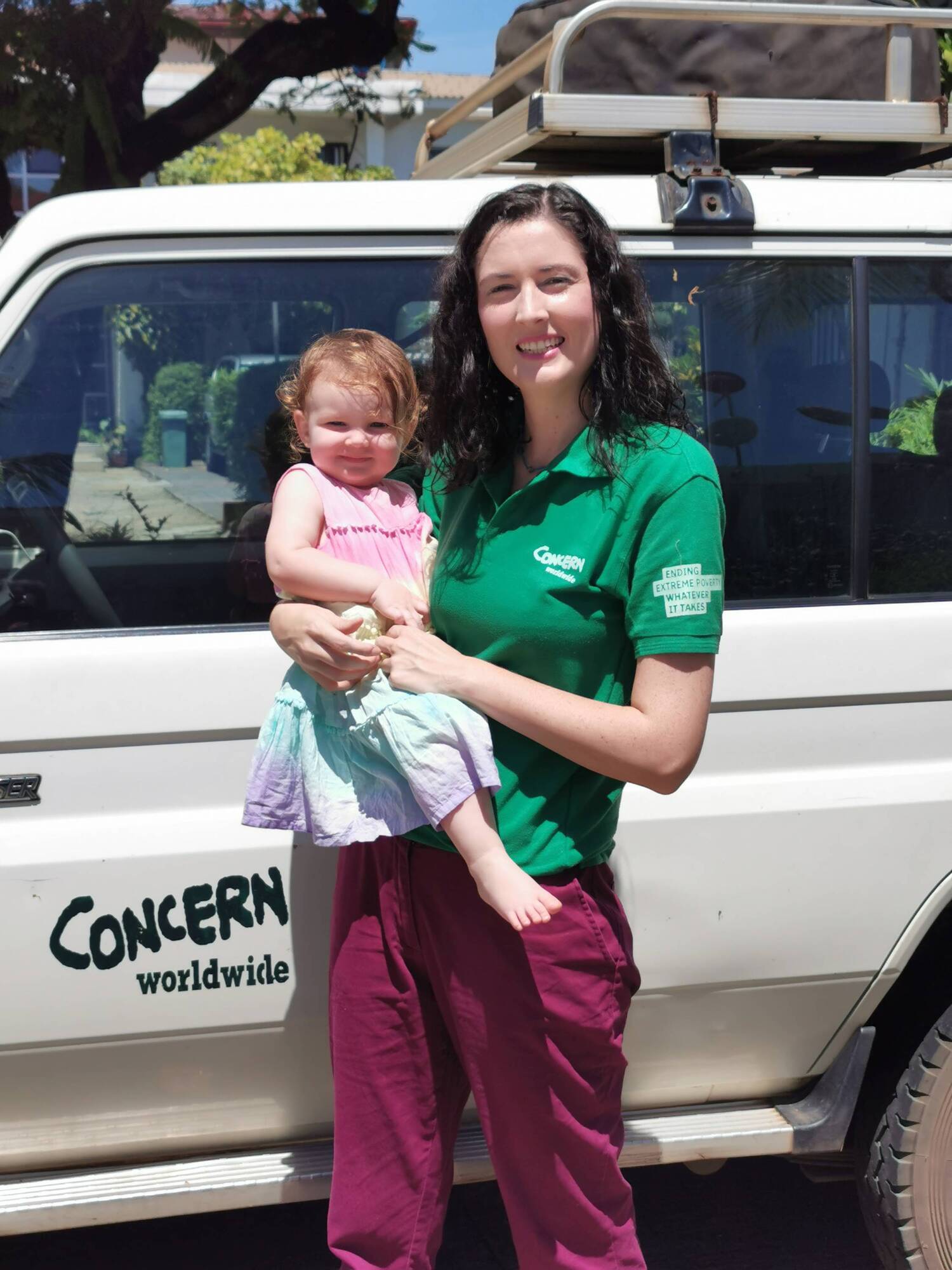
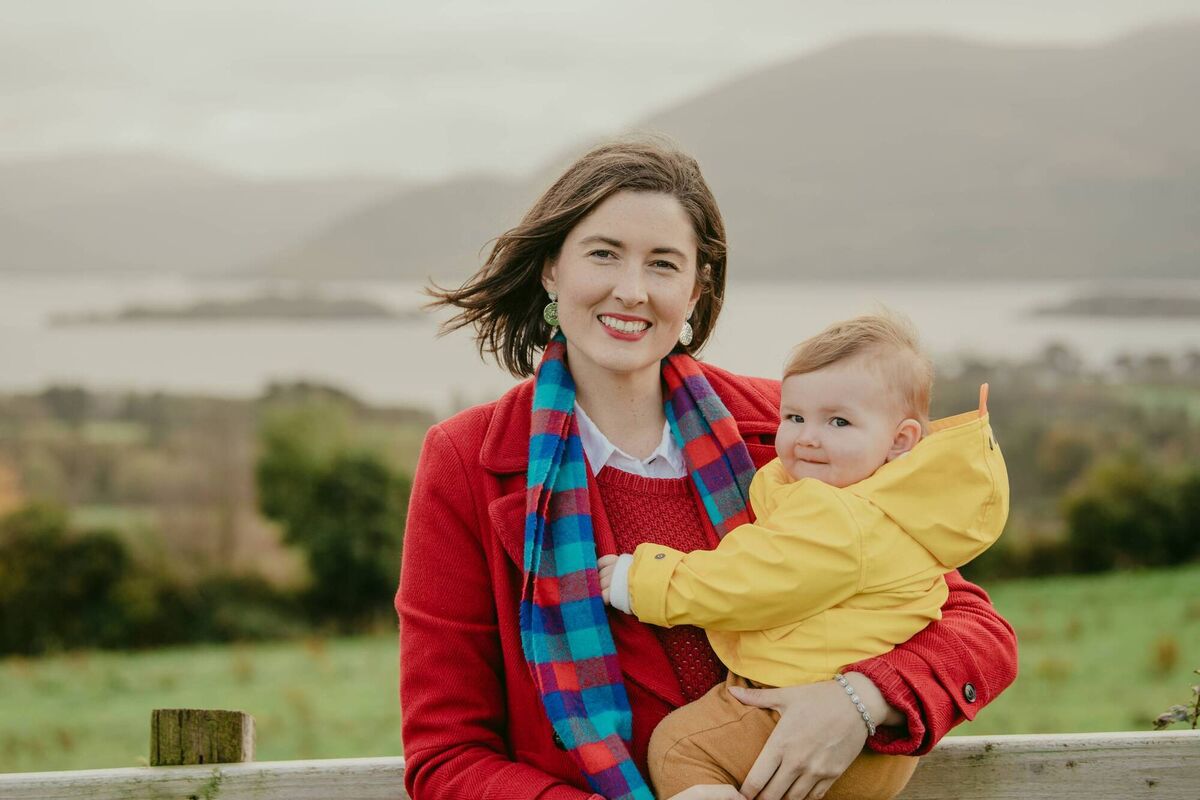
Ciara Begley and her daughter Hannah, in Liberia
LAST October, Ciara Begley picked up her 13-month-old, said goodbye to her partner and headed off to Liberia with Concern.
For Ciara, who grew up in Waterford, as well as the US and Australia, it was like “all the circumstances aligning nicely”.
She’d dreamed of working in Liberia since she’d visited on an Irish Aid junior professional programme. With no war imminent there, she’d seen straightaway a lot could be done.
“There’s high potential for things to improve. Malnutrition’s severe, but malnutrition intervention’s cheap so you can make a huge difference. Better nutrition means improved educational attainment and job prospects.”
In her early 30s, a senior management opportunity with an organisation she considers “amazing” – and being able to bring baby Hannah along — wasn’t something to pass up. “I was anxious to make the things I want to do with my life happen. I’ve a lot of energy and motivation — it’s not like ‘well, I’ve had a baby now’.”
Her Limerick-born partner, Gerard, who works with Irish Aid, is currently Irish-based as he wants to see through projects he started.
“He gets how important this work is to me,” says Ciara, who pre-Hannah might’ve felt nervous about the move. “But I was so blown away at having a baby I felt anything’s possible.”
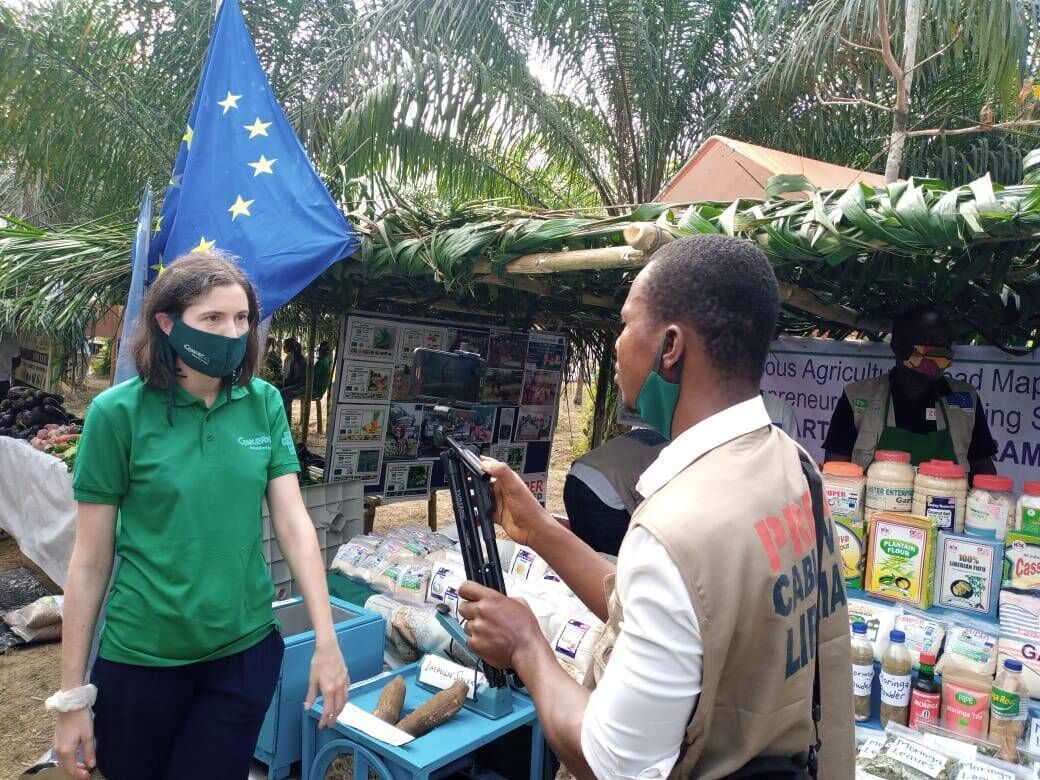
As Concern’s programme director in Liberia, she runs initiatives that provide Covid messaging and prevention and vaccine positive messaging. Liberia’s had over 2,000 cases and 85 deaths, though testing’s not widespread. She works with Liberia’s health system, looking at how they could cope with virus outbreaks. “The health system here isn’t strong. In places with extreme poverty, facilities struggle with normal child immunisation. Rolling out a huge national vaccine campaign will be challenging.”
Because Liberia has low life expectancy — and people with vulnerable conditions die — the population at high risk from Covid-19 is low, leading to vaccine hesitancy. “Everybody feels Covid isn’t life-threatening — compared with ebola when they saw bodies piled on trucks. They feel they’ve got bigger problems: malaria, malnutrition,” says Ciara.
Hardest of all has been the economic consequences of lockdowns. “We work with counties with the highest levels of child-stunting [from malnutrition]. Last year, markets shut for five months — farmers couldn’t buy seeds. The whole harvest was reduced.” This has led to 40% price inflation — it’s predicted over 12% of Liberia’s population will be in food crisis by August.
Based in Monrovia three days a week — where the five-minute journey from her home to Concern’s office means braving erratically-driven motorbikes and speeding government vehicles across five lanes of traffic — Ciara works two days weekly in Concern’s field office in Buchanan City, Grand Bassa County. From here, reaching communities Concern works with can be challenging. “Journeys are on dirt roads — very bouncy. One of the hardest to reach is a five-hour walk from a regional town three hours from Buchanan. During rainy season certain communities are inaccessible.”
What’s most challenging is that the needs will always outstrip ability to respond to them. “But you couldn’t feel too deflated — Liberians are so amazingly strong, open-hearted and friendly.”
For now, it’s about getting stuck in, working hard and coming home to Hannah – cared for by a local childminder. “I spend time with her in the evenings, playing, enjoying her company. I’m never alone — I’ve got this amazing child along for the ride.”
See: www.concern.net
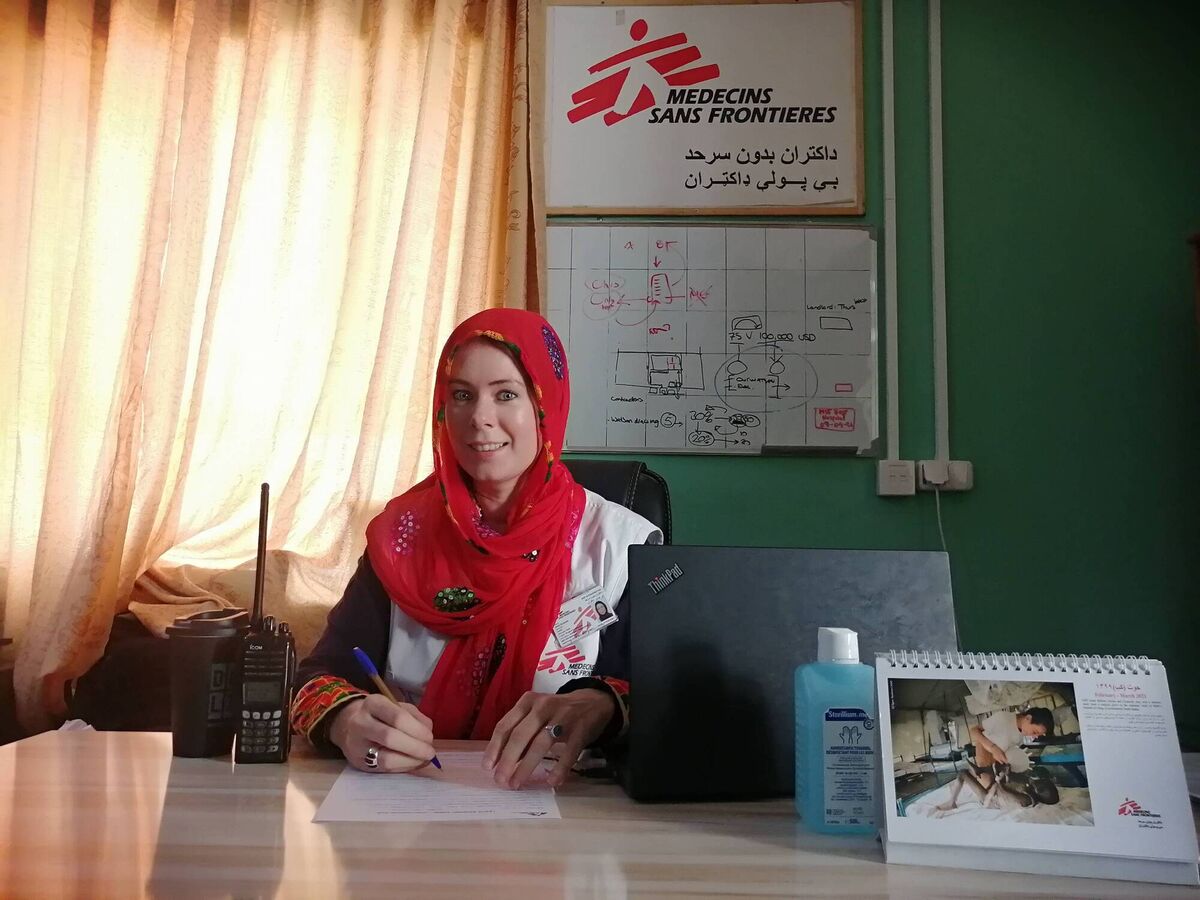
It gets really noisy at the compound where Sarah Leahy’s based in Afghanistan. “We hear a lot of big explosions — heavy machine-gun fire, small arms fire. Day or night, it’s fairly relentless — sleeping’s a real challenge.”
Sarah, 37, from Dundrum, Co Dublin, manages one of Médecins Sans Frontières’ (MSF) biggest projects: the 300-bed Boost Hospital, the only referral hospital in Helmand Province and a lifeline for approximately 1.3m people. MSF supports the emergency room, surgical unit, inpatient department, maternity department, neonatology unit, laboratory and radiology department, as well as the 82-bed paediatric unit. Last year, it provided over 110,000 consultations, assisted in more than 17,000 births and performed an estimated 4,900 surgical interventions.
Helmand province has been one of the areas most affected by Afghanistan’s ongoing conflict, with violence flaring in October last year. Sarah arrived in January and the most intense fighting she’s seen happen in May, breaking out around Helmand’s capital, Lashkar Gah, early in the month. With the city’s main trauma hospital focusing on the most critical cases, other patients were referred to MSF-supported Boost Hospital. In one week, MSF treated 93 war-wounded patients — bullet wounds, shrapnel injuries.
With the fighting happening just a few hundred metres from where she’s based, part of Sarah’s job is security management. “In an active conflict zone, this takes huge time. Our compound’s 3km from the hospital. We have to check the general security in the town — is it deemed safe to move from home to hospital?”
How does she cope in a situation where, second to second, personal safety’s not guaranteed? “It’s challenging, but we just get on with it, we’re here, we do our job. Our focus is our patients and our staff who are local.”
With the conflict blocking access routes, people are forced to make dangerous, circuitous journeys. “A 30-minute journey could take five hours.”
It’s difficult to say how many Covid cases Afghanistan has had. “They say 67,743 cases and 2,855 deaths – I can’t say officially,” says Sarah. Boost Hospital treats Covid only when it presents alongside the patient’s primary reason for admission.
Being away from her Dublin-based parents in the middle of a pandemic has been a worry. Her boyfriend, John’s also in Ireland. But she considers her little room at the compound – where she has her yoga mat and candles — her sanctuary.
“There’s a communal kitchen, where everyone meets for dinner — there could be up to 18 of us here,” says Sarah, who’s worked with MSF since 2017. “You make it work. You look forward to your breaks. I finish here in October. The plan is to go to the US with John, to do a road trip around the South.”
See: www.msf.ie
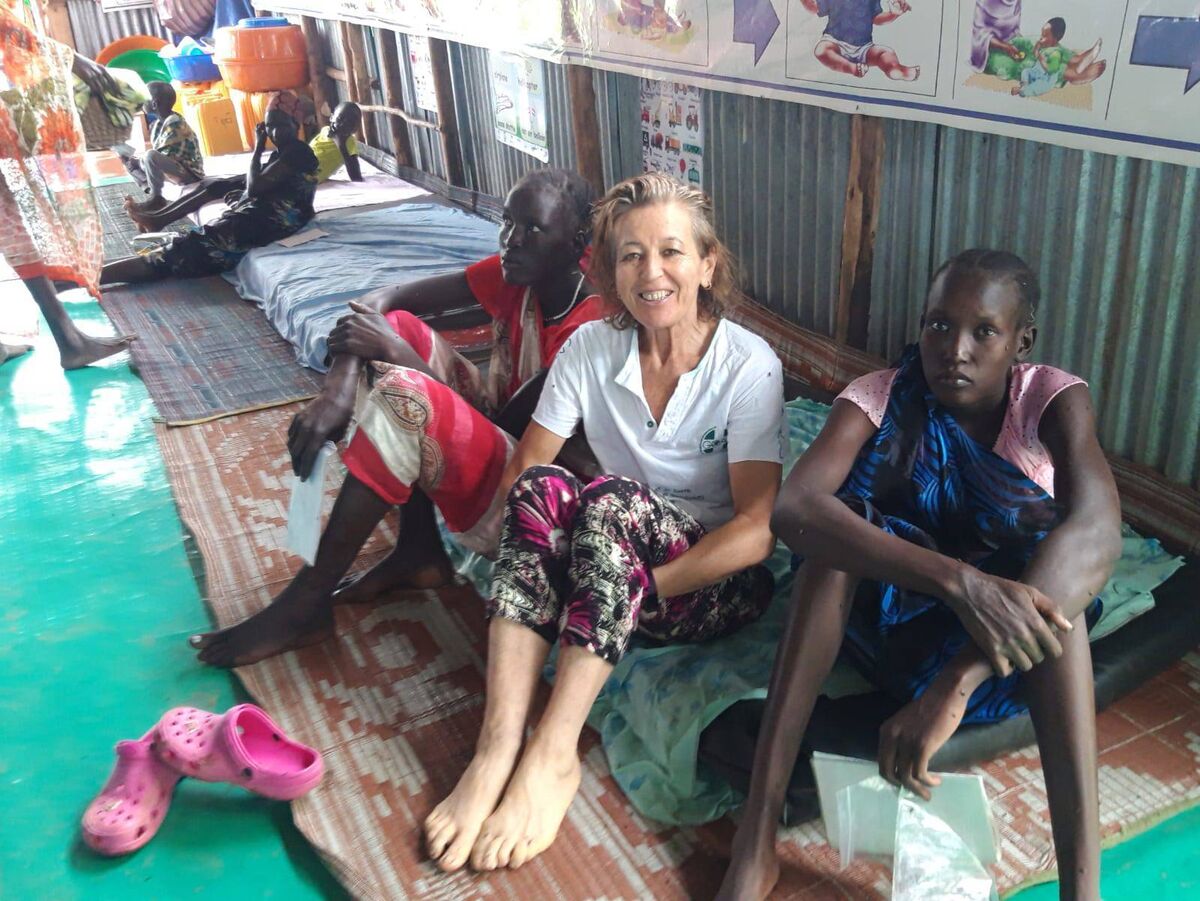
As refugee programme manager with GOAL in Ethiopia, Mary T Murphy’s job involves lots of travel — to Gambella region in south-west Ethiopia, where GOAL supports two refugee camps with a population of more than 100,000 South Sudanese refugees. And to the north-eastern Afar region, where there are two smaller refugee camps with a population of approximately 50,000, mostly refugees from Eritrea. Here the temperature often reaches 45° C and it mightn’t rain for three years.
“The refugees we support have fled their country of origin due to war, food insecurity, drought or famine. They’re mostly from rural locations. They end up living in often overcrowded shelters in a completely different environment,” says Mary, from Renaniree, Co Cork.
Having volunteered with GOAL’s team in Congo DRC in 1994 in response to the Rwandan refugee crisis, Mary joined GOAL in Ethiopia in 2008. Since then she’s responded to many emergencies including floods in Pakistan (2012), Ebola in Sierra Leone (2014), and various drought and emergency responses in Somali region of Ethiopia.
When Covid hit last year, Mary and her colleagues were nervous. “There was great uncertainty.” However, transmissibility and burden of severe disease in Ethiopia is low, she says, possibly due to a younger population.
Personally, she “drafted a plan and stuck to it”: daily exercise routine of aerobics using her laptop and listening to wellbeing podcasts. “So far so good — I didn’t contract the virus.”
Part of GOAL’s approach to prevent virus spread is getting communities engaged in their own welfare with emphasis on hygiene promotion, handwashing with soap, respiratory hygiene and physical distancing.
“In the refugee camps, we’re trying to dispel some myths around Covid-19 – that the vaccine was developed with controversial substances or that it gives you Covid. We’re distributing accurate, consistent information, translated into the local language, from WHO and the government of Ethiopia. We’re advocating for a large vaccine supply so we can roll out a huge vaccination campaign.”
Seeing the refugees’ resilience helps her cope. “I get great energy from meeting them, seeing how they’ve adapted to a different country, a different life. There’s great hope when we see the children going to school.”
And there’s her family in Renaniree, who play her requests on the for Africa day, grow wildflowers in her garden, send her parcels of goodies and organise group video and chat calls. “I’m so grateful and very lucky.”
See: www.goalglobal.org

CONNECT WITH US TODAY



Be the first to know the latest news and updates