How to help children embrace sports when they want to quit
Not all children enjoy the rough and tumble of team games. But rather than quitting sports completely, parents need to encourage them to find an activity they enjoy, says RTÉ presenter Jacqui Hurley
How to help children embrace sports when they want to quit

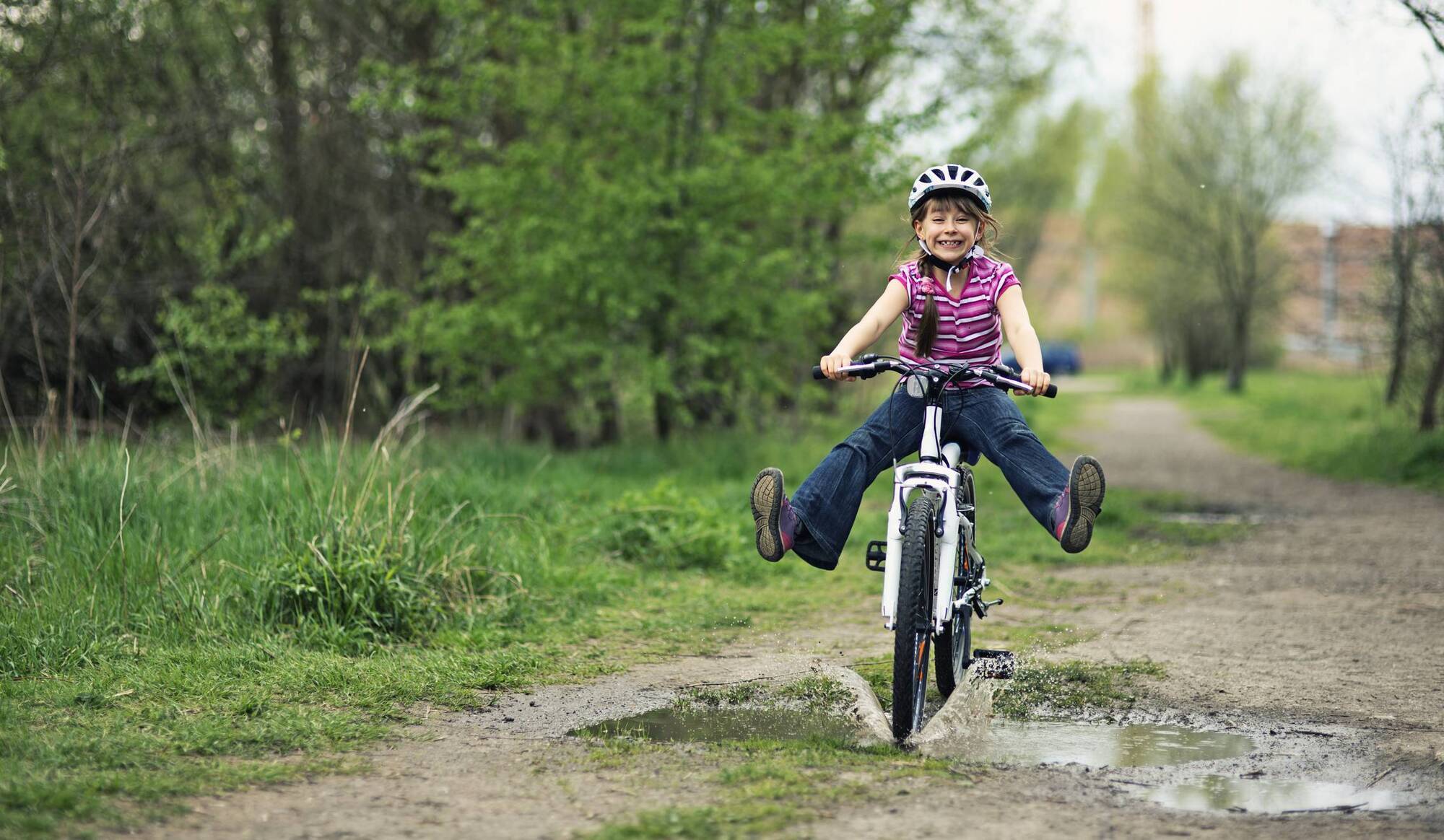
Picture: iStock 
The summer holidays here, and whether they are an ace with a ball, a hurl or a racket, children need to be encouraged to embrace their sporty side.

“For kids, it’s about so much more than just sport,” says RTÉ broadcaster and Cork native Jacqui Hurley. “It’s about their development and their ability to communicate with their peers, by saying something as simple as ‘pass me the ball’.”

Cathal Geraghty, community sports development officer with Cork Sports Partnership, says while the health benefits of encouraging children to be active are incredibly important, the social benefits are also crucial, pointing out that playing sport is a way for children to learn team-building skills. “They learn how to build friendships, and how to win and lose,” he says.

“I only see upsides - the communication skills, the leadership skills, the teamwork skills,” says Hurley. “The research constantly tells us that those who are more confident are ones who played sport.”

The 2018 Children’s Sport Participation and Physical Activity Study, which surveyed 86 schools with input from 4,697 primary and post-primary students, found that 80% of primary and 58% of post-primary school pupils reported participating in community sport at least once a week but only 13% of children met the National Physical Activity Guidelines of at least 60 minutes of moderate-to-vigorous physical activity every day.

While many parents may be concerned that their children’s sporting skills have stagnated during months of lockdown, Hurley firmly believes that they shouldn’t worry but focus instead on encouraging their kids to remember how much fun it is to play sports with their friends.

“Nobody is judging them. The people who are coaching your children just want them to be happy. they’re not trying to raise superstars. That’s not what I’m trying to do when I coach kids, I just want them to run after the ball and have the craic.”

She adds that summer camps are an ideal way to integrate kids into sport.

Introduce them to as many sports as possible

The role of Cork Sports Partnership is to increase and provide opportunities for all to become more physically active, and sport is one element of this. Geraghty suggests that parents lead by example, taking their children for walks and cycles, introducing active travel into their day and taking part in physical activity with them.

He recommends encouraging children to try different sports and activities.

“There could be barriers in terms of geography or cost but, where possible, try to introduce them to as many sports as possible.

“Take children to local matches so that they can immerse themselves in the experience.”

He says the recent Federation of Irish Sports 20 x 20 campaign, with its motivating tagline ‘if she can’t see it, she can’t be it’, is a great example of encouraging girls to experience sports.

When you see it and you realise it was this simple all along, then of course you feel can do it, says mother-of-two Hurley.

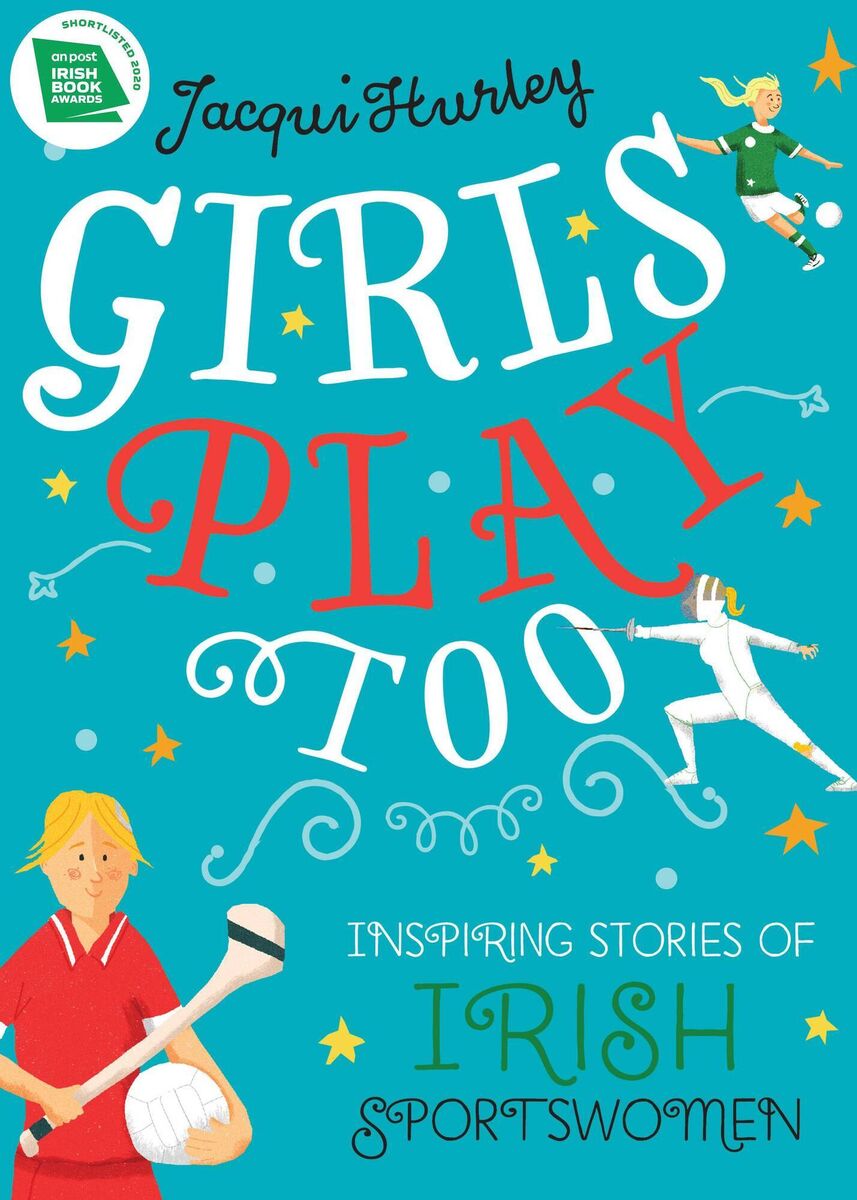
Girls Play Too by Jacqui Hurley

To this end, she has written a children’s book, Girls Play Too, which highlights the achievements of 25 of Ireland’s leading sportswomen.

The idea for the book stemmed from a conversation with Evanna, a friend of her young son.

Hurley was listening to Evanna and Luke talking about whether boys or girls were better.

“I overheard Evanna saying to Luke, ‘You’re right, boys are better’. She said it was because their matches are on TV. And I thought something needs to be done about this.

“Little girls need to know that girls’ matches are on the TV too and the only way they’re going to know that is if we tell them.”

Hurley says the most amazing thing about her book is that young girls tell her they love the athletes and the stories.

“My neighbour’s daughter has taken up boxing because she read Kelly Harrington and Katie Taylor’s stories and she was really inspired by them.

“The stories are so identifiable, everybody can look at them and relate. We’re all the same really, we just choose different things.”

A place for every child on the team

Geraghty suggests trying to identify a local role model. “If you look at Cork, there are lots of examples of great women’s teams,” he says, citing the camogie and ladies football teams. “Basketball is my own sport and for years there have been a number of great Irish female basketball players who have gone to the US on scholarship or have played internationally. Locally, there are great clubs like Glanmire and Brunell. That’s the same in other sports, such as swimming or hockey.”

Hurley believes in Ireland there is too much emphasis on team sports. “But if we could redefine the boundaries, we could keep so many more girls interested.”

Just because your child doesn’t like team sports doesn’t mean that they aren’t actually sporty, says Hurley. “Somebody might be really into golf or tennis or running. We need to make sure we tell girls that that is sport too and is really good for their bodies and minds.

Jacqui Hurley, RTE
Jacqui Hurley, RTE

She coaches in her son’s GAA club and says that the children she most enjoys working with are those who are not that interested when they start but they’re really interested when they finish.

“The progression in those children is where the real joy is. Suddenly they realise that this is something that is for me. And sport is for all. You really need to make sure as coaches and parents that you’re kicking the ball with all of the kids and making sure that they find it accessible as well. Try to make sure that everybody understands that there is a place for them.”

Helping young people to be more physically literate

Some young people are searching for an identity, says Geraghty, for a group where they can belong. “A boy or girl takes part in a swimming club and they’re proud to be part of that club. The fact that I played basketball was part of my identity, but it was one piece of the pie, so that is a positive element there.”

He says parents can also encourage their children by educating themselves. “Sport Ireland and Coaching Ireland have developed two great workshops to provide parents, coaches and teachers with the language of sport so they can help young people to become more physically literate and active.”

Having sporty children can bring its own challenges, as Hurley is only too aware. Her six year old loves GAA, rugby and swimming and wants to start basketball. “There aren’t enough hours in the day to ferry him around to all those places. Being organised as a parent really makes the difference.”

Prior to the outbreak of Covid-19, Hurley and her family carpooled with other families and found it really helpful because “you’re not the one on the road every Saturday”, and she is hoping it will again be possible in the not-too-distant future.

“It’s building the community outside the gates as well as on the pitch because if you are putting yourself into a club now, you are building more than just a sporting surface for your child, you’re actually building a social group for you.”

When Hurley’s family moved back to Cork from Australia, the first thing her parents did was register their children in the local GAA club because they wanted to make friends. “My mum and dad are still members of the GAA club at home, and that’s only using GAA as an example. The benefits for the family are phenomenal.”

More in this section

Lifestyle

Newsletter

The best food, health, entertainment and lifestyle content from the Irish Examiner, direct to your inbox.

Cookie Policy Privacy Policy Brand Safety FAQ Help Contact Us Terms and Conditions

© Examiner Echo Group Limited