Why there's such a buzz in Cork about World Bee Day
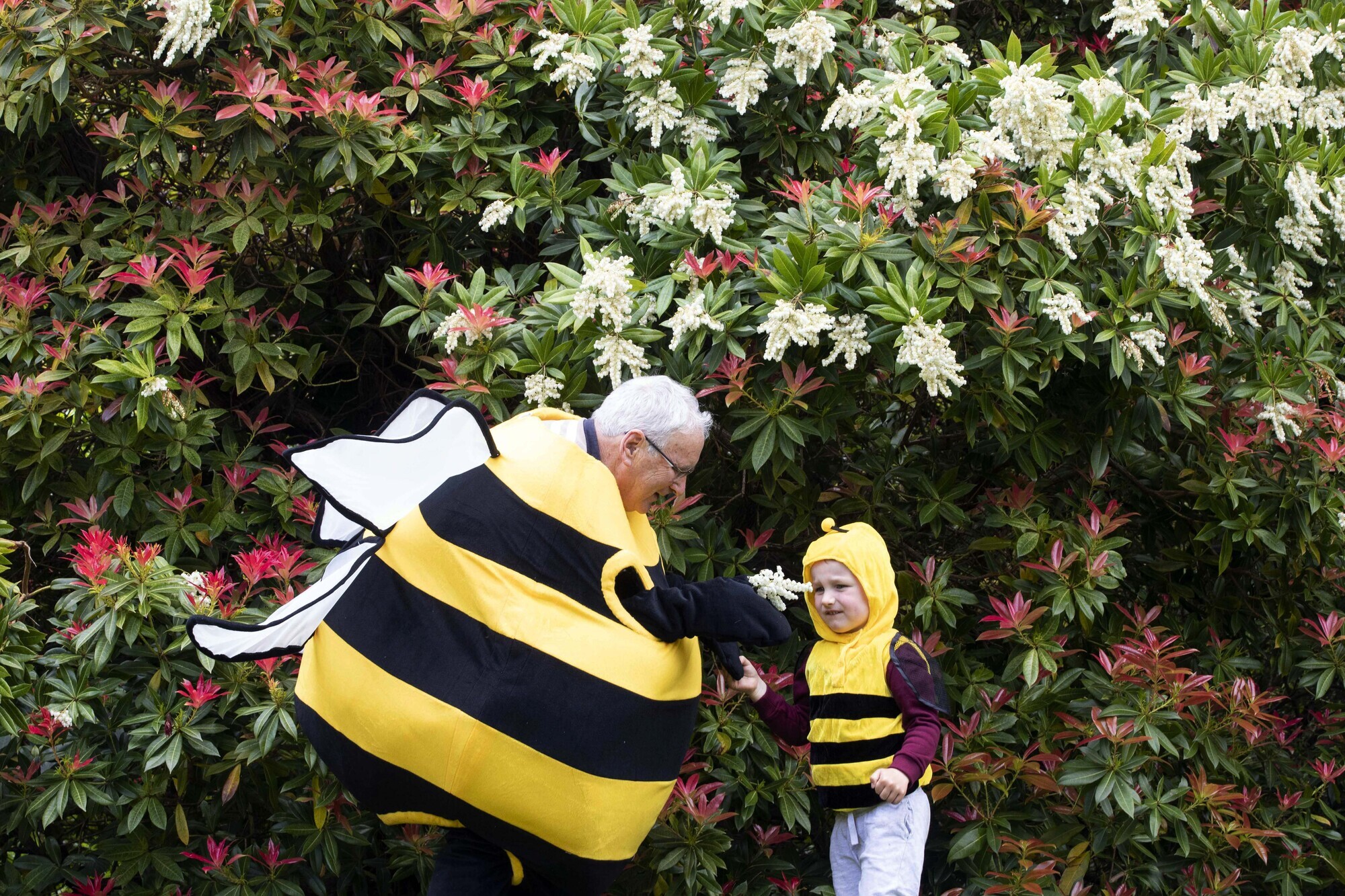
Little bee Charlie Walsh and Pat Deasy of the Irish Bee Conservation Project celebrate the new pollinator trail opening at Fota House today.
The weather may be shocking, but the country is abuzz today, as people get ready to mark the fourth annual World Bee Day.
The celebration, which focuses on protecting and raising awareness of the vulnerable pollinators, first came to life in the United Nations in 2017. This year’s theme is ‘bee engaged - build back better for bees’.
Here in Ireland, many groups are doing their bit to take part and highlight the importance of bees to our ecosystem. There are over 20,000 bee species flying around the world, including 97 native species here in Ireland, but there has been a worrying decline in numbers in recent years.
In Europe it’s been reported that hive numbers have decreased by over 30% in the last decade. Two species have become extinct while six are considered to be critically endangered. Ten species are currently endangered and a further 14 are considered vulnerable.
According to the Irish Bee Conservation Project (IBCP), the declines could be due to a number of factors including habitat loss, a decline in wildflowers, pests and disease, agricultural chemicals and climate change.
From an economic perspective, however, it is reported that the pollinators contribute €53 million annually to the Irish economy.
Ireland is home to honey bees, bumblebees, and 77 species of solitary bees - individual bees of surprising sizes and colours - who are the country's main pollinators.
“The native Irish honeybee, black or brown bee, is called Apis mellifera mellifera. In all honeybees, there are three different types, also known as castes, in a hive. There is the queen, the drone, and the worker bee. Each has a very different role,” says Francis Mulvihill of the IBCP.
“The queen bee, who is female, is a central figure in the hive. There is usually only one queen in a hive because as soon as a queen is born its first duty is to seek rivals and kill them.”
Male drone bees, the ICBP explains, ensure there is genetic diversity in the hive. A queen can mate with up to 20 of them, with some hives capable of holding as many as 50,000 bees in the summer time - who are mostly female worker bees.
Their roles involve a range of activities like changing nectar to honey, packing pollen from flowers and trees into cells, ejecting dead or dying bees from the hive, and filling gaps in the hive with propolis collected from trees.
The IBCP was established to provide information to communities regarding bee habitat requirements and to increase the survival of all species of native Irish bees. It is run entirely by volunteers.
Pollination by bees is especially important for humans because about 75% of the food and drink we consume require it to exist.
However, the lives of bees, who are all important to pollination, can be as short as 30 days in the summer when they are continuously flying or six months in the winter.
Other fun facts: Honeybees also have their own language, called The Dance of the Bees, and five eyes that can detect UV light when there is no sun visible to humans.
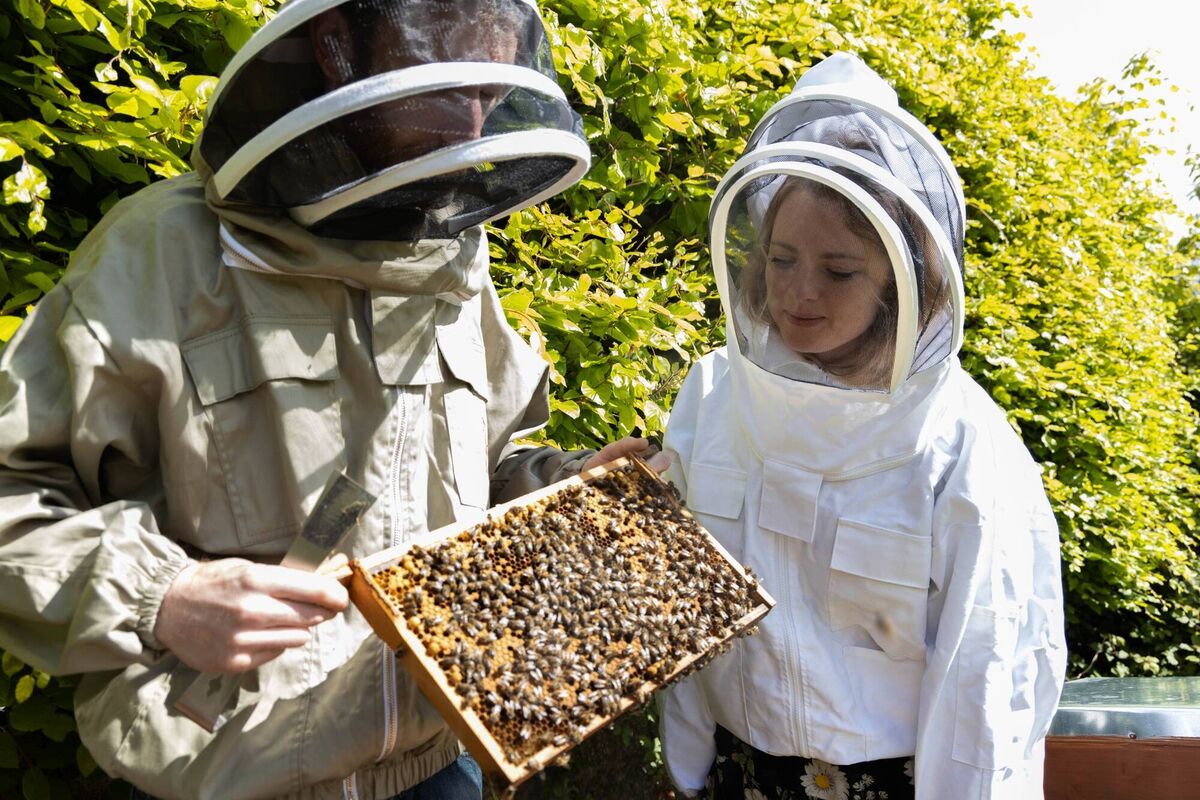
In honor of World Bee Day, thousands of Ireland’s native bees have been introduced to the campus of TELUS International in Cork in a bid to protect local biodiversity.
The company worked with beekeeping services company An Beach Dubh on the project, which installed two hives of up to 60,000 of the Apis mellifera mellifera (a type of honeybee) at TELUS' Mahon headquarters.
The partnership is part of an initiative to repopulate urban areas with native high-quality bee colonies and raise awareness of the importance of bees. It will also see the production of 40kg of honey over the course of the year.
“Irish bee populations have been declining since 1980 as increased development has led to habitat loss. As bees are such important pollinators, this could be devastating for food production and biodiversity,” says Séadna Mac Giolla Coda, a fourth-generation beekeeper and founder of An Beach Dubh.
“We are delighted to reintroduce high-quality bee colonies into the Mahon area to mark World Bee Day."
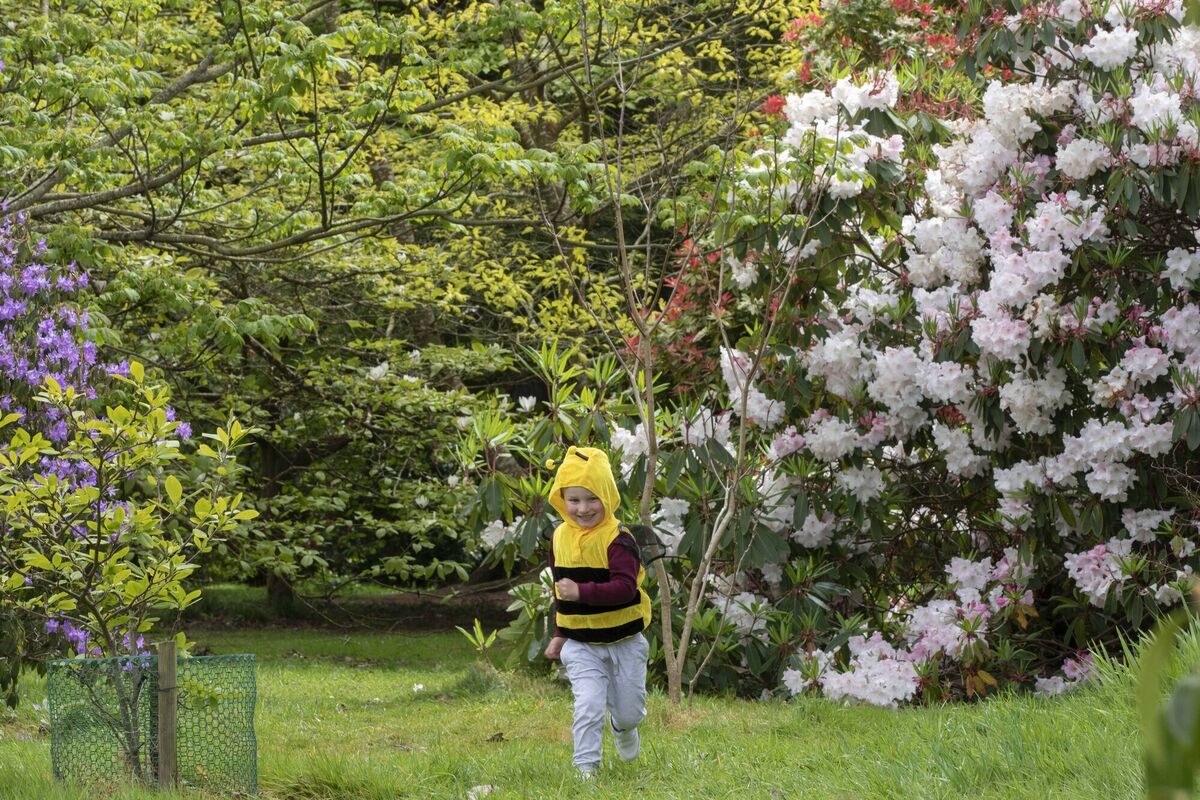
Over at Fota House, the Office of Public Works, the Irish Heritage Trust, and the Irish Bee Conservation Project are opening a new walking tour called the Bee Pollinator Trail today.
It will consist of a total of 12 stations such as ‘What is Pollination’, ‘The Bee Lodge’, and ‘Plants Good for Pollination’, along with stations containing specific information on different bee types.
The final stop is an observation hive where visitors will have an opportunity to watch the bees go about their daily chores.
It is hoped that the trail will help teach visitors about the importance of pollination and that it “will become a benchmark for pollinator trails throughout the country into the future,” says Tony Varian, Chairperson of the IBCP.
There will be two open days for the public to see the trail on May 22 and May 23 before it opens fully.
You don’t need to visit a trail to learn about bees, however. There are great books and websites out there, such as the kids learning zone on www.ibcp.ie and www.biodiversityireland.ie.
To make your garden a bee haven, you can also look up the All Ireland Pollinator Plan on www.pollinators.ie and get planting this weekend.
The initiative was originally launched in 2015 by Dr. Úna Fitzpatrick from the National Biodiversity Data Centre and Professor Jane Stout. TG4 will be airing a one-hour documentary tonight on the plan and how it is mobilising individuals and communities to reverse pollinator decline across all of Ireland.
In Fitzpatrick, Stout, and Dr. Pól Mac Cana will tell audiences about the variety of pollinators who work on our behalf.
Also featured in the documentary will be local initiatives from around the country, such as Buncrana’s pollinator-friendly planting, a community glasshouse in Donegal, a school in Dublin that has implemented pollinator-friendly policies, and a Mullingar farm where traditional hedge-laying is helping to promote biodiversity.
“The beauty about it is that we're not asking 'anybody' to solve this problem, we're asking 'everybody' to get involved, and if everybody took small actions, then together we would solve it,” says Dr FItzpatrick.
Watch at 9.30pm on TG4 tonight, May 20.


CONNECT WITH US TODAY



Be the first to know the latest news and updates