Appliance of Science: Why do I have curly hair?

What's the difference between curly and straight hair?
When it comes to hair type there are plenty of variations from light waves, ringlets, poker straight, or, my own current state… all over frizz, but we can most easily place hair into two groups, curly or straight. What exactly is the difference between straight and curly hair though, and what causes each?
The answer to that question comes in a number of parts, let’s start with the physical shape of the hair itself. Hair is made up of the fibre, the strand we can see, and the root or follicle which we can’t. Our hair follicles are found under the skin and that is the part from which the hair fibre grows.
The follicles for straight hair tend to sit straight down under the skin and the fibre that grows from them, not surprisingly, grows straight up. These fibres are cylindrical and uniform in shape.
On the other hand, the follicles for curly hair tend to sit under the skin at an angle and the fibre growing out from them, therefore, have a turn or kink as they emerge at the skin’s surface. This makes these fibres oval or u-shaped. The shape of our hair fibres may be dictated by a number of different genes, but we need to look at the proteins that make up hair and the chemical bonds between them, to better understand those curls.
Hair is made primarily of a protein called keratin. The cylindrical hair fibres of straight hair have these keratin proteins evenly distributed throughout.
The keratin in oval-shaped fibres is less evenly distributed. How does that make the hair curl? These keratin proteins have weak chemical bonds between them, when they are evenly distributed throughout the hair, the bonds are evenly distributed too, meaning there is no uneven force or pull on a particular part of the hair fibre, so the fibre grows straight. But when they are unevenly distributed around the hair follicle these bonds can pull the hair more in some places than others, creating curls, kinks and spirals, depending on their distribution.
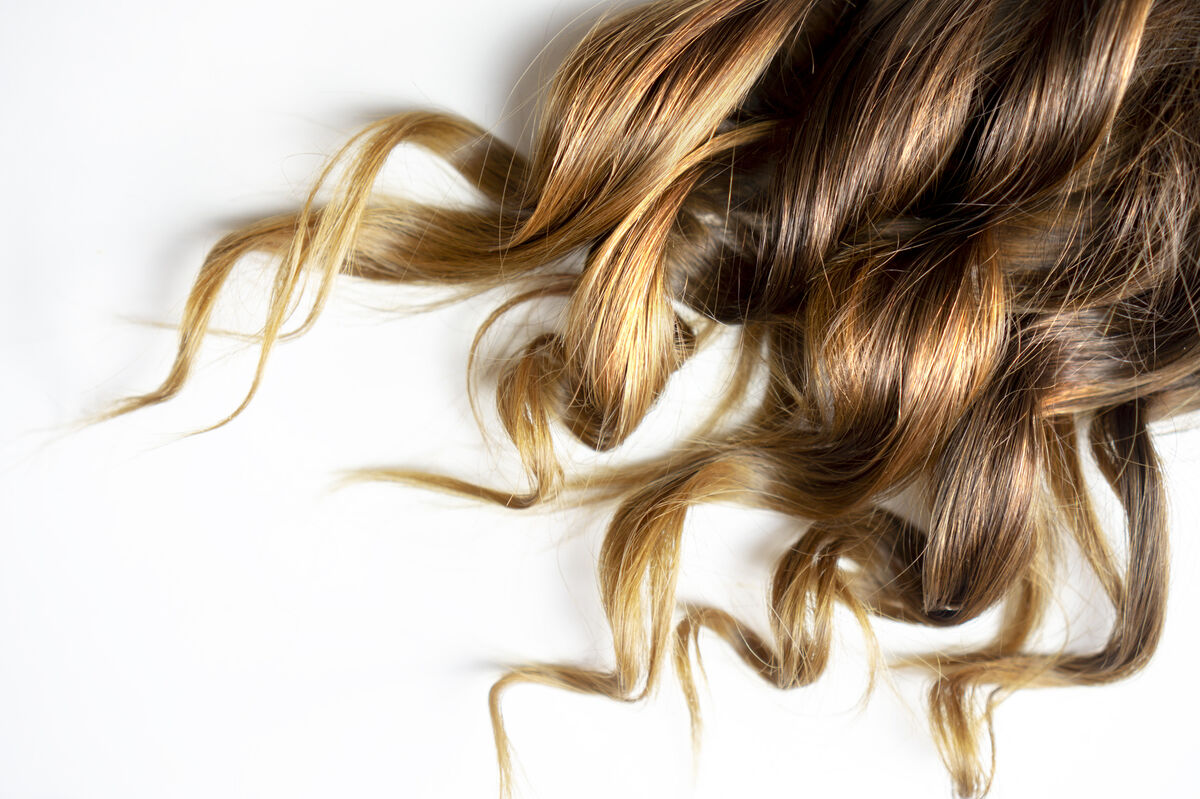
Now that we have an understanding of what makes hair curly or straight, it’s time to address the frizz. Frizzy hair is usually associated with curls, but why? Specialised skin cells secrete natural oils that can keep hair from drying out, but these oils cannot move down the length of curly hair as easily as straight, meaning curly hair is more prone to dryness and frizzing.
Before we reach for the hair straighteners, there are some advantages to having curls; despite what we might think, long curly hair is easier to comb than long straight hair. Apparently, it is less prone to tangles.
A study into this knotty subject found that it is all down to the angle at which individual hairs touch. While curly hairs bump into or intersect with, each other more often, straight hairs do so at more acute angles. The greater the angle, the more likely the hairs will knot. The study reported that straight hair knots more than twice as much as curly hair does.
So although curly hair may be more prone to frizz, straight hair is harder to comb. While the science may be interesting, it doesn’t deal with the real question on everyones’ minds… when will the hairdressers reopen so we can overcome the frizz or the tangles or the general bad-hair issues?
CONNECT WITH US TODAY



Be the first to know the latest news and updates