How ISL interpreters became the most familiar faces at pandemic briefings
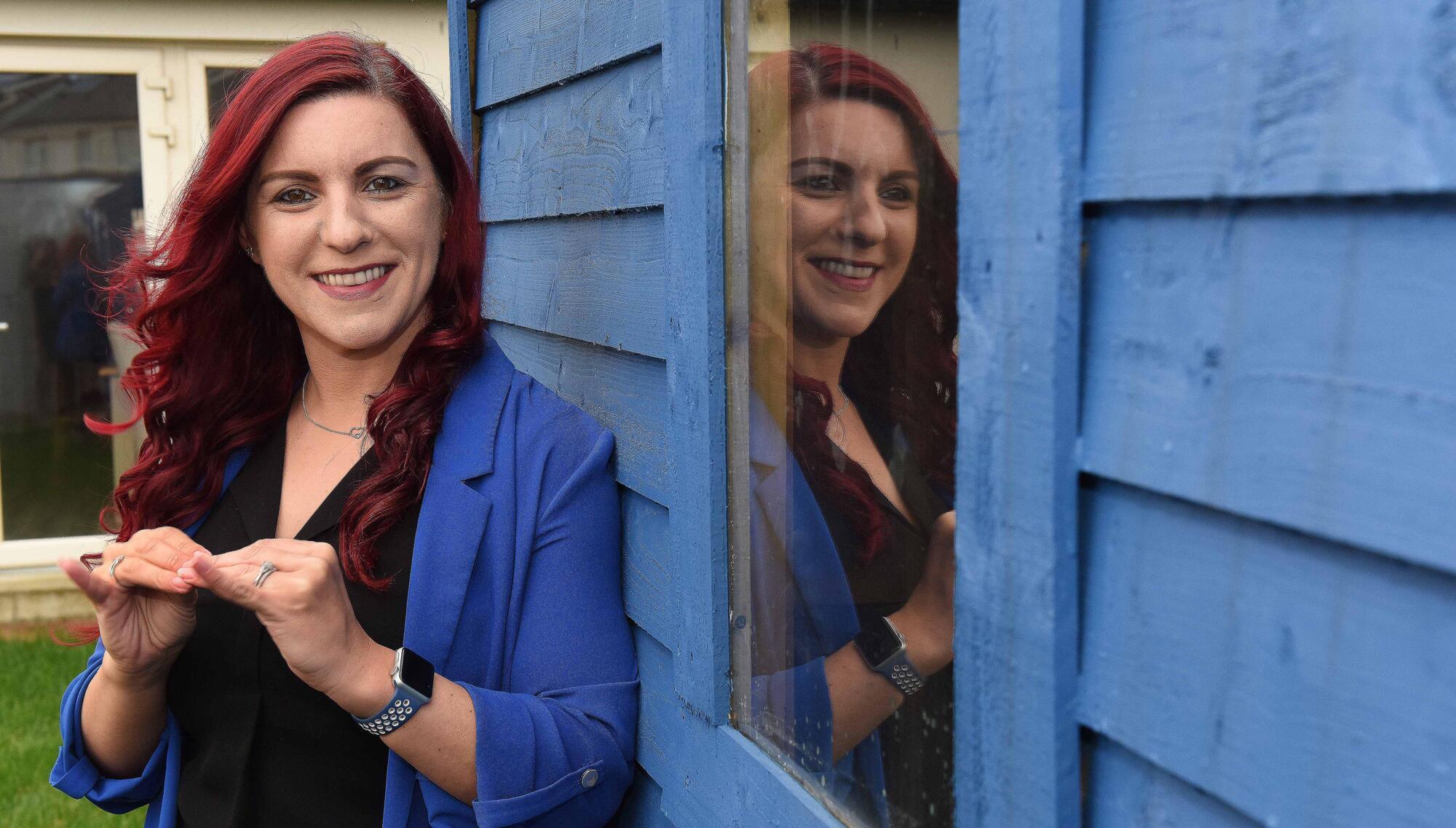
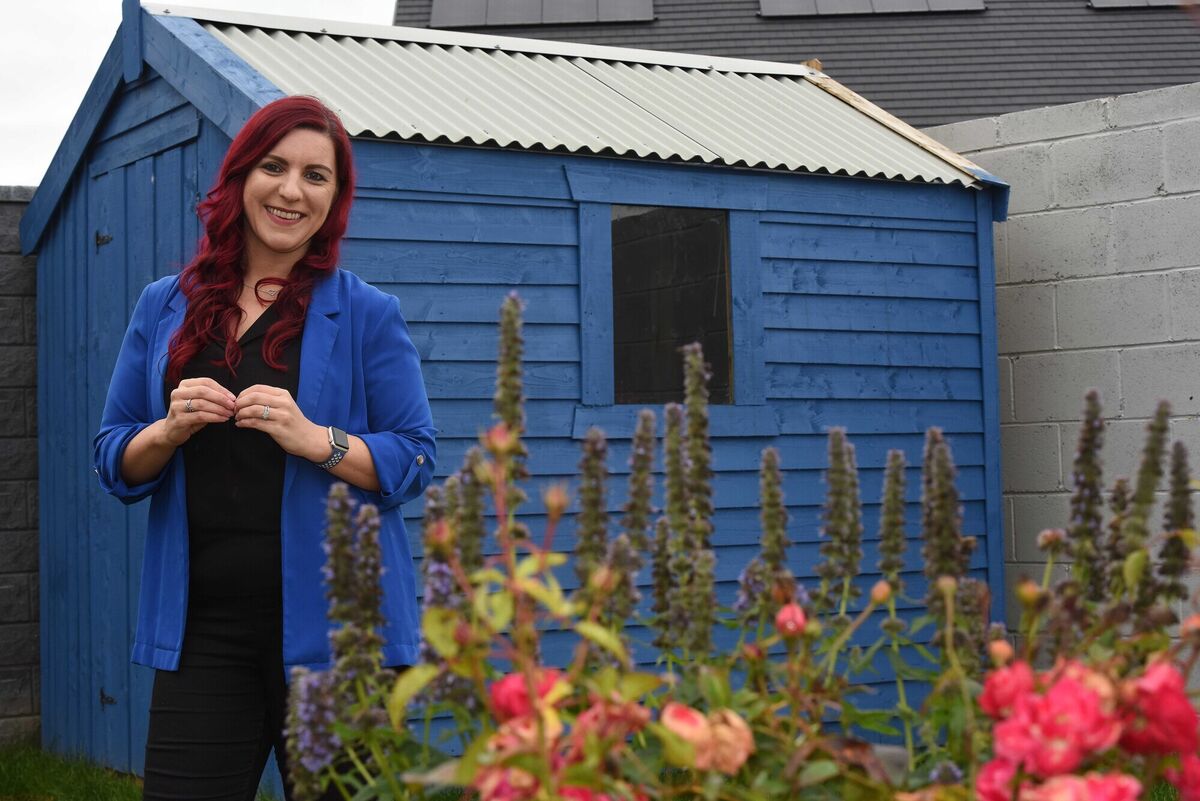
Lisa Harvey was interpreting a speech by the Taoiseach on live TV when she learned she would have to postpone her wedding.
UNTIL recently, many of us may not have paid much attention to press conference interpreters. That’s because until Covid-19 hit, they were largely unseen.
In fact, there weren’t any Irish sign language interpreters present for the initial pandemic briefings.
“The pandemic has raised so much awareness, but it would never have happened without lobbying from the deaf community,” says hearing interpreter Lisa Harvey.
“It took a lot to get us up there [on the daily NPHET bulletin] and while it was sorted in a short space of time, it wasn’t a given that interpreters were needed initially.”
This may seem surprising, as there are more than 5,000 deaf people in the country communicating through Irish sign language, which has been recognised by the Government as one of our three national languages since 2017.
“We’ve moved to a point now though where people are starting to notice when there’s no interpreter present,” Lisa says.
“And by the end of this year, there’s going to be legal grounds — the Irish Sign Language Act — coming into effect, for us to be there. We’re finally becoming part of the furniture.”
Lisa is a hearing interpreter, whom you might recognise from the televised briefings in recent months.
In Ireland, a hearing interpreter is usually someone who has grown up with English as their first language. Later in life, they go on to learn Irish sign language or ISL, and become qualified to become an interpreter.
There are around 120 hearing interpreters in Ireland currently. However, there are only five deaf interpreters.
Teresa Lynch is one of those five. She is also a professor at the Centre for Deaf Studies, the chairperson of the National Deaf Women of Ireland, and a founding member of the Council of Irish Sign Language Teachers. I ask Teresa via Zoom if she ever sleeps.
She squishes her fingers together in front of the screen and laughs.
“A little bit,” our interpreter Susan Cave tells me, who is also on our Zoom call.
“The idea of an interpreter seems like such a new phenomenon, but it’s not, we’ve been around since 1646,” says Teresa.
“But we have to rely on English to record the history of our language and they’re completely different languages.”
Teresa travels around the country, working with hearing interpreters to make sure there are no communication barriers for people who have limited sign language.
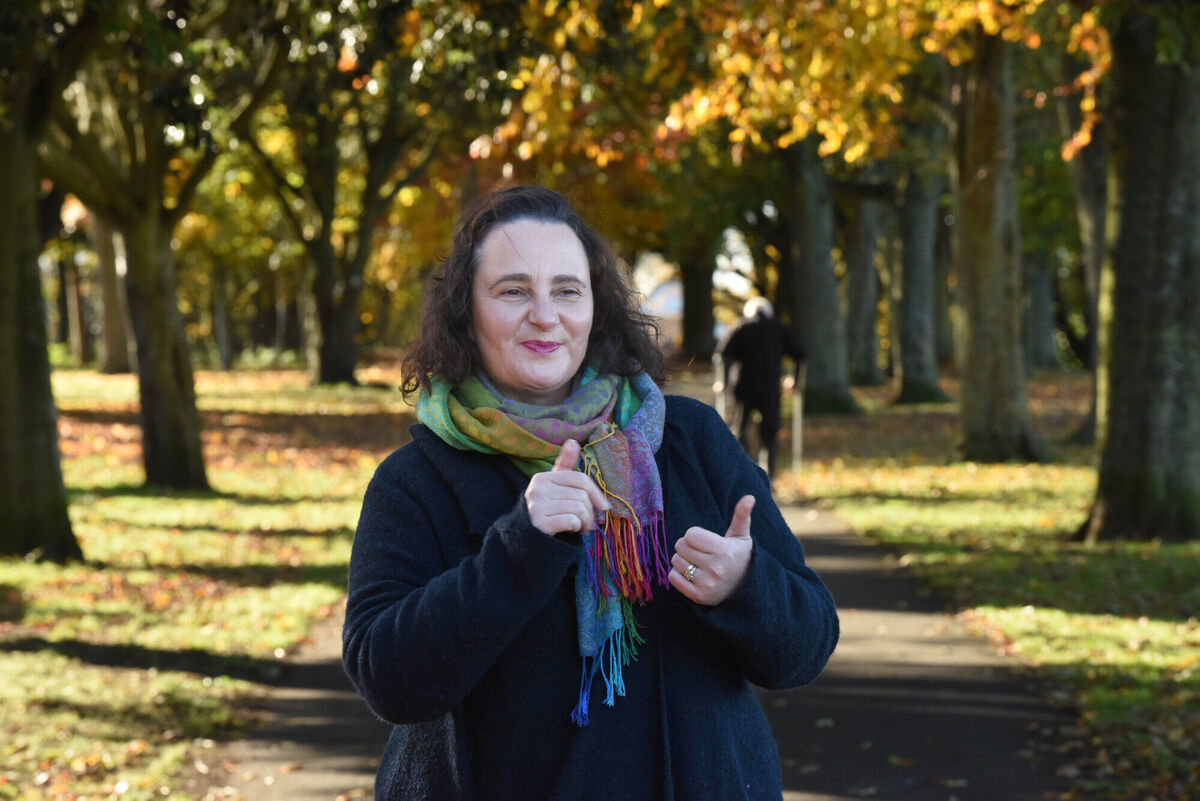
“Maybe it’s a deaf person who lives in the country and their ISL is diminished because they’re isolated, or someone who has just moved to Ireland and might not know our sign language,” says Teresa.
“I can relate to that person. I can use facial expressions and my body in different ways to understand what that person is trying to communicate.
“As deaf people, we have a shared life experience, a shared language. We can support deaf people in other ways.”
Deaf interpreters are especially important for people who are blind and deaf, says Teresa.
“They may be able to articulate through ISL, but how do they understand me? How will they know that I’m,say, nodding? By doing this,” she says as she taps on her shoulder, the sign for nodding.
Susan, who is part-owner of Bridge Interpreting, says that being deaf is a lived experience.
“I’ve seen deaf interpreters at work and it’s beautiful,” she says. “I just watch and think ‘I could never do that as well’.
Bridge Interpreting is the main sign language interpreting provider in Ireland, with about 70 team members.
“I’m so proud that we’re considered to be a part of this community,” Susan says.
“How quickly we gravitated towards each other once lockdown began to make sure everything was accessible was amazing. We pulled out all the stops and the response has been great.
“People are getting it, they’re seeing how important it is to have interpretation and that’s been the positive side of all this.”
I ask Teresa if she can summarise the history of Irish sign language up until the pandemic.
She takes a deep breath.
“In the 1850s there were two deaf schools established in Cabra, boys and girls. They were only a 10-minute walk from each other but weren’t allowed to meet. So, they each developed their own ways of signing,” she says.
“The grammar, structure, and use of facial expression were similar but there were variations, like the signs for the days of the week.
“Then in the 1950s, signing was banned in schools, and oralism was introduced as the way of teaching.
"I went through that system and it was tough, really tough. It was impossible to lipread what the teachers were saying, 80% of that is guesswork.”
To illustrate her point, Teresa asks me to lipread what she's saying, just to experience a morsel of what it feels like.
I can’t tell if she’s saying mat, math, or bat. I give up within seconds.
“Those in authority felt that deaf people should be able to talk and that they would be better off in society if they could,” Teresa says.
“We were encouraged to wear hearing aids, and for hours and hours, they would try to teach me how to say my name, but I couldn’t hear it.”
According to Teresa, because of the assumption that deaf people could speak, other aspects of her education were cast aside.
“We still couldn’t speak, and our confidence just dissipated,” Teresa says.
“Finally, it’s now being recognised that ISL isn’t a tool, it’s our language and culture. This is our space in the world where we can communicate. We’re very proud of our language and we want to protect it.”
After years of campaigning, the Irish Sign Language Act was signed into law in 2017.
The act, which comes into full effect next month, recognises the importance of the language, aiming to preserve it and widen the presence of interpreters.
Yet, even though 40,000 people know the language in Ireland, there are only around 120 hearing interpreters available, compared with Finland's 400 for a similar population.
Highlighting the importance of interpreters may be one of the few silver linings of the current pandemic, says Teresa. “Imagine if you had 5,000 deaf people in Ireland who didn’t know what was going on in the news, wandering around, not following protocols," she says.
“Not everyone can understand the subtitles. With an interpreter present, we’re equally informed and that’s extremely important.”
Soon after the interpreters began to communicate at the NPHET briefings, the Irish Deaf Society set up a group to create signs for all of the new words popping up, such as ‘lockdown’ and ‘coronavirus’.
Lisa says that this committee, which Teresa is a part of, has been a huge resource for her colleagues.
“We’re on a screen dealing with very high pressure, fast-flowing information,” Lisa says. “We don’t have time to explain certain phrases.
“Now, when a phrase keeps coming up we can tell the committee and they’ll create a definitive sign for it and get an explainer out.”
When Lisa agreed to do her first Covid-19 press conference nine months ago, she had no idea she would still be on TV months later.
“We usually get the press release about five minutes before a briefing, the same as the news outlets,” says Lisa. “Most of the time you don’t get enough time to read it.
“We try to listen to the news throughout the day and keep each other posted to avoid huge surprises, like the name of a new drug we mightn’t recognise.”
There are usually two interpreters present for Covid briefings, who switch out every 15 minutes to ensure the quality of the interpreting.
“You’re concentrating so hard and it’s so fast-moving. It does wane,” Lisa says. “It’s just the nature of the work right now.”
In May, while Lisa was interpreting a speech by the Taoiseach, she learned on live TV that she would have to postpone her wedding.
“I was meant to get married that day,” she says. “I had postponed the wedding already and while he made that announcement I was just standing there thinking: ‘Not again'.
“But that’s the job. You have to put on a professional front because it’s not about me, it’s about getting the information out there.”
Lisa finally got married in October and on her first day back to work, she received a surprise in the post: a congratulations card from Taoiseach Micheál Martin.
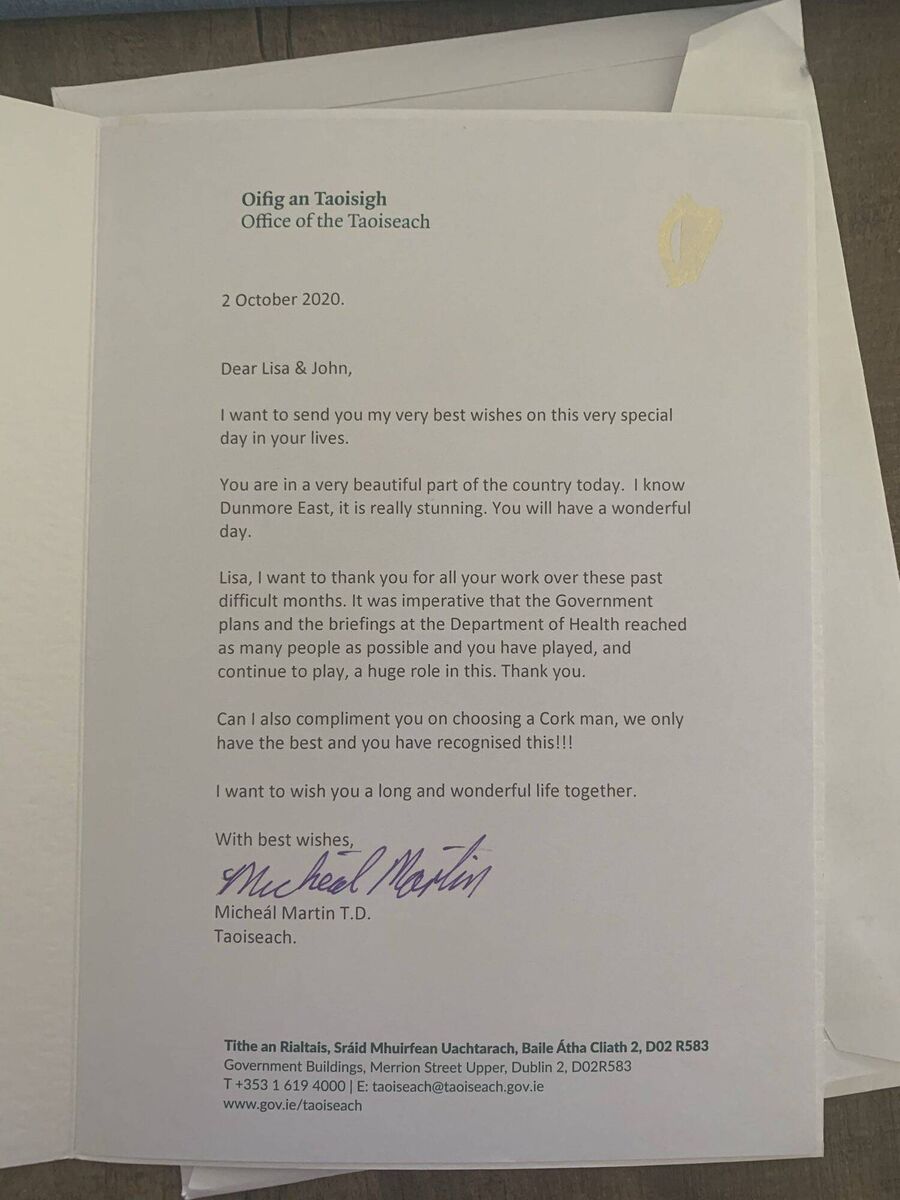
“It was a lovely touch,” Lisa says. “For someone like that to recognise the power of the work we’re doing, and that this community is getting access to information that they have every right to, is great."
"There’s still circumstances where we’re not there though and the community is still fighting, but it’s a lot better than it was before.”
— this article was first published in November 2020
CONNECT WITH US TODAY



Be the first to know the latest news and updates