Movember: Why men need to be aware of prostate cancer warning signs

Picture:iStock
FORMER Irish rugby international Tony Ward has no problem admitting he’s a typical man.
For about 18 months when he was approaching his mid-50s, he needed to go to the loo more often – he’d be in town and have to nip into a shopping centre to find a toilet.
“I put it down to an element of ageing. I thought: 'Ah I’ll be fine – I’ll deal with it next time I’m at the doctor’s'. Men are useless – they don’t want to talk about anything that shows vulnerability. They brush it under the carpet, but life doesn’t work like that,” says the now 66-year-old.
By the time Tony got to his GP his PSA (prostate-specific antigen) levels were “through the roof” and the doctor knew immediately the prostate shape had changed. “He suspected it was something even before the results came back.”
It was in fact advanced prostate cancer and Tony says he didn’t help himself by delaying getting checked. But he considers himself fortunate. “The cancer hadn’t [extended from] the prostate into the rest of my body. It was just short of that – I was lucky I went when I did.”
Men’s reluctance to acknowledge and open up about their physical and mental health – about any emotional challenges they’re facing – is what leading charity Movember has been working to address since 2003. Aiming to change the face of men’s health on a global scale, Movember encourages men to stay healthy in all areas of life, with a focus on staying socially connected and becoming more open to discussing their health and significant moments in their lives.
What Movember Ireland director Jack O’Connor calls “our moustache-themed bat signal”, this year’s campaign, Lockdown – Shave Down – Get Down, is calling on people to sign up, grow a mo (moustache) or take on the Move challenge: to walk/run 60km during November - 60 being the number of men lost to suicide every hour globally.
About 10,000 people so far have signed up for the 2020 Ireland campaign and 90% are growing moustaches. “There are Mo sisters – lots of them, women with dads, husbands and brothers, men in their lives who they want to live longer, so we want to give women something to do too and that’s the Move challenge,” says O’Connor.
The pandemic impact – physical distancing, social isolation, job loss, financial instability and all-round uncertainty – has caused many men to experience increased loneliness, isolation, financial stress and uncertainty about the future. “It just reinforces the need to take care of each other,” says O’Connor. “The key is connection, checking in on each other, knowing the signs of someone who’s struggling and knowing how to reach out.”
He cites an example of a programme Movember fast-tracked with Covid-19 onset this year, all to bolster social connections: Movember Conversations is a digital resource developed by mental health experts for those wanting to feel confident and informed when navigating important conversations with a friend who’s struggling.
“The resource guides you through typical scenarios and teaches conversation prompts that open-up conversation and keep it flowing meaningfully. A few thousand people signed up during lockdown, wanting to learn the best lexicon to use in these conversations,” explains O’Connor, who says it’s all about helping people who notice a friend’s a bit off – maybe they’re normally a chatterbox in the Whatsapp group and suddenly they go quiet, or perhaps they’re usually laid-back and all of a sudden they’re biting the head off everyone.
“Character changes are a big indication. Many guys might notice something isn’t right with someone – but not know how to go about helping. With Movember Conversations, we want to help in early preventive stages.”
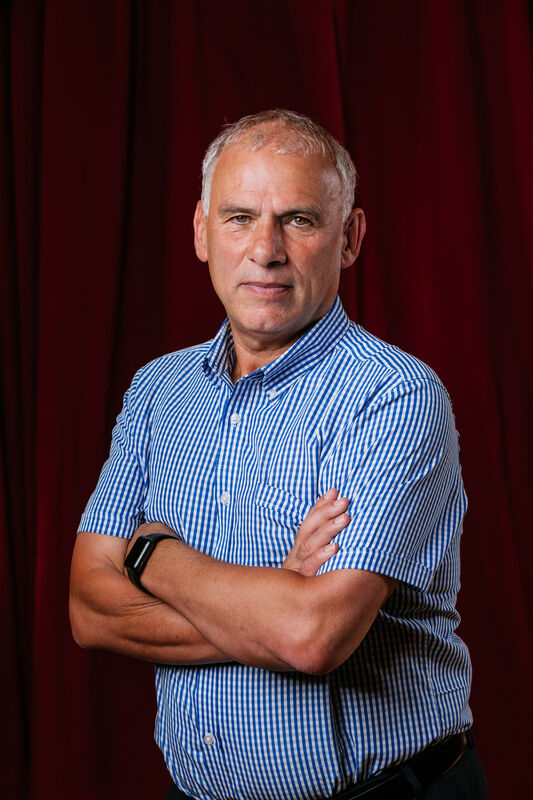
At Marie Keating Foundation, director of nursing Helen Forristal says the organisation works a lot with Men’s Sheds Ireland. “They’re not coming together now because they’re a vulnerable group – a lot are aged over 70. And they’re resource-limited – they don’t use digital technology so much.”
She sees these pandemic-challenged, restriction-bound weeks as a time to be strong, to look out for each other. “The evenings are drawing in, the days shorter. It’s a lonely time but we all have phones. We can call and check in on each other – ‘How are you? I’m thinking of you. Is there anything I can do?’”
She has the same concern for men’s physical health as O’Connor expresses – “because of Covid, a lot of people aren’t going to the doctor: how many undiagnosed cancer cases will we be looking at in 2021?”
Forristal says Marie Keating Foundation aims to ‘make cancer less frightening by enlightening’. She urges men to know their body, to visit the doctor if they see/feel any changes. “The fear during Covid is that men may stand back, not want to bother their GP. We’d encourage them to phone the GP, talk through what they’re experiencing – the GP will then decide whether they need to be seen.”
Topping the list of cancers affecting men is prostate cancer – almost 3,700 are diagnosed with it annually in Ireland. It often doesn’t have any symptoms and, if detected early, has a 93% five-year survival rate. “Men, at a certain age, may experience prostrate-related problems: getting up more at night to go to the toilet, feeling they haven’t completely emptied their bladder or wanting to go but hesitating when they get to the toilet,” says Forristal, adding that such symptoms should be checked out with – as a first step – a phone call to the GP.
Bowel cancer’s the second most common cancer affecting men in Ireland, with over 1,700 cases diagnosed annually. Blood in/on the stool, unexplained weight loss, pain in rectum/deep in back passage or feeling of not having properly emptied the bowel all flag up a potential problem.
Testicular cancer’s less common – about 180 cases a year. It usually strikes between age 15 and 34. “With a 97% five-year survival rate, it’s extremely curable when caught early. We educate Transition Year students about it – they’re often unaware it’s a cancer they’d be at risk of,” says Forristal.
The red flags for testicular cancer include: lump in testicle, sore/painful testicle or dragging sensation. Forristal encourages all men, once they’re 50, to get a yearly check-up and, in the case of prostate cancer, to get both the physical examination and the PSA blood test.
Meanwhile, Tony Ward has been keeping on top of his prostate health ever since he had brachytherapy to “blow the tumour to smithereens” back in 2012. But even then, feeling “quite tired” after radiotherapy, which he got over a six-week period, he kept trying to do “bits and pieces” of work. “Instead of doing the logical thing and lying down, I was fighting it – absolute madness. I learned quickly you have to roll with it.”
He had a polyp removed from the prostate area last November and is due to undergo a uroflow test (measures urine flow) to check for lesions after last year’s operation. “You just have to continually stay on top of it and get checked out,” he says.
Now living in Greystones, he’s a convert to sea-swimming since July. “It just blows me away. I’m one of those people who’d go to the Algarve every year and never in a million years get in the water.
“I have these couple of minutes before I get in the water when I think ‘oh God, do I want to do this?’ But because I know how I’ll feel when I do get in and get out again, I just do it.”
Whatever life throws at him, it’s about being positive, giving it his best shot. “It’s a matter of applying this philosophy: I have a big match and in the second half I’m playing uphill against the wind. I still do that even if I get bad news.”
Have your razor ready to join Movember Ireland live tonight at 7:15pm, Friday, October 30, for the big virtual community Shave down via Zoom. Full of beardy banter, hairy chat, and moustachioed musings, men will get together to say goodbye to full-face foliage and hello to hairless chins, all to welcome some top lip topiary in the name of men’s health.
Men are asked to invite friends to support their shave down efforts by sharing their progress on social media – film it, snap it, share it. Do tag Movember and use #Shavedown
Afterwards, join Movember Ireland on Zoom or Facebook Live for late-night get down party, a reward for the shaving efforts – there’ll be comedians, a quiz and more. Sign up at ie.movember.com.
Visit www.mariekeating.ie/standupforyourprostate/ for information and support on prostate cancer.
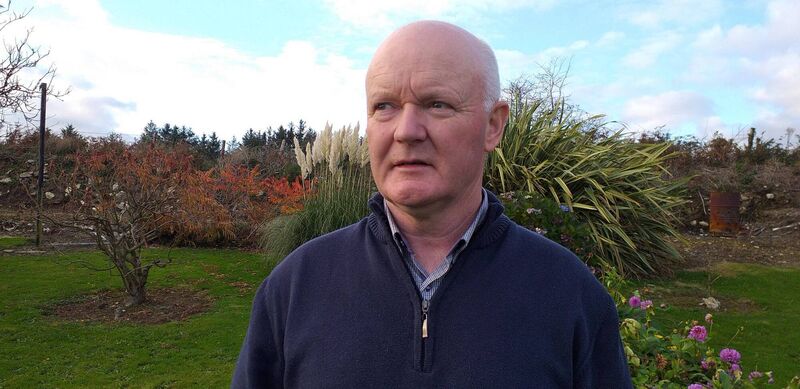
Following a routine work medical in 2015, dad of two grown-up daughters Paul Power discovered his PSA levels had risen a little.
He went to his GP, who did an internal examination, saw nothing alarming and suspected prostate infection. “To be on the safe side, he suggested I see a urologist,” says the Co Waterford-based 57-year-old Glanbia worker.
The urologist also thought ‘infection’ and prescribed antibiotics for five weeks, after which Paul’s PSA had again risen slightly. “I insisted on further investigation. My nature is: if there’s a problem get it sorted.”
MRI showed a grey area on the left side of the prostate and subsequent biopsy found a tumour developing on its inner side. Paul’s wife, Eileen, had accompanied him to the appointment that delivered this news. “It was a shock but I was a little prepared. In the back of my mind, I’d gone down that road, that there was definitely something with the PSA rising.”
While his consultant recommended monitoring the growth and treating it accordingly over time – “he wanted to be sure I’d do the right thing because of [possible] side-effects [of surgery]” – the option of robotic surgery strongly appealed to Paul. “I wanted it taken out – because of all the people I’ve heard of having prostate cancer and they were monitoring and treating it and it never went away. In a lot of cases it caught up with them – they got 10 or 15 years and it was back again.”
Reassured there was a 95-99% chance surgery would get all the tumour, though there was a risk some cells might escape, Paul had robotic surgery in May 2016. “They got it all out. The consultant said down the line I might need some radiotherapy.”
In 2018, Paul’s PSA levels began climbing slightly again. Monitored every six months, his consultant opted last January to book him in for a scan, which Paul soon discovered wouldn’t happen until August. Told of an option to go to Heidelberg University Hospital in Germany where he’d get the scan done promptly – though he would have to finance it himself – he went home and discussed it with his family. “I felt it was best to know. I’d been told there was only a 50% chance they’d detect anything because the PSA rise was so minute.”
Paul flew out on a Sunday night, had the scan at lunchtime next day and got the results in two hours. “The scan showed up nothing.”
While Covid-19 cancelled his review appointment in Ireland, his consultant felt it was time for some radiotherapy to eradicate any cancer. Paul’s now over two-thirds through 35 sessions of radiotherapy.
Life’s for living, he says. “I’m positive. When you’re in a pinch, you just keep going. I’m always looking for the solution. Glanbia has been tremendous – the company gave me seven months off after the operation. I requested a three-day week, which I now have. I do bit of farming – I rent some ground. I’m interested in machinery and I do a few acres of hay for sale,” says Paul, who also trained as a facilitator for Marie Keating Foundation Survive and Thrive programme.


CONNECT WITH US TODAY



Be the first to know the latest news and updates