Sky Matters: Get ready to see the five naked eye planets
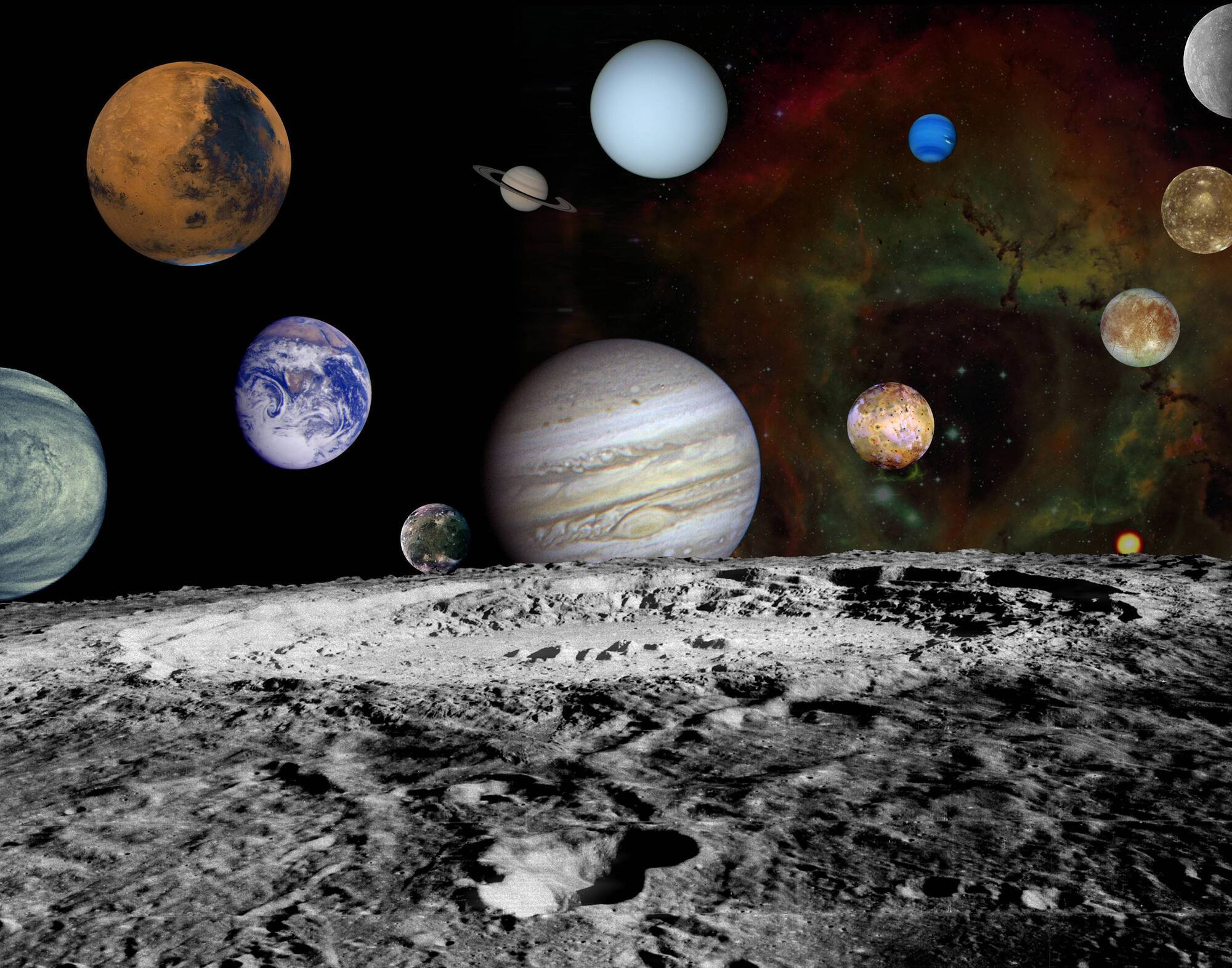
The month of November is a great time to see the five naked eye planets (Mercury, Venus, Mars, Jupiter and Saturn) and all at quite reasonable times of the evening or morning.
Just after dusk the planet Mars makes an appearance in the east. There’s nothing to rival its brilliance at the moment and its deep red hue is unmistakable, a colour that comes from oxidized iron (the equivalent of rust) which covers much of its surface area. Mars will be visible throughout November, so don’t miss it, and don’t worry that you may have missed it at its very brightest in early October – it will still be a spectacular sight.
Around the same time, to the west, the giant planet Jupiter starts to show and then as dusk deepens the fainter planet Saturn becomes visible to the east of Jupiter, about a hands-width away. Recent theories of these two planets suggest they might have played a crucial role in the formation of our Earth and even assisted with the evolution of life. When the Earth was first formed Jupiter, because of its enormous size, may have flung water-laden comets and asteroids in our direction from the depths of the emerging solar system, helping to fill our oceans that at that time were empty. It may have diverted asteroids large enough to cause mass extinctions, perhaps even the asteroid that killed off the dinosaurs. And on top of that we think that some 4.5 billion years ago Jupiter and Saturn were once much closer to the Earth, the net effect of which was to stop the Earth from growing further, leaving us at just a nice size and distance from the Sun so that liquid water could exist, and water is a crucial ingredient of life. For Mars, however, the even closer proximity of Jupiter and Saturn may have so stunted its growth that it never developed enough gravity to hold onto its atmosphere. The long-term consequence of having no atmosphere is a planet devoid of any form of insulating blanket, which inevitably leads to permanently freezing temperatures making the evolution of life even more challenging, irrespective of whether it got a foothold in the first instance. It’s a runaway greenhouse in reverse. The real winner in this cosmic tussle was the Earth, so as you gaze at Mars and Jupiter (and Saturn) you might give them a knowing nod and a silent thankyou.
Turning to the morning sky, the planet Venus is the brightest object throughout November. Much less bright, about 70 times less bright, and closer to the Sun is the planet Mercury. On the 14th of the month Venus, Mercury and the Moon will lie in a straight line (Mercury in the middle) and this may be the easiest time to pick out Mercury which is normally elusive as it continually skirts close to the glare of the Sun. It is dangerous to look at Mercury with a telescope or binoculars if you are inexperienced, as you could inadvertently point at the Sun and could be blinded, so please exercise extreme caution at all times.
We are lucky in November that the peak of the Leonid meteor shower occurs on the evening of the 16th and morning of 17th with a crescent Moon setting early in the evening, leaving dark skies with ideal conditions for seeing some of the fainter meteors (weather permitting, of course!). The Leonid’s come from the dust left by the comet Tempel-Tuttle and although they can be incredibly spectacular we expect this year to be able to see a relatively modest 15-20 meteors per hour. That’s still worth heading outdoors to view from a dark site with a nice cuppa and NO mobile phones to destroy your night vision.
Further information on what you can see in the night sky, complete with maps, is available from the Blackrock Castle Observatory website at https://www.bco.ie/sky-matters/.
CONNECT WITH US TODAY



Be the first to know the latest news and updates