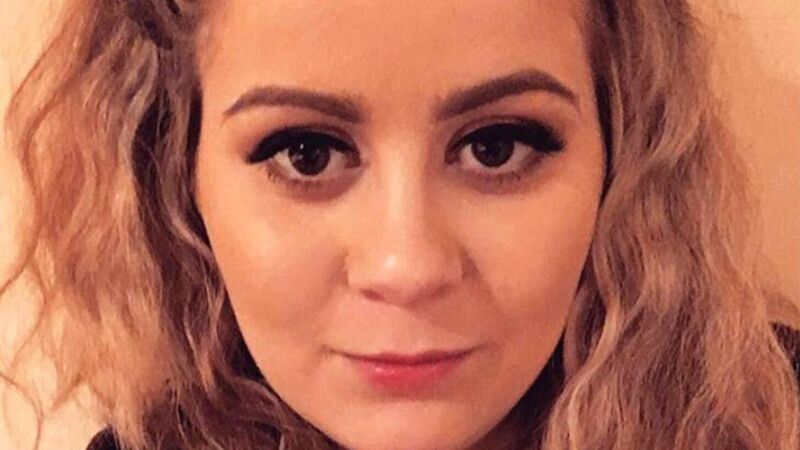
WHEN Nicola Wall was diagnosed with schizoaffective disorder, a chronic mental health condition characterised primarily by symptoms of schizophrenia, she took to her bed for days, feeling like her life had ended.
She combed the internet for personal stories of the illness, to see if there was anyone or anything that could make her feel positive about the diagnosis.
She found a documentary on YouTube from the 1980s about schizophrenia where the contributors described how the voices they heard told them to kill people. This was not reflective of the illness she had experienced and the sensationalist treatment of it terrified her. However, almost a decade later, from that place of hopelessness and desperation,
Nicola has become the person she needed back then, someone who has learned to live with the challenges of her condition and who fights the stigma of mental illness. She has also realised a long-held ambition, to write a compelling and powerful book reflecting her experiences. Added to all of this, she is a mum to a son, Danny, almost two, and is expecting a baby girl in November.
“I was pregnant and then I had a newborn when I was writing the book. It was hard at the time but I’m glad I did it, I had a great sense of achievement when it was finished,” says Nicola, 31, who lives with her husband Kieran in Dungarvan, Co Waterford.
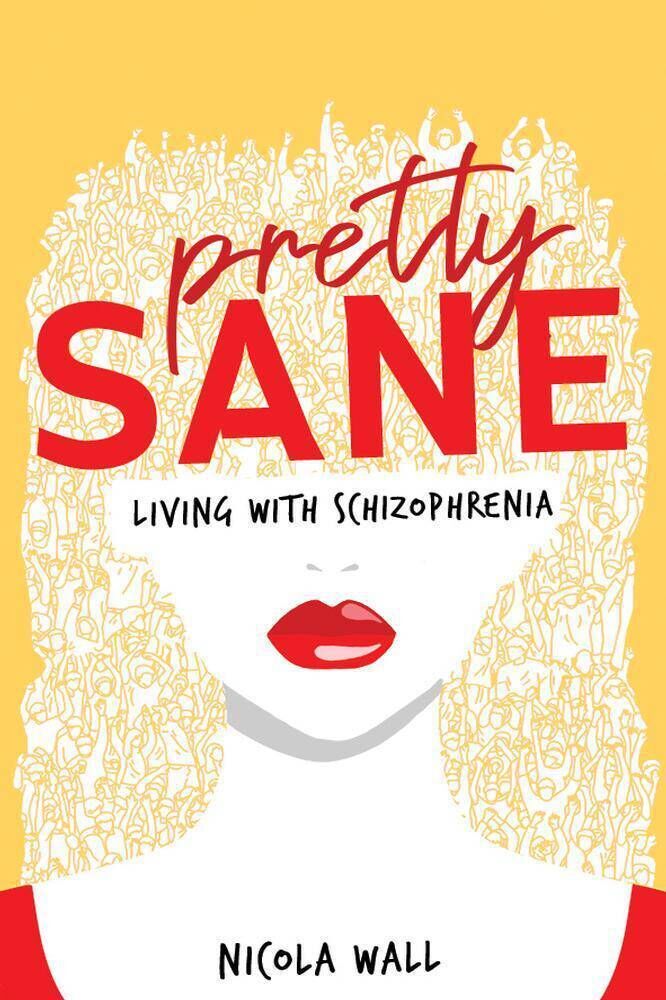
While Nicola has participated in an RTÉ documentary about schizophrenia, written a blog about her experiences and appeared on the Late Late Show, writing the book, titled Pretty Sane, was a daunting prospect.
“It was on a whole different level from everything else. I shared far more than I usually do, a lot more details about voices that I thought I would never share, I was definitely nervous about people reading that,” she says.
TAKING CONTROL
The voices that Nicola heard growing up have dissipated somewhat in recent years, and now she mainly experiences noises. The dominant voice throughout has been ‘Freddie’ who is featured in the book.
“I put Freddie in the book, which was a big decision. People would always ask, ‘what do the voices say?’, when I would do interviews and it’s such a loaded question. You can’t answer it really quickly. I put him in the book because I wanted to show this is basically what it sounds like.”
Nicola writes about how Freddie can be “awful” but never harmful towards other people: “He says appalling things about people sometimes, but he never suggests anything violent. The bad voices only ever suggested I hurt myself, never anyone else.”
Nicola says that she heard the voices from such a young age that she always thought it was normal. “To me, the fact that other people don’t hear voices, I can’t get my head around that,” she says.

While it took a long time for her to receive an actual diagnosis, the acknowledgement was a source of relief to her. “It gives you
knowledge and knowledge gives you the power to take some control of your condition,” she says.
Nicola has had to deal with many challenges in her life, including a suicide attempt before her leaving cert exams, but she says the greatest difficulty she faced was when her mother died, when Nicola was in her mid-20s.
“Losing her at the age I did was really hard. It was before I got married and had my baby, she missed all of that. That definitely had the biggest impact, learning to live without her.” she says.
Nicola is not on medication and has found talking therapy valuable in helping her to live with her condition. However, she has found it difficult to access and is currently not seeing a therapist.
“Having someone to talk to on a regular basis was the most helpful thing. I can’t afford it right now... It is the kind of thing we save up for, it is not something we can get at the drop of a hat.”
EMBRACING MOTHERHOOD
Becoming a mother has been a positive change in Nicola’s life.
“It is the best thing that ever happened because it gives me a focus. It has given me more of a will to live that I never had before. I wasn’t actively suicidal but I didn’t have that will, that desire to be here.
As soon as I was pregnant with my son, I was like ‘I want to live into my nineties now, I want to be here for the long haul’. It has given me a different kind of perspective of how good life can be.
However, Nicola has struggled in her current pregnancy with the limitations imposed by Covid restrictions, and believes they need to be reviewed due to the negative effects on maternal mental health.
“A supportive birth partner lowers stress levels, helps labour progress and improves the outcome for mother and baby... I went to my first scan alone, the first appointment and the one after that, and the next one and so on. This was incredibly hard with what I have but I’ve been as brave as I can possibly be and never complained. I understand why these measures had to be put in place but with just a few weeks to go until my due date, I am so disheartened by how we have been forgotten about,” she says.
For now, Nicola is looking forward to the new arrival and taking one day at a time.
“When I first got diagnosed, I thought my life was over. It doesn’t have to be the way it is in the movies, where you are going to spend your life in and out of hospitals, it is possible to be happy with it and live alongside it.
“Looking back now, I would tell myself that it’s all going to be fine, it just takes time, work and effort. Every single day I wake up, it might be a good day or a bad day. The good days are worth it. I wouldn’t ever say it’s easy but it is definitely worth it.”
- Pretty Sane, by Nicola Wall, published by Mercier Press, is out now.
CONNECT WITH US TODAY
Be the first to know the latest news and updates