A pain in the head: why migraines are on the up during Covid-19
Silhouette of woman sitting in bed by window
Migraine is Ireland’s fifth leading cause of disability, affecting almost one in eight people, according to the Migraine Association of Ireland. Any change in routine can cause distress for those suffering regular migraines, and common triggers like stress, anxiety and particular food are likely to creep in as we find ourselves navigating our 'new normal'.
Those who suffer regularly from migraines are experiencing more frequent and severe occurrences since the onset of the Covid-19 crisis, says a new survey conducted by the Migraine Association of Ireland.
Conducted alongside pharmaceutical company Novartis, and coinciding with Migraine Awareness Week (September 6-12), the survey was carried out online via a sample group of 120 adults living with migraine in Ireland.
Despite the fact that lots of us suffer with them, migraines remain a misunderstood and under-managed condition, and the rise in incidences among sufferers is a worry given the prevailing circumstances, according to Dr. Martin Ruttledge, consultant neurologist at Dublin's Beaumont Hospital.
58% of survey respondents reported suffering from more frequent migraines, while 69% of the group stated that their symptoms of migraine have become more severe since the pandemic began. Of that 58%, 84%, said that this was due to stress caused by the Covid-19 pandemic.
"It’s worrying that the survey shows that many migraine sufferers are either experiencing more severe or frequent migraines," he says.
"However, it is not unexpected, as we know that stress is a very common exacerbating factor in this condition, and it has been a very stressful period for everybody over the last 4-5 months with the Covid pandemic."
Factors for triggering increases in migraines also included changes to their routine (67%), a lack of sleep (63%) and increased screen time (60%). Over one-third of those suffering further with migraines were working from home, 21% said that their working hours had increased during the pandemic, and 20% were no longer working.
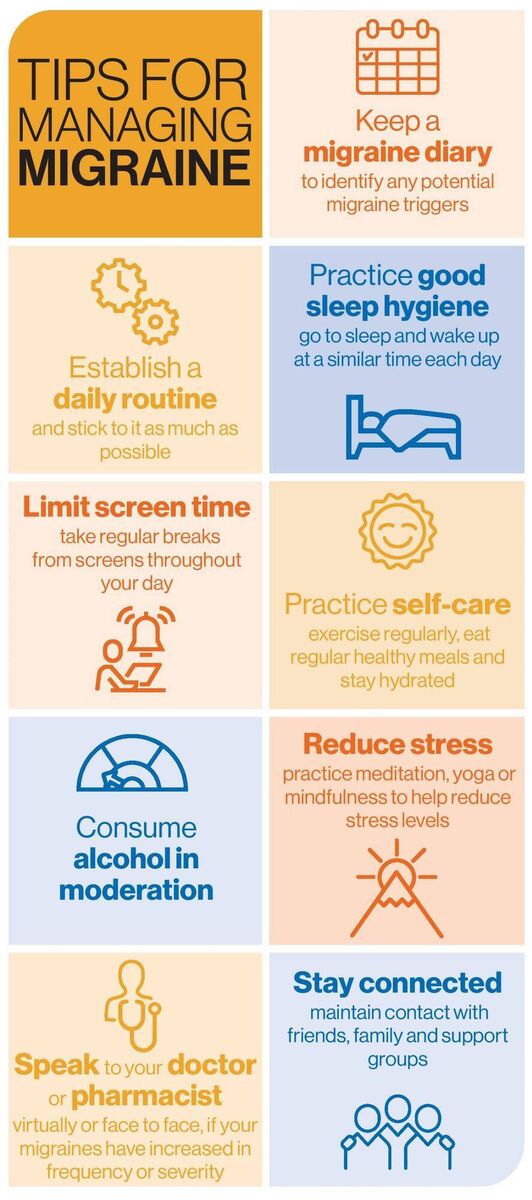
So, what can we do?
- Keep a migraine diary - identify any potential triggers and make a note of how they affect you
- Establish a daily routine - and stick to it as much as possible
- Practice good sleep hygiene - go to sleep and wake up at a similar time daily
- Limit screen time - take regular breaks from your phone, TV or desktop during the day
- Practice self-care - exercise, eat healthy meals regularly, and stay hydrated
- Consume alcohol in moderation
- Reduce stress - try yoga, meditation or mindfulness
- Stay in touch - maintain contact with friends, family and support groups
In light of the Covid crisis, 52% of respondents to the survey said that appointments with their healthcare professions were cancelled or postponed since the start of the pandemic, while 49% of respondents who experienced an increase in migraines reported cancelled or postponed appointments.
A complex neurological condition, migraine affects approximately 12-15% of the Irish population, approximately half a million people. It is Ireland’s fifth leading cause of disability, and while it affects people of all ages, migraines are three times more common in women than in men.
"Migraine, especially the more chronic forms, can be a very disabling neurological disorder," says Dr Ruttledge, and the worldwide uncertainty in recent months has only made the situation worse.
"Patients should seek advice from their primary care doctors and other healthcare professionals if they are struggling. We are still having face to face and virtual consultations in our migraine clinic, and many GP's are reviewing their patients regularly, both in person and by phone.
"There are effective treatments available for many migraine sufferers and we are still available for our patients."
CONNECT WITH US TODAY



Be the first to know the latest news and updates