Whisky fan? Training your sense of smell is a crucial skill
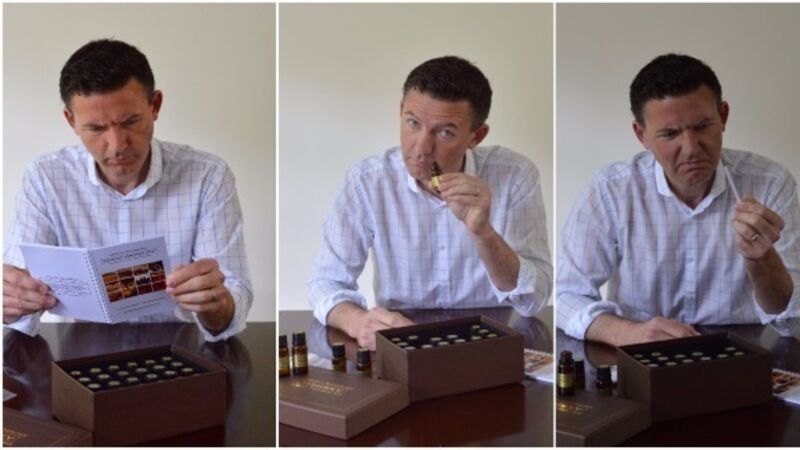
So you’ve decided to become a whisky geek. You’ve tried a few brands, learned the lingo (arcane terms like dram, NAS, cask-strength), the science (you know the difference between a washback and a Lyne arm) and the history (the two Aeneases, Coffey and MacDonald), and have even bought a tweed blazer in Penneys so you look the part. But there is one part of whisky fandom hard to perfect; an innate sense that cannot be trained via reading alone - your sense of smell.
Of all our senses, smell is probably the one we value the least. If forced to pick one to jettison, it is hard to imagine someone binning their ability to see or hear in favour of smell, but it is in its subtlety that its power lies - apart from enabling us to avoid danger, evolutionary biologists suggest that it also helps us recognise family by scent, and thus avoid inbreeding. It should come as little surprise that the part of the brain that controls memory and emotion also processes our sense of smell. How we perceive aromas is often guided by our life experiences. But there are some elements of scent that we can be completely objective about - and whisky carries many of them. As the most complex spirit in the world, whisky can be a tough sensory code to crack. How do you train your senses to pick out the key notes? It turns out, much like you can train individual muscles, you can teach your brain to isolate and identify a few of the elements most identified with what should be our national drink.


CONNECT WITH US TODAY



Be the first to know the latest news and updates