A love affair with film
TO own a villa on top of Beverly Hills, where millionaires’ mansions are as commonplace as trees, is a yardstick of success among the Hollywood film fraternity.
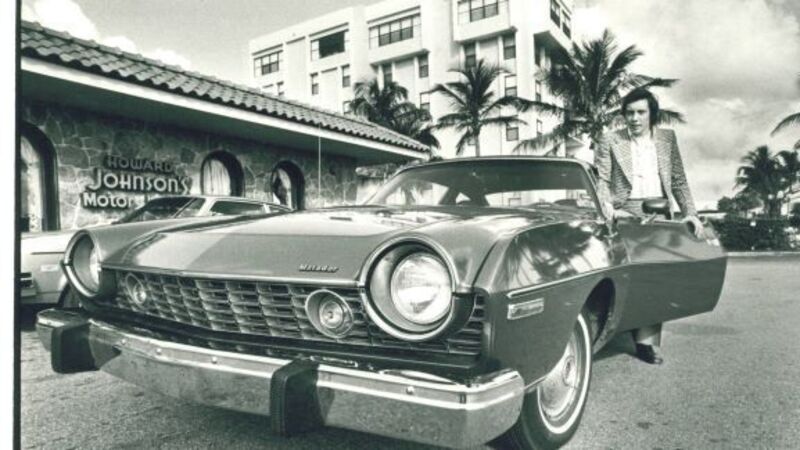
In 1975, I was working for the National Enquirer newspaper. I lived in the Howard Johnson Motel. Wherever I went, I searched for an Irish connection. Working in LA, I was introduced to Michael O’Herlihy at the Beverly Wilshire Hotel. Michael was a film and television director, best-known for episodes of Hawaii-Five-O, Maverick, and Mission Impossible. Michael was happy to talk about Dublin, where, like me, he was born. He kept in touch with Ireland by buying the Irish papers . Michael died in Dublin in 1997. My relationship with Samuel Beckett brought me into contact with great actors who performed his work: Michael Gambon, for his acclaimed performances in Endgame and Krapp’s Last Tape, Sir John Gielgud in the short-film adaptation of Beckett’s play, Catastrophe, directed by David Mamet.
In contrast to the buttoned-up, black-tie formality of the 2013 Academy Awards, the dress code for the green-carpet Oscar Wilde event organised by Trina Vargo, president of the US-Ireland Alliance was relatively casual cocktail dresses or suits.
Star Trek director JJ Abrams’ Bad Robot Studios was where I photographed, in black and white, director Steven Spielberg, actor Warren Beatty and his wife actress Annette Bening, along with Irish A-listers actor Colin Farrell and director Jim Sheridan, and Michael Burns and Michele Burke. Annette had a catalogue of my work, which included John Hurt in his acclaimed performance in Beckett’s Krapp’s Last Tape. Bening saw it in LA last year.My assignment to cover the Wilde event was sponsored by Kildare Village Chic Outlet Shopping, where, last year, I had a show of my photographs of celebrities from Andy Warhol to Yves St Laurent.
Brian Kitson from Kildare Village was in LA too. My assignment was to capture, with my Rolleiflex film camera, the most brilliant pre-Oscars party in town. The Rolleiflex 120 roll film camera was what Hollywood’s professional photographers used to shoot the stars. Hollywood epitomised glamour, and movie stars abandoned themselves to the magic of the twin-lens reflex camera.
The Irish have always been part of Hollywood. Wilde’s friend, novelist and playwright, George Bernard Shaw, made his writing debut in the movies in the ’30s: he adapted his play, Pygmalion, and won the Academy Award for best scenario. Photograher Cecil Beaton won an Academy Award in 1964 for costume design, for the same movie, which was entitled My Fair Lady. Honouring the Irish in film at the Oscar Wilde event, filled me with contrasting emotions.
Growing up in Athy, Co Kildare, as a young boy the Savoy Cinema was where I first saw moving images on film. A marble-fronted, art deco-styled ‘picture palace’, it was where, on weekends, I had escapism in black and white, hearing the sound of the film spools, seeing the light upon a white screen.
I happily embraced everything American, from Sinatra to Monroe, to Whiskey A Go-Go, where Jimi Hendrix, The Doors, and Van Morrison all performed. Back in the calm of my hotel this year, I could once again see the famous Hollywood sign. On the last day, I went to visit the Church of the Good Shepherd, where the funeral of Sinatra was held in 1998, as was the funeral mass for Hitchcock, who died in 1980. I remember photographing him in Covent Garden in 1971. This time the 500-seater church was empty, with only the flicker of candles. For a moment, I could hear a medley of Sinatra songs in my head.
CONNECT WITH US TODAY



Be the first to know the latest news and updates