Sally Foran: Spray tans are making a comeback – here's why 

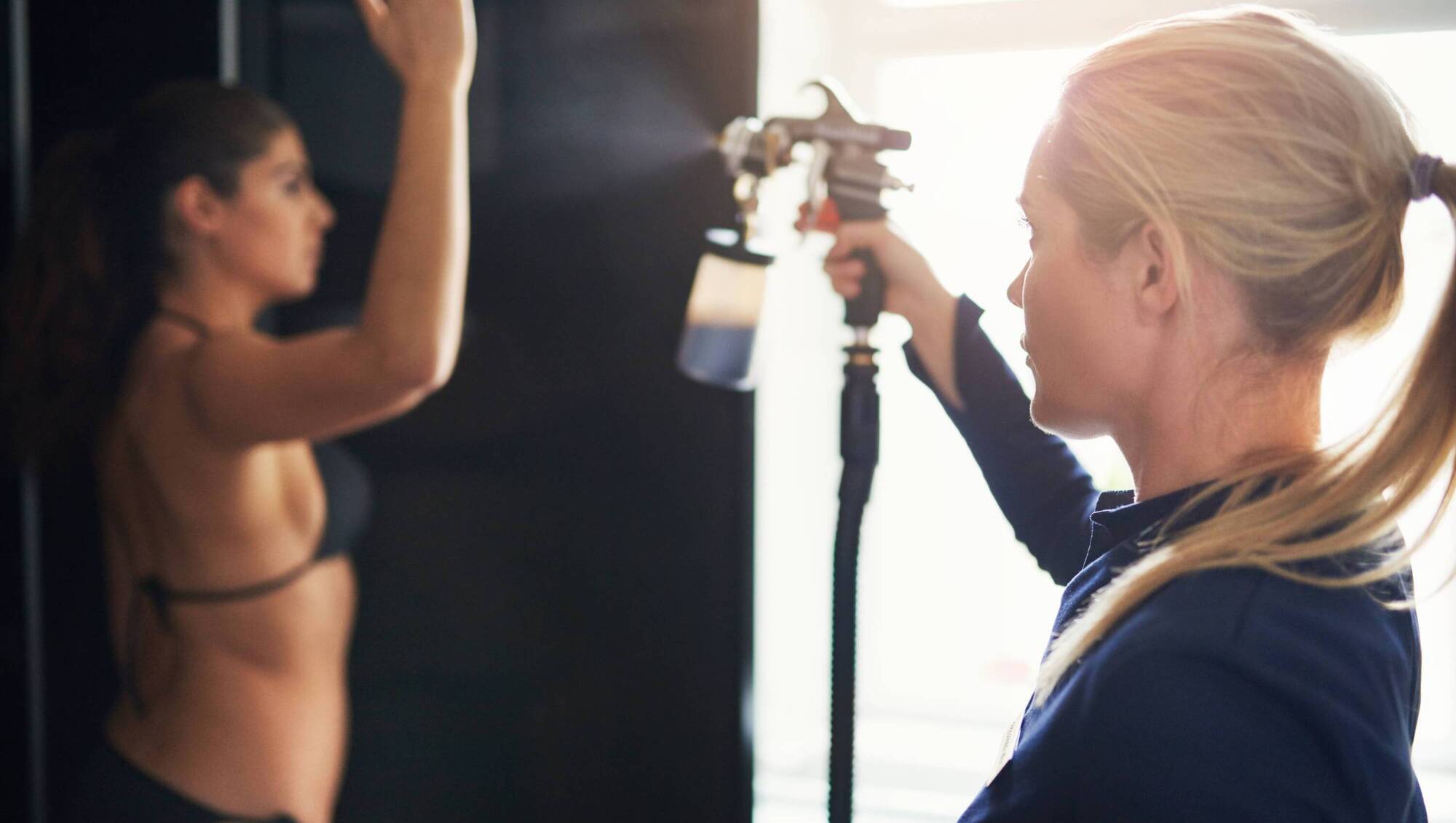
Today's spray tan formulas are a world away from the orange hues and sticky finishes of the past, and many of our favourite at-home fake tan brands now offer professional salon treatments too. Poco Beauty founder Pippa O'Connor Ormond shares why the brand entered the spray tan market and her top tips for achieving a natural-looking, healthy glow. 
In 2026, we have more choice than ever for fake tanning, from lightweight waters and hydrating serums to express mousses and gradual tans.

In 2026, we have more choice than ever for fake tanning, from lightweight waters and hydrating serums to express mousses and gradual tans.

As most of us hopefully know by now, fake tan is the only safe tan, despite the fact that extreme tanning unfortunately seems to be back in fashion.

A tan is your skin’s response to DNA damage caused by UV radiation. While many people still see it as a sign of health, it’s actually evidence that your skin has been damaged. Although sunburn causes more severe acute damage, tanning also increases your long-term risk of skin cancer and accelerates premature skin ageing. The only safe way to achieve a bronzed glow is from a bottle.

I’ve never understood why people are meticulous about applying SPF to their face while deliberately exposing the rest of their body in pursuit of a tan. Do they think the rules of accelerated ageing, pigmentation, collagen loss, and, most importantly, skin cancer somehow don’t apply below the neck? UV exposure breaks down collagen and elastin, leading to wrinkles, sagging, uneven pigmentation, and rough skin texture over time.

Another persistent myth is that a “base tan” somehow protects your skin. In reality, it provides protection equivalent to only around SPF 3, offering very little defence against further UV damage. Nor is there any evidence that deliberately tanning is beneficial for conditions such as acne or psoriasis.

The continued use of sunbeds is particularly worrying. Using them before the age of 35 increases the risk of melanoma by around 75%, according to research, making it especially disheartening to see younger generations embracing them once again.

Thankfully, fake tan has evolved just as dramatically as our understanding of sun safety.

In 2026, we have more choice than ever, from lightweight waters and hydrating serums to express mousses and gradual tans. My personal favourite is a tinted gradual tan because it gives me an instant glow while continuing to develop over the following days — ideal for someone who’s always leaving things until the last minute.

If I am honest, the last time I had a spray tan was about 10 years ago. It was also my only experience. I found it pretty unpleasant: The fumes felt suffocating, and neither the smell nor the colour impressed me. But, a decade on, the landscape has changed.

Why is spray tan making a comeback?

Today’s spray tans are a world away from what we had on offer in the ’90s. They are faster drying and available in a much wider range of shades and undertones, while trained technicians are capable of subtly contouring the body for the most natural-looking, flattering finish.

For those who aren’t confident fake tan users, they reduce the risk of streaks, patchiness, and missed patches. (There’s also far less chance of pulling a muscle trying to reach your mid-back.)

A professional spray tan will typically last between five and 10 days, depending on your skin type and aftercare. Regular moisturising and topping up with a gradual tan can help it fade more evenly and extend its life.

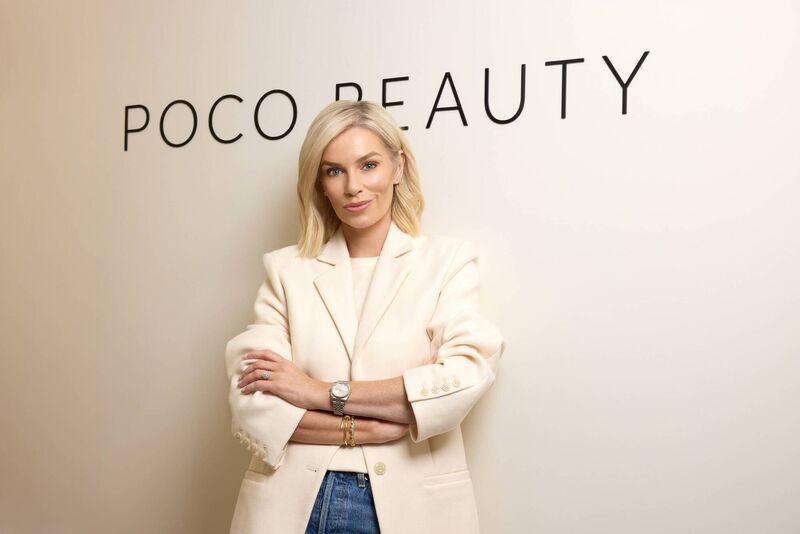
POCO Beauty founder Pippa O’Connor Ormond, who launched a range of fake tans last summer, including a professional spray tan, empathises with my memories of spray tan.

Founder of POCO Beauty Pippa O'Connor

“I remember getting a spray tan for the first time — it must have been 20 years ago. Your options were limited in terms of brands and colour. I remember looking orange and needing something as strong as a Brillo pad to remove it!”

Like many of us, the 40-year-old is naturally pale and loves “nothing more than having tanned, glowy skin”.

“But I want it to look natural. I want to look like myself, just fresher and more radiant.”

Introducing a professional spray tan alongside at-home products was always part of the plan for POCO Beauty, she says.

As a business owner and mum of three, O’Connor Ormond wanted to create a formula that delivered a “low-maintenance tan”.

“I wanted to get it absolutely right in terms of the formula, the colour, the performance, and the way it wears off.”

Of course, prepping before a spray-tan is just as important as prepping before fake tanning at home.

“People ask me what I do to prep and, honestly, it’s so simple. My skin is clean and exfoliated with no lotions or creams. I might apply our Skin Flood to dry areas such as my knees and elbows but that’s really it. A good tan should simply absorb into the skin. I don’t like a wet spray tan that takes ages to dry. I want to get dressed quickly afterwards and get on with my day. To maintain it, I’ll top up around day six or seven with a gradual moisturiser.

“A good tan shouldn’t require deep scrubbing to remove. It should fade naturally.”

Her biggest tip for getting the best result? “The main thing is sleeping in it. I really feel like a tan needs to marinate overnight to give the best-looking result.”

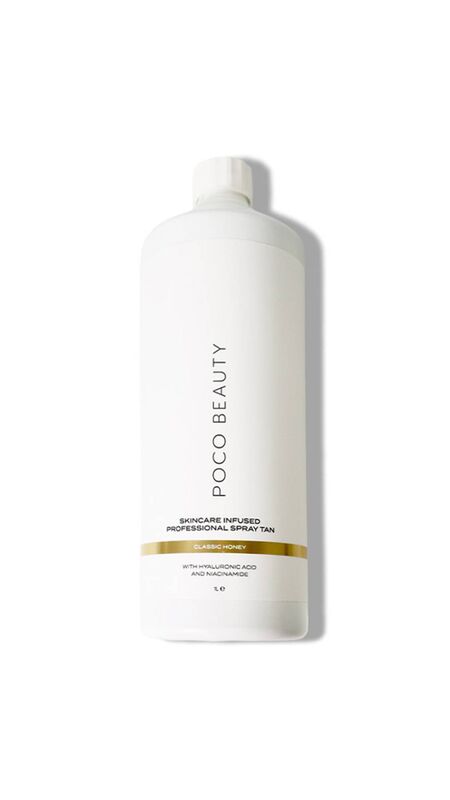
POCO Beauty skincare infused professional spray tan

  • POCO Beauty’s professional spray tan is now available in dozens of salons nationwide, including mobile spray tan technicians who can come directly to your home. For a full list of stockists, visit exa.mn/pocotan

x

More in this section

Lifestyle

Newsletter

Eat better, live well and stay inspired with the Irish Examiner’s food, health, entertainment, travel and lifestyle coverage. Delivered to your inbox every Friday morning.

Cookie Policy Privacy Policy Brand Safety FAQ Help Contact Us Terms and Conditions

© Examiner Echo Group Limited