Miriam O'Connor: As an artist, there are so many ways to reflect on agricultural life
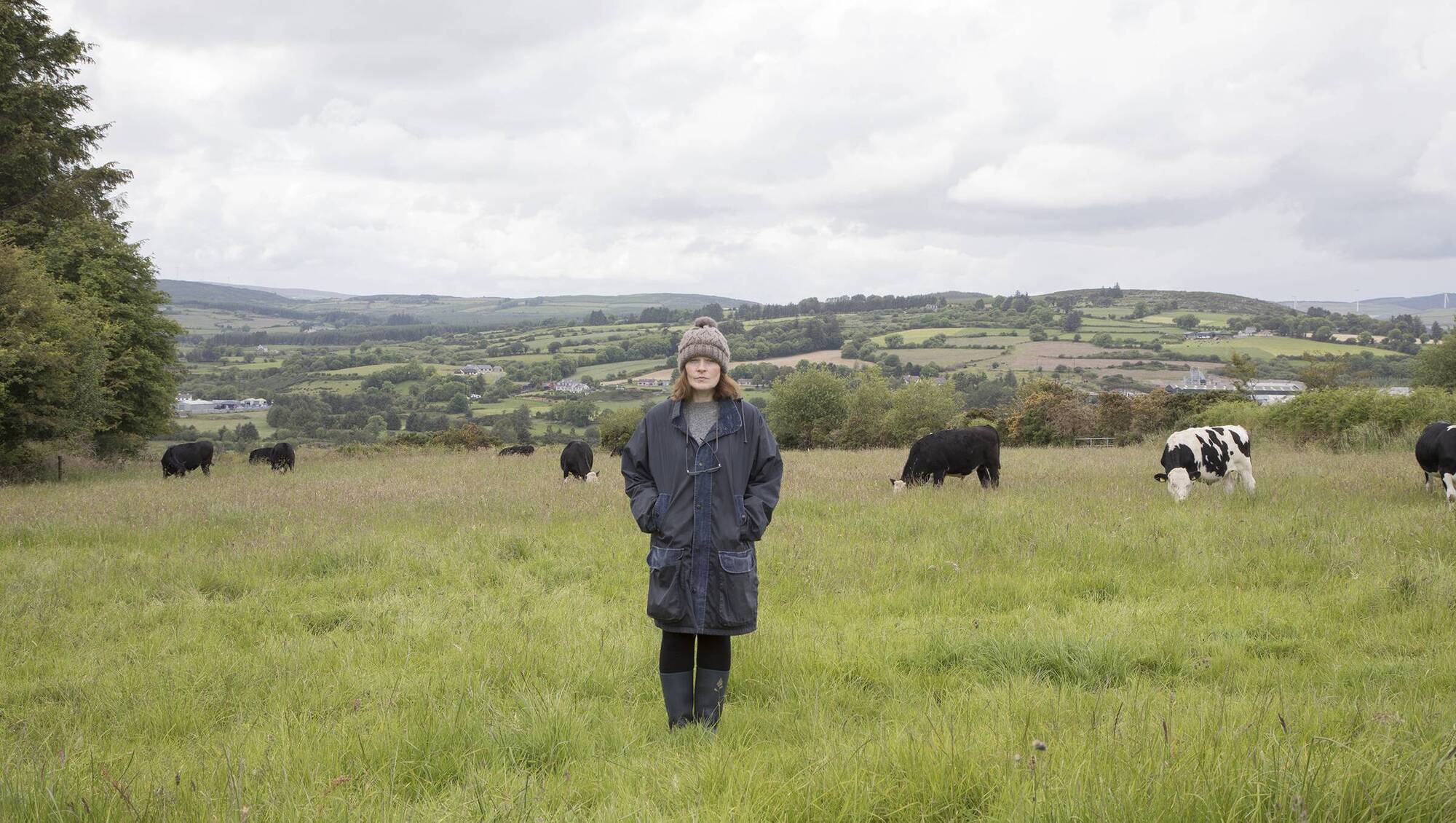
Miriam O'Connor, Self-portrait, from her Tomorrow is Sunday series, 2020
Balancing her dual careers as a farmer and visual artist is not always easy, Miriam O’Connor admits. Yet she manages. O’Connor’s photographic work, a spectral image labelled 01030036 from her series, is showing this month in the Island Portrait exhibition at SOL Fine Art as part of Dublin Gallery Weekend 2026.
This year alone, she has shown in three other group exhibitions, and won bursaries from both the Arts Council and Cork County Council, and she has still found time for the cattle.
Growing up, O’Connor did not expect to work the family farm, near Macroom in West Cork.
“Though I'm not suggesting that I had exact clarity on what the rest of my life would look like,” she says. “I lived in the UK for a while. I worked in retail and in customer care, in big chip companies like British Airways and British Telecom.
"Also, I studied fashion. I was a kind of a chameleon, I did lots of different things. Around the year 2000, I began taking photographs through an evening course at Crawford College of Art and Design in Cork. I just quickly fell in love, I became obsessed with photography. I knew it was the right trajectory for me.”
O’Connor went on to study the medium at the Technological University, Dublin before completing a masters at Dún Laoghaire Institute of Art Design & Technology in 2011.
“I tried to work commercially in photography after that,” she says, “doing things like weddings, but I just didn't feel like it was the right thing for me. I really wanted to work as an artist.”
She had already begun to establish herself, through solo and group exhibitions, when her brother Jerome died of cancer in 2013.
“We were a family of four girls and one boy, and the farm had passed, in the traditional manner, from our father to Jerome. He worked it for nearly 30 years, and then, when he died, my sister Síle and I inherited.”
Returning to work the farm brought a considerable change to her lifestyle and priorities, a process she recorded in another project, in 2020.
“But it’s getting close to a decade and a half now,” she says. “We’re beef farmers. We have cattle for eight months of the year, and then we take a little sojourn for the winter months, and we go back into it again around February or March.
"But when you're a custodian of the land, you’re busy all year round in one way, shape or form. I don't mind the work. It did take a little bit of getting used to, but it's different when the place is yours. The power relations and the responsibilities shift. You have to take responsibility for the land and the animals, and how things work out. But, yeah, I quite enjoy it, you know?”
O’Connor and her sister also care for their mother.
“It can be difficult,” she says. “There are many challenges, from food and nutrition, to looking after the medical side of things. One of the questions that is always on your mind is, what's wrong? What do you need? How can I help? So it can be quite stressful, but then it can be extremely rewarding as well. You have these moments of endearment, running in conjunction with a kind of chaos. I think what's critical is that me and my sister do it together. And we’re lucky because our mom is still mentally quite well, and she’s still mobile.”
Finding time for her art practice has sometimes required a degree of resourcefulness, but she has always kept her hand in.
“As an artist, there's so many ways to reflect on agricultural life, and rural life in general,” she says. “Within the agricultural context, photography is often used to sell machinery, but also to sell landscapes, or the idea of a romantic kind of rural life.
"But my position per se would be thinking about it in a functional manner. I think of my everyday life as a tool where photography must be put to use, like other things on the farm. So if a shovel has a particular function, then so should a camera. That's not always an easy thing to achieve. But it's something that informs the kinds of work I make, and the approaches I have to photography.”
For her series, O’Connor set up a wildlife camera on the farm.
“It’s a way of putting photography to work in a kind of subcontracting role. This machine, the camera, can do work for me that I can't physically do myself because I'm busy with everything else. Animal movements trigger the camera, and generate a lot of photographs.
“I have photographs of landscapes, photographs of falling stars, photographs of horses, dogs, badgers. There are no owls, but I do have photographs of other birds. Often, I would take the camera for a little walk myself, you know, before I set it up. I put the camera on, so it becomes this kind of object that I hold in my hand, and it registers everything in its path.”
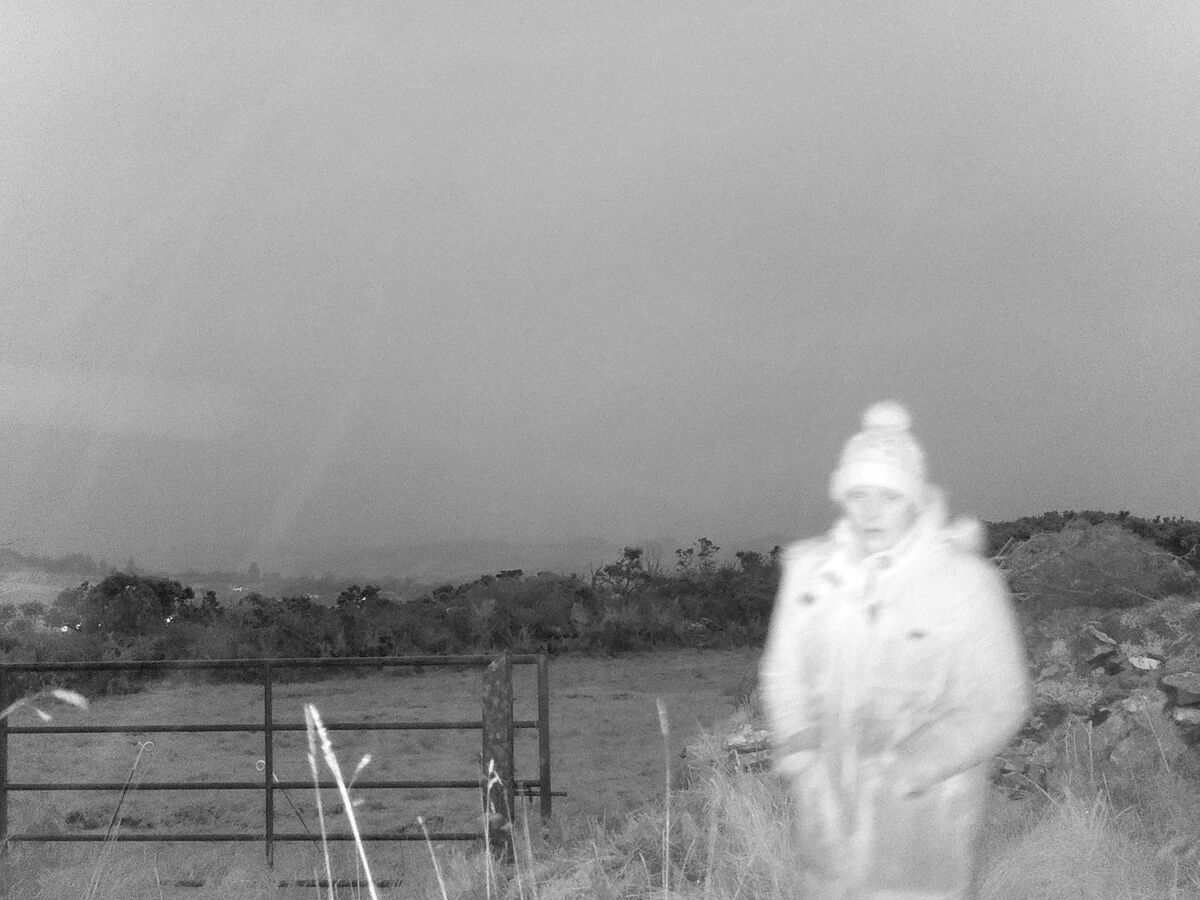
Sometimes the camera has taken photographs of O’Connor herself, triggered by her movements when she has been setting it up or taking it down. The photograph she is showing at SO Fine Art is one of a triptych, she explains.
“The camera generates these photographs in such a short space of time, three images for every one second of movement. So there's one photograph of me facing the camera, there's another of me looking away, and a third that shows me caught in another moment.
“The opportunity to show this particular portrait, of me facing the camera, in this particular exhibition, is a joy for me, because it means that the archive of photographs becomes animated. It comes to life when it leaves the archive and goes out into the world.”
At present, most of the photographs in O’Connor’s archive — there are 8,073 in all — exist as digital rather than physical images, but she remains open-minded about how the work will be shown.
“In the next few weeks, I’ll be exhibiting another photograph from the series in the LHQ Gallery at County Hall, and I’ll be showing a number of others at Lismore Castle Arts late next year. But I’m still making decisions around how to organise the archive. I’ve been thinking about making very small versions of the photographs so that curators can make decisions about how they can be shown.”
One can only wonder at what kind of project O’Connor may embark on next. The one thing she is sure of is that, no matter how great the demands of farmwork, she will continue to make art. “I can't think of a single other thing that I would be fit for,” she says.
- Miriam O’Connor’s work is showing in Island Portrait, a group exhibition opening on November 5 at SO Fine Art, Powerscourt Centre, Dublin 2 as part of Dublin Gallery Weekend. Island Portrait runs until November 27. Further information: miriamoconnor.com, sofinearteditions.com, dublingalleryweekend.ie