Film reviews: Wildwood is detail-packed stop-motion magic worthy of a rewatch
Plus, Fatherland stands shoulder to shoulder with this year's best films, and Klara and the Sun turns a brilliant novel into a bland vapid film
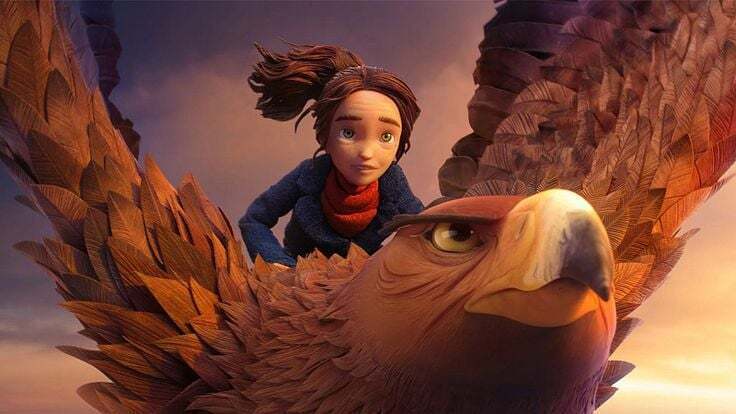
Prue, voiced by Peyton Elizabeth Lee in Wildwood

Prue, voiced by Peyton Elizabeth Lee in Wildwood

Wildwood

★★★★☆

Wildwood (12a) is a big-screen stop-motion adaptation of the 2011 bestselling fantasy novel of the same name, written by Colin Meloy.

The McKeels live in Portland, Oregon. Mum and Dad (voiced by Jake Johnson and Maya Erskine) haven’t grown out of their hippie phase, even though they now have a twelve-year-old daughter, Prue (Peyton Elizabeth Lee), and a baby, Mac.

Dad believes in magic and is sure something unusual is hidden in Wildwood, a quiet forest near the city. He is so worried that he doesn’t even want Prue to take baby Mac out when she babysits, but Prue is twelve and precocious; when her parents leave, she immediately takes Mac on an adventure.

When she stops at a cafe, she meets Curtis (Jacob Tremblay), a slightly nerdy boy from her class who has a crush on Prue, but she sees herself as far too grown-up for him.

Neither Prue nor Curtis realises that their world is about to change. A large flock of crows swoops in, inexplicably snatches baby Mac into the air, and carries him off towards the forest.

Determined to save Mac, Prue and Curtis give chase, following the crows to the bridge that separates the forest from the rest of the city. Prue bravely steps forward, while Curtis panics but follows her anyway. Before either of them can stop to ask what on earth is going on, they find themselves in a forest full of talking animals and an entire world beyond anything either could have imagined.

The kids soon become separated, each setting off on their own journey of discovery. Curtis must learn to be brave in the face of seemingly impossible odds, while Prue needs to learn to believe in magic if she is to have any hope of rescuing her brother and making it out of the forest alive.

The forest is a twisted place, divided by dark forces, but it wasn’t always this way. Once a place of happiness, it has been consumed by darkness. At the heart of it all is the Dowager Governess (Carey Mulligan), driven to dastardly deeds by a deep grief she can’t shake. She commands an army of lethal coyotes, led by a gnarly old coyote voiced by Tom Waits. Plenty of other colourful characters lurk in Wildwood, voiced by actors including Richard E. Grant and Mahershala Ali. The more creatures Prue encounters, the more she learns about herself, but will it be enough to save her brother?

With stunning animation and a richly imagined world packed with layers of detail, Wildwood demands revisits to take it all in. The voice work is excellent, as is the film’s strong message about confronting grief, finding yourself, and recognising that magic still exists.

A staggering battle sequence towards the end means Wildwood might be a bit much for the little ones, but it’s perfect for young teens right through to the oldest family members. Magic stuff.

  • Cinematic Release.

Fatherland

★★★★☆

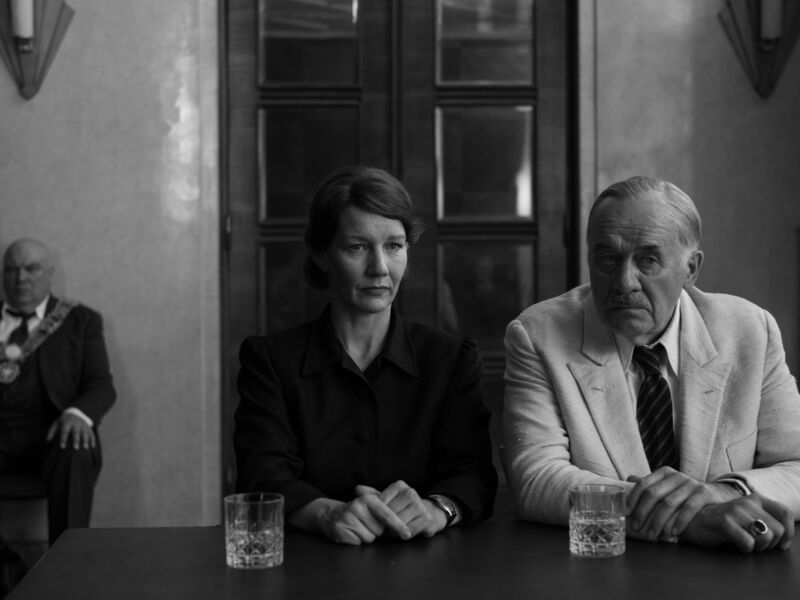
Hanns Zischler as Thomas Mann and Sandra Hüller as Erika Mann in Fatherland

Paweł Pawlikowski, a Polish filmmaker, is a three-time Oscar nominee and winner for his 2015 film Ida. He is known for distinctive black-and-white cinematography. Fatherland (12a), set in 1949, draws inspiration from German Nobel laureate Thomas Mann, who has lived in exile since the 1930s.

Germany welcomes Mann back with a prestigious award. Revered for his writing and wartime defiance of the Nazis, he has also made enemies. His daughter Erika (Sandra Hüller), also a writer, chaperones him. She has grown weary of chaperoning him, but someone has to do it.

Their trip will take them to West and East Germany, with both sides eager to honour him. East Germany, under communist rule, will be a vastly different experience.

Erika’s brother Klaus (August Diehl) is a fellow celebrated author. Depressed and struggling with addiction, Klaus is no longer helped by drugs. Erika makes him promise to meet them in Germany.

At Mann’s celebration, Erika’s ex-husband Gustaf Gründgens (Joachim Meyerhoff) appears. His acting career flourished during the war, thanks to his Nazi connections, particularly his ties to Göring. Erika is sickened by how many artists and elites now honour her father, despite siding with the Nazis.

As the Manns travel from West to East, they are burdened by heartbreaking news from home, news that Mann doesn’t want to dull his triumphant return to Germany, forcing Erika to build a wall around her emotions. This wall begins to crumble almost as quickly as it was built. With stunning cinematography from Łukasz Żal, Fatherland captures the shell of a newly divided Germany as it attempts to rebuild and become a functioning country once more. There is a coldness here that reflects the icy reality of former Nazi collaborators working, living alongside, and socialising with those who fought against the regime. Expect to see Hüller’s name in the Oscar conversation, alongside the film, which has been put forward as Poland’s entry for Best International Feature. Stark and gripping, Fatherland is among the year’s best films.

  • Cinematic Release.

Klara and the Sun

★☆☆☆☆

Based on Kazuo Ishiguro’s novel, Taika Waititi’s Klara and the Sun (12a) has a draw for Irish audiences: it stars Aran Murphy, son of the one and only Cillian.

In a near-future world, people own human-like artificial friends (AFs). Klara (Jenna Ortega) is an older-model AF and somewhat defective.

Most people want fancier models, but teenager Josie (Mia Tharia) likes Klara’s quirks and convinces her mum, Chrissy (Amy Adams), to buy her. Despite a rare illness, Josi spends her days happily with her boyfriend, Rick (Aran Murphy), and Klara, until their friendship sparks unexpected events that make little sense plotwise.

Like all AFs, Klara is designed to learn, yet the story never explains why she struggles to understand basic concepts. She is convinced that a combine harvester is a demon and believes the sun lives in a barn near Josie’s house.

The film has glaring plot holes and endless repetition. I could go on. And yet, for all that’s wrong with the film, the biggest issue is that it turns a brilliant novel into a bland, vapid film that fails to grapple with any of the big questions it raises. The young actors try, but too much is stacked against them. Don’t worry, Murphy the Younger, there will be plenty more opportunities to wow us with those acting genes.

  • Cinematic release.

More in this section

Scene & Heard

Newsletter

From music and film to books and visual art, explore the best of culture in Munster and beyond. Selected by our Arts Editor and delivered weekly.

Cookie Policy Privacy Policy Brand Safety FAQ Help Contact Us Terms and Conditions

© Examiner Echo Group Limited