Cork artist Maitiú MacCárthaigh: 'I was not the 'right' son to go into farming'
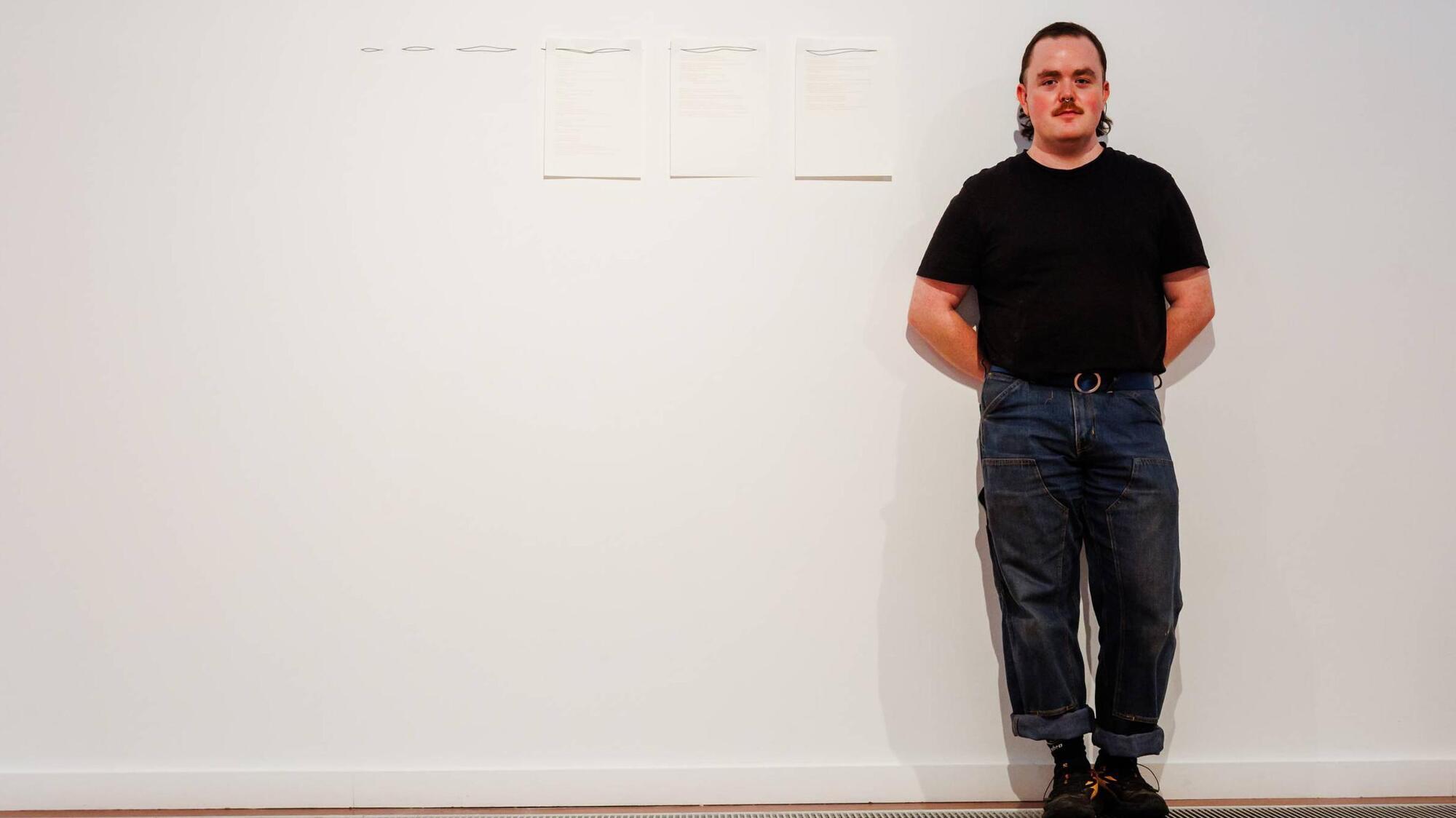
Maitiú MacCárthaigh at LHQ Gallery, Cork County Hall. Picture: John Beasley
Growing up gay in Ballinascarthy, Co Cork, Maitiú MacCárthaigh was always conscious of being different.
“I was one of four sons,” says MacCárthaigh, who uses they/them pronouns. “We had a pig farm, which very tragically and almost comically burned down when I was very young.
"I’m the eldest, but as time went on, it became obvious that I was not ‘right’ son to go into farming.
"I got into art for my Leaving Cert, and moved up to Cork to do a foundation course before going on to the Crawford.”
MacCárthaigh has since completed a masters in artistic research at the Royal Academy of Art in The Hague. He has recently returned to Ireland to embark on a PhD on a Hardiman Scholarship at the College of Arts, Social Sciences, and Celtic Studies at University of Galway. They also have two solo exhibitions running concurrently in Cork:
is at LHQ Gallery at County Hall, while can be seen at Cork Printmakers.
As their titles suggest, MacCárthaigh drew heavily on their farming background for both exhibitions.
“My work is rooted in the way that I look at West Cork now, at how gentrified it is. In the old Ireland, the gay son would have had to run off to the city or forever be a bachelor.
"Now it’s like, isn’t it great the gays can live in rural Ireland? Except they have to look exactly like the straight people, they have to be monogamous, they have to own a home, and they have to be financially successful.
Read More
“I’m like, I could have been the gay organic pig farmer living in Ballinascarthy.” MacCárthaigh chuckles. “Oh sure, that would have been perfect.”
MacCárthaigh remembers of art college that “the processes you learn are a bit agri-. You walk around at home, and it's like, how many gates have no hinges; they're all held up with twine.
"There’s this thing of, what's to hand can maybe be changed and reconfigured into something else. It’s like that at college too, you’re using all these machines, and learning how to weld properly and so on, so I’ve been able to navigate the world through making.”
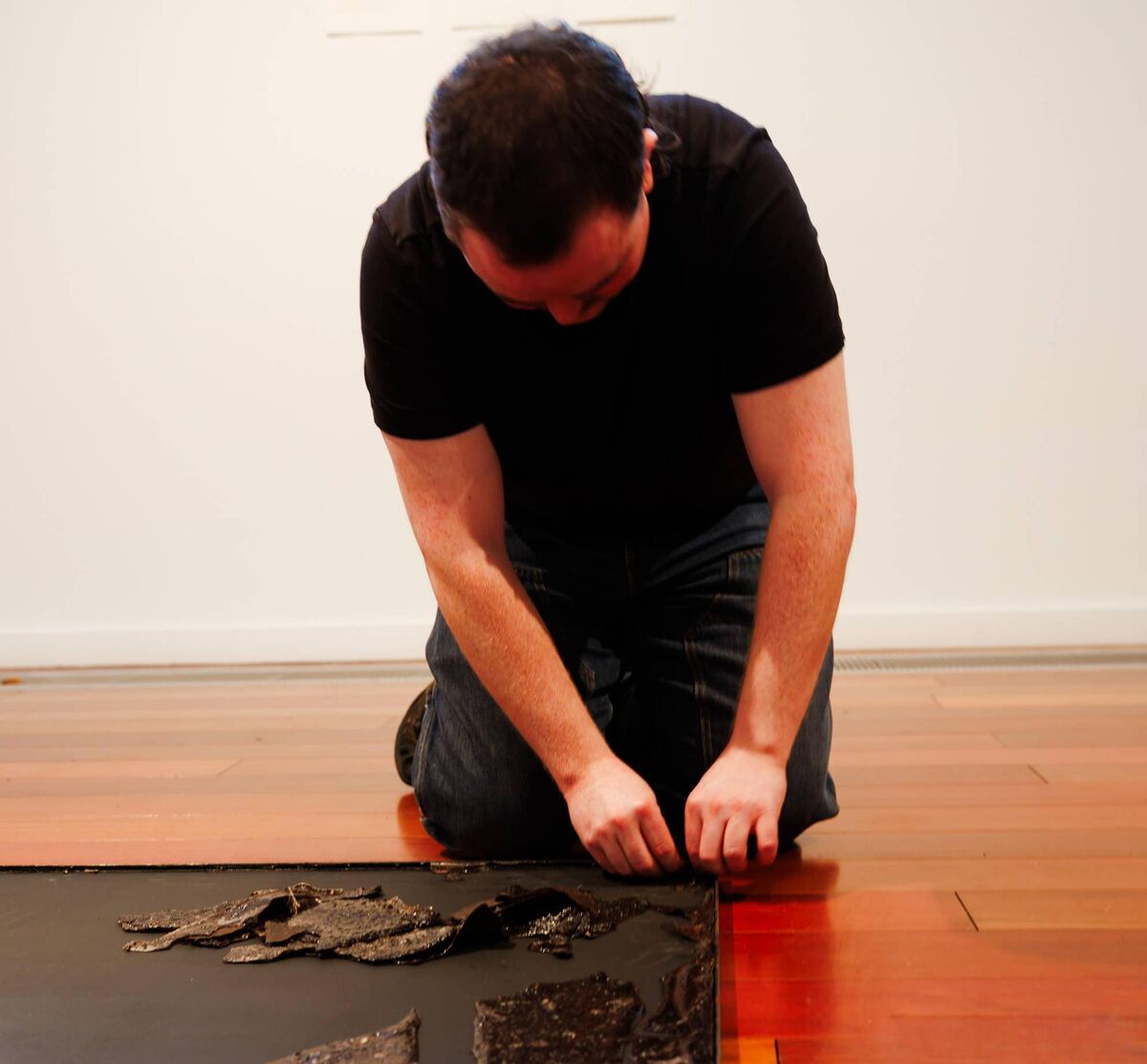
MacCárthaigh has recently settled in Limerick with his partner, who teaches at UL.
“I'm slowly getting introduced to the art scene here. There's a lot of get-up-and-go to it. A great energy. I go up to Galway University maybe once a month, and I’m in regular communication with my PhD supervisor. She's a cultural geographer, so her whole thing is embedded in space and place.”
Like many artists, MacCárthaigh has found it impossible to secure a studio.
“I mostly work on my kitchen table. But I’ve also had residencies at the Triskel Arts Centre and the National Sculpture Factory in Cork, at Uillinn in Skibbereen, and in Lisbon, and most of my new work was made in those spaces.
MacCárthaigh’s installations and sculptures are made from materials as diverse as bio-plastics and all-purpose composts.
“All my materials have to fit in the back of my 2003 Toyota Corolla. I get them from the Co-op or from steel yards or these wholesale places.
"I'm interested in how the Co-op works and how it’s moved from being maybe more community based a century ago to being a place now where you just go to buy stuff that comes off the back of a lorry.”
Creative writing is a major part of MacCárthaigh’s practice. Their exhibition at Cork Printmakers is based on a story they wrote about a gay throuple in the fictional Ballybent, while their exhibition at the LHQ Gallery features a voice-over describing what MacCárthaigh calls “the interconnectedness of oat flat whites, artificial insemination and rustic sodomy”.
MacCárthaigh will spend much of the next three years completing their PhD research project, titled .
“That involves writing a 40,000-word thesis, and a creative output that’s open to negotiation. I’m hellbent on making it an exhibition. There’ll be a lot of scheming.”
MacCárthaigh’s interests go well beyond sexual politics, however. At the opening of their LHQ Gallery exhibition, they were happy to poke fun at the new wave of urban sophisticates moving to the countryside, for instance.
“The kind of people learning to make sauerkraut from YouTube tutorials. But they’ve closed all the triple-glazed windows because they can’t stand the smell of slurry.
"It’s this idea of people saying, I’m going back to nature, to ‘the capital-L Land,’ but at the same time they can’t deal with the realities of what rural Ireland has become, in terms of production and industry.
“I get a good laugh out of all these contradictions,” MacCárthaigh adds. “Even if I am being critical, I think my work at the moment is very much a love letter to West Cork.”
- Maitiú MacCárthaigh’s runs at LHQ Gallery at Cork County Hall until October 30, and runs at Cork Printmakers until November 12