Tom Dunne: From the Faces to the lycra-era, Rod Stewart has had some innings
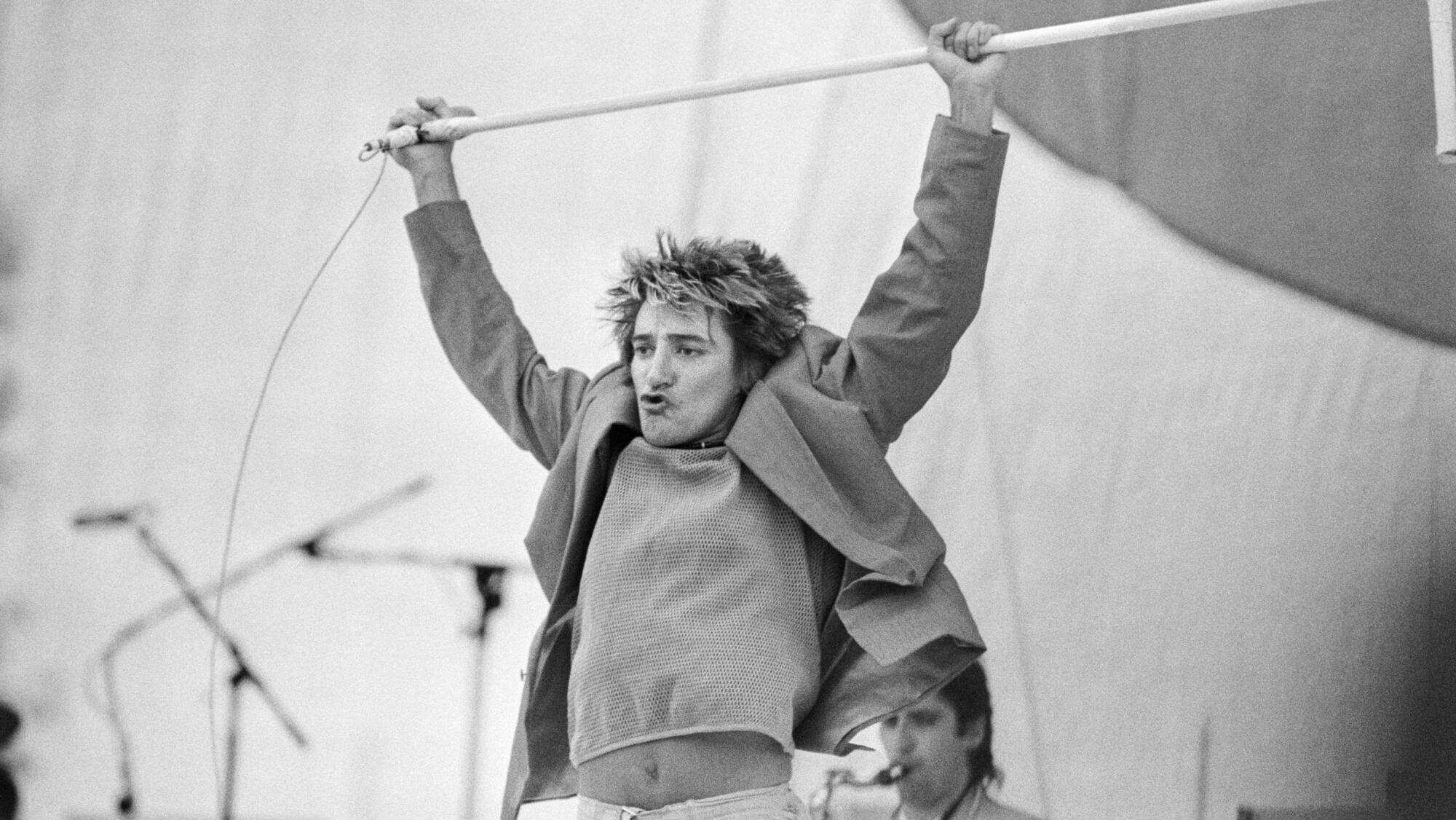
Rod Stewart on stage in 1983. Picture: Philippe Wojazer/ AFP

Tours labelled “The Final Lap” or “This Might Be the Last Time” are nothing new in music. With most bands, and Elton John knows who we are talking about, they can become almost eternal. The long goodbye can last forever. With Rod Stewart, though, I suspect this will not be the case.
Prior to news of his upcoming live retirement, there had been health issues with Rod, gigs pulled, talk of a stent. His wife described a “recovery regime” and made the point that at his gigs he enters the stage at 100mph and doesn’t stop for two hours. Four costume changes due to excessive sweating. Not sustainable I’d wager, at 81.
I blame Mick Jagger for this crazy expectation of geriatric fitness. The man who was doing gym work three days after having his aorta replaced has set the bar too high. I would urge anyone over 50 not to look at Mick and think: “If he can do it, so can I.” You can’t, honestly.
Even Adam Clayton, as U2 limber up for a live return, is being realistic. “There’s a certain Peter Pan-ness to Jagger and what the Stones do,” he said, “I don’t think we convey the same thing. I think we ultimately are more age-appropriate. And I mean that in the nicest possible way."
‘Age-appropriate’ is not a phrase you hear often in music. Most musicians do not behave in an age-appropriate manner either at the start or end of their careers. They don’t wear age-appropriate hairstyles or clothing. They don’t have age-appropriate views. It’s questionable if they should be allowed vote.
Being non-age-appropriate has given Rod the kind of life that prior to the 20th century was enjoyed only by Roman emperors. He was basically free to do whatever he wanted with whoever he wanted, whenever he wanted, since he was about 19. He describes it as “a life beyond anything I could have imagined”. And then some.
While it might have been dramatic to suggest music somehow “saved” Rod from a life of drudgery, it wouldn’t be true. He was the youngest of five kids, and being the youngest by eight years was doted on. I had a similar gap and can vouch for his being “fantastically happy”.
His dad would have been happy for him to pursue a career in either professional football — a trial at Brentford — or music. He chose music — you could play and drink — and realistically never looked back. Professional by 19, one of the biggest artists in the world by his mid 20s.
In the early 1970s, he was both successful as a solo artist and a member of The Faces, the band the remaining members of the Small Faces formed after the departure of Steve Marriot. Steve Jones of the Sex Pistols cites the Faces as their single biggest influence, and I can easily see that.
They were a wonderful band. and still stack up as great singles, but it was the chaos of the shows, their apparent ease, confidence and swagger that most impressed. US gigs often ended with most of the audience decamping to their hotel rooms.
Rod was both huge commercially and critically-feted. described him thus: “A writer who offers profound lyricism and fabulous self-deprecating humour, teller of tall tales and honest heartbreak, he has an unmatched eye for the tiny details around which lives turn, shatter, and reform.”
Lycra-clad Rod was the one to beat in the punk years. There are still accusations he deliberately released a double A-sided single — — to keep the Sex Pistols' off number one in June 1977. He succeeded, worst luck.
The If You Think I’m Sexy Rod was a bit of a caricature to most music fans in the late ’70s. But he was still able to release epic tracks like to quieten all critics. Form was temporary with our Rod, but the class was as permanent as it was undeniable.
He joins a growing coterie of acts heading out this autumn for what they say will be the last time. Tours by 10CC, Saint Etienne, Hugh Cornwall, and The Damned are being similarly advertised. Can’t be easy for any of them. Where do you go when the music just stops?