A certain type: Annie Atkins on her behind-the-scenes work with Spielberg and Wes Anderson
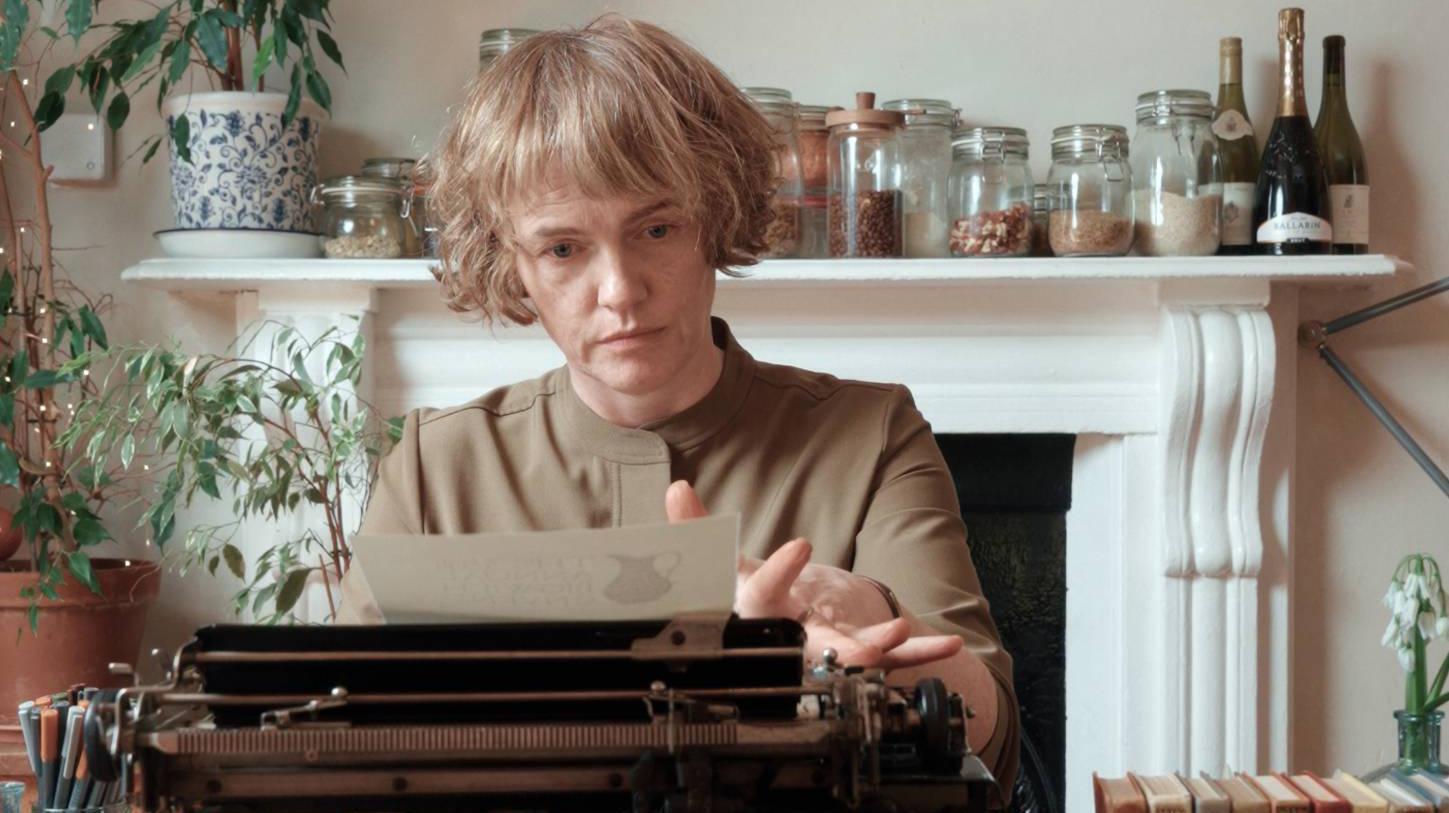
Annie Atkins, Welsh-Irish graphic designer, takes part in the BIG Type Festival in Dublin this weekend.
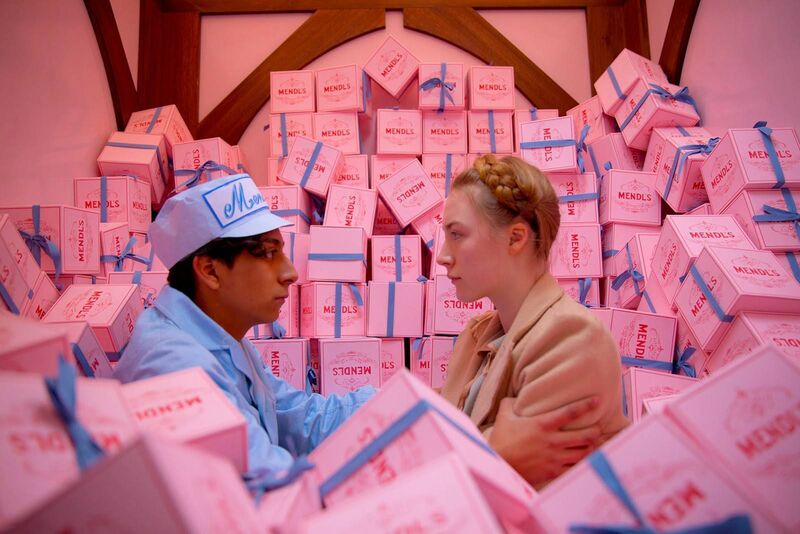
While actors like Paul Mescal, Jessie Buckley and Saoirse Ronan continue to fly the flag on-screen, there is no shortage of talent at work behind the scenes in the Irish film industry. Dublin-based Annie Atkins is one of the most prominent names at work in the area of film graphic design, responsible for making props from the iconic pink Mendl’s cake box in Wes Anderson’s Oscar-winning to maps for the most recent film, one of many Steven Spielberg movies she has worked on. However, it’s the often unnoticed background pieces that really get her juices flowing.
“The designer for called me up and told me they were working on a film about UFOs and needed a couple of pieces," recalls Atkins. "I was so excited because I love Steven Spielberg and everything he makes. He said not to get too excited as they needed a pile of bureaucratic documents from the 1950s for a specific scene. But that is exactly my cup of tea — because I love making those fake documents look realistic.”
Atkins will be discussing her work at The BIG Type Festival, a three-day celebration of print, typography, design and creativity at the National Print Museum in Dublin this weekend. Unsurprisingly, it’s a subject she says people find endlessly fascinating.
“People are very interested in film props because they are often hidden in a movie — we don’t always get a close-up of these things but a lot of work goes into them.”
Atkins was born in Wales and has lived in Dublin for almost 20 years. She grew up in Wales, surrounded by creativity; her Galway-born mother was an artist and her father a graphic designer. She says she wanted to follow in their footsteps from an early age.
“My dad used to come home from his office with his old Letraset sheets, the dry transfer where you would rub the letter down on to the page. I loved that kind of thing. I never felt I was going to be anything else.”
After studying graphic design, she worked in advertising but quickly decided it wasn’t for her and went on to do an MA in film production at UCD. Her first job when she graduated was on the set of the TV show which was filmed in Dublin and Wicklow. It was a baptism of fire, but an “amazing” experience, she says.
“I had to make everything by hand, I had to design stained glass, royal scrolls, I had to use a feather quill, it was actually terrifying. But everyone on that set was so helpful to me — there was a lot of wisdom shared and imparted. We have such an amazing talent pool here in Ireland, especially for making period and fantasy TV and film.”
Atkins’ work has been in demand ever since and she also nurtures upcoming talent, passing on her expertise in workshops for students. While the nature of much of her work is about creating objects that blend in to create an authentic atmosphere, some of her most eye-catching work has been done with director Wes Anderson, who is renowned for his distinctive aesthetic.
“He is a different kettle of fish because he is very much a visual artist as well as a director. When you watch a Wes Anderson film, you can see the graphic design because he makes a character of it. When I work on a Wes film, I am very much working to his style and aesthetic. But I like that challenge. When I work for another director or a TV show, it is more down to me and the art department to put something together that suits the script. But I always tell my students that you don’t need to work on a Wes Anderson movie to have a really amazing career in film design.”
Atkins’ work is very much hands-on and she is optimistic about the craft element of filmmaking despite concerns about AI and its impact on the creative industries.
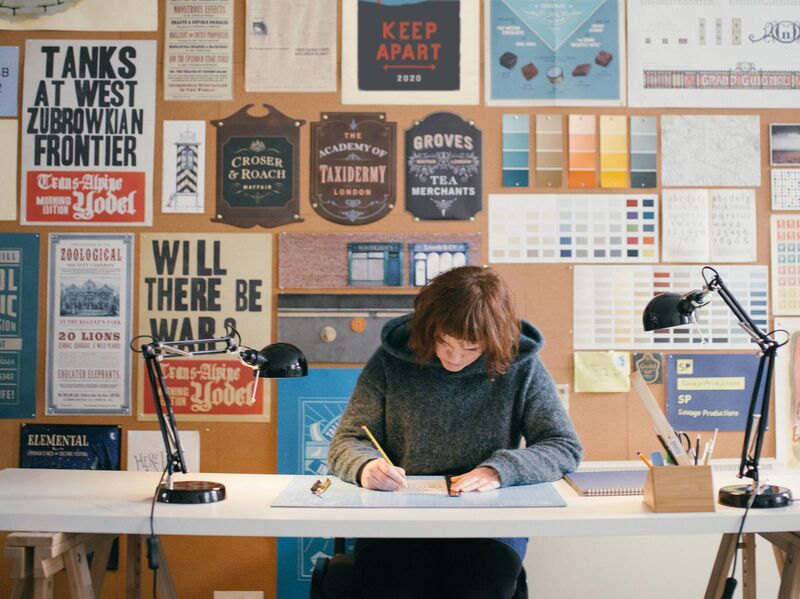
“It is a big subject and I’m not overly qualified to talk about it because we actually don’t use it in the film art department, we’re not allowed because of copyright issues. So I am very lucky — because it’s not part of my working practice, I don’t have to think about it. But I still believe you have to design and make things the analogue way to better understand what you are doing. You have to go through that trial-and-error process. I think it is good to keep kids away from AI when they’re young, they’ve got to get that pen and paper out.”
On that theme, Atkins has turned her significant talents to making children’s picture books. Her recently published book , features 10 letters and spells to pull out and keep, adding another element to the story.
“I think it’s okay that technology is affecting us and our habits, that’s just par for the course, but the important thing is that you make stories that children are drawn to,” she says. “If you are an inquisitive kid who always wants to know more of the story, then you get this second layer. It also means that I’m getting props literally into the hands of my audience, as opposed to a film where the props are not seen.”
She believes there is still a huge appetite for well-made books that are also objects of beauty. “Absolutely — the way people read and consume things is changing, but we live in a tactile world, and we are always going to want tactile things.”
- Annie Atkins will be appearing at the Big Type Festival at the National Print Museum in Dublin, Sept 4-6 (see panel). Her book is out now
The acclaimed artists discuss their shared connection to typography and graphic communication and how letterpress printing can help communicate resonant social messages. Followed by a drinks reception and DJ set by Anthony Burrill.
The Dublin author discusses his Booker-longlisted debut novel . Followed by a drinks reception.
Annie Atkins explores how handmade documents make fictional worlds feel emotionally real. Bestselling author and illustrator Chris Haughton will discuss his debut non-fiction book , which delves into the evolution of knowledge, communication, and information.
A celebration of 30 years of the National Print Museum, featuring live printing demonstrations, and workshops in letterpress, bookbinding and paper making. nationalprintmuseum.ie