Super Nature: The picture that used old movie cameras from 40 participants to film the natural world
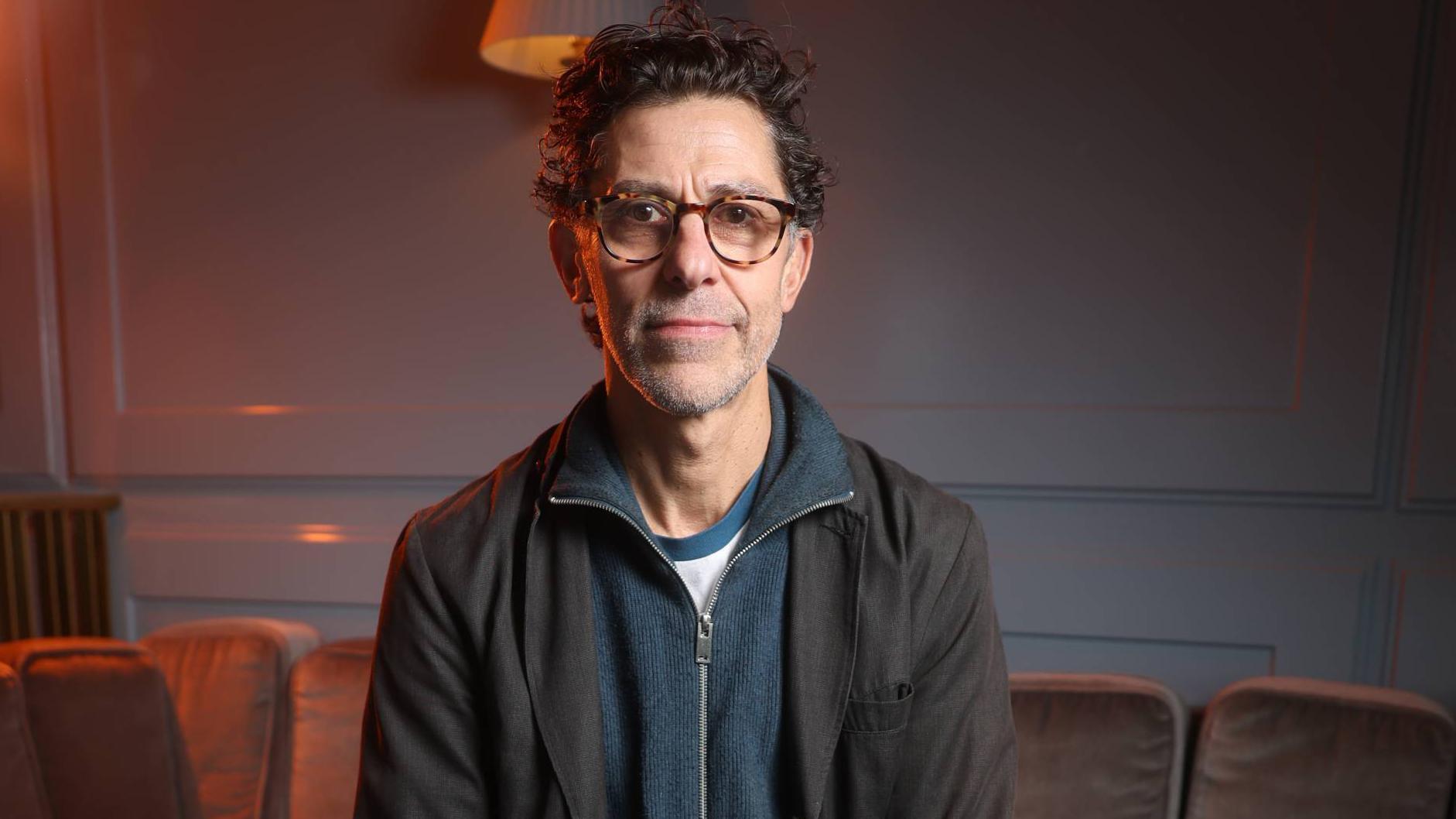
Director Ed Sayers has assembled footage from 40 different people for his Super Nature documentary. Photo: Shane Anthony Sinclair/Getty Images for BFI
A global love letter to nature shot exclusively on Super 8 cameras, is an immersive exploration of our world and the creatures that inhabit it.
Ed Sayers’ documentary - coming to Irish cinemas next week - captures white rhinos and sea dragons, flamingos, snails and many more, as filmed by 40 people throughout the world. That it was filmed entirely on Super 8 cameras makes the experience all the more special. Filmed in the original home movie format, makes audiences feel present and supports a new way of seeing nature.
For Sayers - who has made films in all formats and has had a long love for Super 8 - the filming style offered a unique opportunity to be up close and personal with Mother Nature. “There's something quite special about Super 8 in so many ways. It's actually the same emulsion that is used on any Kodak film. So whether it's 16 millimetres, 35 millimetres — or like 65 millimetres for IMAX, where each frame is almost as big as a photograph — it's the same emulsion.
“It’s the same layers of red, green, and blue paint, if you like, primed to read light and record light onto this celluloid base. But because it's so small, all that organic grain that you get in all the film stocks is enlarged when you see it back. This graininess and this impressionistic, lovely, softer way of looking at the world is very attractive to the human brain.”
The smaller home movie format, he feels, is also associated with memory making and preservation. Introduced in the 1960s, Sayers describes it as a little format designed to make it easier for people to shoot organically. “You didn't have to pull film into a magazine and know how to load it. You just put a little plastic cartridge full of film into the camera, and off you go. And that's 1965, and it's still being made and it's still got a place in the world.”
Still, making a film on the format with 40 participants worldwide would present enormous logistical challenges, and Sayers and two of his colleagues went to local nature very early in the project to establish what would be feasible. Next to each perforation, he explains, each hole is one tiny frame of an image.
“But when they're speeding past the projector lamp at 18 frames per second or whatever, that's the movie. That's the magic. You can't rewind and go again like you could on a video camera.
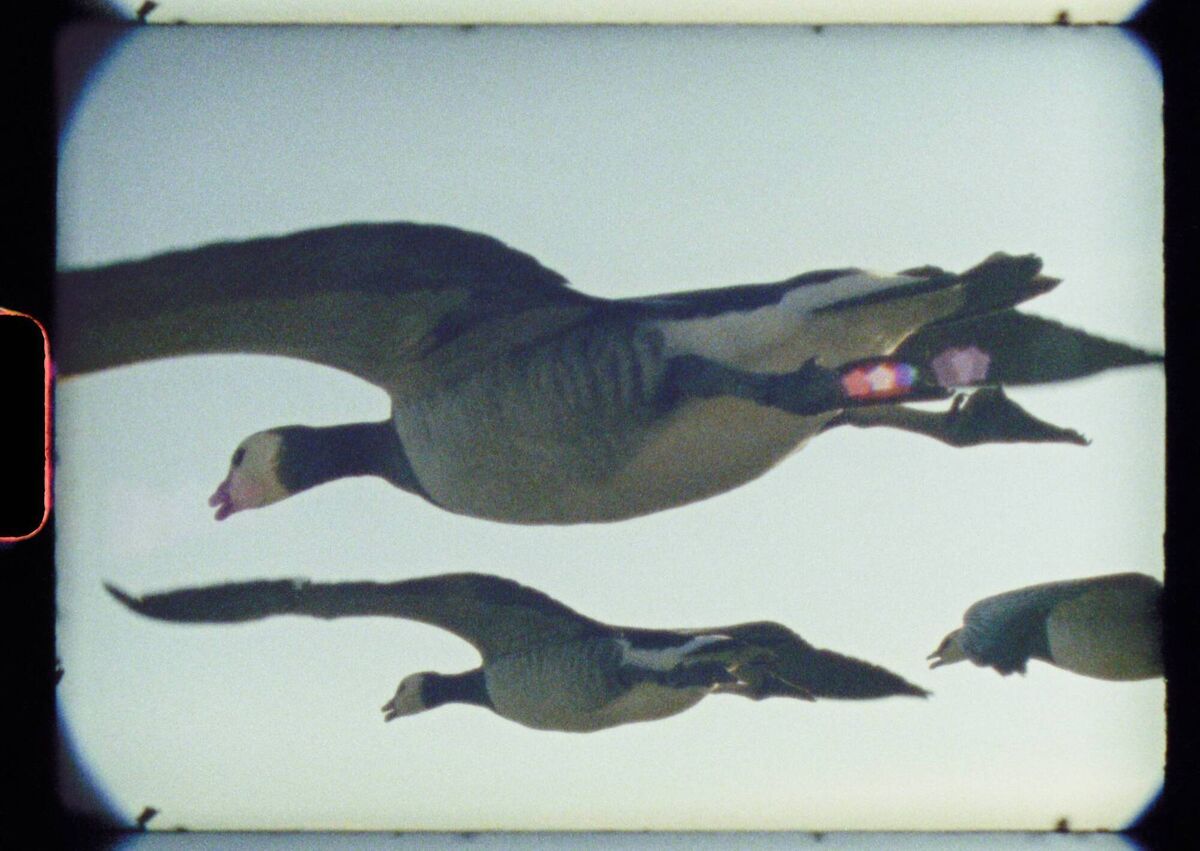
"You'd be doing a double exposure, so it forces you to be quite present in the moment and to accept that when you're pulling the trigger, you are making a bit of film, unlike waving a camera around for ages and thinking: “I’ll see what I can edit out a bit later”.
Wildlife going about its day was absolutely not built to respect the format, he laughs - especially when each roll of film is designed only to record for a couple of minutes before the camera needs to be reloaded. He recalls doing a litmus test on a North Norfolk beach in the UK, where he happened upon a mother seal patting its pup with its fin. “I can hear the film's rolling, and I'm in focus, and I think the exposure's right. This is good. And the film runs out!
“That’s in the film early on because it gets the audience aware of how these moments are inspiring and make you feel very connected, or whatever they're making you feel, and then they can just be gone. There's this tension all the time, which is actually an interesting metaphor for life.”
Along with Sayers’ early days Norfolk trip, peers Karan Talwar filmed water buffalo in Mumbai and Dice Rose desert quail at California’s Joshua Tree, before broadening out the ambitious documentary. As well as filming, they recorded diary-style notes - because Super 8 is a silent medium, all sound would be added in later on in the editing process.
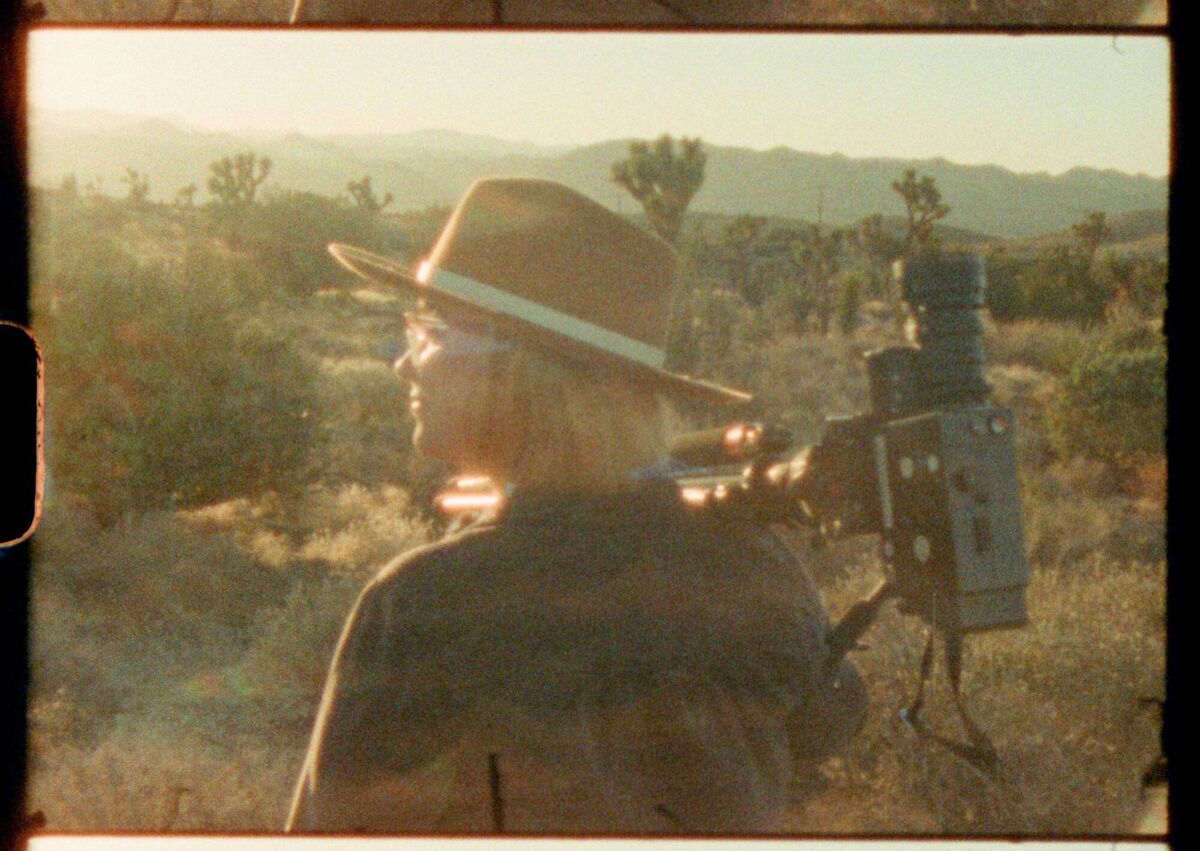
This would become their blueprint as the filming process went worldwide — and the British Film Institute’s Documentary Society as well as top documentary-maker Asif Kapadia ( ) were among the film’s early champions.
“The idea was always that it was going to be a lot of people,” says Sayers. “I’d estimated 30 to 40 just by thinking about roughly the length of the film, and how each person's contribution might be between one and three minutes.”
What was it about the relationship between this filming style and nature that appealed, and what does he hope audiences get from the film in terms of its love letter to nature and the natural world?
“I think because you're looking through bars directly at your subject. Be that binoculars, or a monocular if you're a bird spotter. Whatever it is, you're looking directly at that thing. You're not looking at your phone screen or a big fancy digital camera's monitor or a screen. You're going eye to eye with what you're trying to film, and because it's film, not digital, it really makes you start to study what you're filming. You need to start making your best guess for when it's going to be worth pulling the trigger and using some film up. You instantly have to try and become an expert and know your fieldcraft.”
As people learned of the unique project, more came on board. The film unfolded through a broadening scope and more connections - from Masai guides in Kenya to big wave surfers, to filming the Great Pacific Garbage Patch on the north Pacific Ocean. There were a lot of problems and problem solving to navigate as well. Instead of glossing over these, Sayers and his team chose to embrace them, bringing the challenges in to form part of the film’s storytelling.
“You can't make it look like it's all easy just because you've edited the best bits,” he says. “You’ve got to show people that, so the audience gets a little insight into how difficult it can be, and how cameras just suddenly decide they're not going to work anymore because they've been doing it for 50 years, or they've been left on the shelf for 10 years, and now someone wants to use it, and bits have broken, or the lubrication is all kind of gunked up, and the moving parts can't move properly. You film for 30 seconds, and you're in the middle of nowhere, and that camera is dead. You're like: ‘How many more have we got?’”
- is in cinemas from Friday, September 4