How Cork Opera House and the Bord Gáis are bringing major Irish-produced musicals to the stage
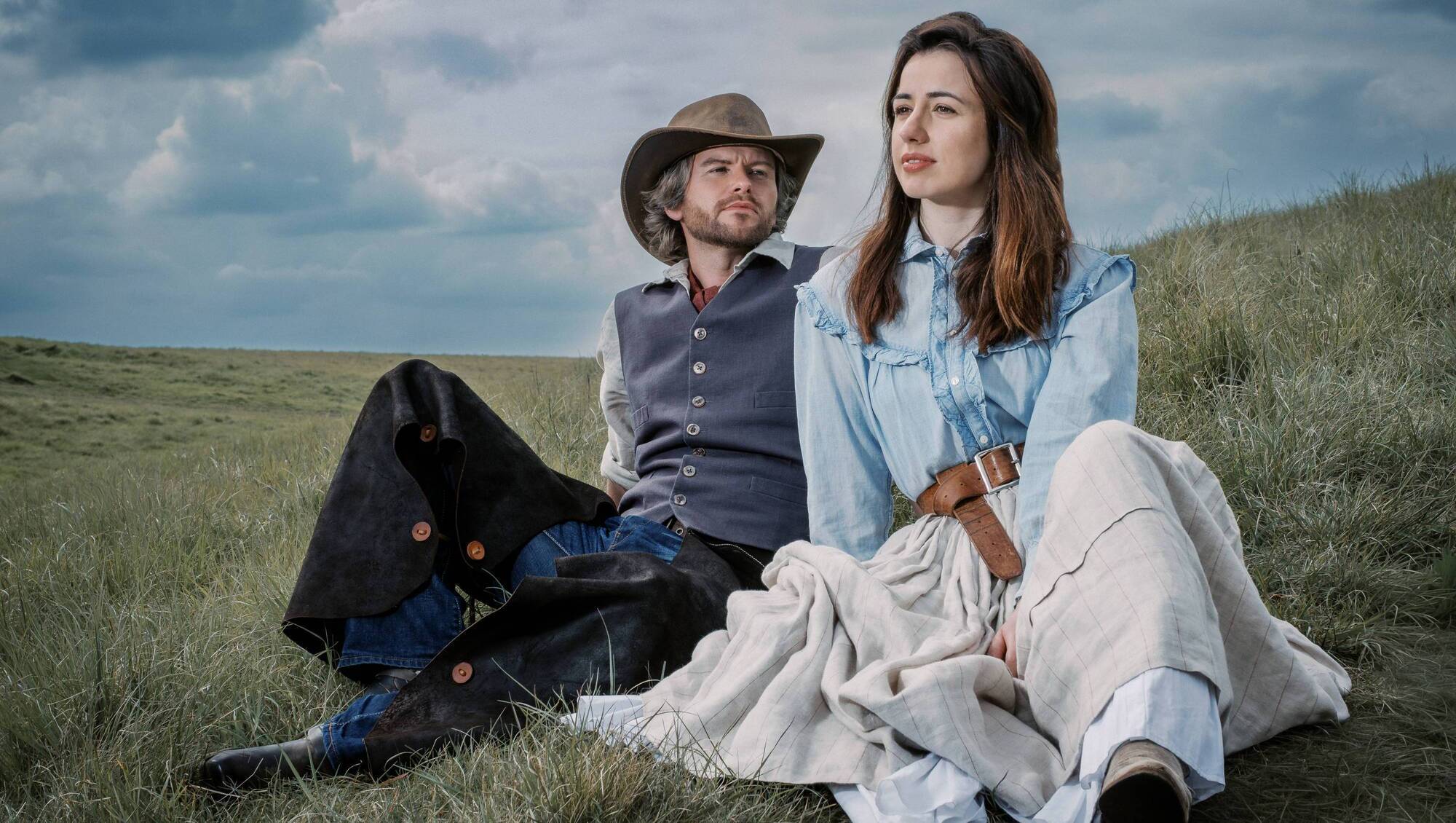
Oklahoma! at the Bord Gáis Energy Theatre, Dublin, will run from June 19 to July 5
We're used to big musicals premiering on Irish stages, but usually they are touring West End shows.
This summer, two Irish theatres are debuting Irish-produced musicals — this month Oklahoma! opens at the Bord Gáis Energy, while Cork’s Opera House will bring The Sound of Music to the stage in July.
For the past six months, Weekend has been checking in with the teams behind the shows to see what’s involved in bringing a big stage musical to an Irish stage.
Now, it’s time for The Sound of Music to grace its stage again for its big 2026 summer production.
“We had hundreds and hundreds of applications — it way surpassed our expectations,” Gleeson said in January.
“People have such a joyous relationship with the show, and with memories of the show, and with being at the Opera House to see the show.”
A full week of auditions in early 2026 in Cork is followed by two days of auditions in London.
“To see the level of talent we have on the doorstep in Cork is always really invigorating, and it always solidifies for me the importance of there being an Opera House in the city for 170 years,” she adds.
“That’s a big milestone, because we now have a set design, so you have to go about building the set,” says Gleeson.
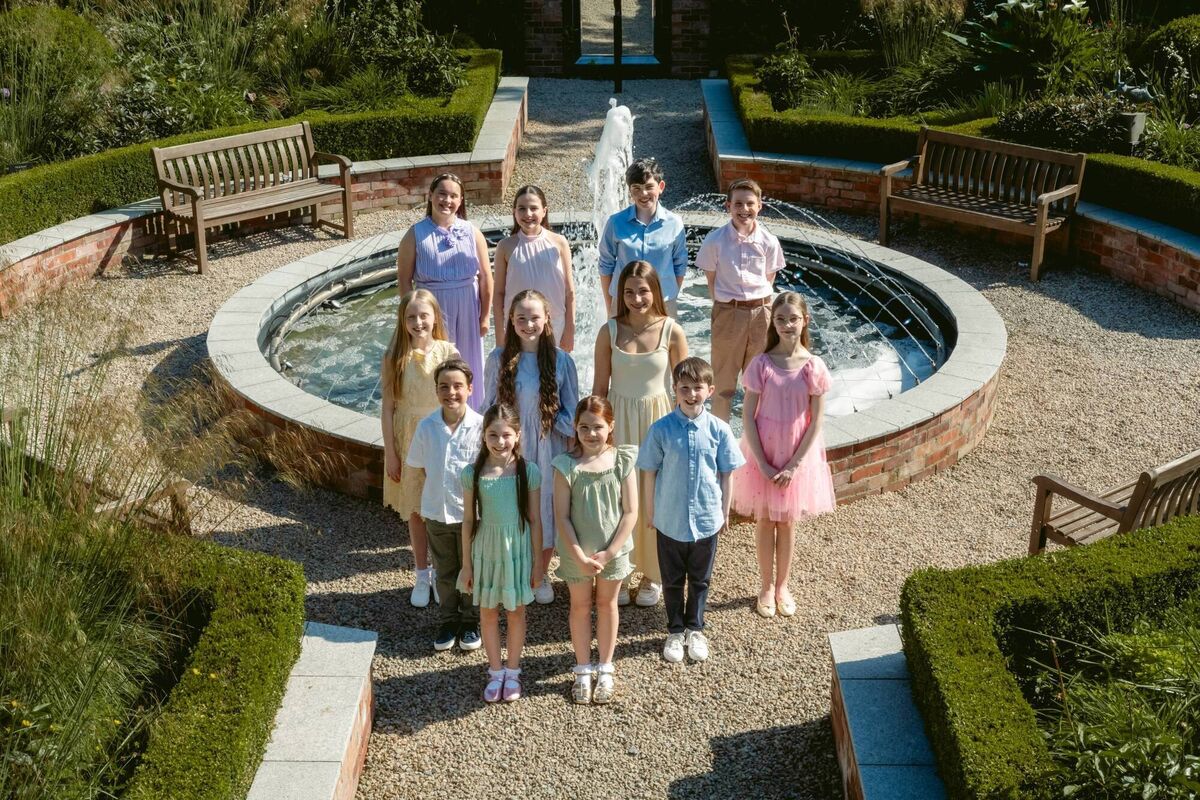
All of the other elements are also coming into place.
“The musical director is thinking about the band that they want, thinking about the ensemble, and who the ensemble is in order to get the vocals right. It’s a very specific show in that there is quite a bit of choral style music in it. He’s working towards figuring out who the best cast is for those roles,” says Gleeson.
“A lot of people have a relationship with Cork Opera House that’s based on memories, nostalgia, and family time. The Sound of Music, to me, feeds into all of that, because it is such a beloved show, and people have had such incredible experiences being in the show.”
“Maria is one of the greatest musical theatre roles of all time. We wanted to find a performer who could bring real sincerity, vocal power, and emotional depth to our Maria,” Gleeson said.
Carr auditioned in London, performing “If I Loved You” from Carousel before acting out a scene opposite Captain Von Trapp (with a crew member stepping in to play him).
She’s never been to Cork, so she is excited about living there for a few months, and has already been advised to try a pint of Beamish.
“The storyline is mainly very light and fun, but it’s got quite poignant and sometimes heavy undertones throughout, because of when it’s set,” says Carr.
“So I think for me as an actor, I can really get my teeth into exploring that journey.”
Carr is looking forward to exploring how Maria goes from a naive young woman to a mother needing to keep her family safe.
“I want to make sure that I consistently challenge myself and bring that playful, young, joyfulness to her at the start, but then by the end [show] that she’s more educated.
“Her eyes are more open by the end. I want to really respect the role, respect the person, and hopefully I’ll do it justice.”

With 37 adult roles and 12 child roles, there are many factors that the producers have to bear in mind when casting, says producer Killian Collins.
“Your Maria needs to be young enough to be credible as the postulant nun, but old enough to be credible as getting married to a man who has seven children,” he explains.
“And equally, [Captain Von Trapp] needs to be old enough to believe that he’s had this previous marriage and these kids and the career that he has, and young enough that it’s not crazy that the two of them are falling for each other.”
In addition, Liesl — the eldest Von Trapp daughter — is aged 16 in the text. But she is usually cast as an adult rather than a child. The age of Maria typically determines the age of who is cast as Liesl. Making this jigsaw work is all part of the process and, once the contractual details are ironed out, the cast can be officially named.
Meanwhile, there’s good news on the ticket front: By mid-April, the first three shows are totally sold out.
All of the components of the production are coming together now, says Killian Collins: “Lighting, sound, costumes, props, stage management, all those things are starting to move.
“You’re probably talking about a production meeting every three to four weeks at the moment, where all those departments are asking their questions and trying to answer questions, and there’s a sense of bringing the thing together and collaborating.”
Set and costumes are the two main things to be settled first.
Rathaya has been constructing the model box and, from this, technical drawings will be made. These go out to a number of construction companies for tender.
“There’s a process there of how much the set is going to cost to build, and if there needs to be adjustments to that design to meet budget,” says Collins.
“Eventually getting to a place where you can sign-off on a final design.”
Costumes are also being worked on, with a large number likely to be made from scratch. They’re also sorting the rehearsal space and planning out the overall workload.
Cathal Synott, the musical director, is putting the finishing touches to the orchestral reduction.
“I’m trying to get it to sound as faithful to the original as possible,” he says.
Next up is a pre-rehearsal week.
“We go into rehearsals the last week of June, rehearsing full time in the North Mon. It’s going to be all hands at the tiller,” he says.
On the first day of rehearsal, they’ll do a read through and then the set and costumes will be displayed.
“Then we get down to work — we go
scene by scene, number by number.
“We’ll try to get the bones of the first act in the first week, and the bones of the second act in the second week. We’ll be trying to eke out the joy in the storytelling,” he said.
The first time that the cast performs with the orchestra is “when you know you’ve got the show on its feet”, added Synott.
All involved are conscious that even though The Sound of Music is over 75 years old, much of it is relevant today.
“The themes that run through The Sound of Music are more meaningful to us now than they would have been in previous years,” Gleeson said.
“As we make this show, we’re conscious of that. And we want to bring people a hopeful and joyful experience whilst respecting the state of world politics at the moment.”
Auditions kick off on January 26. Backstage at the auditions in Dublin, director of the musical Claire Tighe (CEO of TheatreworX productions, who also directed and co-produced Little Shop of Horrors in 2025) told Weekend she has big plans for a “reawakening” of the original text.
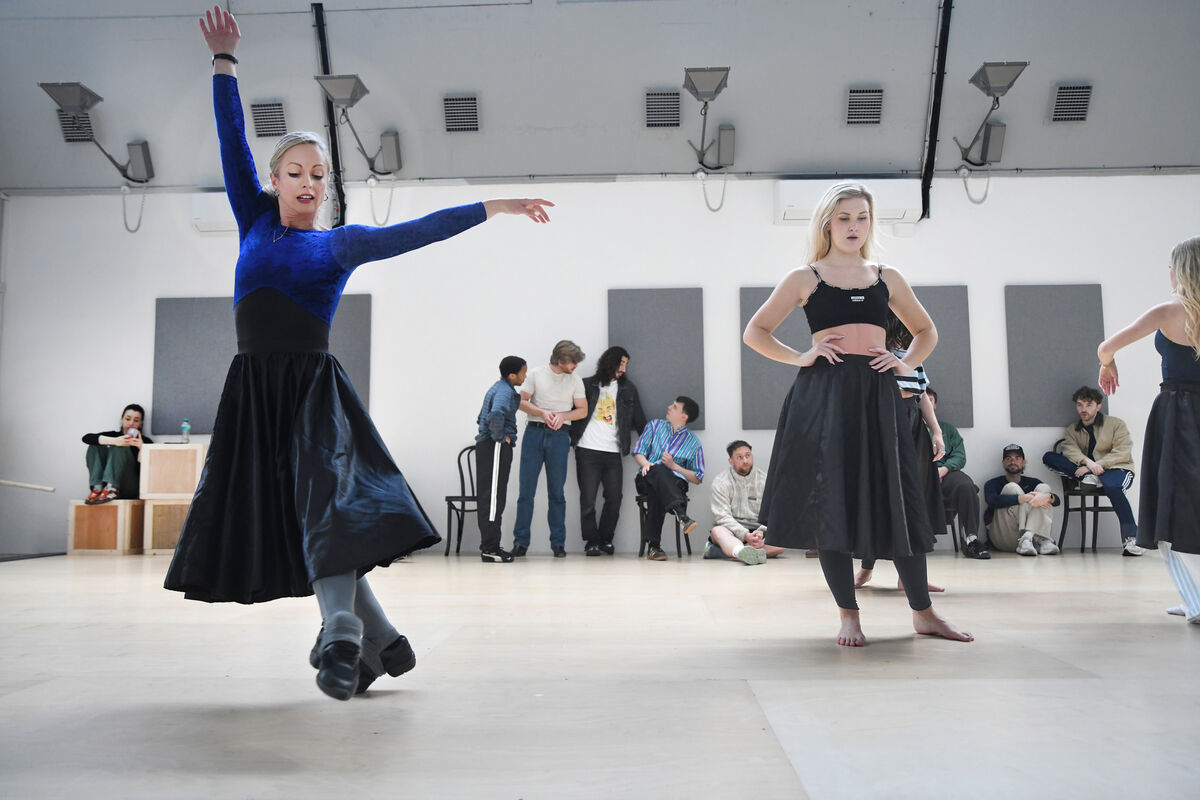
“We want it to feel relevant to today’s audience. So we’re setting it more in an ambiguous land and ambiguous time. It’s less gingham and hair bows, and a bit more about the land and the Earth,” she said.
The production is all part of Tighe, musical director David Bulger, and producer Stephen Faloon’s plan to “change the landscape” of musical theatre in Ireland and bring more homegrown productions onto the stage, especially given so many Irish actors typically have to head to London for roles. “It means so much to so many people, and it’ll have a knock-on effect for so many more people,” said Tighe.
“We call it in our business the ‘triple threat’,” he says.
A production of West Side Story at the theatre during the pandemic showed them what might be possible with future shows.
“We brought 73 Irish people back to work for four weeks. It was an amazing experience. And the first time that I got to see: Look at that. That’s all Irish, and it’s as good as anything in the West End,” Faloon said.
A big learning from Little Shop of Horrors was to invest where it’s needed.
When they realised there was “something missing” from the Little Shop set design, and the answer was an expensive revolve (which as the name suggests, can turn on stage), they splurged on the €25,000 cost.
“I’ll never forget when it did that first revolve in the first show, somebody behind me went ‘oh Jesus, that’s great!’ And we knew — right, that was worth €25,000,” said Faloon.
They also learned that the best ticket sales came during the run, proving that word-of-mouth is key.
Among those who successfully audition is David James Whelan, the lead singer with indie-pop band Wild Youth, who made his professional musical theatre debut in the Gaiety Pantomime’s 2025/26 production of
“The auditions were cool. It was a room full of so many talented Irish people,” he said. He nabs the lead role of Curly after sending in a self-tape and then doing two in-person auditions.
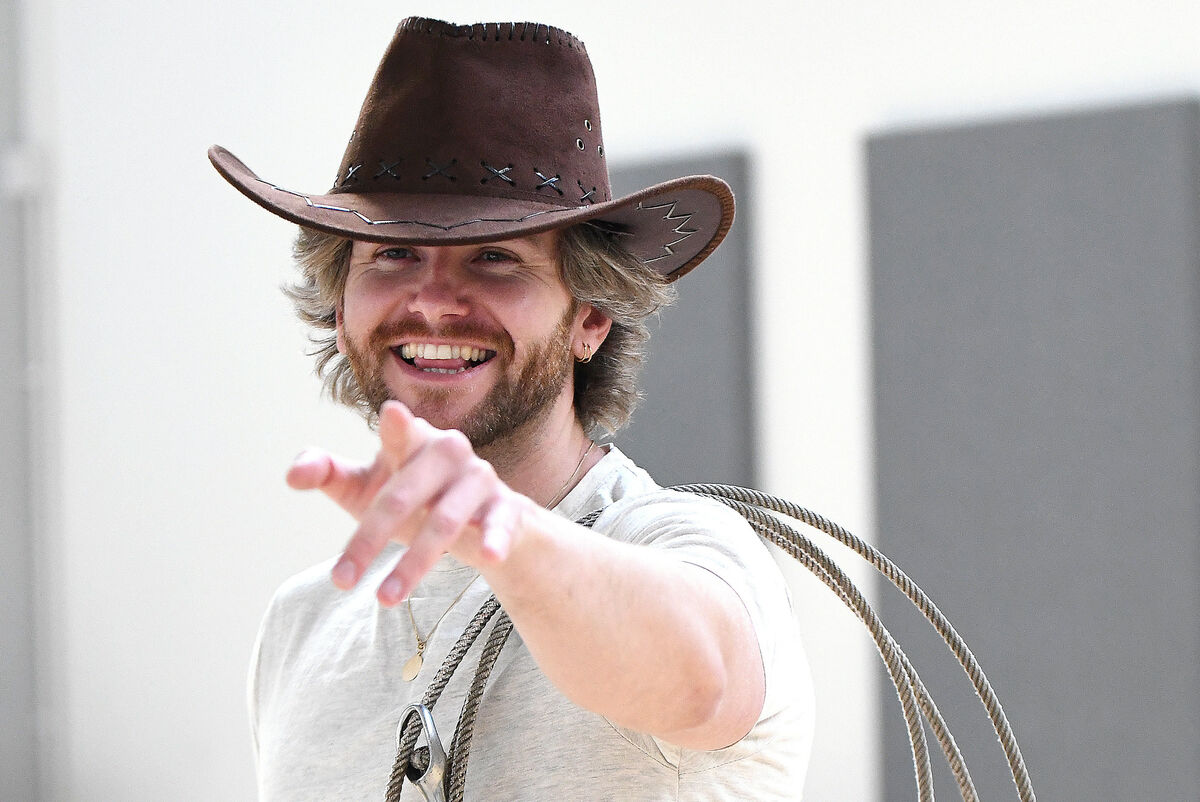
“The writing is absolutely phenomenal in Oklahoma!. It touches on so many foundational things that happen in everybody’s day-to-day life, and especially growing up and falling in love and trying to navigate the world.
“But this has depth and intensity to it, because during that time period everybody was fighting to survive in some way. Life was hard,” he says.
It’s not until April that the full cast will be announced publicly.
Whelan— like his colleagues — spends the time studying up on the role.
“I’m trying to find the Curly in me, and how I can relate to Curly,” he said.
It means a lot of reading and watching other stage and screen adaptations.
“Getting to be in the Bord Gáis in the summertime, playing a cowboy… It can’t get better than that,” he said.
Alongside Whelan, Oliver Flitcroft will star as Jud Fry, Molly Lynch as Laurey Williams, Rachel Gaughan as Ado Annie Carnes, Enda Oates as Andrew Carnes, Sacha Koplewsky as Will Parker, Molly Logan as Aunt Eller Murphy, and Julian Capolei as Ali Hakim.
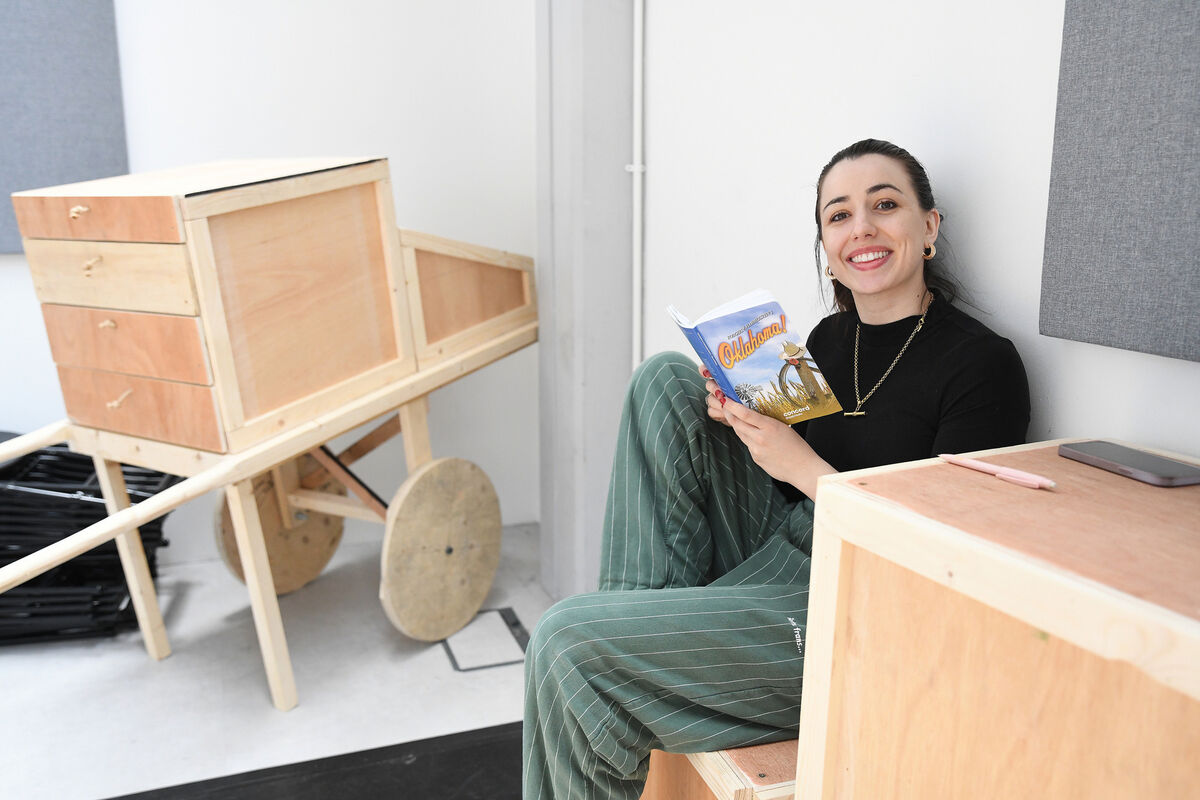
The theatre is busy promoting the show and revealing the cast. But it’s not until the following month that the cast and crew will all meet together in the one room.
Bagnall unveils a scale model of the stage, which has a minimalist copper backdrop and a multi-purpose wooden structure.
“Claire had mentioned Green Grow the Lilacs was a much darker story, so that’s where I began with the set in terms of trying to pick it apart and think about the fundamental elements of that environment,” Bagnall said.
He went down the rabbit hole of researching copper mining in Oklahoma, which led to his use of the material.
He had around six months to prepare, whereas McKeone had around six weeks to plan the costumes.
Tighe trusted them to come up with fresh designs.
“Being able to have that freedom to completely pick it apart and to put it back together is really exciting,” said Bagnall.
Elements like a windmill help the audience to understand the timeframe of the play.
“You have to be respectful of the time it was written in and what it was trying to represent at the time,” said Bagnall.
The set will be built in Galway and then transported to the theatre.
Meanwhile, McKeone has been researching topics like indigo dying for her costume designs. Her illustrations, which she shows to the team, balance contemporary and period elements and the costumes feature materials like denim and cotton.
“At the moment in the shops, there’s so many period blouses for women, which is great for us because it’s exactly the inspiration for the 1900s,” she said.
The costumes will either be made by tailors in Ireland, sourced abroad in places like Madrid (where there’s a big hire house), or bought online.
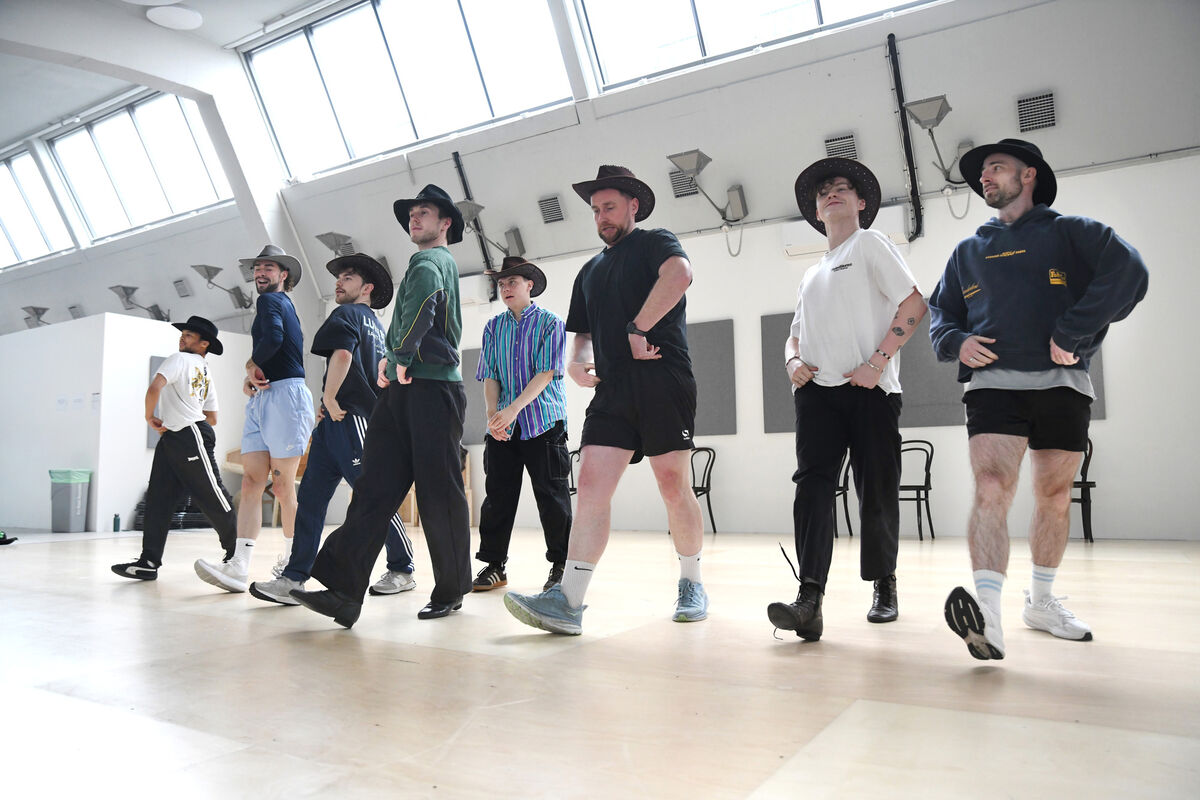
Rehearsals are currently underway off-site until Saturday, June 13. Then they’ll move into the theatre for tech week from Monday, June 15 with a full dress rehearsal on the Thursday and the very first performance in front of an audience on the Friday.
Opening night will be a nerve-wracking time — Stephen Faloon “couldn’t eat” on the night that Little Shop of Horrors opened — but exciting too. With a live orchestra, iconic songs like “Oh, What A Beautiful Mornin’”, and a fresh and modern approach to an original script, Oklahoma! promises audiences a new twist on a beloved tale.
- Oklahoma! at the Bord Gáis Energy Theatre, Dublin, will run from June 19 to July 5