'I'm still climbing that mountain': John Minihan talks Beckett, Athy, and his battle with cancer 
The celebrated Cork-based photographer currently has an exhibition at the National Gallery, writes Marc O’Sullivan Vallig
'I'm still climbing that mountain': John Minihan talks Beckett, Athy, and his battle with cancer 

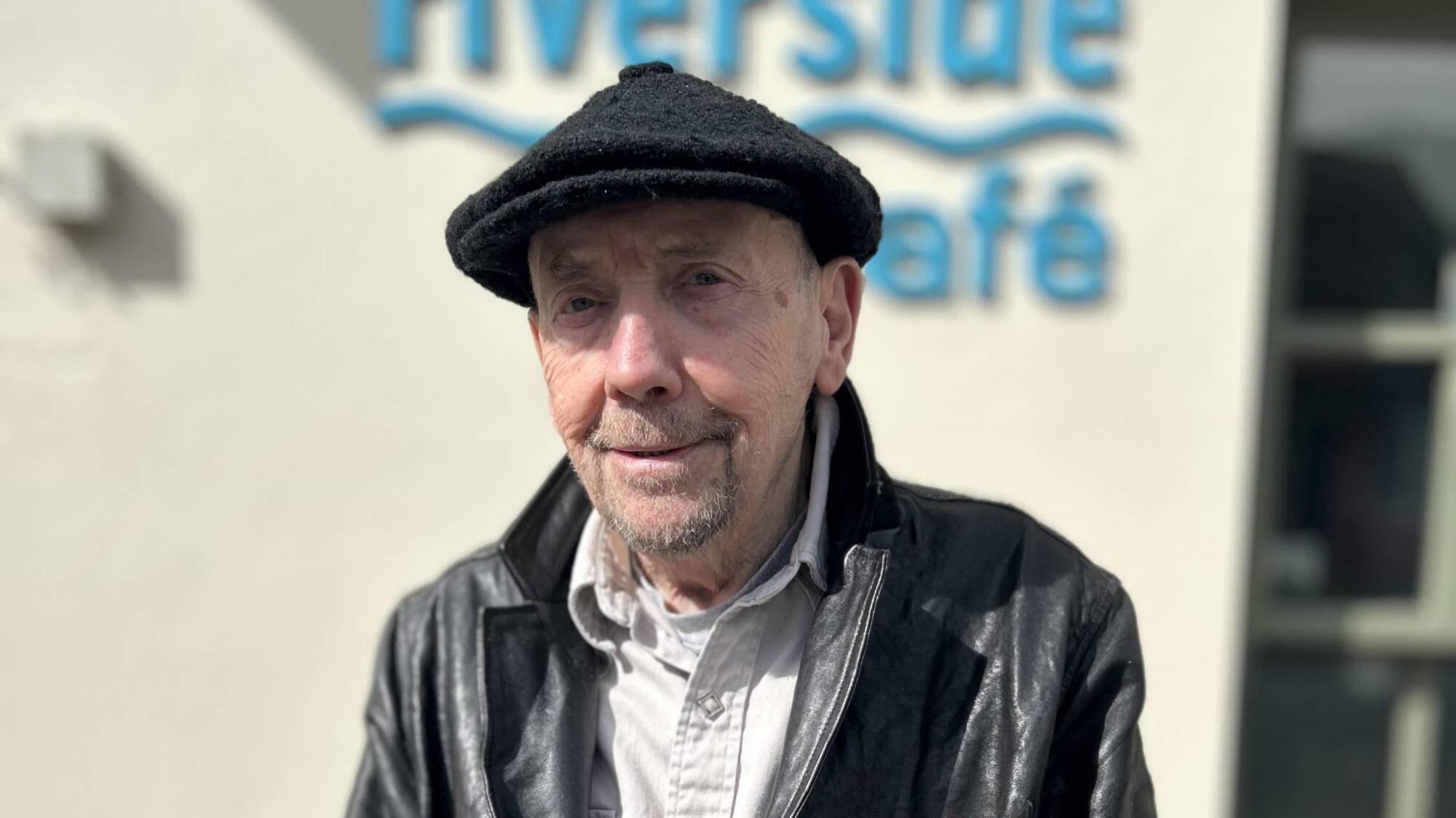
John Minihan in Skibbereen. Picture: Marc O'Sullivan Vallig

“Cancer is gothic,” says John Minihan. “It likes pessimism. So when I look at myself in the mirror, I always tell myself I’m looking good. It doesn't like that.” 

Over the past few years, Minihan has undergone a number of gruelling procedures at the South Infirmary in Cork, but his cancer is now in remission. “With all the radiography and chemotherapy, I went down to about 53 kilos at one stage,” he says.

“But, you know, I've always felt — and I tell people this, unashamedly — that I'm God's photographer. And I wasn't going anywhere just yet, I'm still climbing that mountain.”

Minihan certainly has plenty to live for. The University of Liverpool is producing a new book of his photographs of Samuel Beckett in September, and his work is currently being showcased in Visual Poetry, the very first solo exhibition by a photographer at the National Gallery of Ireland. 

It features his iconic images of Beckett, the painter Francis Bacon and the author Edna O’Brien, but also a selection of more intimate, domestic scenes from his native Athy, Co Kildare. 

Samuel Beckett photographed in Paris in 1985, by John Minihan. Picture: John Minihan/Courtesy of UCC

Minihan, who recently turned 80, remembers Athy, where he grew up on Plewman’s Terrace, with great affection. He was reared there from infancy by his aunt and uncle, the couple he still regards as his parents. 

“My father died before I was born,” he says, “and I only really met my mother once, in Dublin, when I was about seven. There was a picture of herself and my father on the mantelpiece, and I remember her saying, you’re not as handsome as your father. It wasn’t the most loving thing you can say to a child, was it?”

They never had any kind of relationship, and he did not attend her funeral. “I didn’t know the lady. I never had so much as a Christmas card from her. I don’t have a chip on my shoulder about it or anything, but basically, it was abandonment.”

Minihan was 12 when he and his adoptive parents moved to London. “My aunt got a job as caretaker for a house in Baron’s Court. There were about 12 ladies living in the house, all spinsters that worked in the civil service, and we had a flat in the basement. They were rather glamorous ladies, and when my aunt was cleaning the rooms, I would go in and look at their photographs.”

A few years later, aged 15, he won an Evening Standard photography competition for an image he took of two anonymous men at the Whispering Gallery in St Paul’s Cathedral. He soon secured an apprenticeship as a photographer with another newspaper, the Daily Mail, before becoming, at 21, the youngest ever staff photographer with the Standard. 

London in the 1960s was the epicentre of a cultural revolution, and he got to photograph the Rolling Stones, The Who, Jimi Hendrix and many others. Much as he loved being part of the London scene, he always returned to Athy two or three times a year. 

“There were 31 or 32 corporation houses on Plewman’s Terrace,” he says. “Everyone who lived there was different, but there was a certain neighbourliness about it, irrespective of how poor you were. It somebody died on the terrace — as they did, of course, when I was growing up — it was a real occasion. 

"You'd see these women dressing the body of the deceased. The blinds would be pulled down, and you’d see the silhouetted figures moving around. I was mopping up all this stuff as a child; my head would be in through the railing.”

In 1977, a local publican named Bertie Doyle helped him secure permission to photograph the wake of a woman named Katy Tyrrell. 

After the Burial of Mrs Katy Tyrell, in Athy in 1977. Picture: John Minihan/Courtesy of UCC

He hadn’t known her personally, but over the course of two nights and three days, he captured the whole ritual of the wake in her home — the clocks stopped, the mirror covered in a white sheet, the body dressed in a Legion of Mary burial shroud — along with her family’s reactions to her passing. The series became the basis of a celebrated exhibition and a book.

Three years later, he showed the photographs to Samuel Beckett when the publicity-shy author was in London to direct a production of his play, Endgame, at the Riverside Studios in Hammersmith. Beckett was so impressed that he agreed to let Minihan take his portrait. 

It was the first of several meetings, the last being a rendezvous at a café in Paris in December 1985, at which Minihan took what is arguably the most celebrated image of Beckett, with his empty coffee cup and an ashtray full of cigarette butts before him on the table.

Long after Beckett’s death in 1989, Minihan has continued to photograph productions of his plays, most recently a production in York of Krapp’s Last Tape, starring Gary Oldman. He has even photographed Beckett’s car, a surprisingly jaunty Citreon 2CV. 

“I never got in the car with Sam,” he says. “But John Calder, his publisher, did so often. He told me Sam could easily have killed him, the way he sped around all those side streets in Paris.

“After Sam died, his car came up for auction. I can’t say who, but someone in Ireland bought it, and he allowed me to photograph it, inside and out. The butts of Sam’s Gauloises were still in the ashtray. I photographed the log book as well. It gave Sam’s address, on Boulevard Saint-Jacques, just a five-minute walk from where I’d photographed him in that café.”

Minihan still thinks the Citroen 2CV should have been the first vehicle to cross the Samuel Beckett Bridge when it opened in Dublin in 2009. “They could have got Sam’s nephew, Edward Beckett, to drive it. That would have been a lovely moment, wouldn’t it? It would have been fantastic to photograph that, but it didn’t happen, I’m afraid.” 

Visual Poetry exibition

Minihan’s exhibition at the National Gallery will have two rotations, with a new body of work being displayed from June to October. 

One of the photographs he wants included is a portrait of his old friend Edna O’Brien with Van Morrison from 2014, when Morrison put on a series of concerts in Dublin, Belfast and London, with guests such as O’Brien, Michael Longley and Gerald Dawe reading his lyrics.

“I asked to photograph Van and Edna together,” he says, “and she turned up with an old vinyl copy of Astral Weeks. We were in the dressing room, and the two of them were laughing like kids. The lightbulb above them was shining on the album, and there’s all these circles, from when people put down their wine glasses at Edna’s parties.”

 John Minihan with his children, Siobhan and Bosco, at the National Gallery of Ireland. Picture: Abe Neihum
 John Minihan with his children, Siobhan and Bosco, at the National Gallery of Ireland. Picture: Abe Neihum

Minihan has been back living in Ireland since 1996, when he turned 50, his editor at the Evening Standard, Max Hastings, having arranged for him to receive a timely redundancy package. 

He settled in Ballydehob initially, but has since moved to an old schoolhouse outside Skibbereen with his wife Deirdre. He enjoys a great relationship with his three children.

“My daughter Siobhán lives in Leicester, and has given me three grandchildren,” he says. “My son Bosco works in St Martin’s Theatre in London, and my other son Emmet is driving cranes in the desert in Australia. They’re all doing well, and I’m so grateful for that.” 

These days, he is happiest photographing nature. “I had an angiogram last year, and they told me I have heart disease. But I think of that as being like having moss around the heart. 

"When I’m out walking, I might touch an oak that’s 200 years old, and it almost comes alive. So I’m going to be photographing a lot of trees with moss on them from now on.

“I have every reason to believe I’ll die in my 80s,” he continues. “It’s like Yeats said, as a man grows older, he thinks of the impending darkness. But I know I’ll be going to a better place. I’ve always gone to Mass, I’ve always had faith. Catholicism is like an insurance policy around you; it doesn’t cost anything to believe.”

  • Visual Poetry: The Photography of John Minihan runs at the National Gallery of Ireland until October 10. Further information: nationalgallery.ie

x

More in this section

Scene & Heard

Newsletter

From music and film to books and visual art, explore the best of culture in Munster and beyond. Selected by our Arts Editor and delivered weekly.

Cookie Policy Privacy Policy Brand Safety FAQ Help Contact Us Terms and Conditions

© Examiner Echo Group Limited