David Gray: 'In Ireland, a man and a guitar and some lyrics wasn't threatening'
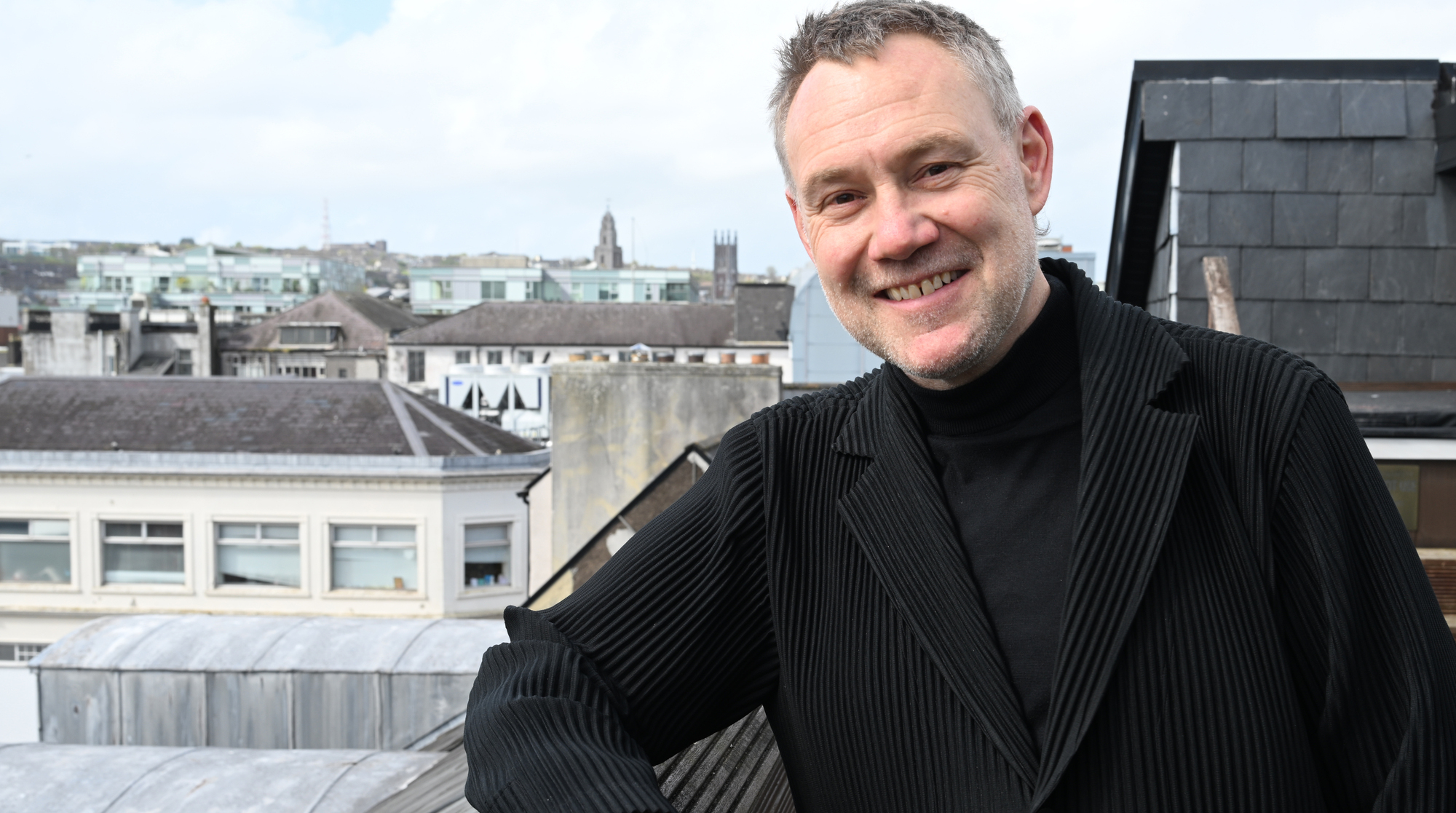
David Gray has seen all sides of the music industry. Picture: Larry Cummins
With over 30 years in the music business under his belt, David Gray feels comfortable in his skin and in his music. On his current tour Past & Present, the Cheshire-born 57-year-old is enthusiastically embracing his past and showcasing new music he says stands “shoulder to shoulder” with anything he’s created previously.
There’s a lightness and buoyant energy to Gray when we meet in Cork on a blustery day. One question in and I’m entranced; he’s thoughtful, savvy, expressive, hilarious, and could talk all day about the music industry.
Over the decades, he’s seen some changes of course. For a musician who started off on a slow burn before bursting into flame with the release of his fourth album he’s arguably seen all sides of the industry. The biggest change he’s seeing now though is how people connect with and find music.
“Streaming alters the way people engage with music. You have gazillions of songs available to you, 24/7,” he says.
This is a far cry from Gray’s early days of music discovery. Growing up in a small village in Wales, he found music by listening to his parents’ records, or through word of mouth in school.
“I never read the music press, and we didn't really have radio reception in the village where I lived so it was very much word of mouth and maybe
"Then I'd save up my money and I'd buy a single, and if I liked the single, I'd buy the album and then I’d have to live with that album for a while, because I’d spent all my money on it.”
The album is “sacred” to Gray. It’s legacy-building stuff.
“I'm still holding to the old idea that making an album is like hanging pictures in a gallery and you want people to go through them in sequence and for a reason. To end up in the last room, looking at the last painting, thinking about the ones they've already seen.”
Undoubtedly and proudly “old school” he gets lost in the process of making an album. “I love the whole process, the unknown of it all.” From the original seed of an idea to the fine-tuning and production, for Gray it feels like alchemy.

“You have no idea if this embryonic thing is going to turn into something or not, and then suddenly it starts to coalesce around the seed of the idea and it’s unlike anything you've done before, and you're uncertain of its merits or even what it is, but you know that something's happening, and you go with it.”
In these instances, Gray says he’ll have found new ways of saying something along his familiar themes of love, longing, mortality and the human experience.
Indeed, in his latest album he’s found new, melodic, confident ways to reflect on “life, observations or just the passage of time”.
Of course, no chat with David Gray would be complete without addressing the in the room. It’s clear that Gray’s relationship with his life-changing album has changed over the years, from the overwhelming aftermath of its success to a more philosophical, settled view of it.
“Look, I'm never going to have a moment like again,” he says. “But I’ve long since made peace with the whole thing. And I don't feel that the music I've made over the years is lacking anything.
" is as good a record as I could make. It has a strong melodic and deep emotional sense to it. Playing the songs on this tour I see they have a presence, and they hold the audience. I knew they'd be able to go shoulder to shoulder with the big songs in the set on the Past & Present tour. And that's been exactly right.”

In his Past & Present tour Gray intersperses these newer tracks with songs from and of course
Gray says he used to tweak many of these songs when he performed them live “just to try and keep things fresh and interesting, for me and the band”, but since the anniversary tour, he’s gone back to performing the songs in their “traditional form”.
Twenty-eight years after the release of , and nine albums later, Gray’s ability to experiment while remaining quintessentially and enduringly ‘David Gray’ means he regularly sells out venues, including his Live at the Marquee gigs in Cork in June.
“I've somehow managed to survive the postscript of ubiquity and keep myself going,” he laughs.
That acceptance he talks about has delivered him a new freedom. “I'm in a very free, creative era of my life. I can follow my intuition or my creative yearnings, wherever I really want to.”
That means he can make more records like the serene and atmospheric which he released in 2021. Calling it the “most fun I’ve ever had making a record” Gray says he’d love to follow that up.
“That record had a certain something that was like falling under a spell. And the way we made it as well, all live, around the mics with me at the centre, it was phenomenal.”

Ireland has long been Gray’s spiritual home. His connection to Ireland, and Cork in particular, thanks to early gigs in Nancy Spains on Barrack Street and being championed by RTÉ music show is undeniable, and Gray holds it tightly.
“At a time when I was making my early music, it really didn't fit into the picture that the cynical industry of the UK was thinking about it.
"But here in Ireland, a man and a guitar and some lyrics wasn't threatening. It was seen as a reasonable position to take. I sort of found a home here and it's all built from that first moment."
- David Gray will play the Live at the Marquee in Cork on Saturday and Sunday, June 13-14
I took my wife to a Manchester United game recently — the game against Arsenal. It was quite a fantastic day. Oh, my God. It was probably the highest point of my year so far. I was so excited. Fans like me are desperate for the vibes, and [Michael] Carrick gave us them for a few games and I cashed in.
A mix of things, but I’m really enjoying Khruangbin. I’m also a huge fan of Bill Callahan, so I listen to him a lot. And I discovered this song a couple of months ago called by Bobby Wright, that’s an absolutely stunning song.
I try not to be seduced by algorithmic suggestions but have to confess that a few things have popped up when I’ve left things running that are really good. I also find new music by overhearing what my kids are listening to.
The treasures of the heart are valued at the highest level here. Poets are seen as heroes, and this treasure of the national heritage and the mystery of place are so strong in the culture. And there's just a bit more time here, for conversation, for lucidity. It’s a culture that values the word and the story and the eye-to-eye contact.
When I was in Killarney last year, we did a bit of adventuring around the National Park. And a few years before that I was in Connemara, doing much the same thing. I would like to explore it more.