Film reviews: California Schemin' teems with Cultural authenticity and has terrific lead actors to boot

Gavin Bain (Seamus McLean Ross) and Billy Boyd (Samuel Bottomley) in California Schemin'.
★★★★☆
Cultural authenticity lies at the heart of California Schemin’ (15A), which begins in Dundee in 2003.
Rappers Gavin Bain (Seamus McLean Ross) and Billy Boyd (Samuel Bottomley) are trying to make a name for themselves as Scotland’s premier hip-hop duo.
Laughed out of a London audition for spitting rhymes in their native accents, and stymied by an industry that only allows for American artists, the pair make an audacious gamble by adopting the personas of Californian rappers touring the UK.
Based on a true story (previously told in the 2013 documentary The Great Hip Hop Hoax), California Schemin’ is actor James McAvoy’s directorial debut. He also plays the music producer who is duped by Bain and Boyd.
Grittily funny in its early stages, with the hapless Gavin and Billy jumping through all manner of hoops as they try to persuade a variety of producers (including James Corden) of their credentials, the movie asks interesting questions about cultural appropriation, the globalisation of pop culture, and the hypocrisy of the music industry around ethnicity.
But as the hoax evolves from a prank and the imitation of ‘American gangster-wankers’ to a subversive artistic statement, the narrative grows darker until the film is about the psychopathology of a world that requires the individual to adhere to certain expectations.
Gavin Bain and Samuel Bottomley are both terrific in the lead roles, with Bottomley’s Billy an easy-going optimist who succumbs a little too easily to the industry’s blandishments, while Bain’s Gavin is a study in psychosis. His morality and his awareness of who he truly is slip away through the gaps between the personalities he creates.
★★★★☆
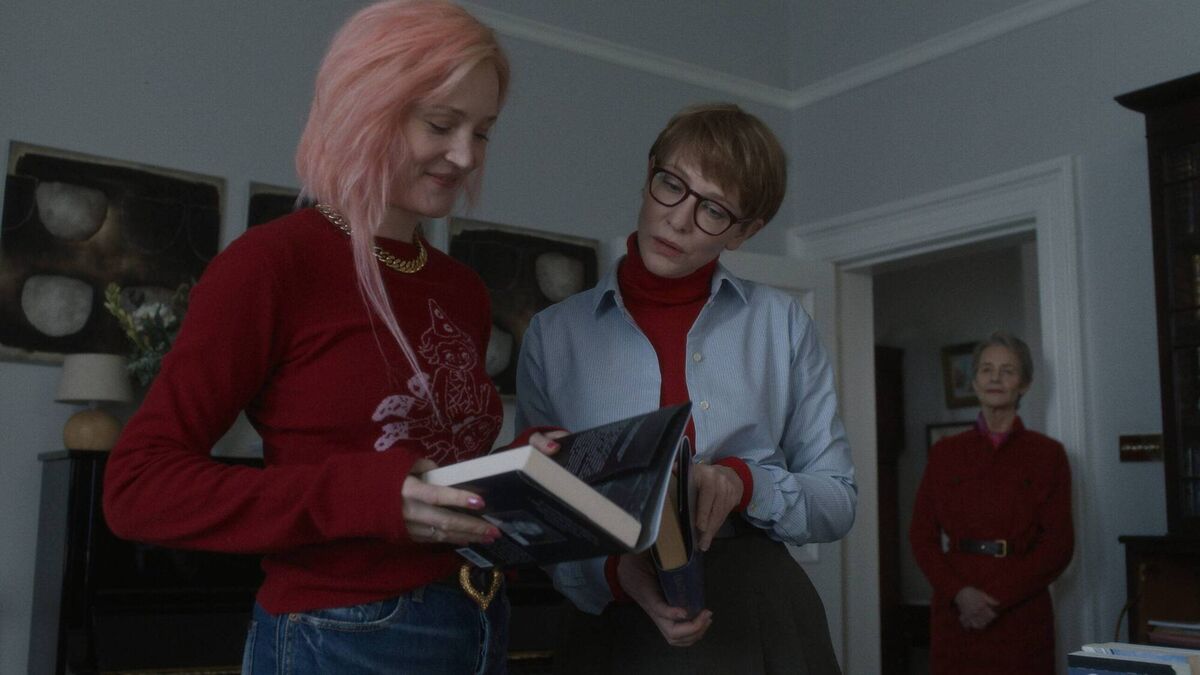
Jim Jarmusch’s (12A) is a triptych of short films exploring strained family dynamics that opens with Jeff (Adam Driver) and his sister, Emily (Mayim Bialik), arriving for a rare visit with their aging father (Tom Waits).
The siblings’ wariness of their father sets the tone: Both believe the older man to be a deadbeat, and the disconnection is only partly salved by small gifts and token gestures of affection.
That awkwardness continues in to the second section, where a mother (Charlotte Rampling) is visited for afternoon tea by her adult daughters, Timothea (Cate Blanchett) and Lilith (Vicky Krieps); although the third section, in which twins Billy (Luka Sabbat) and Skye (Indya Moore) come together in Paris to mourn their recently deceased parents is more hopeful in terms of the siblings’ retrospective appreciation for their parents’ child-rearing.
Deliberately repetitive and emotionally austere, the film features a very fine cast and unsettlingly provocative insights in to the most fundamental of all relationships.
★★★★☆

Opening in Algiers in the early 1940s, Francois Ozon’s adaptation of Albert Camus’ (15A) begins with Meursault (Benjamin Voisin) being arrested for the murder of an Arab man, Moussa Hamdani (Abderrahmane Dehkani).
Told in extended flashback while Meursault languishes in prison, the story explores his studied indifference to conventional morality and feeling: He seems puzzled by the emotional outpouring at his mother’s funeral, repeatedly tells his long-suffering girlfriend Marie (Rebecca Marder) that ‘love means nothing’, and appears wholly impervious to others’ pain.
The film builds to its inevitable and explosive climax.
Is Meursault — a borderline sociopath, surely? — the product of nature or nurture?
Shot in starkly shimmering black-and-white that echoes the ennui-ridden Meursault’s insistence on unvarnished truth, and featuring a performance from Benjamin Voisin that renders Meursault’s bland disaffection deliciously sinister, this is a timely revisiting of the existentialist anti-hero poster boy. The Stranger beautifully evokes the period detail of 1940s Algiers and firmly roots the story in the naked racism of French colonialism.
- All theatrical releases