Over 30 years after it came to our TV screens, why do we still love Friends so much?
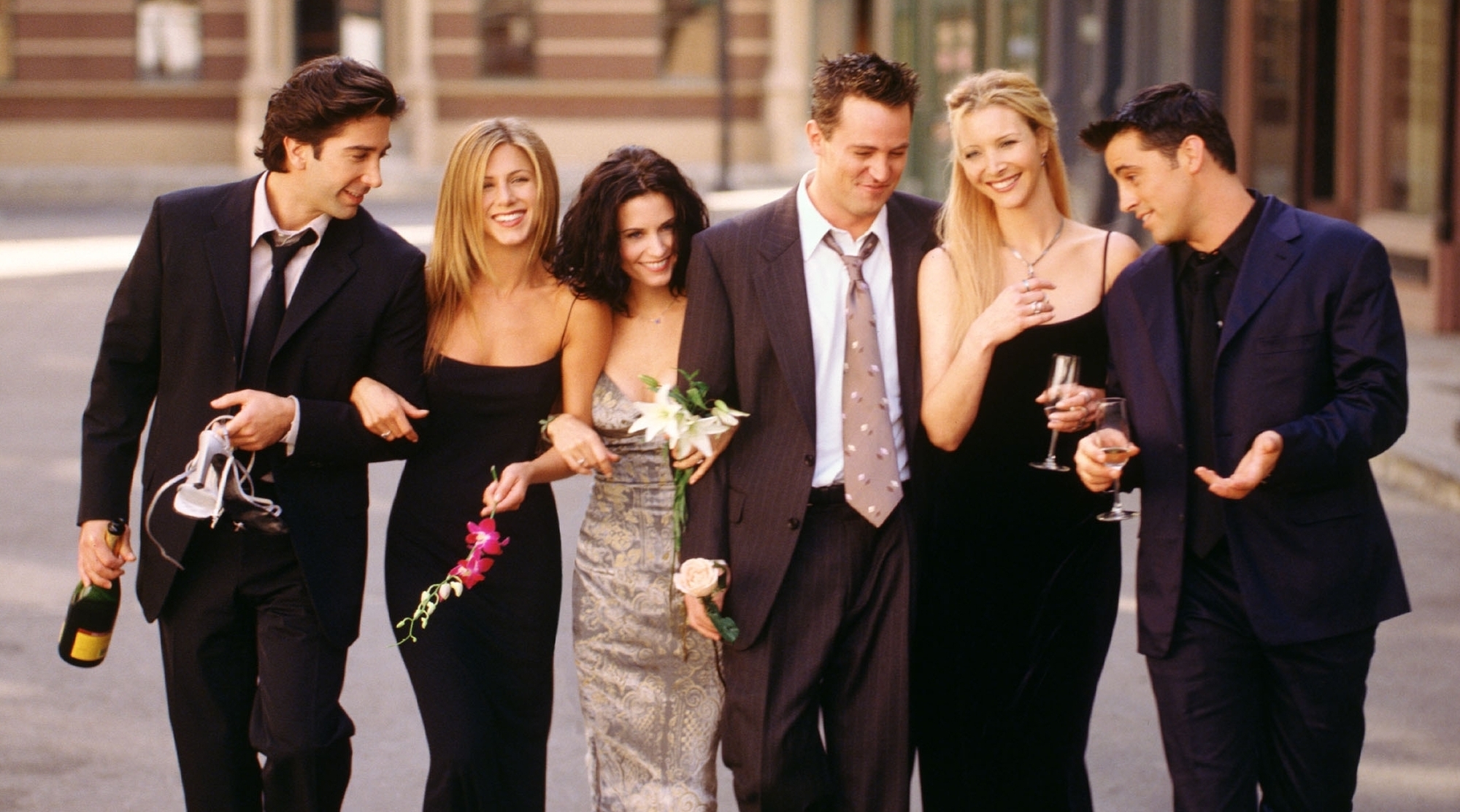
The cast of Friends, David Schwimmer, Jennifer Aniston, Courteney Cox, Matthew Perry, Lisa Kudrow, Matt LeBlanc. Picture: Warner Bros. Television
Friends may have ended 22 years ago but we just can’t let it go — we love it too much. Not just us mid-lifers who watched it on terrestrial telly back in the 90s, but generations who weren’t even born when the first episode aired in September 1994, yet still eagerly streaming it on their devices. It’s the ultimate comfort-watch.
Whether you’re Gen Z watching it on your phone, or Gen X watching it on a plane — they always have Friends on planes, perfect high-altitude jelly-telly — or the entire family planning an outing to see Friends! The Musical Parody at Cork Opera House (April 13–18), Friends is a sitcom that just keeps on giving.

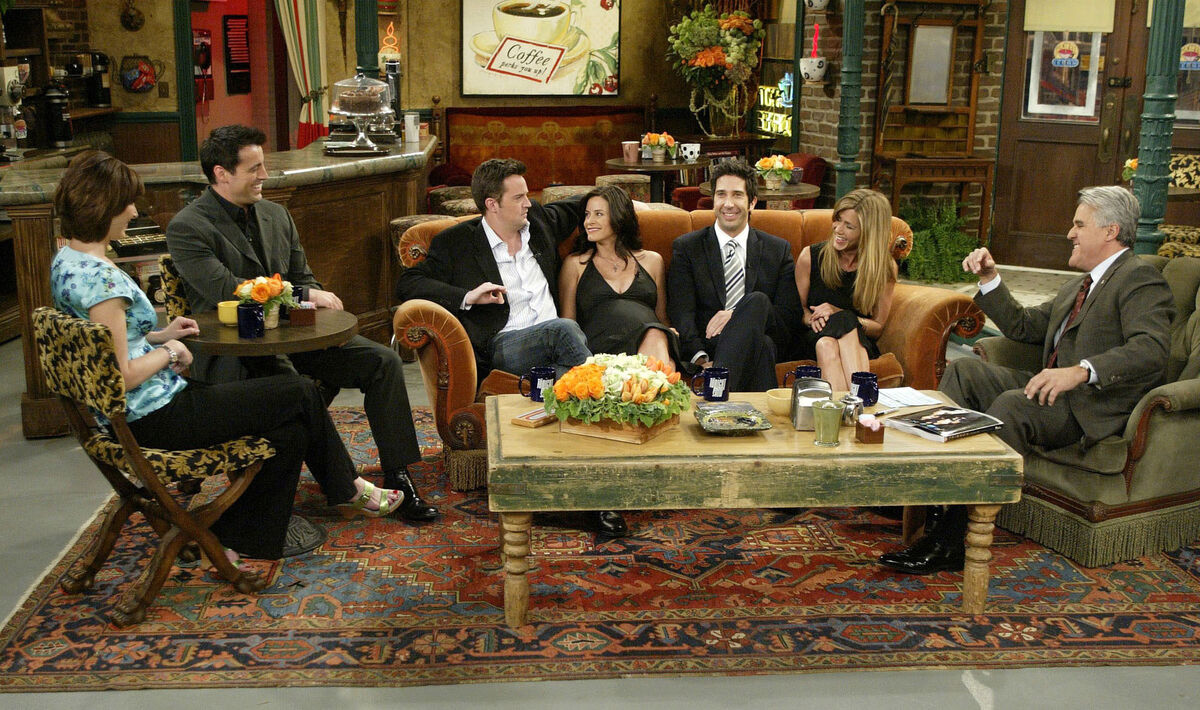
You can even visit the Friends Stage at Warner Bros studio tour in Burbank, and sit on the Friends sofa pretending you’re in Central Perk, before exiting through the gift shop full of Friends-themed merch and the café full of Friends-themed food, from giant coffee cups to Rachel’s Thanksgiving trifle (happily, a meat-free version). To date, Friends has made Warner Bros almost $5 billion (€4.31bn) — it’s the one that spins money.
Nobody could have predicted such enduring appeal when that first episode aired over three decades ago — the one where Ross’s wife had left him for a woman, where Moncia was dating Wine Guy, and when Rachel turned up at Central Perk in a bedraggled wedding dress, having just jilted someone at the altar. We were hooked.
And so began 237 episodes that lasted 10 seasons, and made Jennifer Aniston (Rachel), Courtney Cox (Monica), Lisa Kudrow (Phoebe), David Schwimmer (Ross), Matthew Perry (Chandler) and Matt LeBlanc (Joey) into household names, almost overnight. It also made them rich — they famously operated an all-for-one policy of equality, so that within the six actors, there were no standout stars who were better paid than their colleagues; by the end of the series, each actor was making $1 million (€0.86m) apiece, per episode. The final episode was watched by 52.2 million people.
What made Friends so good — and so enduring — was twofold: great writing, and great performances. Created by Marta Kaufman (whose husband Michael Skloff composed the series’ earworm theme song) and David Crane, the action centred not around the classic sitcom framework of a family, but a friendship group.
Kaufman and Crane based the ensemble on their own experiences of friends-as-family when they were struggling twentysomethings in New York, trying to get their careers off the ground, supported by and supporting their own close friendship group. The storylines aimed for character relatability — dating, work, flat-sharing — with Kaufman interviewing her babysitters to capture an authentic twentysomething linguistic tone.
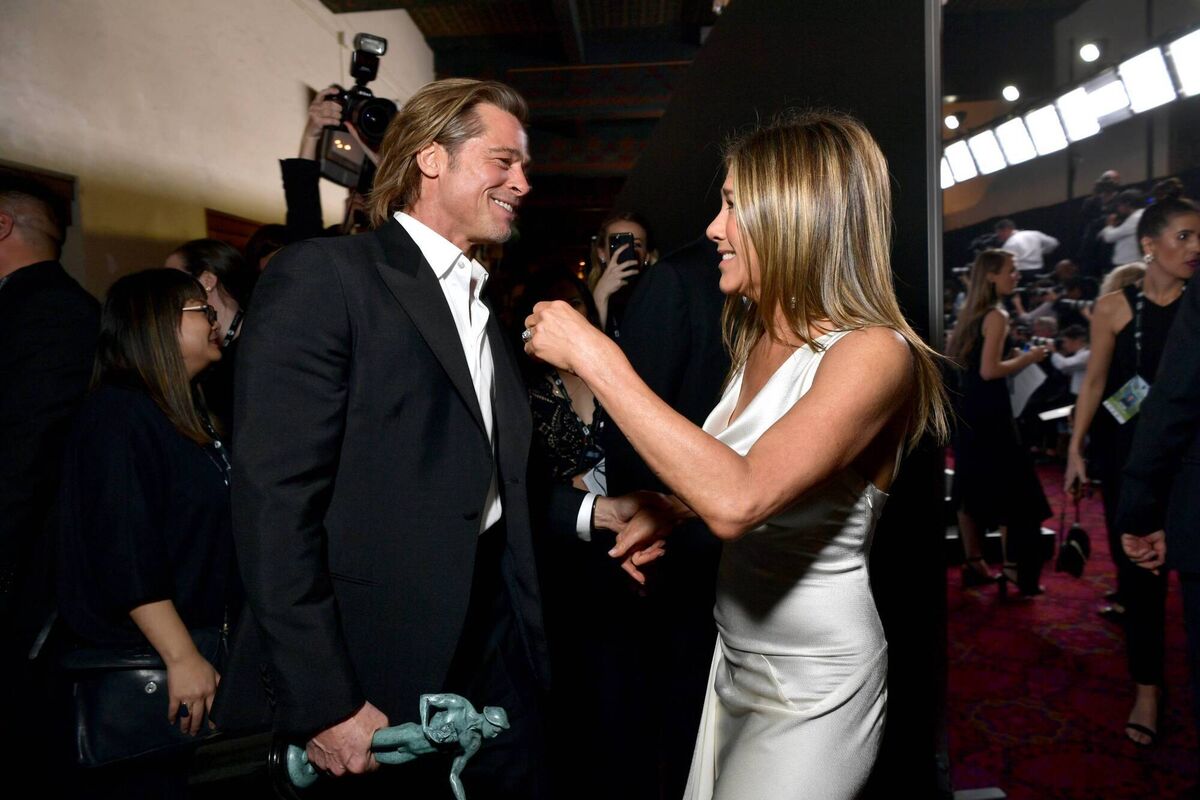
While there had been ensemble friendship sitcoms before — Cheers, Seinfeld, Golden Girls — none were as young and glossily attractive as the cast of Friends. Or quite as fast and funny. As the show became a hit, it began attracting stellar guest appearances, including cameos from Sean Penn, Reese Witherspoon, Robin Williams, Susan Sarandon, Bruce Willis, Gary Oldman, Jeff Goldblum, Julia Roberts (who dated Matthew Perry from 1995 to 1996), and Brad Pitt (Mr Jennifer Aniston at the time).
The sharp writing and brilliant performances made up for a marked lack of plausibility, as the story promoted a fantasy version of 1990s New York. In Friends, unlike in real life, three of the six characters — the three female Friends — worked poorly-paid jobs yet could afford Manhattan rent. Not just Manhattan rent, but a decent-sized, nice-looking apartment, while working as a waitress, a cook and whatever it was that Phoebe did involving singing about smelly cats. The male Friends’ jobs were unlikely in a different way — a soap actor and a palaeontologist. Seriously? Only Chandler’s job — corporate office worker — was vaguely plausible, until he quit to become a junior copywriter. While still being able to afford Manhattan rent.
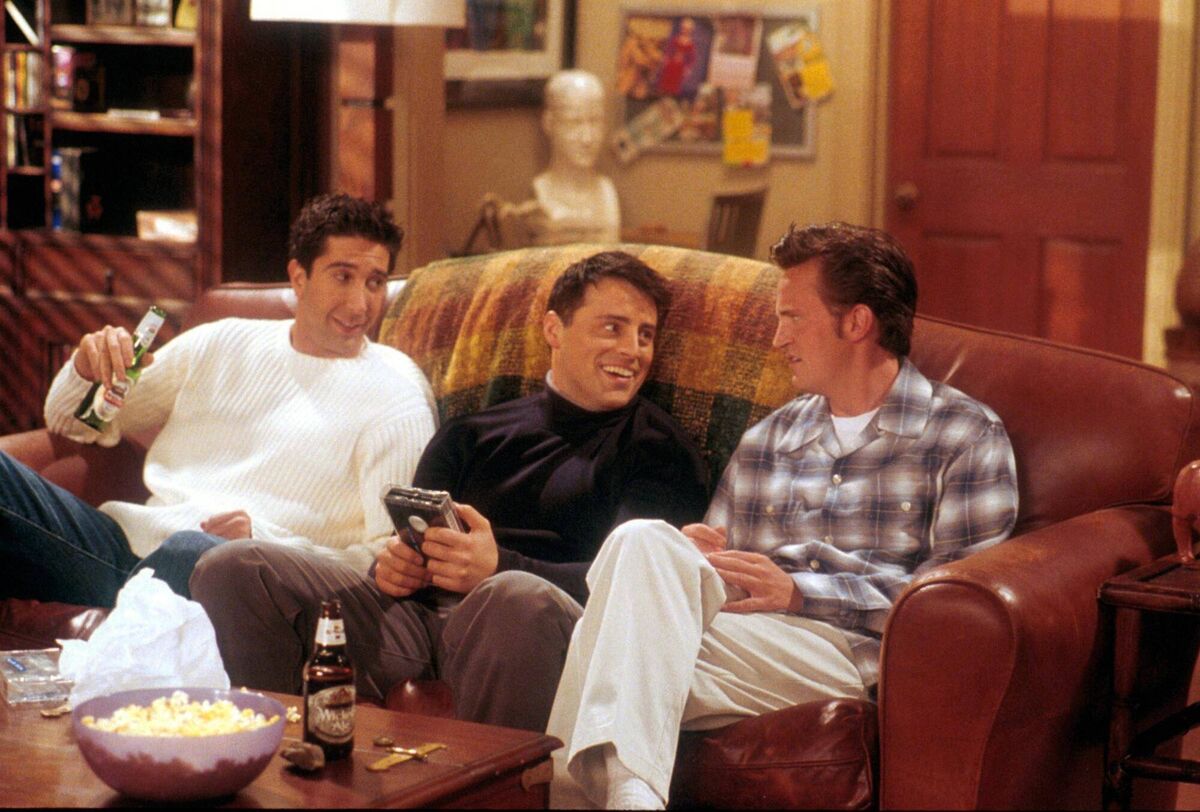
But to nitpick is to miss the point. They were gorgeous, hilarious, kooky, with fabulous hair and skin, Hollywood bodies and expensive teeth, and perfect wardrobes; you never saw them looking rough, or scruffy, or wrecked. They were all about galpals and bromance, romance (Ross and Rachel, Chandler and Monica) and sibling relationship (Ross and Monica).
The story lines were on a spectrum from silly to daft, which is why we still love them; the show reminds us of a time when — viewed retrospectively through nostalgic eyes — life seemed less complicated, more analogue, less polarised. A simpler time when we bumbled along, enjoying an unrealistic but highly engaging show full of shiny white characters who hung out in a coffee shop.
In recent times, it’s become chic to rubbish Friends, because if we apply a contemporary lens, of course, it highlights all kinds of problematic aspects. Like its whiteness. While there have been a smattering of walk-on black characters, mostly in later seasons, the show is overwhelmingly white — a complaint similarly aimed Sex And The City, another 90s friends ensemble sitcom which waited until its 2008 spinoff film to awkwardly shoehorn in a black character played by Jennifer Hudson. Were Friends to ever reassemble, like the Sex And The City cast minus one key player, would they overcompensate by clunkily throwing in the kitchen sink of diversity, like in widely hate-watched And Just Like That?
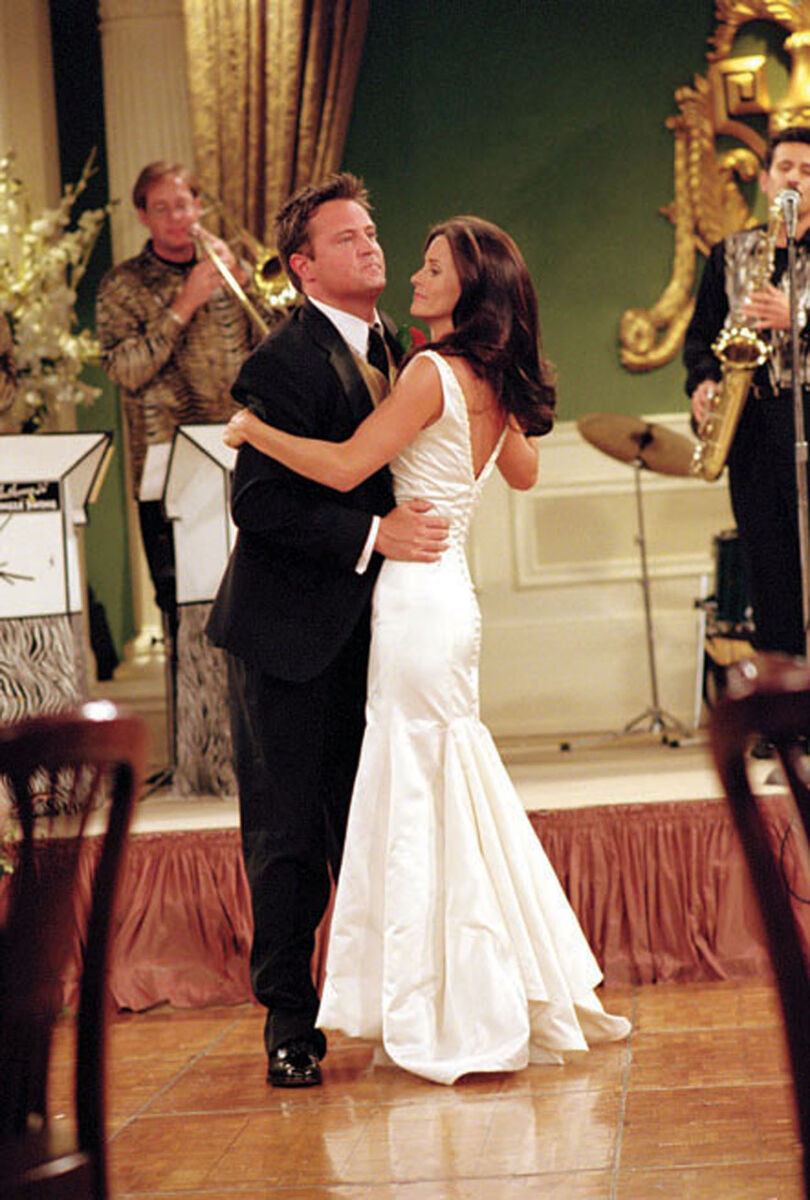
And then there’s the fattism — the 90s was still a time where fat people were either jokes or monsters. Monica, played by an emphatically non-fat Courtney Cox, was a fat teen. Fat Monica first appears in flashback in season two, although her ex-fatness is treated as a long running joke — she appears in four episodes, in a fat suit dancing with a doughnut, but is frequently referenced throughout the series. She’s eventually fat-shamed into thinness, stops being a fat joke, and becomes a sexually viable women worthy of Chandler. Yikes.
There’s also the lame gay jokes and transphobia, the kind that were standard in the 90s. Ross’s ex-wife Carol is gay, and the butt of casual homophobia from Ross, who also has a problem with a male nanny; Chandler’s dad is a transwoman — or a drag queen, because the script doesn’t seem to know the difference — who is played by a straight woman (Kathleen Turner, who has since stated she wouldn’t take the part now). And you could wade into its woeful gender stereotypes too — Monica the nit-picky clean-freak housefrau, Rachel the hot ditzy haircut, Joey the womanising sports bro. Yet even from within the depths of contemporary post-woke culture, Friends still gets a hall pass. It is widely forgiven, because it still makes people laugh. Even in unfunny 2026. Perhaps especially in unfunny 2026.
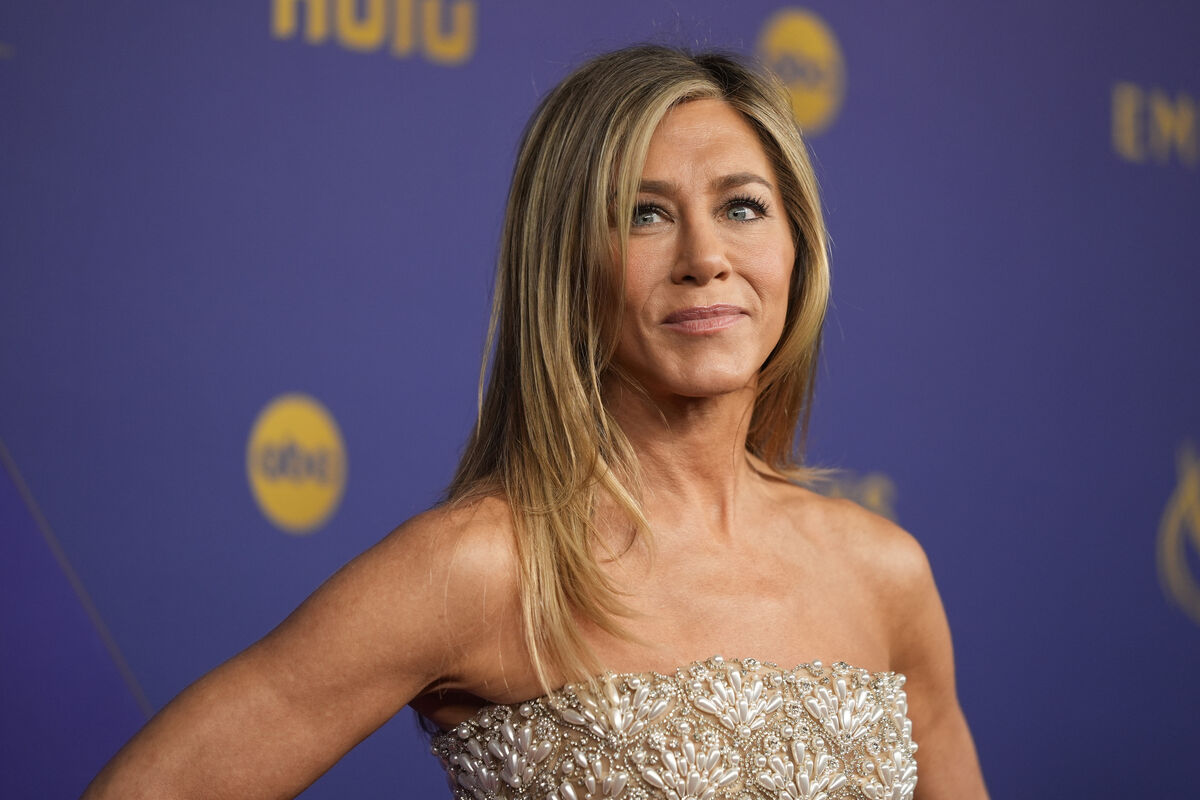
Far more problematic at the time was the eye-watering real-life sexism encountered by Jennifer Aniston at the hands of the media, where instead of being known as a phenomenally talented and successful performer, she was slapped with the label ‘Poor Jen’. This narrative ran and ran, focusing on Aniston’s private life and intimate relationships instead of her professional prowess. Tabloids shifted a lot of units comparing her to Angelina Jolie (remember Brangelina?), while assuming the role of creepy gynaecologist in their endless speculation as to why she hadn’t produced any babies.
All this fake concern was being directed at the wrong cast member. While ‘Poor Jen’ was anything but, in real life, Matthew Perry was dealing with long-term and ultimately catastrophic addiction. During his time as Chandler Bing, he was drug and alcohol-free for just one of the ten 10 seasons — season nine — yet is widely regarded as the most brilliant cast member, with the sharpest ad-libs (many of which were left in), and the most perfect timing. He was, said Lisa Kudrow, “the funniest.” Yet much of his brilliant performance happened in a blur.
“It was not lost on me that Chandler had grown up way faster than I had,” wrote Perry in his memoir, Friends, Lovers and the Big Terrible Thing, the year before he died of ketamine poisoning in 2023. He described how the catalyst for the sitcom’s end was Jennifer Aniston wanting to leave to pursue a film career, but how the storylines of the six friends had, in reality, drawn to a natural conclusion:
As they left Stage 24 at Warner Bros in Burbank – the Friends Stage – he remembered how everyone — even Matt LeBlanc — was crying.
Except him. (“I couldn’t tell if it was because of the opioid I was taking, or if I was just generally dead inside.”) Post-Friends, Aniston made a slew of successful lightweight movies before moving to an Apple TV series in 2019, The Morning Show. Courtney Cox starred in another comedy series, the unfortunately named Cougar Town, from 2009 to 2015, and appeared in the Scream movie franchise. In a nod to Monica, she also launched a collection of homeware.
Lisa Kudrow starred in HBO’s The Comeback, about a soap star trying to make a comeback, which was subsequently cancelled in real life; she has since popped up in varying capacities as writer, producer and performer in non-household name projects.
Matt LeBlanc made two seasons of the not-very-good Friends spinoff Joey, as well as playing his older real-life self in the brilliant meta comedy Episodes with Tamsin Greig and Stephen Mangan. David Schwimmer has played Robert Kardashian in a 2016 movie about OJ Simpson, voiced the giraffe in the animated Madagascar films, and appeared in the Disney series Goosebumps, as well as working in theatre and as a director. And Matthew Perry appeared in several forgettable TV series – including a 2015- 2017 reboot of the Odd Couple — as well as publishing his memoir, before his death aged 54.
The Friends didn’t all stay friends. “We only had dinner, the six of us, once since the show had ended,” Lisa Kudrow told Modern Family star Jesse Tyler Ferguson on his podcast, although the three female stars remained close.
The six actors were not seen together on screen again until 2021, for the one-off feature-length Friends — The Reunion, an unscripted event inexplicably presented by James Corden. The six converged on the original set, accessorised by a parade of special guests, from David Beckham to Justin Bieber.
It was one of the most-streamed events of the year – from a purely nostalgic, where-are-they-now point of view, it was the one we had been waiting for.