'It was the first time I’d ever met a sexologist': Ben Reilly on art and Cork
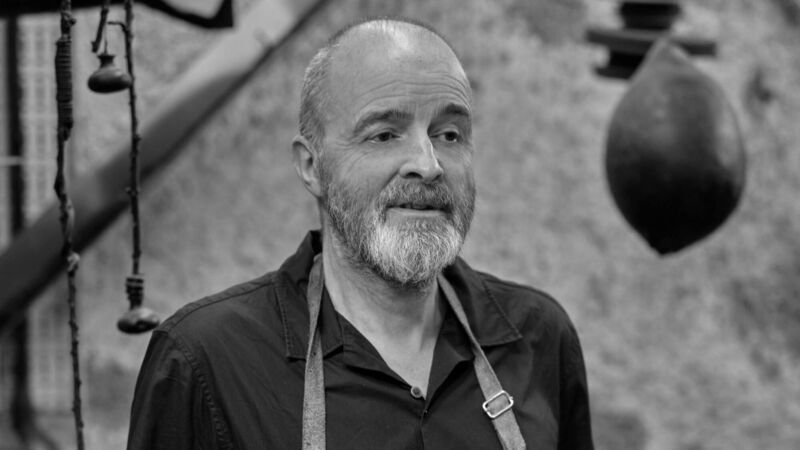
Dublin-born Ben Reilly has been resident in Cork for many years.
The tombstone of Thomas Ronan, a former Mayor of Cork, can be seen today on the grounds of Triskel Arts Centre on Tobin St in Cork. Known as ‘the Modest Man,’ it was carved in the late 17th century and features a human skeleton.
The carving has fascinated the artist Ben Reilly for years. “The skeleton has 11 ribs on one side and 14 on the other,” he says. “And it looks like he’s got a Walter Raleigh moustache. I suspect the craftsmen who made it were taking the piss, big time.”
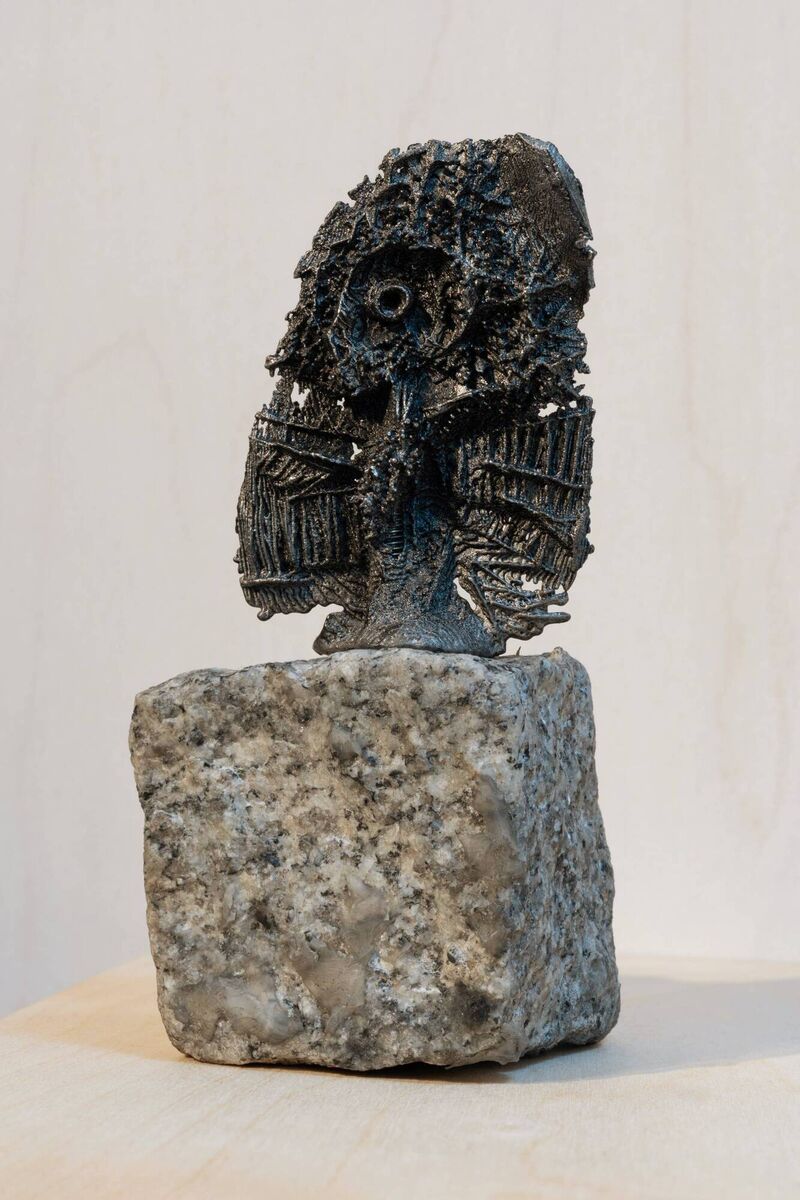
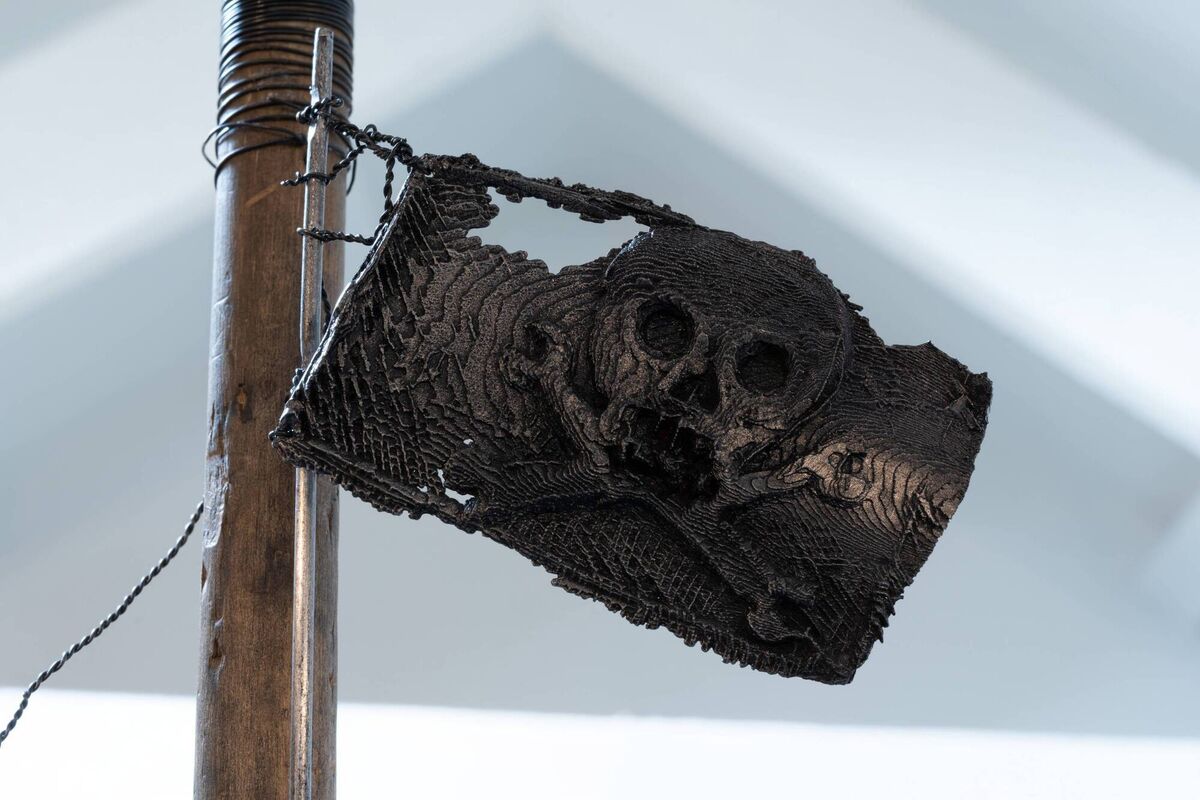
The Modest Man has inspired several of the works in Familiar, Reilly’s new exhibition of sculptures and prints at Cork Printmakers Studio Gallery. Others feature an old yew tree in St Luke’s, and most seem preoccupied with death.
Reilly’s interest in the subject goes back to his student days. A native of Dublin who came to Cork in the early 1980s to study at the Crawford College of Art and Design, he remembers exhibiting a sculpture inspired by bog bodies in a post-grad exhibition at the Crawford Art Gallery.
“It was life-sized, in hammered steel,” he says. “I was invigilating the show one Saturday when this Dutch couple came and asked if they could buy it. The woman explained that she was a sexologist. I had no idea what that was, but it turned out that she was a lecturer, and she taught all sorts of things to do with sex.
“That was a real eye-opener for me. It was the first time I’d ever met a sexologist, and the first time I ever sold a work. They actually asked why I was selling the sculpture so cheaply. I could have pretended there was a zero missing, but honestly, I was delighted to get £100 for it.”
It was the start of a colourful period in Reilly’s life. Not long after, he won a scholarship to study in Greece for a year. He was to work at a college in Athens, but the facilities there were negligible, so he decided to spend time travelling instead.
“I went around the different islands, and then my girlfriend came over and we spent a few months on Crete. We worked on a farm. She was picking tomatoes and I was loading the trucks. Towards the end of our stay, I started wanting to make things again. I remember being on a beach and grabbing lots of driftwood and building this massive sculpture.”
Around that time, a group of artists in Cork were working to establish the National Sculpture Factory in the Old Power House on Albert Road. Reilly was one of the first to take a studio on the premises.
“The building was full of repossessed furniture and ballot boxes,” he says. “I had a space in one corner. I bought a second-hand welder and went to the scrapyard to get material and started working. There was no toilet, so I used Lucozade bottles. I remember another artist coming in one day. She saw all these bottles and said, oh, that’s really interesting. She thought I was making some kind of installation.”
Much as Reilly loved making art, he always needed other income streams to cover his expenses. At an exhibition opening, he got chatting to Mary O’Donnell of the Archaeology Dept at UCC, and asked if she knew of any jobs going on digs.
“Mary mentioned that there was a research project starting on a ringfort in Garranes. I got taken on. I had a motorbike at the time, so I was driving out every day. It was idyllic. I remember after the first week being handed a cheque, and it was the most money I’d ever got for a week’s work in my life.”
Reilly continued working on digs, going from one contract to another, for the next ten years or so. When an opportunity arose to study archaeology at evening classes at UCC, he went all in, completing a degree in 1995.
He also continued making art, exhibiting in solo and group shows in Ireland, Europe, China and America, until eventually he returned to education once more, completing an MA in Fine Art Sculpture at the Winchester College of Art and Design in 1999.
On returning to Cork, he sought out a new studio space, somewhere he could work on his own.
“I wrote to the City Council,” he says, “asking if there was an empty building I could use for a short period of time. I told them I’d just do a project, and be gone. I heard later that when they looked at my portfolio, one guy said, all this stuff is about dead people, why don’t we give him the old city morgue on White Street?”
Until a few years before, the morgue was where doctors and coroners had performed autopsies on accident victims. When he got in, Reilly was surprised to find that the slabs for laying out the dead were still in place, along with a bath and a sink, and an angle grinder that was still plugged in and had stains on it that looked like blood. “It was like the staff had just laid down their tools and walked out,” he says.
Reilly had intended using the space as a studio for six months, but ended up staying for 18. However, he was never satisfied with the work he produced there. “I mean, in hindsight, it probably wasn’t the healthiest place to be.”
It was around this time that he began teaching workshops in secondary schools. Eventually, he was hired to teach sculpture on the portfolio preparation course at St John’s Central College in Cork, and then, in 2003, he secured a full-time position as a Fine Art Lecturer at South East Technological University, Waterford Institute of Technology. Today, he commutes from his home in Cork during term time.
Despite the demands of teaching, Reilly spends more time than ever in the studio, he says. He is always experimenting. He made the sculptures in Familiar by carving into cuttlefish bones he sourced on the beaches in West Cork, and pouring molten alloy in to produce tin casts. The prints are etched in acid onto metal plates. Both processes he sees as forms of drawing.
“It’s only a few weeks since I finished these pieces,” he says, “but I’m itching to make new work already.”
He remembers an occasion, back in the 1990s, when he had to sign on for the dole between jobs. “It was down in Midleton. I was telling the guy who was interviewing me about making art and doing this, that and the other to support myself. And he was kind of fascinated by the whole thing. At one stage, he said, 'So it’s a bit like a religion, is it?' At first I was thinking, no, it’s not. But then I thought, yeah, you could say that. It is a bit like a religion.”
- Ben Reilly, Familiar runs at Cork Printmakers until April 30
- corkprintmakers.ie
- benreilly.ie