'My arse': Ricky Tomlinson on Liverpool, building site adventures, and The Royle Family
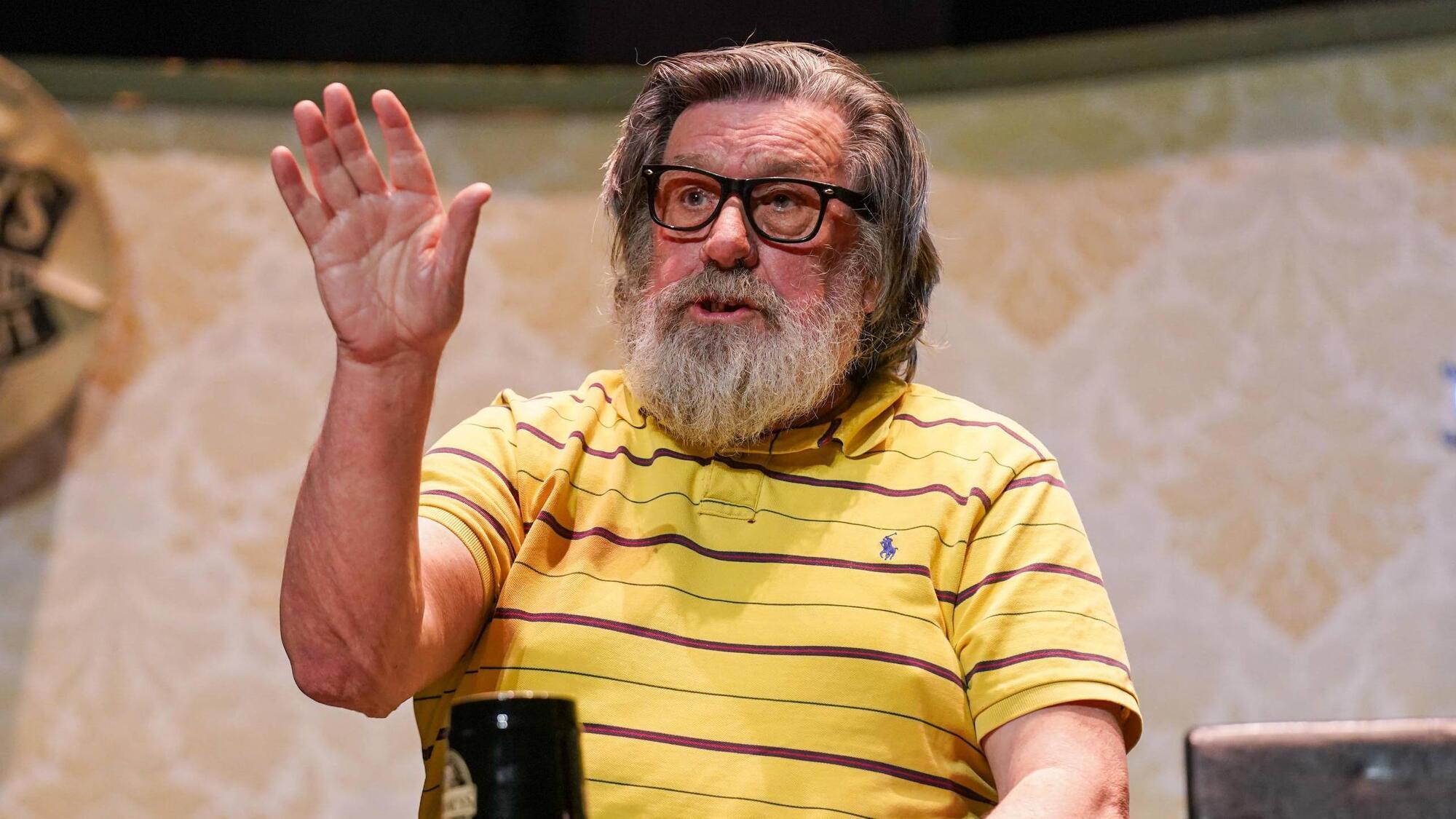
Ricky Tomlinson performs at Vicar Street in Dublin.
Ricky Tomlinson is one of those people who can’t help being funny.
He was born in September 1939, a few weeks after the Second World War started. His mother had been evacuated to Blackpool, as Liverpool was a bomb target. Tomlinson returned to Liverpool after the war and has remained living there since.
He’s one of the city’s proudest sons, and was part of his hometown’s music scene in the late 1950s when a couple of young musicians named John Lennon and Paul McCartney were playing with The Quarrymen.
“We were all on the scene together,” says Tomlinson. “I had my own little band called The City Slickers. There was this piano player, a wonderful musician. His name was John Lowe.
"I said to the lads in the band, ‘I'm going to poach this fellow. He's really good.’ I went and poached him. I didn't know, but the band he was playing for at the time was The Quarrymen. He left The Quarrymen to join me. And he's never forgiven me!”
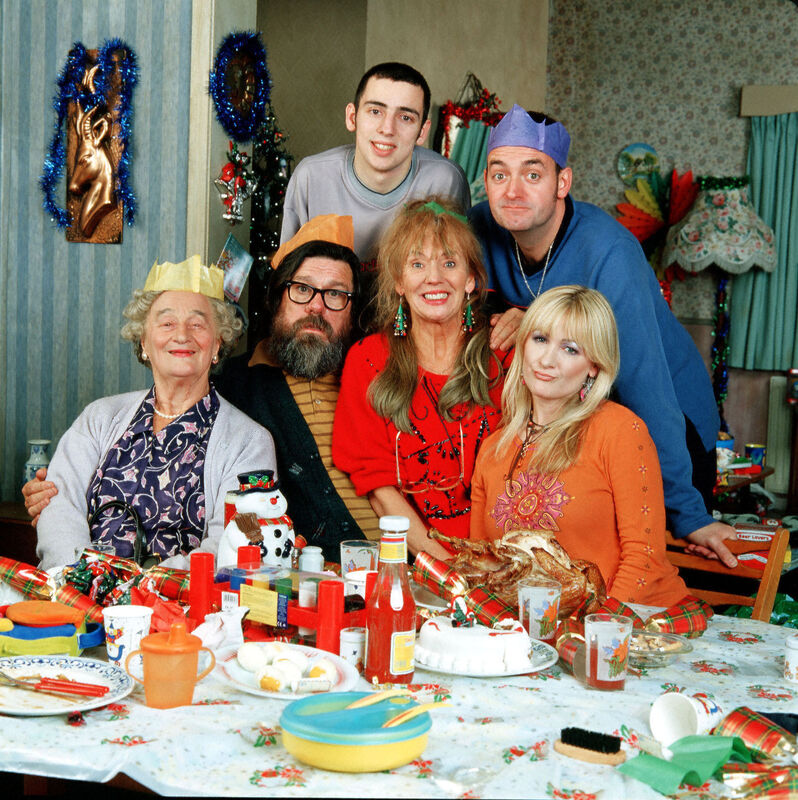
Tomlinson mentions that in the early 1960s, his co-star on sitcom, Sue Johnston — who played his character’s wife — was a regular at the Cavern venue during the Beatles’ legendary live sessions. She was a typist working in the city and used to go along to the bar at lunchtime. “She knew McCartney very, very well,” he says. Of the cast from , though, Tomlinson singles out Liz Smith, who played ‘Nana’, as his favourite.
“Liz Smith and me were very close,” he says. “She used to have me in hysterics with her stories. If anyone saw us arguing, they would think it was real. We used to film at Granada. Facing the studio, there was a five-star hotel. Because Liz come from London, she was put up in the hotel. It was only up the road for me; I'd go home overnight and travel back the next morning.
“Liz would come on the set about ten past nine. We'd be having something to eat. She'd start picking bits of our food. I’d say, ‘Go away! You've had your blinking breakfast in the hotel. They’re stopping the winter fuel allowance on pensioners because of the likes of you! You greedy so-and-so, coming here and stealing our breakfast!’”
Early in his working life, Tomlinson worked on building sites. He remembers one Irish foreman fondly. His name was Mick Mee. He was, according to Tomlinson, about 6ft 9in tall. “He was a man mountain,” he says. Tomlinson was the steward on the building site, working under him while they built the Wrexham Bypass.
“I remember,” says Tomlinson, “he said to me one day, ‘I'm bringing my mobile home. I'm going to live in my mobile home because the job's going to take 12 months. I want you to put a fence around it. I don't want people looking in on me overnight when I've knocked off.’ “I said, ‘OK. What height do you want the fence?’ “He said, ‘Make it 1 metre, 2 foot.’ “I said, ‘What?! Make your mind up, Mick. Do you want it in imperial, or do you want it in metric?’”
Tomlinson hit the great crossroads in his life in 1972. He took part in a national builders’ strike in Shrewsbury, campaigning for safer working conditions. He was fingered and sent to prison, amongst 24 trade union activists, sent down for a trumped-up charge of “affray and intimidation”. It took 47 years before he was exonerated. He spent over a year in prison, much of it in solitary confinement, and on hunger strike.
“I was on ‘the blanket’,” he says. “I went 31 days without anything to eat. My wife says to me, ‘Thirty-one days? You can't go 31 minutes now without eating.’ “I was in solitary one day. I'm lying on the bed. I'm feeling a bit sorry for myself. I looked over into the corner of the cell. On the brickwork, someone had written something. I got out of bed. I crawled on my hands and knees. I lay on the floor, and I read what it said: ‘Just remember: the darkest hour in your life will only last 60 minutes.’ That was like a shot in the arm for me. I was made-up. Then I just kept yelling until they had to whizz me away to the hospital wings.”
When he got out of prison, he was blacklisted by building contractors. He took to comedy, performing in working men’s clubs, which ultimately led to his acting career and iconic roles in and , among other TV shows and films.
“I’m a bluff merchant,” he says. “I had no experience on the stage. As a comedian, I used to just get up and talk to the crowd. If anyone shouted out, that was me, I was away. I could have a go with them and take the mickey. I have a natural humour, I suppose.
“I did clubs, no other act would do. This one club was near the docks. All the so-called gangsters would come into the club. On more than one occasion, fellas would come in and fire off shotguns and all that.
“I remember in one club called the Colombo Club I did ‘the worst singer competition’. This fella kept putting his hand up to get up. I said, ‘Hang on, mate, hang on.’ He was desperate. He kept putting his hand up. Then I said, ‘OK, get up here. You better be good. You've done nothing but scream to get on stage. Here’s the mic. Let's hear you.’ He went, ‘My name is Detective Inspector Coffey, and this is a raid.’ He was a detective. He announced the club was getting raided on the stage!”
- is at Dublin’s Vicar Street, Wednesday, April 8. See: vicarstreet.com
“I was at a big showbiz do in London,” says Ricky. “Everything was free. There was a lad called Roland Joffé who I'd done a movie for, , which was a two-and-a-half-hour-long movie [released in 1981].
"It was the first thing I ever did – and I was the lead! I thought I was going to be an extra. He was going to America to make more movies. He was having this big party in the Groucho Club. He invited anyone who was anyone. Liam Cunningham, Liam Neeson and a few other Irish actors were there.
“There was this little fellow standing by the bar. I'm only 5ft 8½in. This fellow was smaller than me. He had a little fuzzy beard and a little ponytail. He looked lost. I walked up to him because the place was bouncing.
“I said, ‘You're okay, mate, are you?’
“He said, ‘Yes, thanks.’
“I said, ‘Have you got a drink?’
“He went, ‘Yeah, I'm okay.’
“I said, ‘Okay.’ Then what I was going to say to him was, ‘Are you in the business?'
“But before I had a chance to say it, Roland Joffé, whose leaving do it was, came over and said, ‘Rick, I'd like you to meet Robert De Niro.’ And I was about to ask him if he was in the business! But do you know what — De Niro was super. He was lovely.”