Opera review: Jennifer Davis shines in hugely-enjoyable production of Rusalka
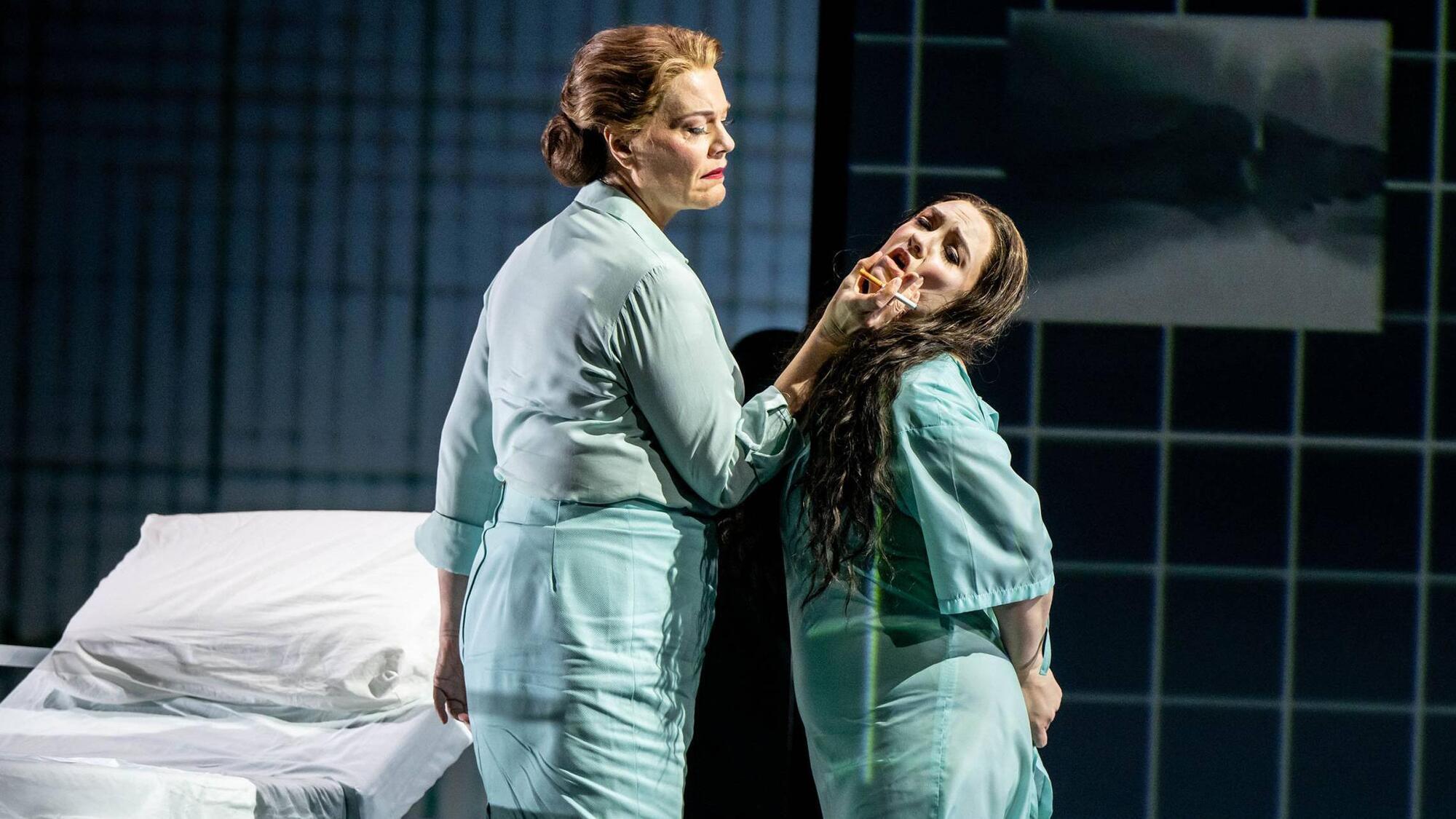
Michelle DeYoung (Ježibaba) and Jennifer Davis (Rusalka) in Rusalka at the Bord Gáis Energy Theatre in Dublin. Picture: Ruth Medjber
★★★★☆
Dvorak’s is rooted in folklore and fairytale, and anyone who knows will not need much more of an introduction to the plot. Here, in a co-production by Irish National Opera, the Royal Swedish Opera and Nouvel Opera Fribourg, the excellent soprano Jennifer Davis is the young water-creature, yearning for the human world, and giving up the safety of her realm in pursuit of love.
In director Netia Jones’s hands, the fairytale world gets a modern, industrial reimagining. Thus, the overture is cinematic in scale and form: a body falls through water, swimming in slow-motion in the full-screen projection. Those images make a few unnecessary returns, but form a striking introduction, which resolves not to a thicket of trees, but a mesh of pipes, evoking a water-treatment plant, or perhaps a particularly punishing level of Mario World.
The wood nymphs make good use of the pipes as they twirl about acrobatically, and Rusalka’s protective father, Vodnik the Water Sprite, arrives dressed as a plumber.
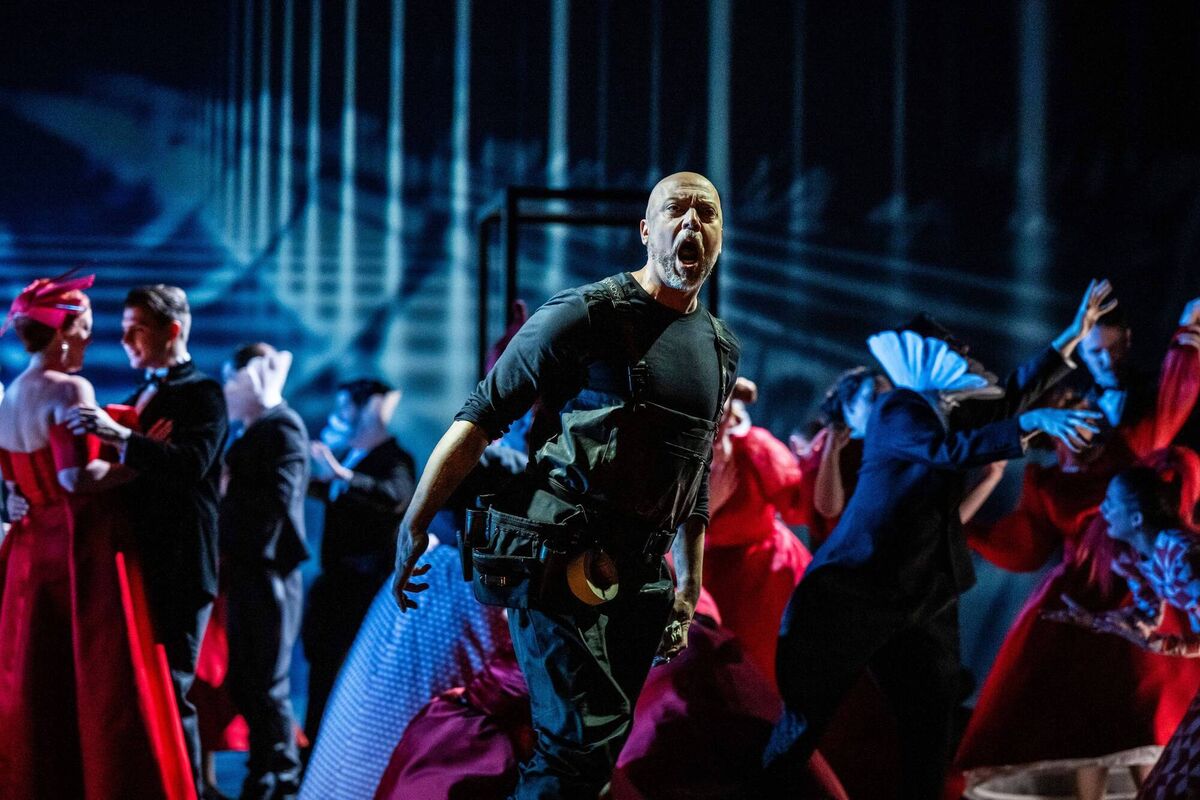
Jones’s is the story of a young woman eager to leave home and test herself. Her father, sung with great character by bass Ante Jerkunica, stands for an older generation that knows exactly how cruel and damaging the outside world can be.
Her concepts are visually coherent, but only so long as you don’t take the lyrics too literally. The libretto, for instance, simply requires Rusalka to drink a potion, but Jones imagines Jezibaba the witch as a chain-smoking cosmetic surgeon, with assistants sizing Rusalka up for breast implants the moment she arrives. Mezzo Michelle DeYoung relishes the part.
Behind her curtain, a Frankenstein-like metamorphosis is mimed unsettlingly, as Jones accentuates her themes of contemporary beauty expectations, and the pressures placed upon women’s bodies. While this production does not have the same raw indignation as – her brilliant response to Brian Irvine’s opera about the appalling treatment of Rosemary Kennedy, JFK’s sister, by midcentury misogynist quacks – it takes the material into a similar feminist sphere: no bad thing when reimagining a classic.
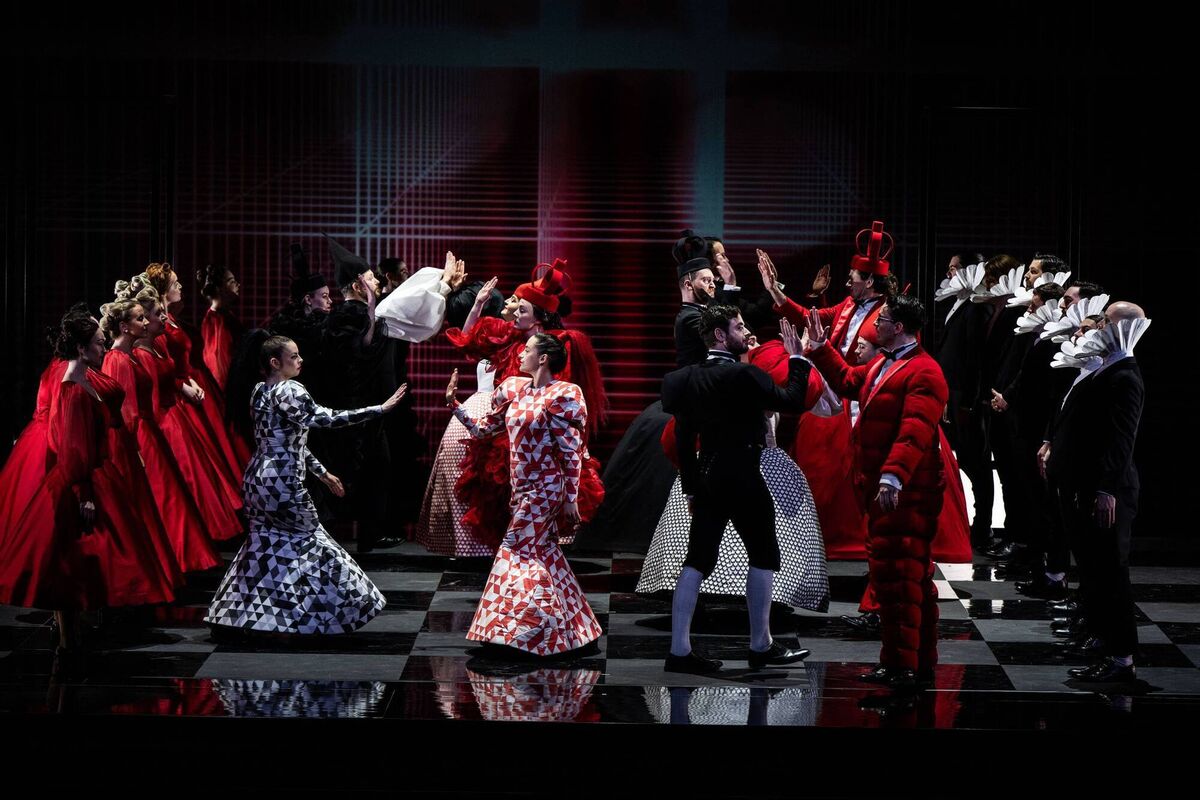
But it’s not all austere or serious. The palace dance is a delightful showstopper, decadent and witty, the chorus members moving around the stage as pieces on a chessboard.
It’s silly, but beautifully suggests that this is a world of strict roles and rules that Rusalka does not understand. There, she meets her doomed prince, sung brightly by tenor Ryan Capozzo. Giselle Allen’s Foreign Princess is effective too – as worldly as Rusalka is not.
At the centre of it all, Davis rises impressively to her role’s challenges. She delivers a lovely ; it has that exquisite beauty of the aria – surely among the finest in the entire repertoire – but perhaps not all the emotional range. She is perhaps more compelling later on in Act 3, after Dvorak’s daring decision to leave the prima donna mute in Act 2.
There’s been a lot of talk about opera’s struggles for relevance, and audiences, lately, in the wake of a certain Oscar-nominee’s views. But few could fail to be impressed by this sumptuous production, which is a parade of visual treats, gorgeous music, and great singing.
And, yes, it is, dread word, “relevant” in Jones’s imagining, if you really care about that sort of thing. Dozens of humans cooperating to produce something like this, of great musical and visual beauty – we’re in trouble as a species if that’s what we call “irrelevant”.
- Until May 28