Stephen Graham: 'Acting isn’t a competitive sport. It’s a team game'
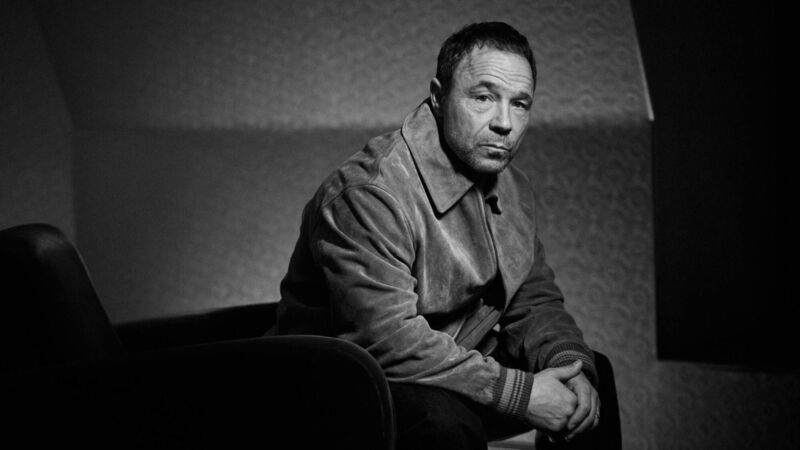
Stephen Graham stars in The Good Boy. Photo: Gareth Cattermole/Getty Images
Stephen Graham is widely regarded as one of the most versatile British actors of his generation, known for his remarkable ability to completely transform himself for each role.
The 52-year-old has portrayed a wide range of characters, from violent and intimidating figures like Combo, a racist, explosive skinhead in to deeply emotional roles such as Eddie, a devastated father in the multi-award winning
His latest film, sees the Kirkby-born actor take on the role of a sinister father who abducts a delinquent teenager and attempts to retrain him through a brutal regime.
Directed by Polish filmmaker Jan Komasa, the story follows 19-year-old hooligan Tommy, played by actor Anson Boon, who is abducted by Chris, played by Graham, after a heavy night of partying.
Tommy wakes up chained in the basement of Chris’s suburban family home.
Triple Emmy-winner Graham says he was drawn to the project as a fan of Komasa’s work. “The script was fantastic. I’d also watched Jan’s film , and that had a huge impact on me,” Graham explains.
“In fact, I hadn’t even read the script at first, my agent sent it over with a note saying it was Jan directing. She asked, ‘Have you seen ?’ and I said, ‘Yeah, is that the director?’ She said yes, and I immediately thought, ‘Well, I don’t even need to read the script…’ But of course, I did read it soon after.
“That film really stayed with me. It has a similar mood to this project: beautifully acted, deeply engaging, and it takes you somewhere completely unexpected.”
While the role of Chris was unlike anything Graham had played before, he says Komasa’s encouragement gave him confidence.
“For me, it always starts with the script and the director. Then I think about what I can bring to the character. Jan and I met for a coffee and had a lovely conversation. I remember saying, ‘I’ve never played a part like this before,’ and he said, ‘I know, that’s exactly why I want you.’ That gave me a lot of confidence.
“From there, I developed some ideas, and then we collaborated as a team. That’s what it’s all about, working together. But it always begins with the script and the director.”
Komasa, whose 2019 film was nominated for Best International Feature Film at the Oscars, says shares similarities with that earlier work.
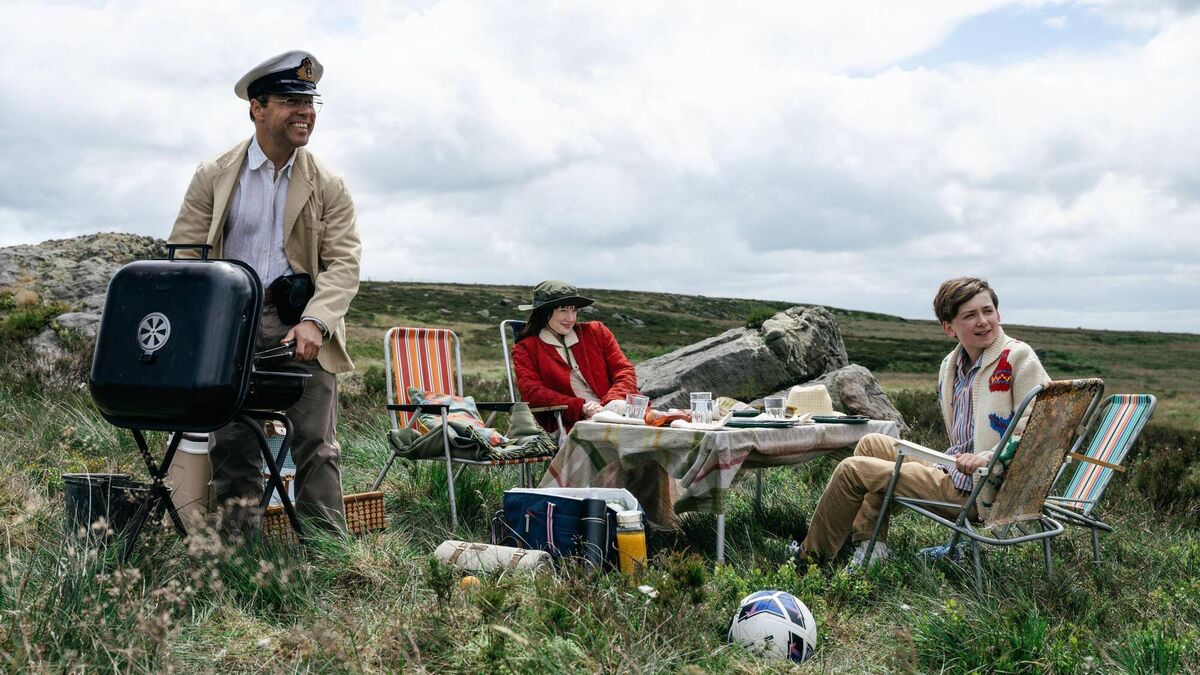
“ is about a young, troubled man, and in a similar way, this story explores that ‘good boy, bad boy’ dynamic,” the 44-year-old filmmaker explains. “The idea of entrapment, of someone being constantly restrained while society tries to re-educate and ‘civilise’ them, felt incredibly compelling.”
He adds: “We’re living in a time where people, especially Generation Z, have grown up with smartphones in their hands.
“My daughter is 25, so I see it firsthand. This is probably the first generation whose attention has become a commodity for big corporations.
“That made me feel there was an underlying social commentary in the story, not just a psychological dynamic between the characters, but a broader reflection on where we are as a society.”
In the film, which has drawn comparisons to Stanley Kubrick’s Chris attempts to reform Tommy by making him watch videos of his past bullying and stolen-car races. He also punishes him with tasers and beatings, while rewarding good behaviour with treats and privileges.
Graham praises his 26-year-old co-star Boon, describing him as a wonderful young man. “He’s completely different from his character, 10 times, a million times different,” Graham says.
“I’d say the same about myself, to be honest. But with Anson, he has that same quality that Kit has, a real passion for the craft and a genuine willingness to learn. And that’s something we all share. Every day is a school day.
“To work with both of them early in their careers, and to watch them grow into their characters, was incredible. You can actually see them discovering things about the roles and themselves as they go.”
Speaking about his approach to acting, Graham doesn't see it as an individual pursuit. “Acting isn’t a competitive sport. It’s not like golf, it’s a team game.
“You’re constantly sharing energy, passing it around the room, building something together. Off set, we spent a lot of time together, dinners, watching films, just hanging out like a family. That was something Jan really wanted us to develop.
“Then on set, you take your time and ease into the character. Being able to work with both Anson and Kit at this stage in their careers was a wonderful experience. They’re already consummate professionals.”
Komasa praises his cast, describing them as artistically hungry. “I was excited to be in the room with them, playing with the camera, doing long takes, and seeing where it would go. Giving them that space was key,” he says.
“It wasn’t calculated. It came from how I felt about them as actors. The psychological weight of the film really comes from them. It was suggested in the script, but it wasn’t fully there, it wasn’t a heavy drama on the page.
“They brought that dimension to it. They filled it with emotion, with life, laughter, tears, warmth, warmth, everything.”
- is in cinemas now