Shirley Manson of Garbage: 'We are running out of citizens who will talk freely'
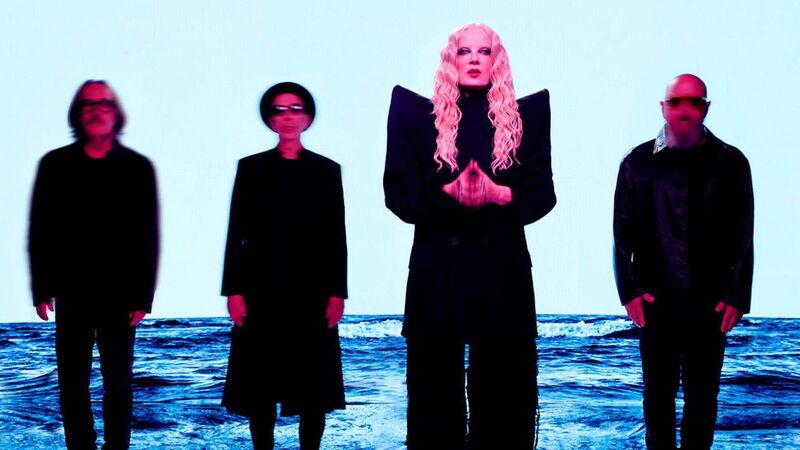
Shirley Manson and Garbage have lined up a summer gig in Ireland.
Halfway through our interview, Shirley Manson is distracted by a bird outside her window in Los Angeles. A small finch has appeared. I can’t see it over Zoom audio, but the moment comes after she has unpacked difficult subjects: the death of her father, her own ill health, frustrations with the music industry, and the fact that she is one of the few musicians willing to speak her mind on the wider world without fear of being cancelled.
“We are running out of citizens who will talk freely,” she explains. “It’s an alarming atmosphere. I’m lucky that I’m old and I’ve had a glorious career. I’d rather be treated unjustly than hold on to my career if it means giving up artistic freedom. I feel it’s my responsibility as a citizen to speak for those who don’t have a platform or voice.”
Earlier this year, the 59-year-old returned to the stage in her hometown of Edinburgh for two concerts that reunited her with former bandmates from the short-lived Goodbye Mr Mackenzie side-project, Angelfish, which was staged to raise humanitarian aid for Palestinian children. The two concerts raised over £35,000. "It felt so good to do something tangible to help people and I'm grateful to the band. It turned into quite a magical event.”
A cover version of by the Stone Roses proved to be a fitting tribute. "I was so blown away by the outpouring of love for Mani [who died in November]. He was a musician's musician and everybody loved him; what an incredible legacy," says Manson.
It was Angelfish that offered a glimpse of the voice and presence that would soon attract the attention of her future collaborators. "I was in a place where I had run out of options. It was the next indicated step and my life exploded, but it could equally have landed very differently."
A first breakthrough for Garbage came with their debut single a track Manson still associates with the moment the project took on a life of its own. “I still get a kick out of playing Vow live. It was the very first song we released on a CD magazine. It was so sci-fi to us, which underscores the amount of time that has passed. The song just kind of took off, I associate it with the explosion of the band. It’s about revenge, so it’s constantly pertinent."
Three decades on the relationship with audiences remains sacred. "There are people who will come out every time you play their city. I have friends that won't do that for me."
For years, promoters insisted there was little appetite for Garbage in Ireland, something Manson never quite believed. “Of course, the people are very similar, the Scots and the Irish. We were told there was no interest. No promoter wanted to touch us in Ireland until about seven years ago, when we played the lovely Iveagh Gardens. As for Belfast, we've not been since the second record [they played King's Hall in 1999]. So to come back is a big honour."
Manson is taking nothing for granted. She wonders if this will be the last time the band will wander the streets of Dublin or any major city. The cost of doing international tours is a daunting ask for many acts, and streaming revenues don’t make up the shortfalls.
“We played 40 shows and only 10 of them were financially responsible,” she explains. "We could have earned the same doing five shows on each coast as we did travelling through the middle of America for two months. That’s alarming because if a band like us, with a very successful career and a built-in fanbase, can barely make it work, then a lot of young bands can’t afford tour buses or hotels. It’s very destructive for our societies.”
Manson reflects on performing songs that have been part of fans' lives since 1995. “Music and songs are so powerful and important to people. I want to play as many of our touchstones for fans as I can. When I was young, it was like a great party, an opportunity to show off."
She adds that her role has changed. "I'm more like a nurse: here to serve the people, 'come here, let me administer to you.'”
With age — she will turn 60 in August — that sense of duty has deepened. “The older I get, the more sacred I see that role,” Manson says.
She suggests the recent Oasis concert which she attended in Edinburgh wasn’t just about the band. “It was about the audience, watching the effect of those people who poured out of their homes to see a working-class band up there was spectacularly beautiful. Those songs are powerful and profoundly moving."
She speaks warmly of fellow Celt and Garbage's 2023 touring partner, Noel Gallagher.

“I couldn’t praise him highly enough. I love him; he’s a really unique and exemplary human being. I mean, he’s like me; we say stupid shit sometimes. We’re like a bull in a china shop and we offend people, but he is a very good man with a lot of integrity.”
Today, artists are less willing to discuss the direction of modern politics, but Manson believes it's her obligation to speak out against the anti-immigrant rhetoric that has become so widespread.
“Politicians are spewing the same bile about other human beings and teaching societies to feel hostile towards any person hoping to integrate. It’s an incredible ruse, it’s the same here as it is in the UK and it’s gathering speed every day.
"Communities are told migrants are our problem and not those who have plundered our resources while feathering their own nests. They are continuing that raiding spree while blaming those who have so little. It’s an incredible and terrifying game that is being played.”
Those anxieties bled into the band’s 2021 album Subsequent album was "a much softer, more conciliatory record" she adds. Its spectral closer was partly recorded in Manson's bedroom during recuperation.
“That song is the most mystical of everything we have written. It was sent to me by the band while I was recovering from a hip replacement and also dealing with long covid. I was dealing with a sick father and my own sick little body, questioning all my life choices, what it means to be a human being, an ageing one and a broken one. I was asking a lot of big questions and the song became the vehicle for that exploration.”
It was while clearing out her late father's house, a committed member of the Church of Scotland, after his passing in October that she found many of the books that shaped his life. "He was a very humble, simple soul and had no valuables or anything fancy but he did have shelves full of books."
When not in America, Manson also retains a home in the city of her birth. A headline show at Edinburgh Castle may yet be a defining moment. “It doesn't get more glorious than that; arguably the highest point of my career will be playing at the most prestigious venue in my home city. I hope to make it to those castle ramparts and afterwards take a long, slow walk down the Mound [landmark city thoroughfare].”
Yet Manson is far from finished. I wonder if a once suggested solo album, perhaps a book or more acting, recalling her turn in are future ambitions. Among all these ideas, the strongest that rises to the surface is a collaboration between Garbage and a full orchestra. "It's something we've wanted to do for a long time," she says.
If this last European date in Dublin proves to be the close of one act for Shirley Manson, it has been a colourful one. The final act, it seems, may still be waiting in the wings.
- Garbage will play Iveagh Gardens, Dublin on July 18