Author interview: Debut novel grew out of fascination with JFK’s visit
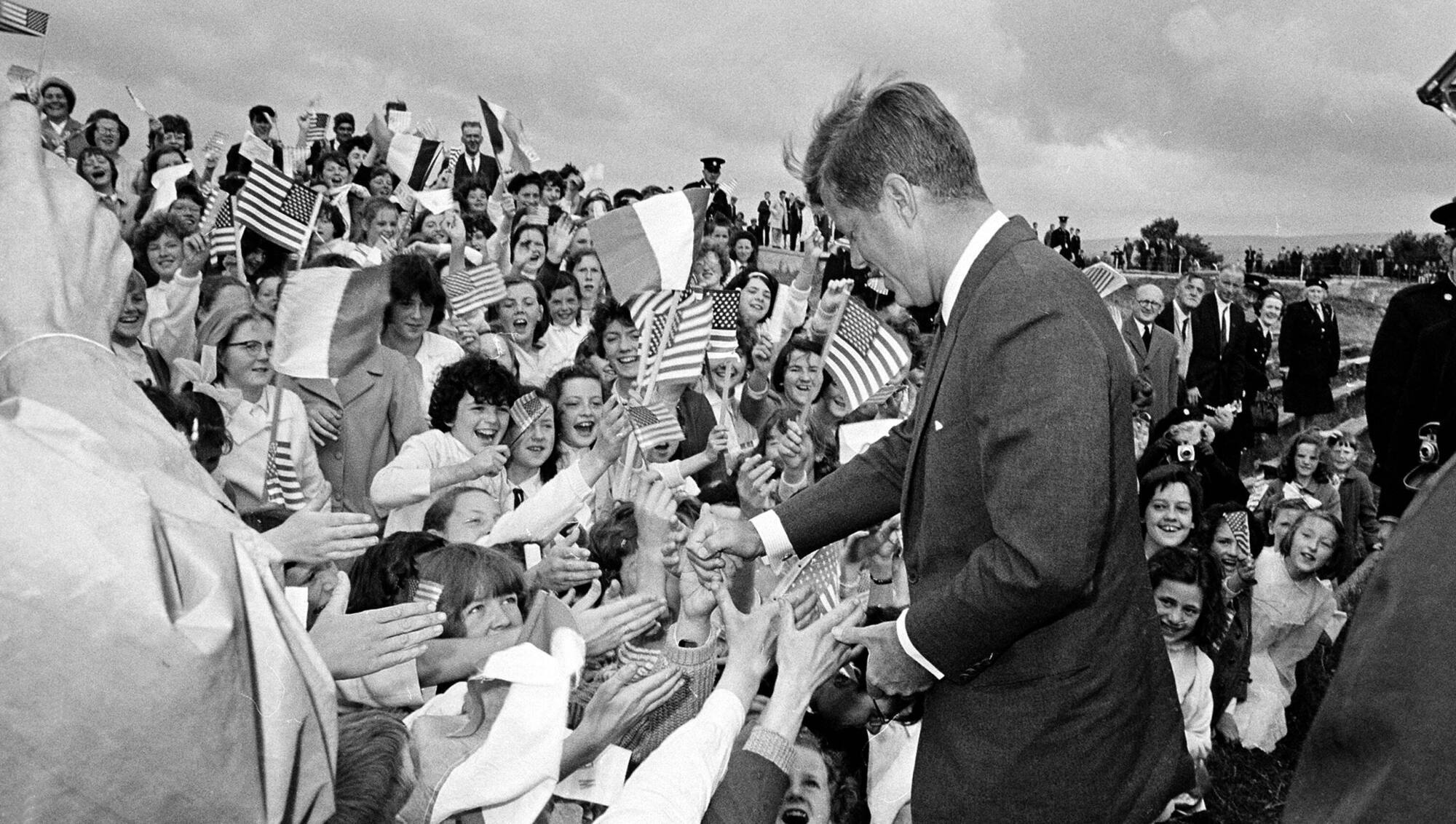
US president John F Kennedy arrives at Sean O’Kennedy soccer field and is greeted by schoolchildren waving Irish and American flags, during his visit to New Ross, Ireland, on June 27, 1963; that visit is the setting for Neil Tully’s novel. File picture: AP
- The Vist
- Neil Tully
- Eriu, €14.00
Forging a career as a full-time writer has never been easy but in the age of social media and untrammelled AI scraping of authors’ work, it has become an even more daunting proposition.
While the creative itch is one that needs to scratched, mortgages and bills have to be paid, and writing is often squeezed in around the demands of everyday life.
“I’m not relying on writing to live, so it can exist fully on its own, without having to network or try to career-build, because I can imagine making it full-time is difficult.”

“I was exposed to him without even realising it, he was this figure that you got to know at a much younger age than any other politician.
“My dad would have been eight or nine years old at the time of the visit, and when you compare when he was born with when I was, the Kennedy visit is the perfect touchstone to start measuring it from.”
Tully may be classed as a millennial, skirting the edges of Gen Z, but he is loathe to get caught up in such generational shorthand, and has a more nuanced view of how the past in Ireland is surveyed, a theme he hopes to address with the book.
“I don’t want to be prescriptive because people can take whatever they want from the book, but I do dislike how some people in my generation look at the previous generation, there is a harsh judgment that is really cynical.
“My dad was one of 13, born on a farm in rural Galway. I don’t know what their privilege was when I hear a 25-year-old now talking about it.
“Their privilege was to emigrate at a young age, not have an education, do hard work, and it was all towards improving each other’s lives.
“People like my father’s family, they all wanted the same progress we did, it just came in a different form.”
He also values the importance of literacy and is concerned about the decline in the number of people reading, referring to the viral article by
journalist James Marriott, who believes we are entering the dawn of a post-literate society.
“Reading is not innate. If you don’t learn how to do it, you will never be able to, and it’s such an important skill not just for fiction, but for how you form your own opinions, from reading non-fiction and so on.
“Reading is as important as writing, so you can make the time. I beat the traffic to work, and I’ll read in the car for an hour before work, and I read for an hour at lunchtime.
“You need to build writing into everything in your life, to make sure all the dials are turned towards it.”

“I wouldn’t make a judgment on how anyone approaches it, because it’s hard to know what to do with this technology that’s been forced on us, and we all have to figure it out as it’s changing.
“If a book has to live or die based on how much you’re pushing it on social media, I’d sooner just let it die.
“I know that sounds easy to say now because I have my book out, but that’s not what a book is. It has to be something that people like, and then they tell a friend about it, and so on.
“I enjoy a certain amount of engagement and I feel really lucky to talk about my book,” he says. “Other people won’t care as much as you do, and you have to just let it go and do its thing.”
“I’m lucky with my colleagues, they have a laugh with me about the writing but they are super supportive.
“I’ve been writing now for over 10 years, fairly consistently and solidly, for no other reason than I enjoy doing it.
“I really do hope this book does well, and that it will lead on to the next one, and so on.
- The Visit is published on March 26 and will be launched at Waterstone’s Cork on April 1 at 6.30pm