Barbara Diener: Fruits of Spike Island residency on show in West Cork
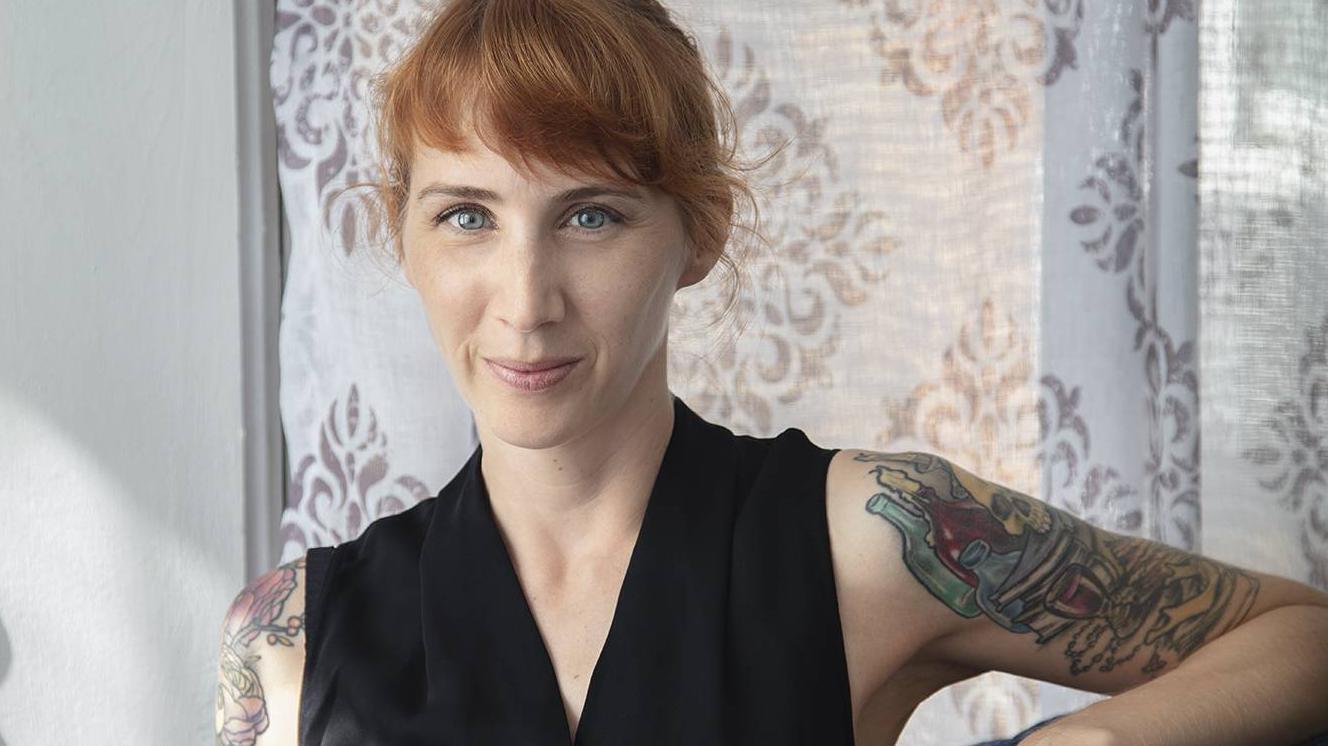
Barbara Diener spent last summer on Spike Island, dipping into the former prison's fascinating history.
Spike Island in Cork harbour has been many things: a monastic settlement, a military fortress, a prison, and latterly, a museum and tourist facility. Over the past few years, it has also been the site of a unique artist’s residency, a collaboration between Spike Island Museum, Sirius Arts Centre in Cobh and Cork-based Sample Studios.
Barbara Diener is one of the eight artists who have participated to date, and work she produced on the residency last summer is now showing as part of the Persistence of Memory group exhibition running at Uillinn: West Cork Arts Centre in Skibbereen until March 21.

Diener is primarily a lens-based artist. Born to a German father and American mother in rural Germany in 1982, she began taking photographs aged eight, after her grandmother bought her a small point-and-shoot camera at Toys’R’Us. At 19, she left for Seattle to pursue her dream of becoming a professional photographer. “I went on my own, intending to stay for one year,” she says. “But that turned into 20.”
She studied photography in Seattle and California before concluding with an MFA at Columbia College Chicago in 2013. Over the next ten years, she exhibited regularly, while working as Collection Manager in the Department of Photography at the Art Institute of Chicago.
Three years ago, she relocated to Cork. “I’d wanted to move to Ireland for some time,” she says. “And when this job came up, it just seemed like a perfect way to make that happen. Since September 2023, I’ve been the Photographic Collections Librarian at UCC.”
Diener signed up with the Sample Studios artists’ collective shortly after her arrival, and when Sample put out a call for the Spike Island residency, she was quick to respond. “It just seemed like a really great way for me to start focusing on making work again,” she says. “I had been shooting still photographs, with some video as well, looking at forests, and how they can be places of sanctuary or unpredictable dangers. A lot of that resonated with what I was finding out about the history of Spike Island.”

She visited Spike while preparing her application. “I made a few images as I was out there, and there were a lot of moments throughout the island’s history that really resonated with me. Some of my past work has dealt with Wernher von Braun, the German rocket scientist who built rockets for Hitler but was then brought over to the US and worked for NASA for a long time. I'm really interested in these moments in history that have been written about and are known, but maybe they're still a little niche and haven't really penetrated the art world.”
Her research led her to the Aud, the German ship carrying guns and ammunition for use in the Easter Rising of 1916 that was captured in Tralee Bay and scuttled by its captain after being taken to Cork Harbour. “There are artefacts on Spike Island that have been recovered from the Aud, which is still there, at the bottom of the sea. It’s a story that combined a lot of my interests: in German history, covert military operations, and rebels and revolution.”
When Diener was awarded the residency, she was not allowed stay overnight on Spike Island, but she spent several periods visiting daily while staying at the artist’s apartment at Sirius in Cobh. Her point of contact on Spike was Dorota Gubbins, the museum curator.
“Dorota was absolutely amazing to work with. Her background is in archaeology, and she also loves photography. So we had a lot of common ground in the way that we explored the island.”
Spike was still in use up as a prison up to 2004. “One of the cell blocks is renovated and is open to visitors. But I was also allowed to explore some of the areas that you don't get to see when you're on the public tours. That was really intriguing.
“Spike Island is in a moment where a lot of the buildings are starting to crumble and it's well worth documenting them in their current state. Some will not be saved, they're just going to deteriorate further, unfortunately. So I took straight photographs of those. But there are other photographs where I used a lot of mirrors and lights to activate the space, and allude to a secondary presence that isn’t immediately visible.”
Over the course of the residency, Diener produced video and sculptural pieces, along with her photography. Some of this work was shown on Spike Island last summer, and more in a solo exhibition hosted by Sample Studios at the Lord Mayor’s Pavilion in Fitzgerald’s Park in October. A selection is also being shown at Uillinn, along with underwater footage Diener filmed in the River Lee, in Cork city and Cork harbour.

“I'm really interested in the idea of connected waterways,” she says. “The River Lee flowing into Cork Harbour would have been used to transport prisoners from Cork City Gaol to be held on Spike Island or to then be transported to Australia.
“I was also interested in how the water was the only way essentially to escape from Spike Island, but there were unpredictable dangers as well. I think there was one successful escape, but that was with someone working on the inside, letting prisoners out or making sure that a boat was there to greet them. No one went into Cork Harbour and swam away and survived.”
Diener’s future plans include producing more work for her Wernher von Braun project, The Rocket’s Red Glare. ‘I’ve been piecing together my family history a little bit recently,” she says. “My father passed away a long time ago, but last year the house I grew up in was finally sold. I brought all my father's negatives and anything that could potentially be of interest here to Cork. When I started going through it, I found a letter that my dad wrote to my grandmother in his childhood.
"They lived in Berlin, but the children that were too young for Hitler Youth were sent out to camps in the countryside. Their teachers were probably ardent Nazis, but my father didn't disclose much about that. Instead he talked about how he would play pranks on his camp leaders, trying to make light of it.
“But I also found these glass plate negatives that my grandfather took in Ukraine in 1941. He was in the German army, on the Eastern Front. I'm still not sure how that's all going to fold into the project. But I think it could just add this personal layer to it that I was missing before.”
- Persistence of Memory, featuring work by Barbara Diener, Sophie Gough, Sarah Long and Áine Ryan, continues at Uillinn: West Cork Arts Centre in Skibbereen until March 21
- Further information: westcorkartscentre.com