Everyone has a book in them? Here's the path to getting it published

Richard Fitzpatrick with Italian football great Sandro Mazzola, when the Irish author interviewed him for his Helenio Herrera biography, entitled HH.
As everyone knows, there are basically two kinds of books: fiction and nonfiction. The first kind are fashioned from the imaginations of great novelists like, say, Claire Keegan. They can be written slowly or quickly. Jack Kerouac wrote the first draft of in an amphetamine-fuelled three-week frenzy. John Banville takes three to five years to write his great literary novels.
Nonfiction books are plodding affairs, built more on research. Into this category come sports books; popular science reads; biographies and memoirs; travel books, which will take in the writer’s research on the culture and history of the place being traversed; self-help and motivational books; cookbooks; true crime and so on. This is the category I fall into.
I’ve just completed my third book, which is loosely a biography of Helenio Herrera, a famous football manager from the 1960s who was tried for manslaughter when one of his players died in 1969 from alleged doping, football’s first “white death”.
Read More
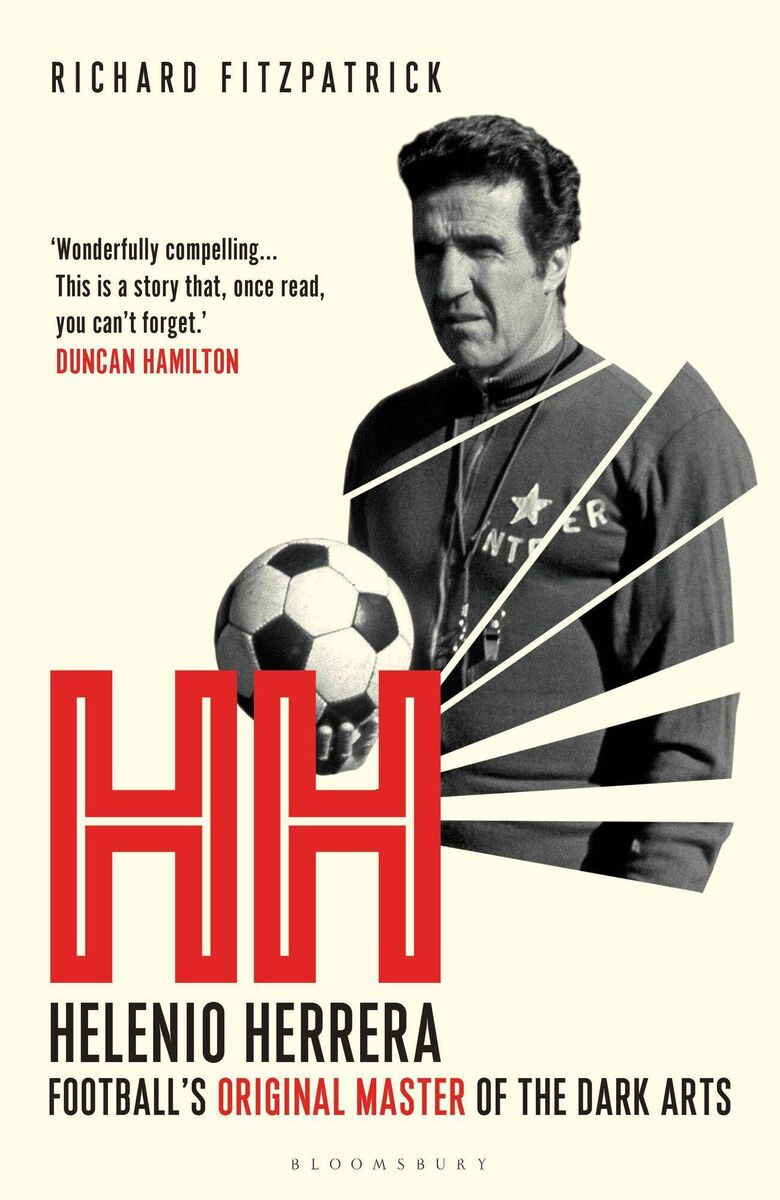
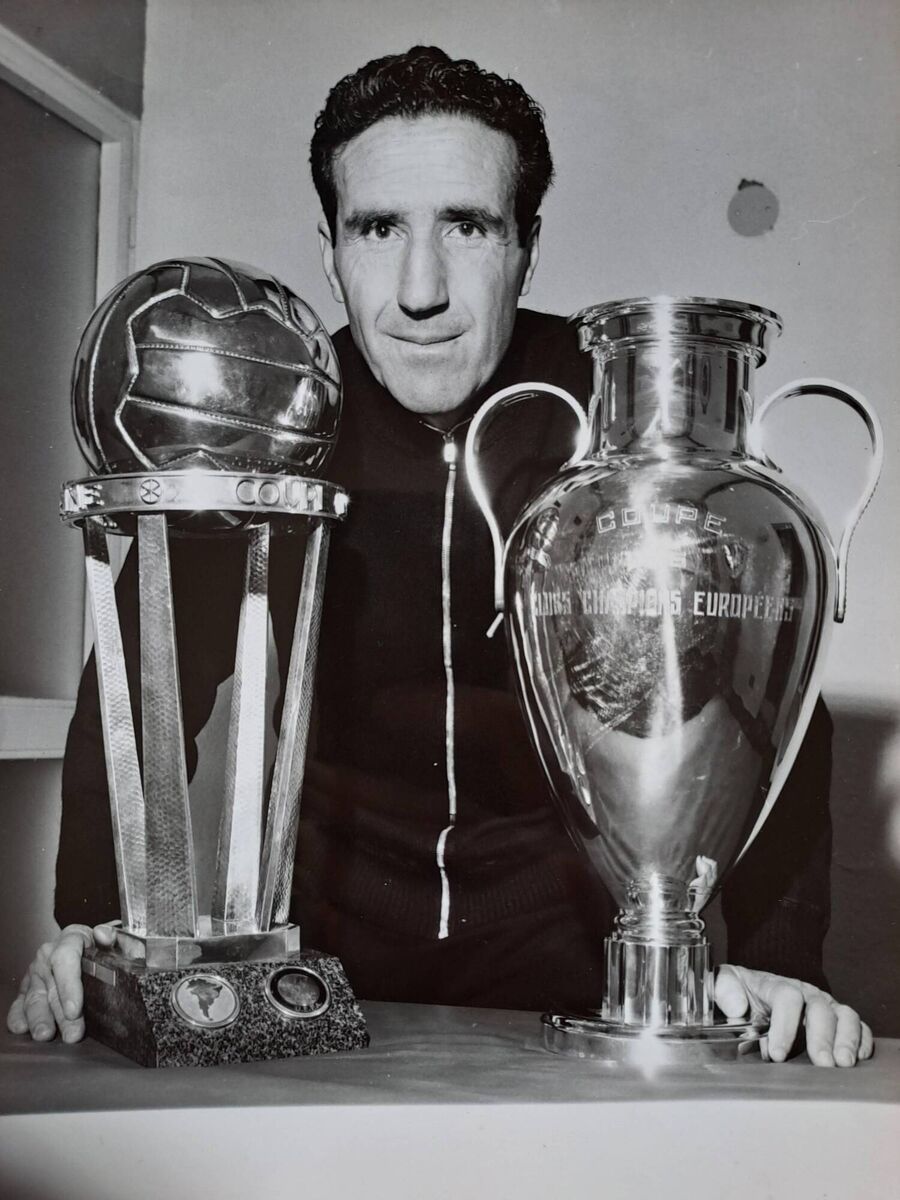
“HH”, as he was known in football – a nickname which gave me my book’s title and is eye-catching for a book cover – is a huge figure in Spanish and Italian football, on a par with, say, Matt Busby in the imagination of British football fans. HH was a mentor to both Jock Stein, although he fell out with Celtic’s legendary coach, and former England coach Fabio Capello.
I was drawn to write about HH, first, because he was such an outrageous character, with an Olympic ability to blow his own trumpet. He was fluent in several languages. He was enigmatic: a violent man who practiced yoga every morning for half a century; a man with devastating charm who had no close friends; and a man shrouded in mystery – no one knew if he was born in Buenos Aires or Casablanca or what year he was born. As HH was so entertaining, I knew he would be good company during the long, solitary years it would take to research the book.
Second, what convinced me to write the book was that HH was involved in a doping scandal, something I only found out about years after becoming aware of him. This was a eureka moment. I thought wow – there’s a story here. I’d always been interested in doping since Paul Kimmage and David Walsh led the charge in cyclist Lance Armstrong’s fall from grace.
Doping in football is the elephant in the room in the sport. The funding for anti-doping measures in football is pathetic. Doping in football is rarely covered in the media. Investigating a case, in which the chief suspect is long dead – HH died in 1997 – was a good way to tackle the subject, and having murder mystery elements threaded through the story would keep readers turning the page.
Doing the research involved a lot of travel for interviews, as the main characters in the story – the ex-players, family members, friends who knew HH – live, or lived, in places like Barcelona, Madrid, Liverpool, Manchester, Milan, Rome, Venice, rural Scotland, Switzerland and Tuscany. I did other interviews over the phone to Hungary and the United States. I spent days immersed in FC Barcelona’s archives and weeks trawling online archives researching the Holocaust.
The first book I wrote, I was single. I did it in a year. The second book, I got married in the middle of it. It took two years. This third book took six years because life kept intruding – sadly, my dad passed away; our second child was born; and for financial reasons, I couldn’t afford to take a sabbatical to write the manuscript, as I had done with the earlier books.
So, once I’d done most of my interviews and research – except for a week I spent in Italy, just before writing the book’s final chapters – I began writing the manuscript in February 2022, while juggling my day job as a journalist and family chores.
I essentially wrote 10,000 words a month, until I finished the 120,000-word manuscript (excluding endnotes and appendices) in the summer of 2023. Typically, on a day’s writing, I’d get 1,000 words done, keeping a hand-written mind map of the overall structure of the book close by. Every time I started one of the book’s 34 chapters, I’d write out several mind-map pages of the key notes I wanted to hit.
After finishing the manuscript, I sent all of it, or sections of it, to eight or nine first readers, including the great Paul Howard, who gave me invaluable feedback. The manuscript also went through four rounds of editing, from first page to last, with my publishers, i.e. with my commissioning editor, a copy editor and a proofreader. The book also got a libel read, by a legal expert. (I had to forfeit one fifth of my advance to get a libel read for my second book.)
There are three ways to get a book published: going directly to a publisher (although most big publishers don’t take unsolicited manuscripts); via an agent, who acts as a gatekeeper for publishing houses, and helps writers, who are typically not good on the business side, to handle negotiations; or self-publishing.
I put a lot of work into writing a good proposal, which included detailed chapter outlines; three sample chapters; and key selling points. My agent got interest from several publishers in the manuscript, but in the end, we went with Harry Potter’s publisher, Bloomsbury, who also published my second book.
So, the money? A typical advance for a first-time author is €5,000 to €10,000, although small publishing houses only give “token” advances, which can be as little as €2,000. It helps, of course, if you’re a celebrity – Britney Spears got a $15 million advance for her 2023 memoir.
For a book that's released by a publisher (rather than self-published), the author’s royalties will be about 10-12% of sales. So, if a books costs €20 per copy, the author is just getting about €2 of that. Ireland may have plenty of writers, but our low population ensures we don't have many rich ones. It's why most writers have a sideline in, say, journalism or lecturing. Anybody writing a book should be aware that the financial reward rarely covers the huge amount of work it requires, especially if the subject is of local or otherwise limited interest.
I was lucky with my second book, it had great marketability, being about the rivalry between Barça and Real Madrid. It was a bestseller. And the gravy came from getting it translated into other languages. That book was published back in 2012.
Today, self-publishing is a viable route. Given fewer than 5% of books sell more than 5,000 copies, there’s potential to make decent money self-publishing on, say, Amazon, where the writer gets to keep 60% of book sales (minus printing costs), although the writer misses out on the publishing house’s rigorous editing and design process, its distribution channels and ability to get the word out about the book.
I’m currently working on a podcast story. Radio documentaries are more social than book writing, working with producers, and involve short timeframes. I’ll hopefully write another book someday but will bear in mind author Percival Everett’s cautionary words: “Deciding to write a book, it never feels like a great idea. It’s always like knowingly entering a bad marriage. If you had any sense, you wouldn’t do it, but you know you’re going to do it.”
- Richard Fitzpatrick’s (Bloomsbury) is available to order in hardback, audiobook and ebook now.
- Take notes
- Write the way you talk, naturally.
- Read George Orwell’s guide to writing, Politics and the English Language. Fall in love with short words and short sentences. Down with pretentiousness and jargon.
- Buy a copy of the Writers’ & Artists’ Yearbook 2026.
- Ask writers and people from the publishing industry for their advice
- Double check contact details of agents/publishers before submitting a proposal; make sure they’re appropriate for your genre of writing; follow up with emails/phone calls to establish status