Ryan Cahill: Irish fantasy writer happy to ride the genre's rise in popularity
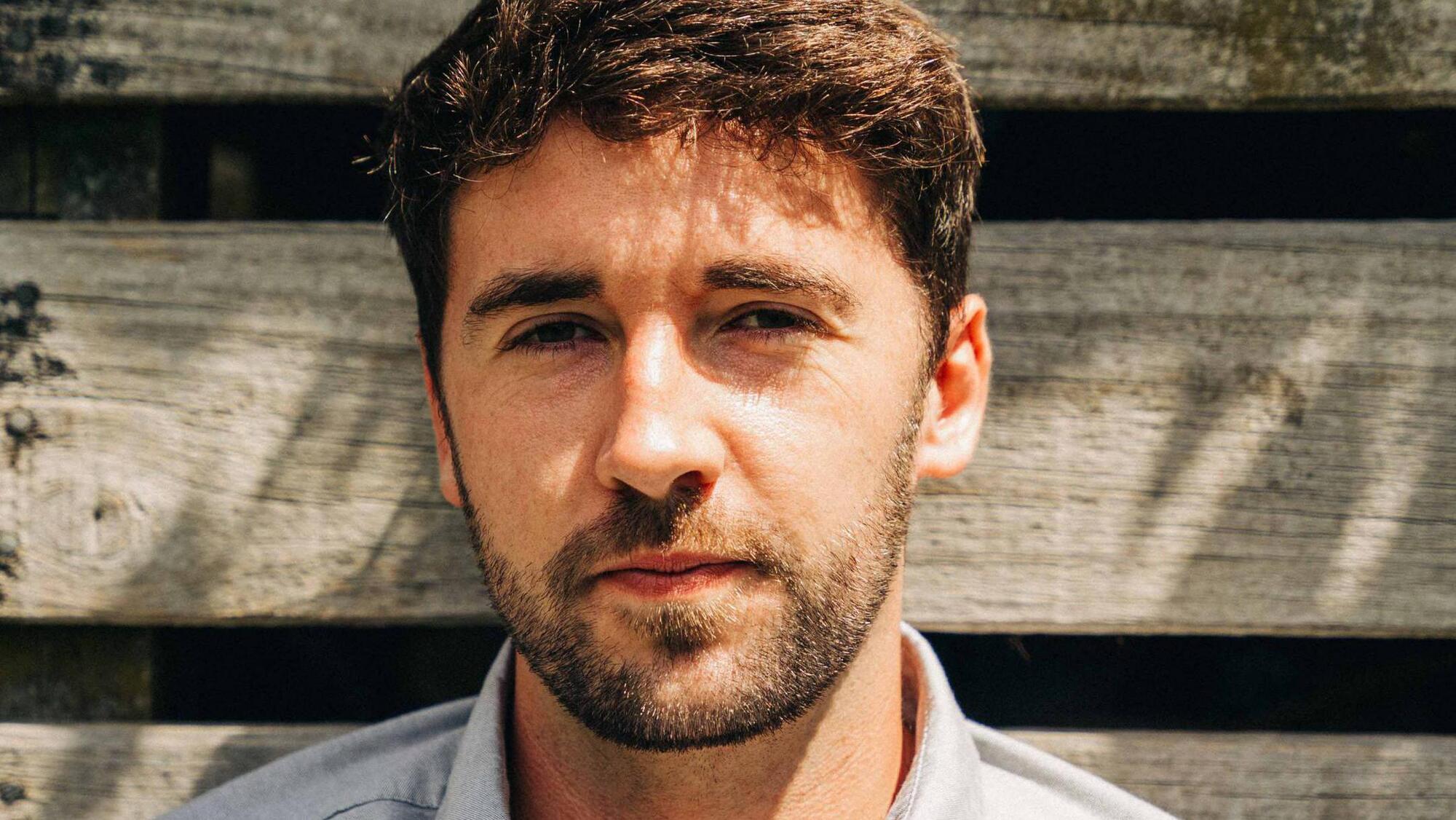
Ryan Cahill, Irish fantasy author, is about to have his books published by the Broken Binding.
Ryan Cahill knew he had made it as a fantasy writer when fans started sending him wooden spoons. “There’s a line in the first book, which is a very Irish line, where [one of his characters] says that his mother used to hit him with a wooden spoon of retribution. I didn’t know what I was doing when I wrote that. Now my readers bring me wooden spoons,” he says.
The wooden spoon is a nod to the Dublin author’s Irish identity and the cliché of the angry mammy dispensing justice with a vengeful utensil. International readers of Cahill’s best-selling series — think Tolkien’s meets the scenes from — latched onto this detail.
They began making their own spoons and presenting them to Cahill at book signings and fantasy conventions. A few years later, he has half a million book sales, a global readership and a house heaving with bespoke cutlery.
“They make them properly – they get them laser burned,” he says, holding a sample spoon up to the Zoom camera. “‘The wooden spoon of retribution’. One of them is making tour spoons [for Cahill’s forthcoming book tour]. They are mailing them across the world to readers in different countries. That’s as nerd culture as it gets.”
Reading Cahill’s aficionadoes of dragons, elves, and wizards will have the overpowering feeling of coming home. The sometime musician and former biochemist has self‑consciously patterned his saga on classics of the genre such as and This is old‑school fantasy, brimming with brave heroes, orc‑like baddies, and mysterious evil stirring in the deep, dark woods.
“The first book was very much written with two purposes. It was written so that people who read a lot of classic fantasy when they were younger would find something that felt like home,” says Cahill from his home in Palmerstown in Dublin.
But Cahill is doing more than playing fantasy’s greatest hits with which started life as a self‑published cult bestseller and which is now to be republished by respected fantasy imprint the Broken Binding, beginning with the first volume, While he wanted to give readers the feeling they had when they first discovered Tolkien’s Middle‑earth or the sprawling universe of Robert Jordan, he is conscious too that the world has changed since those books were published – and is keen for his work to reflect that.
A story that begins in the classic fashion of a young boy from a distant village plunged into a grand tale of clashing empires gradually becomes darker and more morally ambivalent – without ever losing that traditional feel.

“One thing I found is that when I went back and read the books I read when I was younger, I didn’t get the same feeling because I was different now. I wanted to be that entry point but for adults. Later on the story takes some of its influences off its sleeve. The first one, I was open that these are the things that I love, these are the reasons I love fantasy – I want to show them to you.”
He started the saga over lockdown when he and his wife were living in suburban Auckland – not far from the epic New Zealand landscapes where Peter Jackson filmed his adaptations. The plan from the outset was to self‑publish the books – he didn’t want to wait to receive permission to share his writing with the world. They quickly found a huge audience among readers hungry for heroic fantasy in the Tolkien tradition.
Cahill isn’t the only fantasy writer taking inspiration from the greats of the genre – and he names bestseller Brandon Sanderson as an author he regards as on the same wavelength. They are in a minority, however – at the moment, fantasy is dominated by the “romantasy” genre, which combines swords and sorcery with ‑style tales of forbidden love.
Romantasy is controversial within fantasy. Some long-standing fans feel their beloved milieu has been taken over by outsiders,. That is far from a universal view though and many have welcomed the infusion of new readers, drawn to fantasy by authors such as Sarah J Maas and Rebecca Yarros.
“It’s a trade‑off. To me, romantasy is more an offshoot of romance than fantasy. Publishing always moves in swings. [the Rebecca Yarros mega‑blockbuster] …although it is romance and it seems very different, it has given my series a huge amount of readers. What it has done is it has granted accessibility into fantasy for people who never knew they loved it – particularly on the female side.
"There are lots of women who maybe when they were younger were told, ‘fantasy – that’s for boys, that’s for nerds’. There are a lot of women who were told that. They read romance books and fiction books. When came along, it was like a bridge – it allowed people to go, ‘oh, this is romance too. Oh, I like dragons and swords and fire – maybe I like some other things’. It allowed a huge crossover, which I think is positive.”
His books will now be available to a wider readership – especially in Ireland, where he has previously struggled to find distribution. “It was a strange thing for me, the fact that I could walk into a bookstore in Rome and find it in the Italian edition, yeah, but I couldn’t find one in Ireland. That was weird. And it’s really nice this time around – because basically the worldwide print rights were acquired, and at the end of 2024, now it’s coming through.”
One roadblock was the fact that Irish bookstores are traditionally reluctant to gamble on self‑published books. The other issue is the long‑standing snobbery in Irish literary circles towards genre – something Cahill has encountered firsthand.
“I find it strange – you go to other countries and people think of Ireland as the place where fantasy originates. ‘Oh, this is the word‑of‑mouth storytelling culture’. I feel there’s a lot of readers here that love fantasy. It’s just the general media consensus – I don’t want to be unfair about it, so far Ireland has been very positive for me. It’s hard to describe – there’s this mild disconnect which has maybe shifted.”
The ambivalence in Irish publishing towards fantasy is ironic, given the genre's debt to Irish folklore. While he was coy about it, Tolkien was hugely influenced by Irish mythology – his melancholic elves are clearly patterned on the Tuatha Dé Danann, and the parallels between his mega-baddie Sauron, with his all‑seeing eye, and the Celtic mythological villain Balor of the Evil Eye are obvious.
Similarly, Robert Jordan’s lifted freely from Irish culture – the all‑female wizard warriors, the Aes Sedai, are influenced by the Aos Sí, or fairy folk, while the story begins with a celebration marking the festival of “Beltane” – Jordan’s take on Bealtaine.
“There is a mild snobbery – ‘genre fiction isn’t literary’. The reality is that most people who would stand by that statement probably haven’t read a lot of it,” says Cahill.
“The same as I probably haven’t read a lot of non‑fiction. But I try not to disparage it – there’s a lot of great non‑fiction out there. Sometimes people are like, ‘oh, it’s dragons and stuff – that’s what it’s about’. No, if you give it the chance and you actually give it some time and space…
"True classic fantasy now has a real deep drive into what it is to be human, to feel grief, connection, friendship – which a lot of people don’t associate with it. If they gave it a chance, they would see there’s a lot more to it than they thought there was.”
He recalls going to an event in Dublin at which he appeared alongside another writer. The other author – non‑fantasy – was given star billing by the organisers, and there was a disconnect when dozens of fans of turned up. “The place didn’t take me very seriously at the time. They made it more [the other] author’s event. It came to the day – 150, 160 people filled it out and it was amazing.”
Cahill has acquired some influential cheerleaders – including Brandon Sanderson, who invited Cahill to be a guest at his Dragonsteel Nexus convention in Utah last year. On his forthcoming book tour, he will meanwhile be interviewed by towering figures in the genre such as Joe Abercrombie and Terry Brooks. It’s quite an achievement for a first‑time writer who decided to put his love of fantasy down on the page just six years ago.
“It was trying to capture the feeling of classic fantasy while taking in some modern sensibilities without beating people over the head with it. You want it to be baked into the characters, so that they feel real and complex. Fantasy is a really unique conveyance tool. You can make people see through the eyes of other people that they normally never have sympathy with. It allows you to take people and look at themselves through other people’s eyes.
"I was a bit surprised – there wasn’t a lot else going in. It just kind of snuck in there. There is a new wave of it coming now. But because it was first through the gates, it’s gotten a huge amount of attraction, which is incredible.”
- the first volume of is published February 17
The Cork author is a respected writer of fantasy tabletop games in the D&D tradition – but has also written two highly regarded fantasy sagas, the Lovecraftian series and the more classically heroic trilogy, the concluding volume of which was published last year.

The County Down author’s series thrillingly weaves together Irish medieval history and Celtic mythology.
While Landy’s novels are regarded as children’s or YA books, they tap into Lovecraftian horror, Irish folklore – all tied up with wiz-bang action scenes worthy of Marvel.
Having written stories set in the universe, Rudden has won huge praise for his new fantasy doorstopper which draws on Irish history and the horrors of colonialism.