Book review: Final Julian Barnes book an exemplary endnote

'Departure(s)' is most certainly not a novel; the book is more akin to correspondence, a signing off from a career which contains many fine novels and numerous awards
Book review: Final Julian Barnes book an exemplary endnote

Julian Barnes has said this is his final book, and as goodbyes go, it’s powerful and poignant, yet immaculately restrained. Picture: Getty

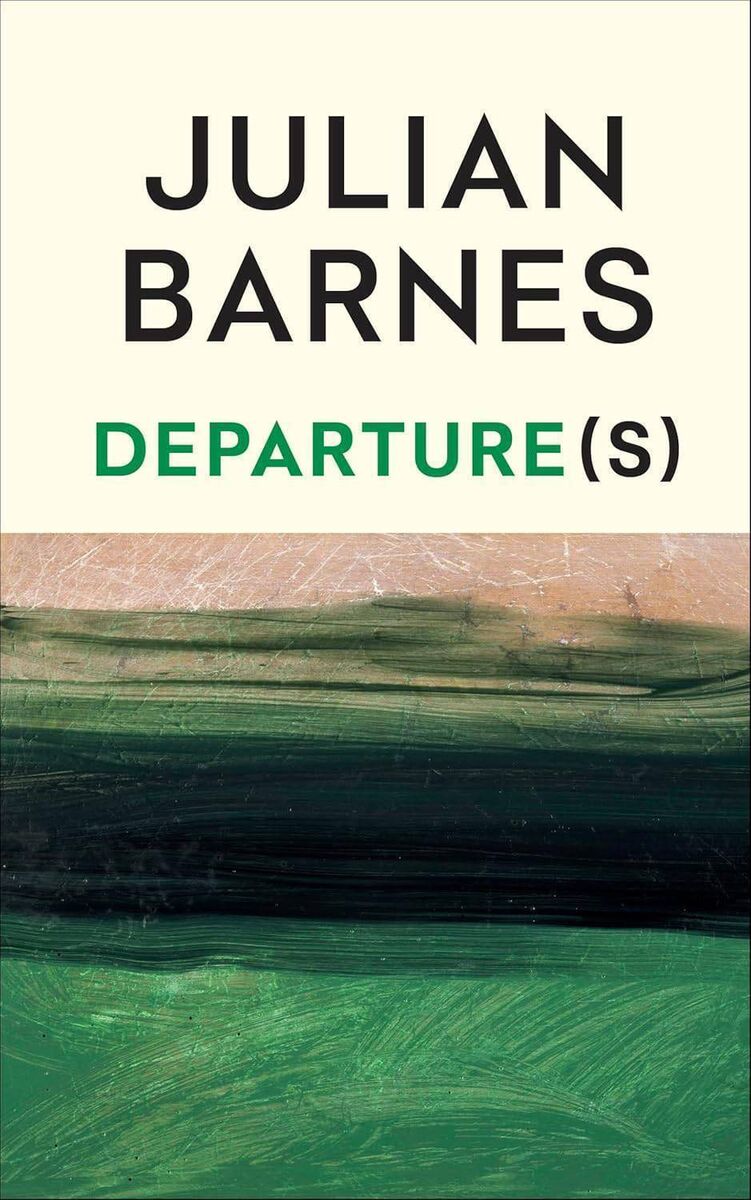
  • Departure(s)
  • Julian Barnes
  • Jonathan Cape, €18.99

Julian Barnes’ Departure(s) defies categorisation. Skirting fiction, autofiction, essay, and memoir, the Booker Prize winner’s latest offering is, unsurprisingly, an intelligent, engaging reflection on memory and illness, connection and release.

Barnes has said this book will be his last, and as goodbyes go, it’s powerful and poignant, yet immaculately restrained, like a firm, friendly hug that lasts not a second too long. 

With plentiful mentions of Proust, Barnes ponders the mechanisms and foibles of remembering: “… what we conventionally think of as a memory is something which has been remembered, frequently or infrequently, over the course of our lives, mutating a little with each retelling until it congeals finally into a version which we convince ourselves is the truth.”

The “story within the story” of Departure(s) is the love story between Jean and Stephen, two college classmates of Barnes who he reconnects with, and who he promises to never write about. 

Barnes is living with an “incurable but manageable” form of blood cancer, which he tells us is treated by daily chemotherapy in tablet form. 

He is much more likely to die with it than from it, “unless there is another mutation, of which there is a five per cent chance”. 

In 'Departure(s)', his diagnosis and illness are explored in depth, his personal relationships less so. 

This is where Jean and Stephen come in — they dated in their youth, and Barnes, somewhat reluctantly, helps rekindle their romance many years later.

The three friends attended Oxford, the mention of which sparks one of Barnes’ witty diversions: “Many years ago, in my novel Flaubert’s Parrot, the narrator gave a list (with which I largely agreed) of subjects which should be banned from fiction on a temporary or permanent basis. 

“Proscription number 4 began: ‘There is to be a twenty-year ban on novels set in Oxford or Cambridge, and a ten-year ban on other university fiction’.” 

While Departure(s) is many things, it’s most certainly not a novel. The author knows this, and tells us himself. 

The book is more akin to correspondence, a signing off from a career which contains many fine novels and numerous awards, and on which Barnes appears to desire the last word, or perhaps more accurately the last discussion — the book incorporates chatty, almost gossipy dimensions, alongside its intellectual and philosophical preoccupations.
True to form, it is also delightfully comical, and June’s elderly Jack Russell, Jimmy, gives main character energy throughout. There is much talk of death, also of love.

In a recounted conversation with Jean, which may or may not have happened as we hear it, Julian says: “… I think the great novelists understand love, and most aspects of human behaviour, better than, say, psychiatrists or scientists or philosophers or priests or lonely-hearts columnists.” 

Departure(s) is a relatively short book, and yet this review has taken me the longest of any to begin.

Rather than tick it off the list, I wanted to stretch and savour the book’s pages, to delay its departure for a little while more. 

Reading a writer as accomplished as Barnes is a frictionless experience, the work appears to skate above criticism, pirouetting in a province of its own. 

Even if it’s not your cup of tea, “lime-flower” or otherwise, there is much to glean from Barnes on the art of writing, the art of living.

Again to Jean, Julian says: “I don’t mind you not liking my books, but you are mistaken if you think I don’t know exactly what I’m up to when I write them.” 

There’s much to explore in Barnes’ extensive back catalogue, of which Departure(s) is an exemplary endnote.

BOOKS & MORE

Check out our Books Hub where you will find the latest news, reviews, features, opinions and analysis on all things books from the Irish Examiner's team of specialist writers, columnists and contributors.


More in this section

Scene & Heard

Newsletter

Music, film art, culture, books and more from Munster and beyond.......curated weekly by the Irish Examiner Arts Editor.

Cookie Policy Privacy Policy Brand Safety FAQ Help Contact Us Terms and Conditions

© Examiner Echo Group Limited