Musing on satire, power, and the long road to publication
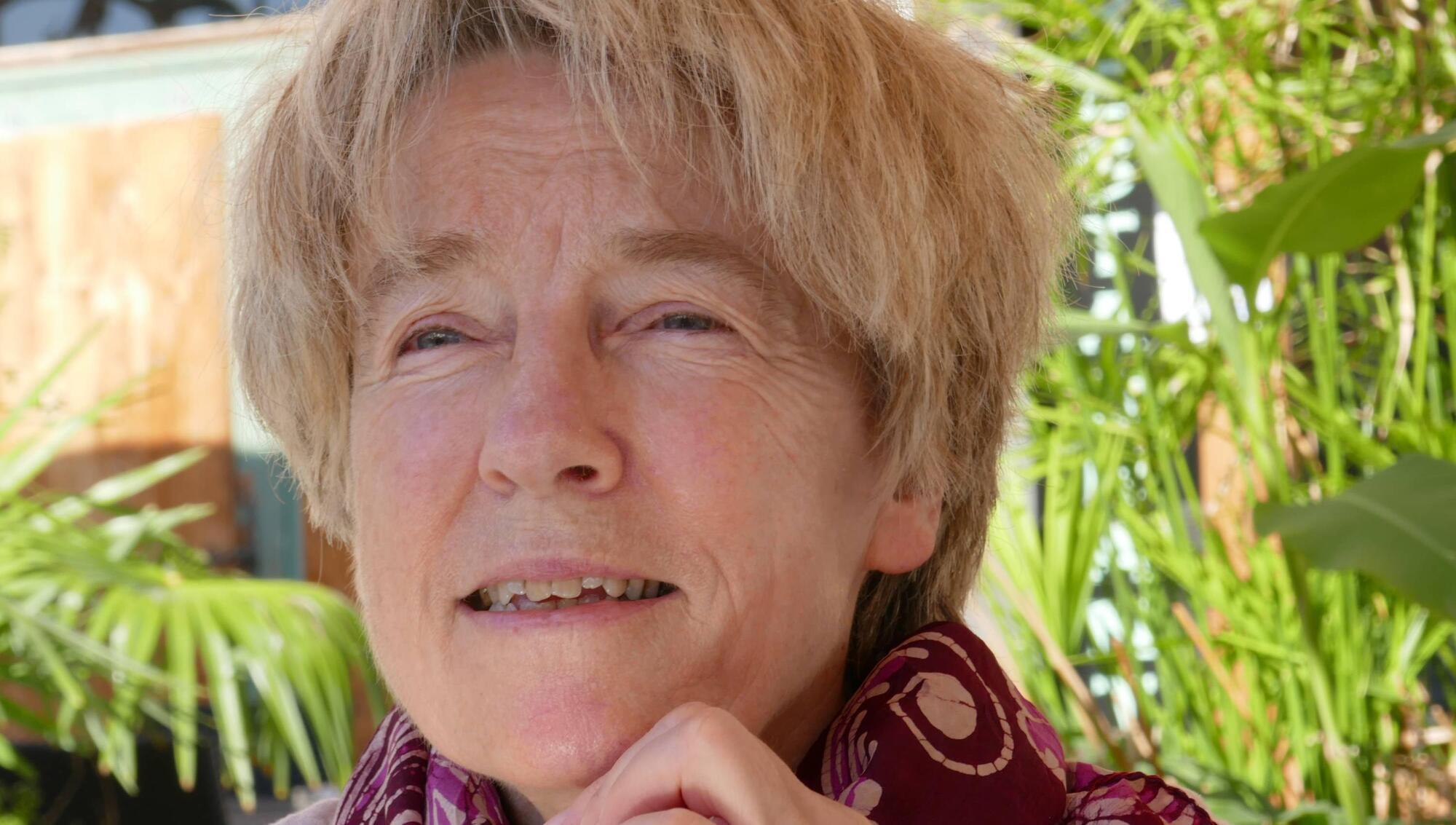
Aoife Feeney’s second novel is a satire, and satire in Feeney’s hands is not a decorative mode; it is a way of taking aim at what societies decide they must not question
Musing on satire, power, and the long road to publication

Aoife Feeney takes a pragmatic approach to criticism. She has had negative reactions before, and she does not pretend it is pleasant, but she does not treat it as a veto either. ‘You have to go out there sometimes and write what you feel you need to write.’

  • The Throats of Birds
  • Aoife Feeney
  • Transat Books,€15.00

Aoife Feeney’s second novel, The Throats of Birds, took a long route to publication. Completed years ago, it was accepted by one publisher and later rejected by the same house, a reversal that set it back significantly.

A newer, smaller Irish publisher, Transat Books, ultimately took it on. 

Feeney contrasted that slow, uncertain process with the speed of her first novel, The Rule of War, published with Somerville Press and supported by literary agent Jonathan Williams. “He brought the book forward very rapidly,” she said.

Feeney does not present herself as prolific. She writes when she has something she cannot leave alone. 

“The reason I write is because certain things occur to me, certain things inspire me,” she said. 

She is also a painter, and she spoke candidly about having decided not to write again, at least for now. The point, as she framed it, is not output but impulse and attention. 

“I write because I have read,” she said. 

I do not write from just an abstract notion that comes into my head. 

That habit of reading as a generator of ideas sits at the heart of The Throats of Birds

The novel is a satire, and satire in Feeney’s hands is not a decorative mode; it is a way of taking aim at what societies decide they must not question.

One of her devices is the podcast, threaded through the narrative as interruptions that unsettle certainty. 

“These podcasts hosted by Toby cut into the conversation of the novel and make a sort of angry argument for all sorts of unsettling ideas,” she said. 

“I try to undermine the things that have been decided to be the absolute truth by society.” 

In the novel’s political imagination, Ireland is not insulated from the currents shaping democracies elsewhere. 

Feeney’s antagonist is Robert Kavanagh, a wealthy tycoon convinced he should rule Ireland and remake it in his own image.

Changing Ireland into a monocultural community

“He wants Ireland to change into a monocultural community,” she said. 

“He wants to stop the liberal rot, and he wants to bring back the Irish language and the true Catholic faith. Kavanagh claims he is acting ‘for the good of Ireland’.”

This is not satire as comfort. Feeney described it as a warning rather than a prediction offered with relish. 

“It is not a joyful anticipation,” she said. “It is a sort of warning.”

Her inspirations for the book are telling, and not limited to contemporary politics. 

One is William Trevor’s Elizabeth Alone, which Feeney describes as the story of a woman in hospital, on the edge of personal collapse, her identity slipping away.

The other is Ossian’s Ride by Fred Hoyle, the 1959 novel in which Hoyle imagines Britain degenerating into a failed state while Ireland flourishes as a wealthy dictatorship and authoritarian police state. 

Those are my two poles of inspiration.

The Throat of Birds has a heroine called Elizabeth, and Feeney also drew on a third strand, both historical and technical in its way. 

She spoke about the 16th-century Jesuit Matteo Ricci, who travelled to China, learned the language, and impressed scholars through a prodigious memory. 

Ricci developed what is known as a memory palace, a structured mental architecture for storing and retrieving knowledge. Feeney adapted that concept for Elizabeth.

“She has her own memory palace that she looks to, to find inspiration and help and guidance,” she said. “This memory palace helps Elizabeth resist the world around her, though ultimately she cannot succeed.” 

Feeney described Elizabeth as timorous, and self-critical. “She is a very timorous person, and this makes her, in her view, a coward,” she said.

That idea leads directly to the title, which Feeney took from a WB Yeats poem, Cuchulain Comforted

The poem imagines the hero Cuchulain dead, and among the dead he must join those reviled as cowards.

In Feeney’s reading, the poem strips away the hierarchy of hero and failure. “He is there as an emblem of us all being equal in death,” she said.

In Cuchulain Comforted, it is the dead who take on the throats of birds, and their speech becomes song. They can communicate, but only among themselves, cut off from the living.

For readers hoping for neat moral arithmetic, Feeney was plain. The book is not populated by winners. 

The podcaster figure, Toby, targets both Elizabeth, to steady her, and Kavanagh’s circle, to unsettle them. Yet resolution does not arrive as triumph.

“He does not win either,” Feeney said. “It is not a book full of winners.” Asked whether the novel is depressing, she did not soften the answer. 

“You will not be happy,” she said. “You might be resigned, or you might be energised into trying to prevent the future.”

That hard-headedness also comes through in how she talks about influence and manipulation. 

She discussed abstract expressionism and the idea, as she had encountered it in her reading, that the movement was supported by the CIA after the Second World War as a cultural counterweight to Soviet-aligned figurative art. 

The point for her was broader than art history. “We are in the hands of incredibly sophisticated manipulations,” she said. 

It is a very dangerous world that we are in.

Feeney’s prose choices are designed to keep the reader alert. She spoke about writing with a distinct rhythm and punctuation, as part of what she considers the voice of the book. 

“I suppose that is true,” she said. “It is a given style. A fragmented story.” 

Her working method fits that description. She drafts by hand and on a laptop, often starting with fragments. 

“I write my ideas by hand, and then I flesh them out,” she said. 

She notices phrases while reading, then tests whether they can be carried into fiction without feeling placed there for effect. 

“It is really from reading that I write,” she repeated.

Feeney also does not shy away from sex in her fiction. She made a clear distinction between erotic writing designed to arouse and what she is doing. 

“It is not arousal erotic,” she said. “It is more analysing what people do in certain circumstances.” 

Painting remains central to the author

Outside writing, painting remains central, though she said the publishing struggle took time and attention away from the studio. 

Her portraits, she said, are representational enough to be recognised, but not flattering in the way families often expect. 

“Sometimes the people in my family who see the portraits do not like them,” she said, recounting her sister’s complaint that the portrait captured an expression she did not want preserved.

It is the same stance she takes towards criticism. She has had negative reactions before, and she does not pretend it is pleasant, but she does not treat it as a veto. 

“You have to go out there sometimes and just write what you feel you need to write,” she said.

For now, the practical aim is visibility, reviews, and availability., but once the book is out and noticed, she wants to move on from the strain of the process and return to painting.

More in this section

Scene & Heard

Newsletter

From music and film to books and visual art, explore the best of culture in Munster and beyond. Selected by our Arts Editor and delivered weekly.

Cookie Policy Privacy Policy Brand Safety FAQ Help Contact Us Terms and Conditions

© Examiner Echo Group Limited