'This isn’t just mindless horror': Ralph Fiennes on 28 Years Later: The Bone Temple 
The Bone Temple is  the fourth instalment of a series that began back in 2002 with Cillian Murphy 
'This isn’t just mindless horror': Ralph Fiennes on 28 Years Later: The Bone Temple 

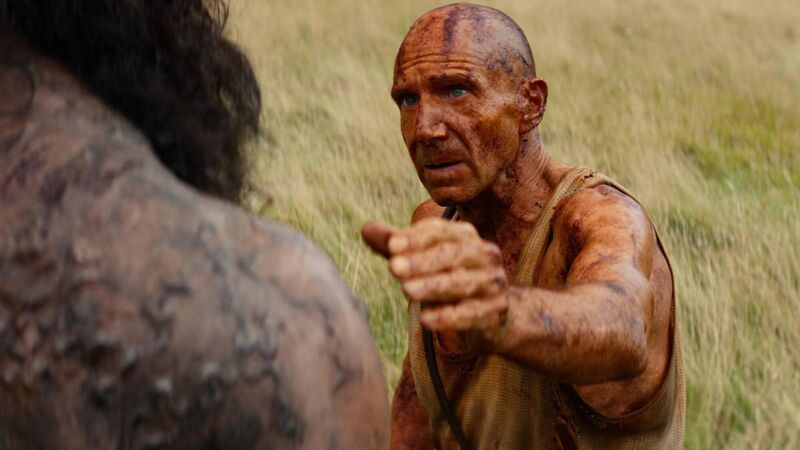
Ralph Fiennes in '28 Years Later: The Bone Temple' forms a shocking new relationship with potentially world-changing consequences.

Last summer marked the long-awaited return of the post-apocalyptic horror film series, with the release of Danny Boyle’s 28 Years Later.

The third instalment in the 28 Days Later franchise, written by Alex Garland, follows on from the Cillian Murphy-led 2002 original and its 2007 sequel, capturing what life in Britain looks like three decades after the outbreak of the catastrophic Rage Virus, a violent contagion that led to the rapid breakdown of society.


A follow-up film, directed by Nia DaCosta and starring the likes of Ralph Fiennes and Jack O’Connell, shifts its focus to the human survivors living in the North East of England.

28 Years Later: The Bone Temple sees Dr Ian Kelson, played by Fiennes, form a shocking new relationship with potentially world-changing consequences, while Spike, played by Williams, is inducted into a gang of acrobatic killers led by Sir Jimmy Crystal, portrayed by O’Connell.

Fiennes, a three-time Oscar nominee who takes on a larger role in this film as the creator of the Bone Temple, says he felt deeply disturbed while reading parts of the script. “Without giving too much away, there are definitely sequences in the film that are horrifying,” says the 63-year-old actor. 

“I was disturbed reading them. I think Nia has handled it brilliantly, the way she’s photographed and edited the horror strikes just the right balance, so you’re compelled to watch rather than look away.

Horror isn’t usually my genre, but when a horror film truly plays on your fear and does it well, it taps into something deeply instinctive. 

The Conclave actor adds that while the film contains gruesome scenes, it is far from mindless horror. “I think these films have always had a humanist element, starting with Cillian Murphy’s character and his journey,” he explains. “In our story, I think that relationship prevents the film from being just about enraged, infected people eating brains and blood. There’s more here, themes about art, our propensity for violence, and our capacity for compassion."

The star says Alex Garland’s script is quite complex. "If a film were just about horror, it would be hard to sustain. Sure, there’s a genre where the horrific moments are exploited purely to scare us, but I’m not keen on that. I like it when there are layers, when the story explores what we’re capable of. This isn’t just mindless horror, no, it definitely isn’t.”

The director has asked for people to avoid mention of Cillian Murphy's presence or not in The Bone Temple, but the Cork actor is believed to play a major part in the yet-to-be-titled fifth instalment. 

 DaCosta, 36, first made her mark on the film industry with a reboot of the horror film Candyman before becoming the first black woman to direct a Marvel film – The Marvels.

 Cillian Murphy in '28 Days Later' in 2002. 
Cillian Murphy in '28 Days Later' in 2002. 

Boyle gave the American director the green light to direct this follow-up film saying: “Nia was the perfect choice to direct The Bone Temple. Alex Garland and I had long been fans of her reimagining of Candyman and recognised that Nia has serious horror chops and a genuine love for the original 28 Days Later.

 “What connects the two films is that they’re both bonkers, idiosyncratic, and artistically personal works,” says DaCosta. “When I initially discussed the new film with Danny and Alex, I told them, ‘I’m going to make it my own. I’m not going to try to make a ‘Danny Boyle movie.’ Because that’s impossible to make.

“Alex’s script was very different from 28 Years Later, so it lends itself to a different approach. I could really put my imprint on it, to let my freak flag fly, and be visually adventurous and match that with more classical filmmaking.” 

Speaking about the distressing visuals in the film DaCosta says: “There are some visuals that are quite distressing, but alongside that, there are concepts and ideas that are really interesting, ideas that encourage people to think about, well, not to get too existential, but about humanity and our place in the order of things.

“I think that when you shock people, sometimes it makes it easier for them to engage with those concepts.” 

DaCosta who recently wrote and directed a provocative, modern reimagining of Henrik Ibsen’s classic play Hedda, says the Bone Temple is a monument to death.

Jack O'Connell in '28 Years Later: The Bone Temple'.

“The Bone Temple reminds us that everything seems hopeless,” she explains. “But at the same time, if you’re still alive, you can accomplish something meaningful with your life. For Dr Ian Kelson, it’s building this monument to death, which inversely, is what gives him the energy to live.”

 In the film Dr Kelson forms a relationship with Samson, the mammoth Alpha played by Chi Lewis-Parry, .

Their evolving dynamic is a key element of the movie. “We’ve seen Samson do monstrous things,” DaCosta notes, “but Kelson sees a lot more to him.”

  • 28 Years Later: The Bone Temple is in cinemas now 

More in this section

Scene & Heard

Newsletter

Music, film art, culture, books and more from Munster and beyond.......curated weekly by the Irish Examiner Arts Editor.

Cookie Policy Privacy Policy Brand Safety FAQ Help Contact Us Terms and Conditions

© Examiner Echo Group Limited