Book review: When a president goes to prison

The overarching sentiment of this book is that a former French president should not have to suffer the indignity of being classed with with other detainees inside Paris’ La Sante prison
Book review: When a president goes to prison

After three weeks in prison, Nicolas Sarkozy was released pending an appeal next year. File picture: Thibault Camus/ AP

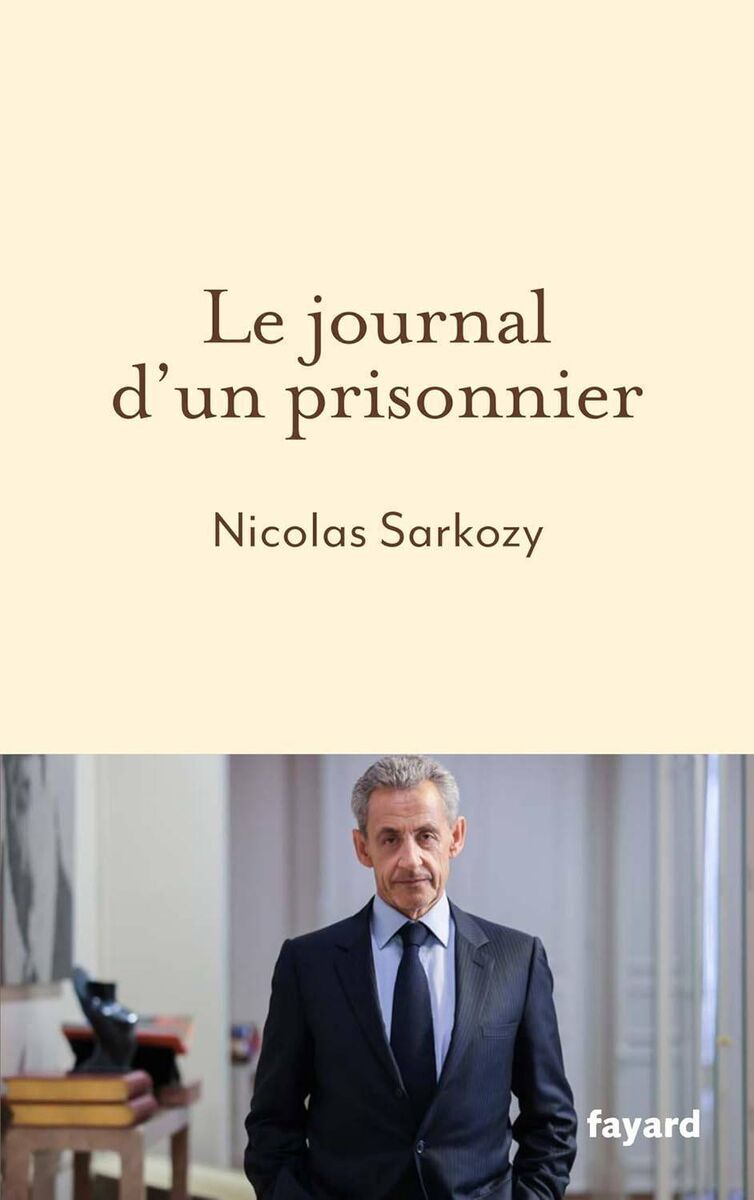
  • Diary of a Prisoner (Le journal d’un prisonnier)
  • Nicolas Sarkozy 
  • Favard, £12.99

“At the Sante [prison], my life began anew,” claims former French president Nicolas Sarkozy in the last line of his Diary of a Prisoner ( Le journal d’un prisonnier), published in French last month by Fayard, a company owned by the far-right billionaire Vincent Bollore.
Although the line does not reflect the contents of the book, it does capture its author’s flair for the dramatic. 

In September, Sarkozy was convicted of conspiracy to finance his 2007 presidential election campaign with secret funds from the Libyan dictator Muammar Gaddafi. 

After three weeks in prison, he was released pending an appeal next year. Diary of a Prisoner appeared one month after his release.

In the interval Sarkozy has been condemned on a separate charge of using fake invoices to systematically break French campaign finance rules.

In France the compressed timeline has raised eyebrows: How can someone spend three weeks in jail and write a 200-page ‘prisoner’s diary’? How can it be ready for bookshops four weeks later?

On Sarkozy’s end, one reason he managed to write the book so fast may be that it is filled with never-ending lists of people who offered him support. 

Those who conveyed their “vibrant indignation” include “all the leaders of the Middle East, but also many European leaders past and present”. 

Christine Lagarde, the president of the European Central Bank and once a minister in Sarkozy’s government, writes to tell him she visited a Church of St Nicholas to pray for truth and justice.

He praises Gerald Darmanin, the justice minister who visited him in the Sante — causing a minor scandal. 

He is cooler towards Macron, though the latter received him at the Elysee palace days before his imprisonment.

Perhaps the most widely reported aspect of this book in French media has been its warm praise for Marine Le Pen, leader of the French far right, who faces her own legal troubles. 

She has supported him publicly. One of her deputies, Sebastien Chenu, committed to writing Sarkozy a letter every week of his imprisonment (in total, three). 

He regrets the “demonisation” of Le Pen’s party, the Rassemblement national, and argues they represent no danger to the French Republic.

The reason for his imprisonment — the so-called Libyan affair, one of three convictions against Sarkozy (there are four other open cases) — receives comparatively little discussion, though he strenuously protests his innocence.

He rehashes abbreviated versions of the arguments rejected by the court. But overall he is less concerned with the substance of the case than the politics around it. 

He considers himself a martyr: wrongly convicted by a conspiracy of left-wing judges and prosecutors. 

He compares himself to the falsely convicted French Captain Dreyfuss as well as, implicitly, Jesus Christ. 

Twice he refers to his imprisonment as a cross. “I prayed,” he says, “for the strength to bear the cross of this injustice.”

Although Sarkozy does not “regularly practice” his religion, the experience changes his perspective. He develops a friendship with the prison chaplain. 

He sees the hand of divine providence in the fact that, on his first night in jail, his cell’s TV is showing a match featuring PSG.

Sarkozy was imprisoned in an upgraded form of solitary confinement. He had no contact with other detainees and was visited regularly by the prison director.

Elsewhere in the Sante, as with Irish prisons, three to five people were sharing two-bed rooms. He writes that he could hear from his cell how they screamed and fought during the night.

The overarching sentiment of this book is that a former French president should not have to suffer the indignity of being classed with such people.

x

BOOKS & MORE

Check out our Books Hub where you will find the latest news, reviews, features, opinions and analysis on all things books from the Irish Examiner's team of specialist writers, columnists and contributors.


More in this section

Scene & Heard

Newsletter

Music, film art, culture, books and more from Munster and beyond.......curated weekly by the Irish Examiner Arts Editor.

Cookie Policy Privacy Policy Brand Safety FAQ Help Contact Us Terms and Conditions

© Examiner Echo Group Limited