George Best in Cork: New documentary goes behind the scenes of the superstar's stint on Leeside
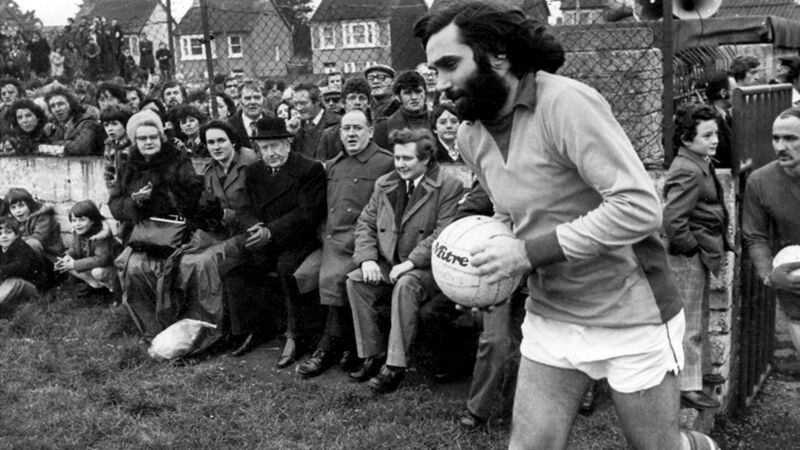
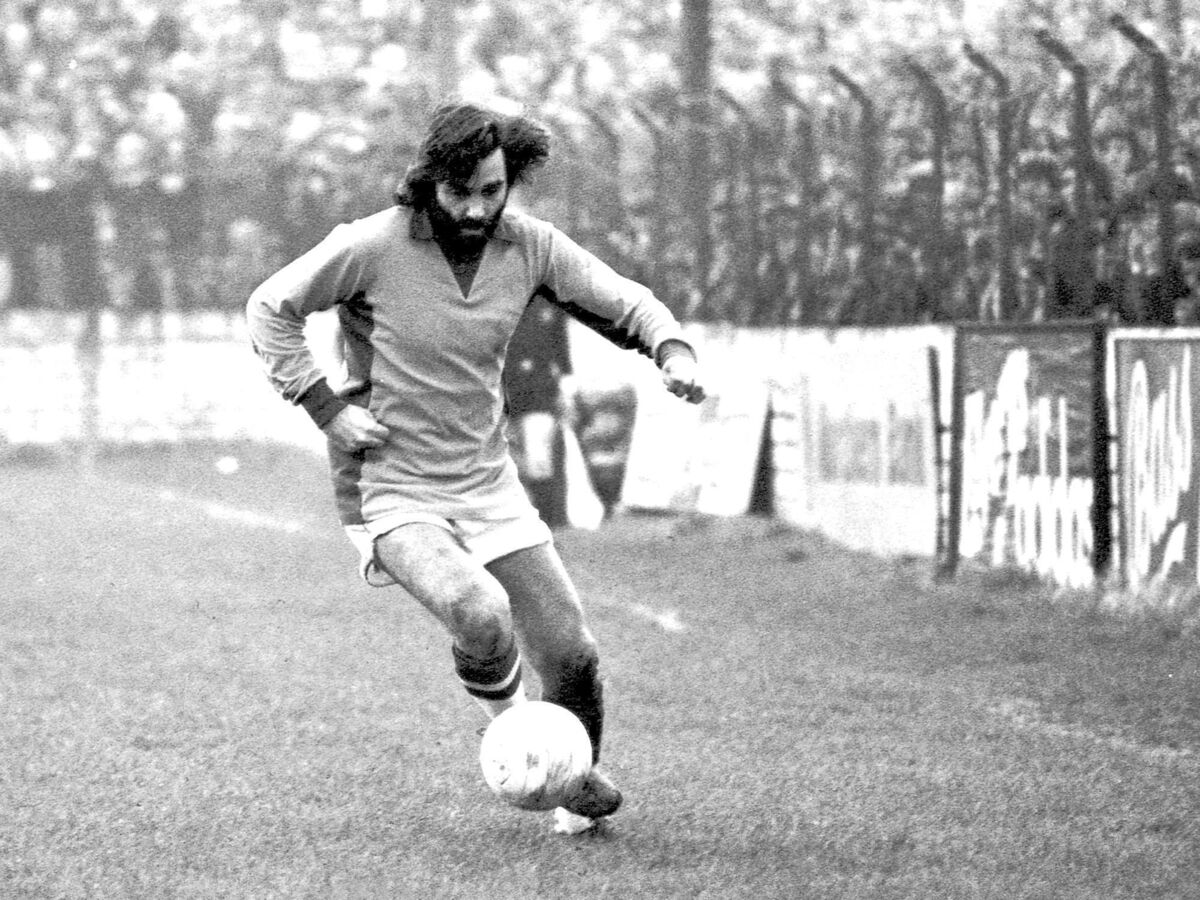
George Best running out for Cork Celtic at Turner's Cross. Picture: Irish Examiner Archive
For his final act, Cristiano Ronaldo has chosen to fill his pockets with Saudi oil money. George Best, when the curtain was falling on his career, was tempted across the Irish Sea to play for Cork Celtic.
It’s such a preposterous notion, but it happened – 50 years ago this Christmas. Best became a global superstar because of his exploits with Manchester United. Infamous for his playboy lifestyle, Best was christened “the fifth Beatle”. Yet a year after Best, the Ronaldo of his day, left United he went to Cork.
“It's such a good yarn,” says Brian Reddin, director of the TG4 documentary George Best i gCorcaigh. “I’m amazed somebody hasn’t told the story before. The thoughts of him, at the height of his career, almost immediately after he left United, ending up playing in Cork. How did that happen? For the guys who went to see him, it was like seeing a God in the flesh.
“John Creedon was saying, ‘In that period RTÉ weren’t broadcasting games. We weren’t getting BBC in Cork. We didn't see Match of the Day. If you wanted to see a United match, you had to go on the boat over to Manchester.
"All of a sudden, this hero was in front of them. Everybody was so excited about going to see him.”
After winning the League of Ireland in 1974, Cork Celtic’s form collapsed. Attendances dwindled, hovering around 800 a game. As Jimmy Barry-Murphy, who played for Cork Celtic in 1973, remarks in the documentary, football in Cork was going through one of its perennial boom-bust cycles. One of the club’s players, Bobby Tambling, a former Chelsea player, who still lives in Cork, was tasked with sounding out a star from England who might be enticed over to play.
Tambling suggested his friend, Best, who was kicking his heels, having left United indefinitely. A deal was put to Best – £1,000 a game plus expenses. It was huge money at the time. A house in Cork, for example, cost around £10,000. His teammates at Cork Celtic were on about £12-15 a match.
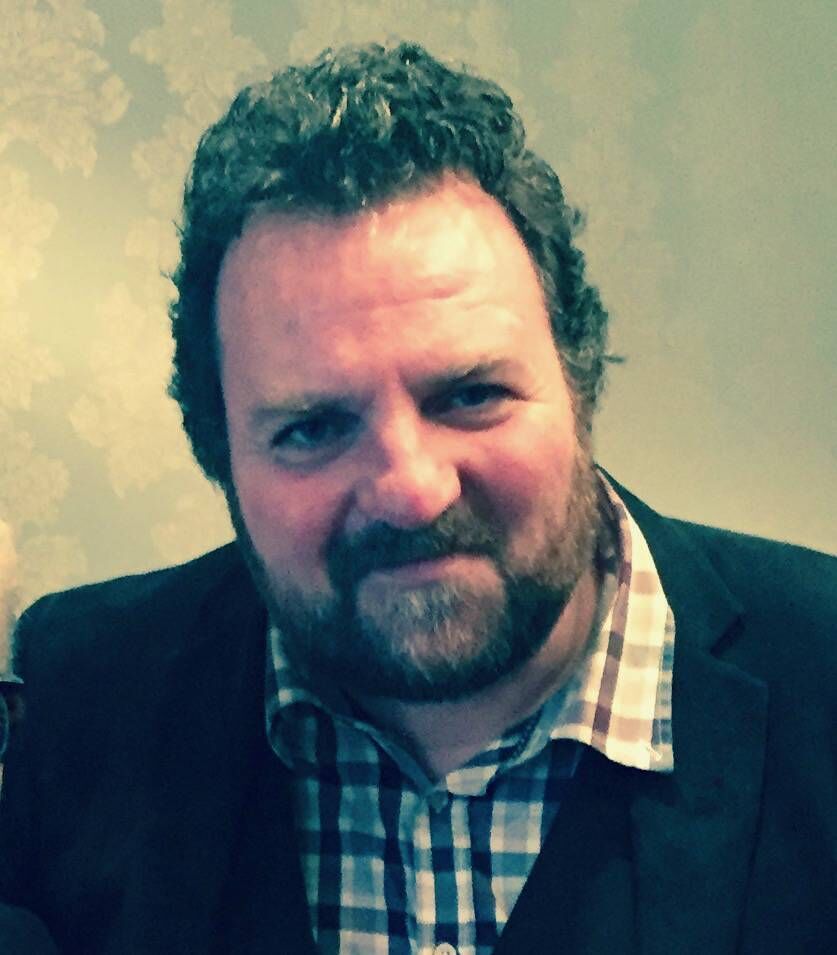
“I tracked down five or six players who played with him, including Alfie McCarthy, Bryan McSweeney, Gerry Meyers and John ‘Blondie’ Carroll,” says Reddin.
“Here's these guys, working down the docks, as an accountant, or in the English Market as a butcher, doing that all week part-time. Then at weekends, the idea of a guy making pork chops in the English Market saying, ‘I'm playing with Georgie Best, one of the greatest players who ever walked the face of the Earth’ – that’s fascinating.
“Chatting to them, they were blasé about it: ‘Yeah, sure he was grand, like. He was fine.’ I tried to big it up: ‘Lads you played with the greatest player of all time! It must have been amazing.’ Their response was, ‘Oh, it was good for him to play with us, too.’ Pure Cork. One of the players, Gussie Walsh, his claim to fame was: ‘I was dropped for Georgie Best.’ I thought that was a great line."
When Best travelled for the matches, he came over the night before, staying in the old Country Club Hotel in Montenotte. The Cork Celtic players didn’t have much interaction with him before matches. He wasn’t there for training. The players were brought to his hotel to meet him.
Brian Reddin adds: “The first time Alfie McCarthy saw him was when he came into the dressing room already togged out. He said, ‘I remember sitting down beside him. He was tying his bootlaces, and the bootlace snapped. I remember thinking, ‘Jaysus, there’s Georgie Best, and they didn’t even give him a decent pair of boots.’
"When Best went out playing, he didn’t know their names. When he wanted the ball, he shouted out the shirt number: ‘Number 11, over here!’” Best played three matches for Cork Celtic before the arrangement petered out, the third game – which wasn’t captured on film – was played in Dublin. His first home game was at Flower Lodge in front of 12,000. Cork people came out in droves for two reasons, it is said: to see Best; and to be able to say they saw Best. They were, however, disappointed by the football.
Best’s underwhelming performance in a 0-2 defeat to Drogheda United resulted in a withering newspaper headline: 'NO BEST BLOSSOM AT FLOWER LODGE.' His second match at Turner’s Cross two weeks later in a victory over Bohemians was more encouraging, which included an audacious back heel at the edge of the box, caught on camera.
Reddin tracked down footage of the two games held in Cork inside the vaults at RTÉ in Donnybrook. Tape from the second match proved elusive until he discovered 15 minutes buried in a Sports Stadium programme segment, which likely hasn’t been broadcast in a half a century. He had a hoot compiling the documentary’s glorious music soundtrack.
“I was blessed because him being glam and Mr. Rock’n’roll, I'm in that world of Bowie, Mud, Queen, Lou Red. I’m trying to be ironic with some of the music. When he leaves, it’s Roy Orbison singing, ‘It's over.’ And Linda Ronstadt singing, ‘You're no good, you're no good, you're no good.’ And Money from Floyd: ‘Grab that cash with both hands and make a stash.’”
- will be screened on TG4, 8.15pm, St Stephen’s Day
In the early 1960s, the British football industry spoke in nervous tones about “the lure of the lira”, as star players such as Denis Law (Torino), Jimmy Greaves (AC Milan) and Gerry Hitchens (Internazionale), flocked to play football in Italy’s Serie A. A decade later, stars such as 29-year-old George Best, Geoff Hurst – and later in the 1980s, Trevor Brooking – headed off to play Leeside.
There was a strong football culture in Cork – Noel Cantwell from the Mardyke captained Manchester United’s 1963 FA Cup-winning side. One of Best’s last managers at United was Frank O’Farrell, whose childhood home was on Friar’s Road, within kicking distance of Turner’s Cross, one of the pitches Best played on for Cork Celtic.
The tradition of enticing British football stars went back decades. In 1953, Cork Athletic signed Raich Carter, with a brief to win that year’s FAI Cup. Carter, 39, had a famously large ego. As a manager, he hung a framed photo from his playing days behind his office desk. If a player asked for a pay rise, Carter would point at the photo: “When you’re as good as him on the pitch, come talk to me.”
Carter made good money in Cork. At a time when the maximum wage in England was £20, he earned £50 per tie plus expenses. He did, however, deliver. In the replayed 1953 FAI Cup final, Carter provided an assist for the opening goal by Jackie Lennox’s (yes, the man from the Bandon Road chipper), and Carter scored Cork Athletics’ winner in the 2-1 victory over Evergreen United, in an all-Cork encounter.
A collection of the latest sports news, reports and analysis from Cork.