Book review: Reflections on being German

'Sanderling' is a rare book: meticulous, honest, unpretentious, interrogative, and utterly compelling
Book review: Reflections on being German

Although Anne Weber has lived in Paris since the 1980s, German history continues to cast its shadow over her. File picture: Arne Dedert/ dpa/ Pool/ AFP via Getty

  • Sanderling 
  • Anne Weber 
  • Translated by Neil Blackadder
  • The Indigo Press, hb £14.99

Sanderling, by acclaimed author and translator Anne Weber, is an exceptional book about coming to terms with German history. 

Originally published in 2015 in German and then translated in French (under different titles), it is available now for the first time in English through an outstanding translation by Neil Blackadder.
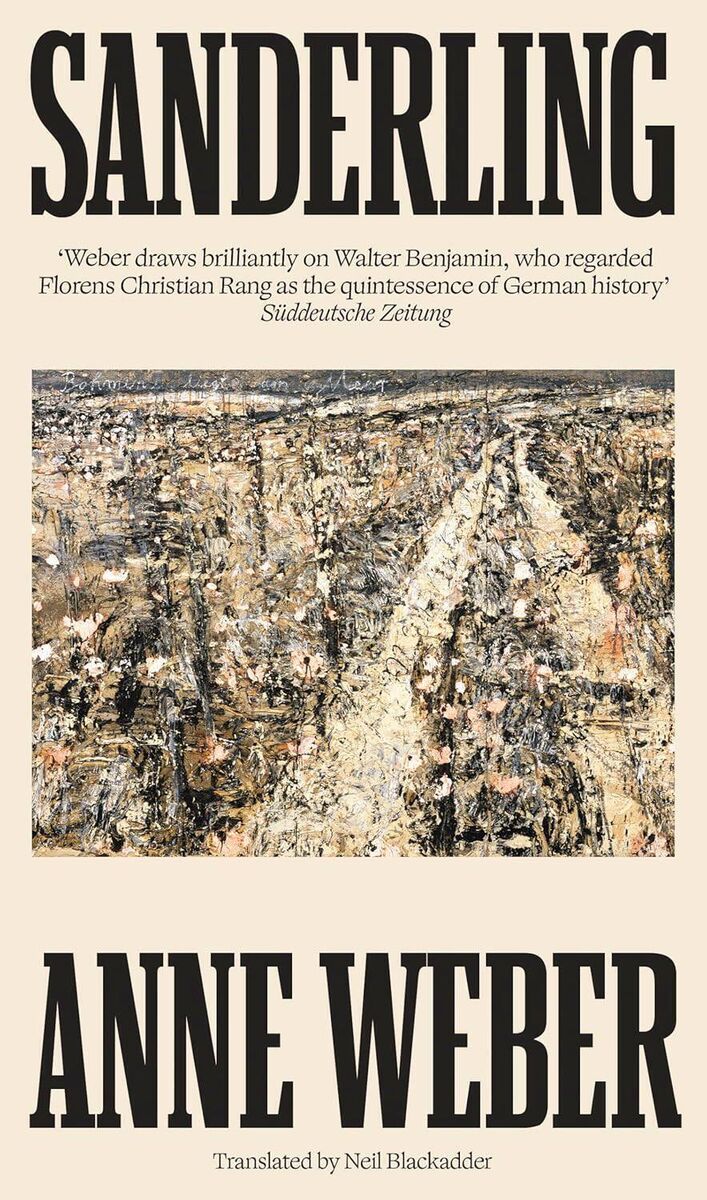
Sanderling ostensibly explores the life of Weber’s influential great-grandfather Florens Christian Rang (1864-1924), a Protestant pastor stationed in the modern-day Polish town of Poznań, which had been annexed by Prussia in 1815. 

Rang’s mission involved efforts to ‘Germanise’ the local Catholic and Jewish populace though his church.

Weber’s narrative method involves the traversal of multiple genres, including (auto)biography, political and social history, psychological investigation, philosophical inquiry, literary criticism, and travelogue. 

Although this approach is reminiscent of authors such as WG Sebald and Claudio Magris, Sanderling is altogether a much more personal reckoning. 

At the same time, the book extends beyond an exploration of the author’s own family history into far-reaching reflections on what it means to be German, in all its complicated historical and contemporary meanings.

Eschewing her great-grandfather’s real name, Weber re-names him after the sanderling bird that lives on the French coast. 

Sanderling himself is an obscure, only partially available figure, surviving in ‘fragments’ in archives, letters and diaries, and in the books he wrote on theology, German culture, literary criticism, and philosophy.

At the same time, he was well known in influential intellectual circles and clearly had a reputation. 

He maintained the respect and admiration of several major early 20th-century thinkers and writers, including Walter Benjamin, Hugo von Hofmannsthal, and Martin Buber.

As Weber researches her great-grandfather, she encounters the limits of understanding imposed by time: why, she wonders, did a Jewish intellectual such as Benjamin not find Sanderling’s ideas questionable? 

Her feelings constantly change. At times Sanderling’s intellectual reach and capacity for self-reflection inspires awe, and even reverence, in Weber. 

Elsewhere, she is repulsed by his over-reaching arrogance, egotism, and cultural supremacism, his lack of ridiculousness.

His own commitment to Germanisation is deeply troubling: on a visit to a local asylum for intellectually disabled people, Sanderling wondered why the inhabitants were not poisoned.

This terrible discovery, which appears almost a throwaway remark, assumes much larger significance because Anne Weber’s paternal Nazi grandfather was a committed member of the SS and an ardent admirer of Hitler.

Although Weber has lived in Paris since the 1980s, German history continues to cast its shadow over her. 

Her generation, she admits, not only continue to deal psychologically with the shame of the Holocaust (to this day she struggles to utter the word ‘Jude’), but also the silence of her parent’s generation. 

Throughout, Weber wrestles with her father’s unwillingness to speak about his family, much less their involvement in creating and facilitating the Germany that emerged in the first part of the 20th century. 

In contrast, Sanderling himself had much to say about the concept of Deutschtum (loosely meaning German-ness), a concept that so catastrophically manifested in the enthusiasm for war in 1914 and later in Nazism.

This generational silence provokes the curiosity that leads Weber back to her great grandfather — she literally retraces his journey to Poland — as well as opening up profound questions about what German-ness means today, which includes, as it must, the question of Germany’s relationship with the rest of the Europe. 

Stylistically the book is a marvel: Weber is as much at home writing humorously about awkward encounters with ticket clerks in Polish train stations as she is grappling with Benjamin’s Theses on the Philosophy of History

Sanderling is a rare book: meticulous, honest, unpretentious, interrogative, and utterly compelling.

x

BOOKS & MORE

Check out our Books Hub where you will find the latest news, reviews, features, opinions and analysis on all things books from the Irish Examiner's team of specialist writers, columnists and contributors.
More in this section

Scene & Heard

Newsletter

Music, film art, culture, books and more from Munster and beyond.......curated weekly by the Irish Examiner Arts Editor.

Cookie Policy Privacy Policy Brand Safety FAQ Help Contact Us Terms and Conditions

© Examiner Echo Group Limited