Mary Is Missing: Irish film shows true meaning of diversity
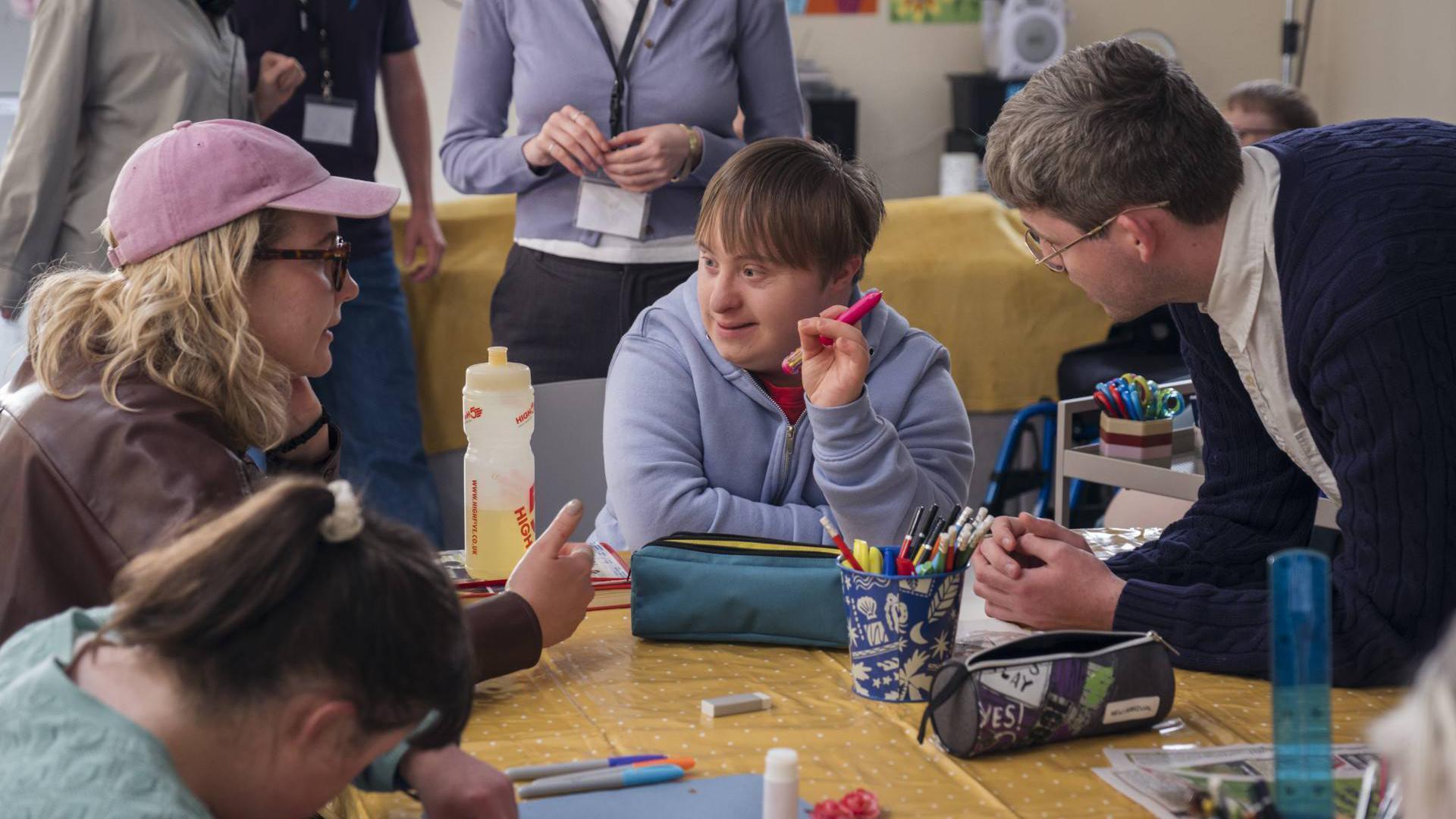
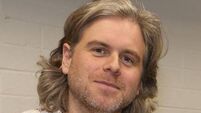
Derek McSweeney on the set of Mary Is Missing.
An Irish thriller developed, created by and starring an ensemble of people with intellectual disabilities was shown at Cork International Film Festival over the weekend.
Set in a day service centre, explores the mystery of a care worker who vanishes without trace, as eyewitnesses give more and more confounding accounts of what happened to her.
The short film was developed through an intensive workshop and writers’ room featuring 13 storytellers with intellectual disabilities. Over twelve weeks, this ensemble worked alongside a team of actors, writers and filmmakers to create characters and develop ideas. From this process, a story emerged, which was later crafted into a screenplay.
Among the film’s stars is Derek McSweeney, who made the transition from stage to screen and noticed a different approach was required compared to theatre acting. “You need to use your voice very big. But in film it's very small, and that's what I actually found challenging,” he says, adding that he greatly enjoyed the experience. “It was really fun. We played games. We had an ice cream truck, we had lovely chaperones, and it was just brilliant, I really enjoyed it.
“The story of the film is about in a day service, and it was a fabulous thing to do with people with intellectual disabilities. I was so proud to do it.”
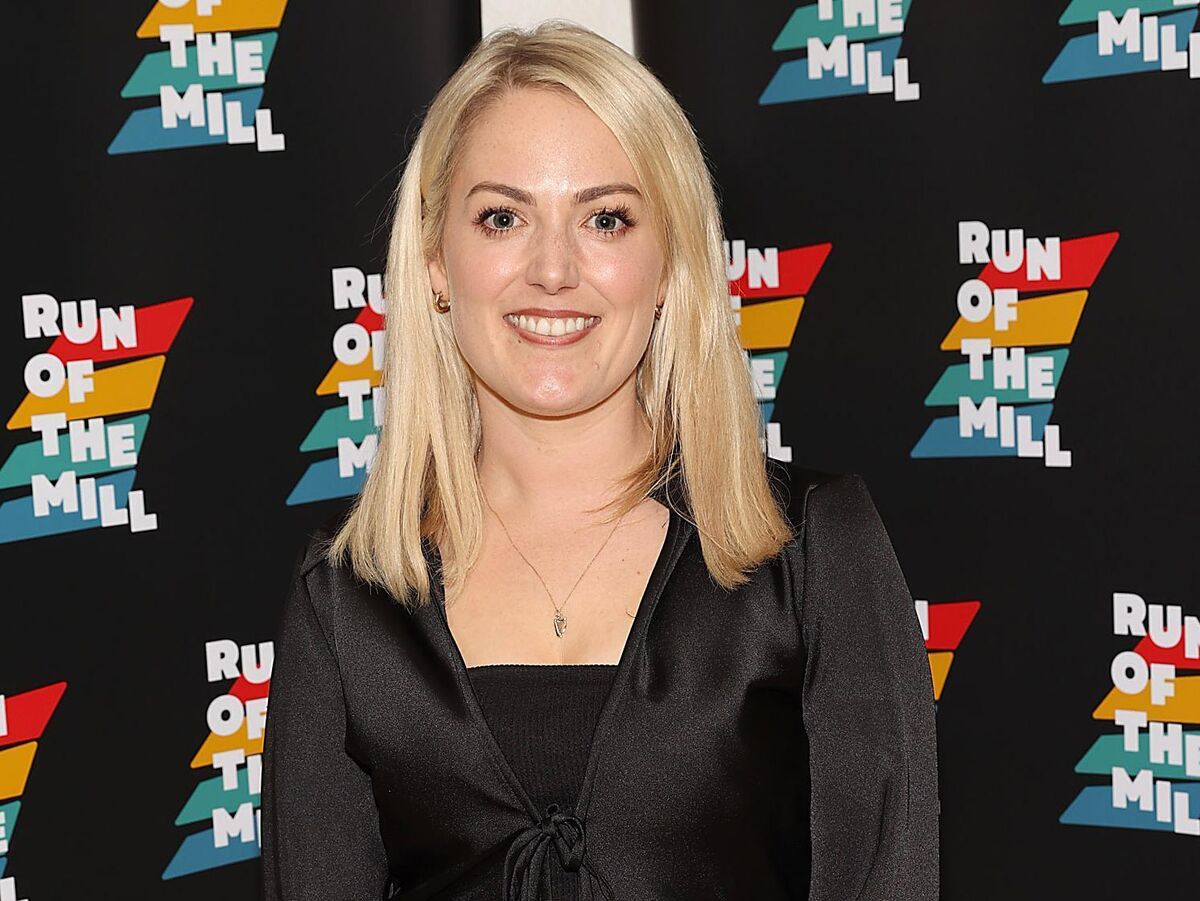
The film was co-produced by Arcade Film and Run of the Mill, which creates platforms for the stories, artistic expressions and talents of intellectually disabled people in the arts in Ireland. It was directed by filmmaker and Run of the Mill’s artistic director Aisling Byrne.
“What drives me to want to make work is to platform stories and talents that are under-represented, and to amplify those voices,” says Byrne. “What's really special about is it's a blueprint that work of excellence with this community is absolutely possible if the right conditions are put in place.”
Supporting the artists has proved to be crucial to the success of the final film, Byrne feels. “Everything we do at Run of the Mill is to create the conditions that are right for our amazing artists to make their best work.” In the arts, because time is money, there can be a reductive perception that it's too challenging to platform communities, or to create or achieve work of excellence with minority communities, she feels.
“You don't often see work that's platforming this community at the highest level. And that is because you do need to rethink. Filmmaking can be quite inflexible as an art form - it’s a 12-hour shoot day, and that's just not going to work for somebody with additional needs. So you need to make the accommodations, if you want to make the work at the highest level.
“Mary is Missing is a testament to that. It's a proof of concept. You've got 13 intellectually disabled performers in a cast of 17, and they're all acting their socks off.” The thing she is proudest of in the film is the final cast performances, says Byrne. “I think they are nuanced. They're some of the best performances I've ever directed, and that is down to the actors being given the tools, the time and the resources and the conditions to be able to excel.”

The idea for Mary is Missing came about following the success of Byrne’s previous short, Headspace, which also screened at Cork, where it won the Grand Prix. From the outset, it was felt that this film should be co-created from scratch by the artists themselves.
“It's very important that our actors are co creators on it, that the stories we're telling are the ones that they want to tell,” says Byrne. “It makes for much more unique work and interesting work, and a perspective that's driven by our artists, as opposed to being from me or from the top down.”
In 2023, she and the film’s co-writer Caitríona Daly worked closely with their cast in developing the story through a 12-week writers’ room. “The only premise that we went into the room with was that the group wanted to make a thriller that was set in a disability day service. Through the writers room, we brought in other actors, and we ran improvisations, and the story of Mary is Missing became what emerged from the writers room.”
For actor Derek McSweeney, it marks the latest project on his growing stage and screen CV. “I’ve always wanted to be an actor, it’s my dream come true.”
- will also feature as a case study on Thursday, November 13, at Cork International Film Festival's First Take, a training and development platform for newly established film professionals, film and media students and the wider film industry