Beginner's pluck: Poet, cinematographer and rewilder Randal Plunkett
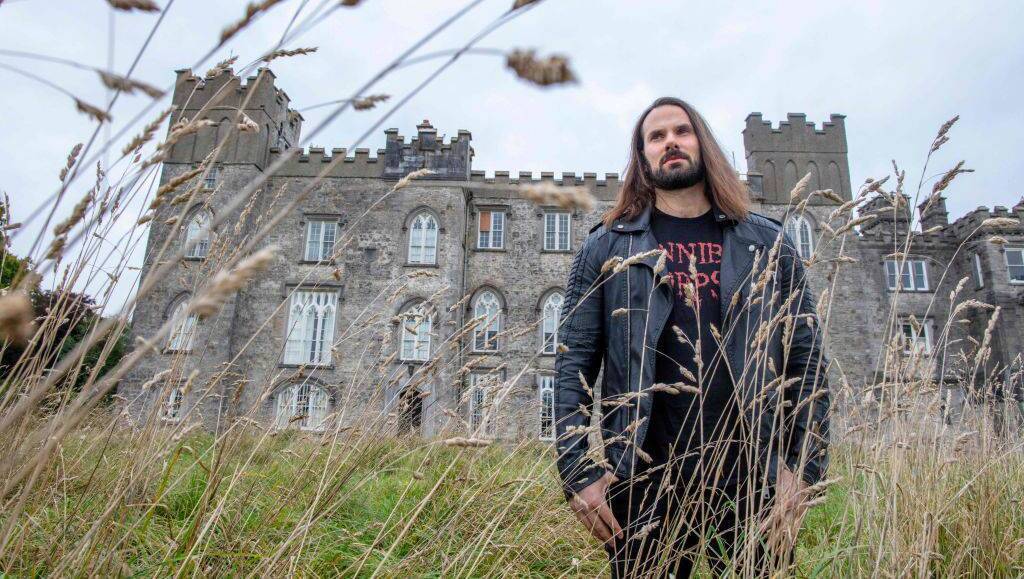
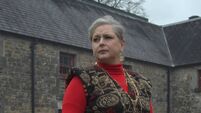
Randal Plunkett, Baron of Dunsany, in the grounds Dunsany Castle, in Dunsany, northwest Dublin. Picture: Paul Faith/AFP via Getty Images
Happy as a child in New York, Randal was devastated when the family moved to England.
“When I left my nanny, things became messy,” he says. “I had a strange relationship with my parents and developed a preoccupation with death.”
He was at a boarding prep school at the time and developed his lifetime obsession with heavy metal.
The family moved to Ireland, and into Dunsany Castle, when Randal’s sick grandfather needed care.
Life at home was fraught. Feeling like a misfit, Randal was badly bullied at school.
After finishing his education in Switzerland, Oxford, and London, Randal’s freedom was interrupted by his father’s illness. He returned, reluctantly, to Dunsany.

“Things were bleak when my father was sick,” he says. “I was making films, and I knew I had a limited amount of time.”
Inheriting at 28, becoming Baron Dunsany, Randall became interested in organic farming, and gradually, becoming vegan, took the estate on a rewilding route.
Still interested in film, he has self-published a poetry book with pictures.
“I never leave the house without two cameras,” he says. “My father always made me sketch, and for me, taking photos is like sketching. It’s like a visual diary.”
1983 in New York.
: King’s Hospital; Le Rosey, Switzerland; Crammer in Oxford; Kingston University, film studies.
Dunsany Castle.
Wife Laura. “We met seven or eight years ago.” Catherine, 14; Constance, 4. “Constance will inherit.”
Running the estate; working on his own projects, and as a freelance cinematographer.
: “I’d be in a black heavy metal band, or in government.
Haruki Murakami; Robert Louis Stevenson; Rory Sutherland; Fyodor Dostoevsky; Franz Kafka.
“Another book of poetry and pictures. I’m self-publishing .”
“Start. And don’t overthink. Write rubbish — it can always be deleted afterwards.”
dunsany.com
@randalplunkett
After a privileged yet miserable childhood, Randal took over the family estate reluctantly — disliking the brutality of animal farming. Changing things, he gradually rewilded the 1,600-acre estate, turning it into an innovative, natural paradise.
Part biography, part a treatise on rewilding, this is an insightful and inspirational read.