‘Magic happens when you put on a red nose’: Why these Irish women decided to become clowns
We associate clowning with men but its potential to transform and empower has made it increasingly popular with women. Kate Demolder looks at the ongoing rise of female clowning
‘Magic happens when you put on a red nose’: Why these Irish women decided to become clowns

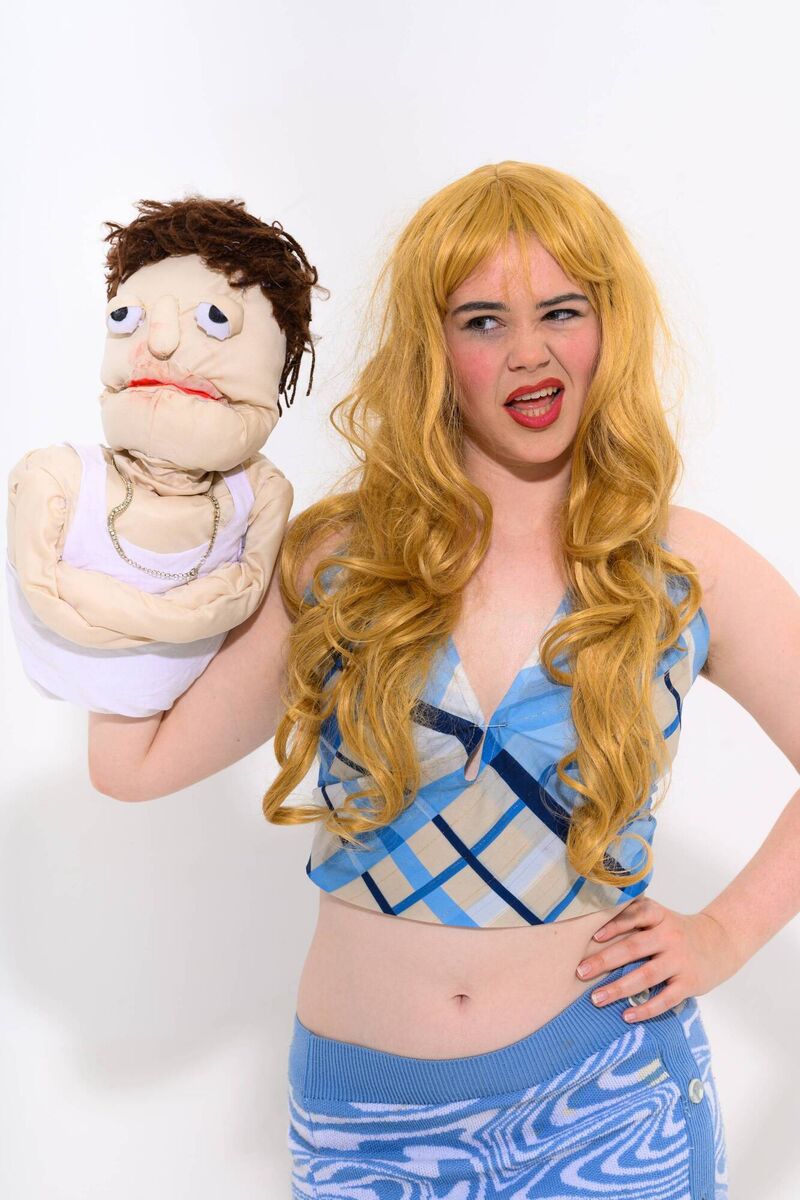
Nora Kelly Lester from Bunny Bunny Productions pictured at her home in Barnland in Gorey, County Wexford. Pic: Jim Campbell

For centuries, clown cars have mostly been filled with men. A new group of talent is changing that.
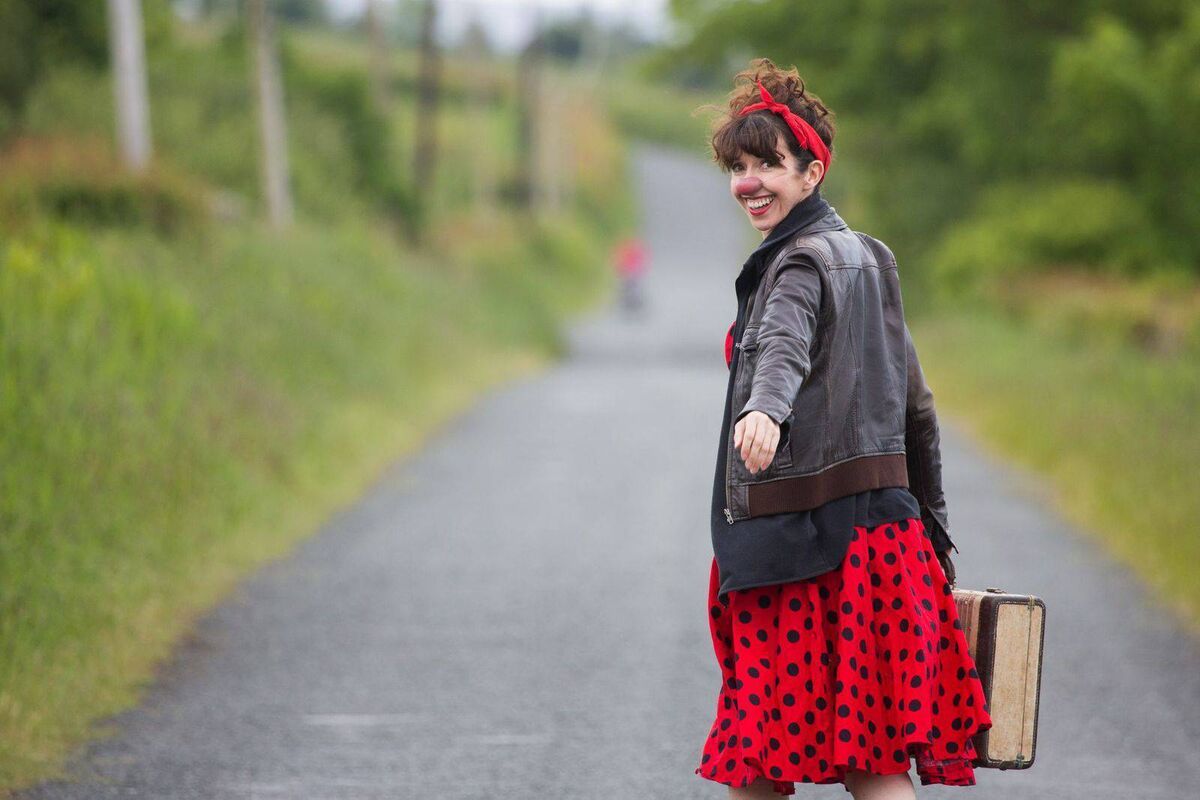
The leopard print swimsuit is just the start. Bunny, the frantic, absurd and endearing clown created and performed by Nora Kelly Lester for her critically acclaimed show Bunny Bunny, pivots from a red nose to a teddy bear to a bin bag, all to convey modern womanhood in all of its messy contradictions.

Bunny — a character credited as having “the writing, physical comedy and ingenuity of Phoebe Waller-Bridge’s Fleabag” — is the culmination of years of Kelly Lester’s work. 

Originally trained in theatre, she mused over clown through her studies, but it wasn’t until watching the critically-acclaimed Red Bastard by Eric Davis at the 2013 Edinburgh Fringe that she felt its red nose impress upon her.

“His whole thing is about pushing and testing an audience,” she says between smiles. “That blew my mind.”

Kelly Lester came home inspired and began creating the show, which would become Bunny, Bunny

As master of ceremonies, Bunny displays the kind of unearned self-assurance that usually wins praise for men and derision for women. She screams, mimes, discusses lovers, and bares her soul in a process that taught its creator a multitude.

“How to be publicly imperfect was perhaps the greatest lesson,” she smiles, recalling rehearsal time. That process, however, was what ignited the flame. 

“The first time I did any rehearsal work, I was so embarrassed and ashamed of what I was doing. But when I looked back months later, the stuff I thought was so terrible was actually so funny. I realised I needn’t have taken myself so seriously — and that’s what clown teaches you. In that way, I would say it’s transformational. And there are people out there literally ruining the world who could really do with it.”

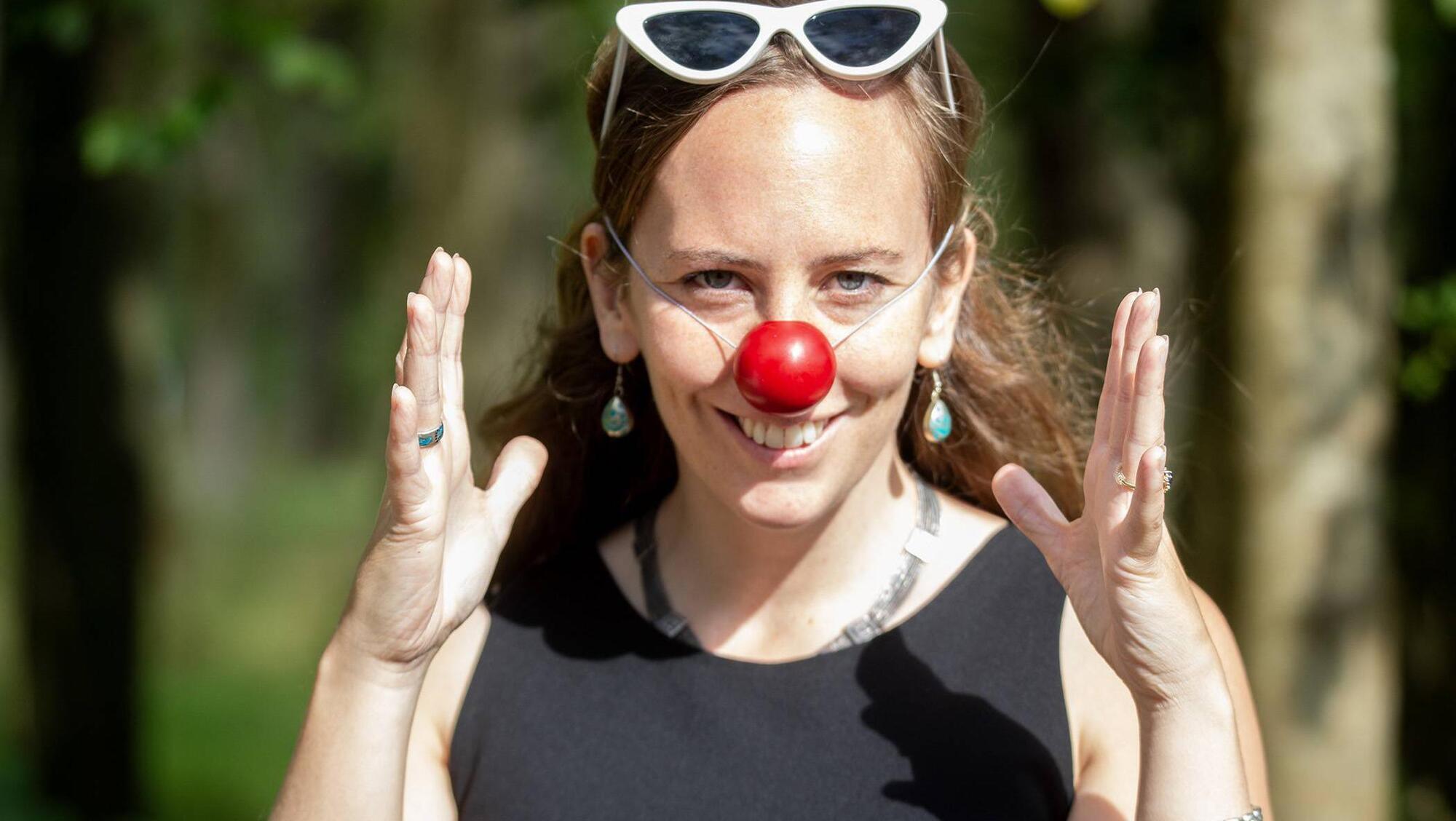
“The job of the clown is to courageously reveal their own humanity in order for the audience to experience theirs,” Ruth Lehane, award-winning actress, writer, theatre maker and clown, says.

CLOWNING ON THE DOUBTERS

From Paris to Sydney, Brazil’s palhaçaria feminina to Dublin, female clowning is on the rise — despite comedy’s historical insistence that women lack the funny bone. Annie Fratellini, of the famous Fratellini clown dynasty, notably performed as a male clown for this very reason.

However, the comeback is on. And the reason is therapeutic.

“The job of the clown is to courageously reveal their own humanity in order for the audience to experience theirs,” Ruth Lehane, award-winning actress, writer, theatre maker and clown, says.

“In our digital world, we’re getting more and more removed from our humanity. Clown is about connection, to the self and to the audience.” She pauses. 

“Magic happens when you put on a red nose, because the colour of humanity comes through people when they’re working this way.”

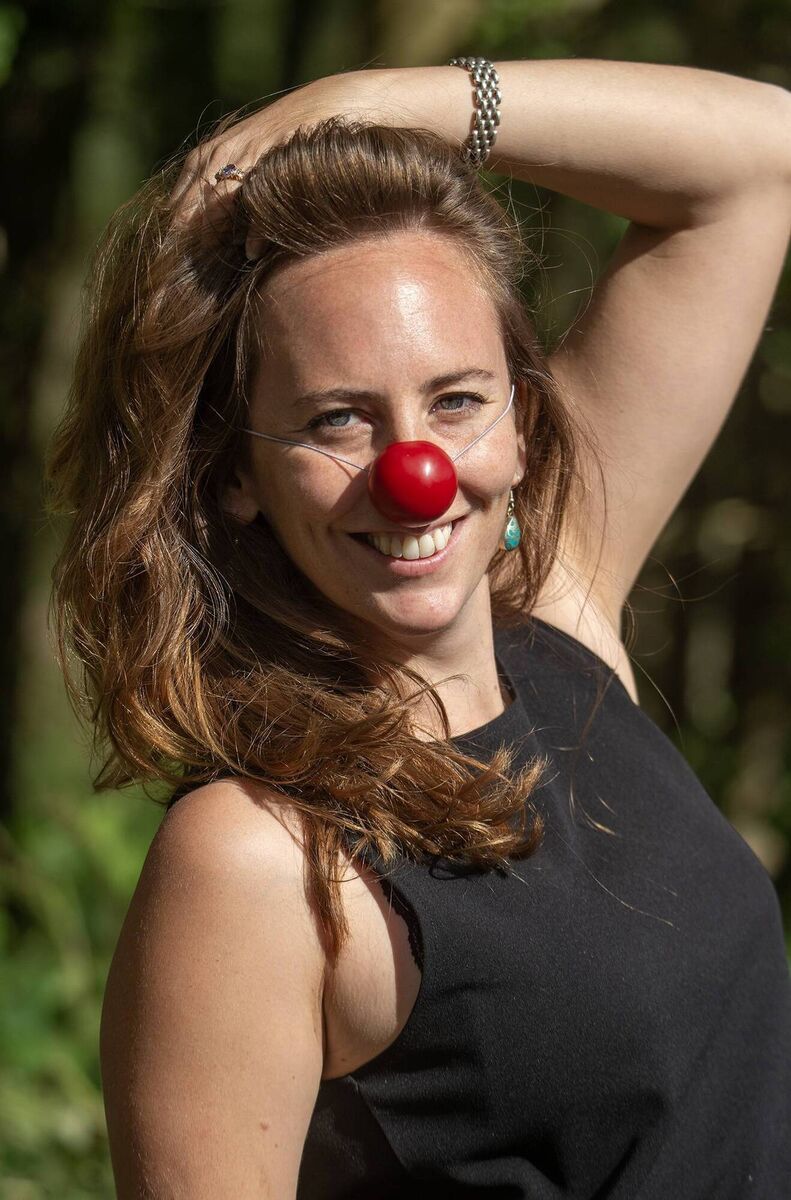
Saorla Rodgers and collaborator: “Getting acquainted with failure in a new way is so hard to do, but such a good thing, not even specifically for performers."

When Saorla Rodger was a student in the Gaiety School of Acting, a week-long workshop directed her attention to the art of clowning: “I found it so challenging, but it didn’t really spark anything. I then did another workshop in London, which really drove home the idea that failing was not a bad thing, or even just unimportant.”

Failing, or perhaps the redirection of it, is a central tenet of clown.

“Getting acquainted with failure in a new way is so hard to do, but such a good thing, not even specifically for performers,” Rodger says. 

“It rewired my brain to go from panicking when something didn’t work with an audience to thinking: That’s great, I’ve found something that doesn’t work — how useful.”

This consideration has proven addictive for young, jaded performers.

“Even in the past year, new clown-specific nights have started up in Dublin where there never were before, and that speaks to how affected we all are by it; it covers the full remit of human emotion,” Rodger says. 

“I know that people say that everyone should try stand-up once in their lives. But for me, I think everyone should do clown.”

“There have always been women in clown, but you could argue that the stars are aligning right now,” Angelica Santander says. “This has been brewing for a while.”

THE ART OF MOCKERY

Clowning’s origins are centred around disrupting hierarchies, a tempting mechanic proving uniquely suited in today’s patriarchy. 

And unlike conventional theatre, the fourth wall is permanently down, proving real and alive in ways performers could only dream of. 

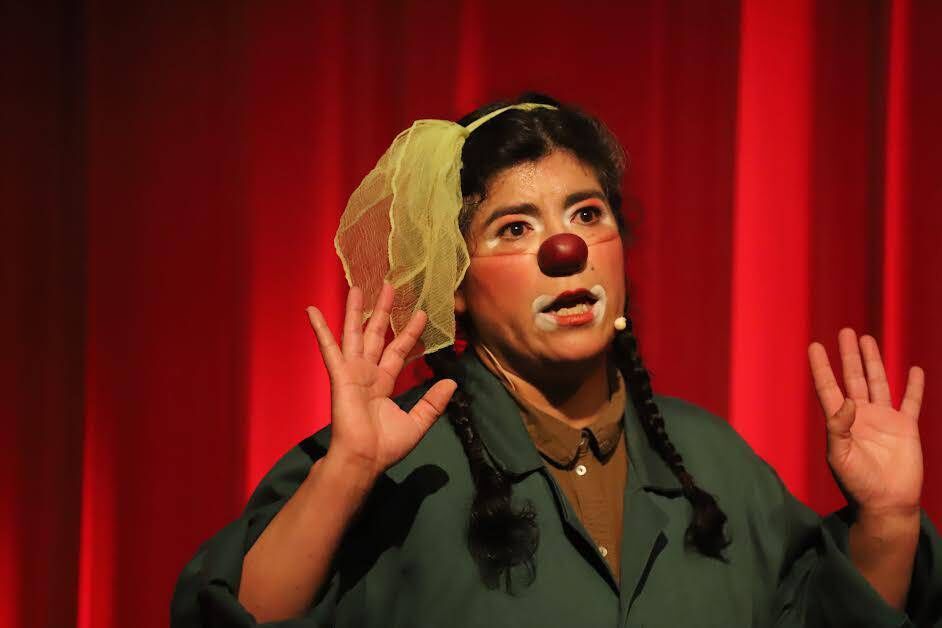
Indeed, while Kelly Lester and Rodgers blur the boundaries between stand-up, theatre, and comedy, Angelica Santander — regularly hailed as Ireland’s top female clown — incorporates the aspects of humanity we’re prone to losing today into her work.

Santander, who is originally from Chile, was an actor before she studied clown under Sue Morrison, a world-class teacher of performance-oriented ‘Clown and Bouffon’ — a modern French theatre term to describe a specific style of performance work that has a main focus on the art of mockery. Today, as a performance artist and early years practitioner, what keeps her coming back is the freedom of expression."

Santander has noticed more and more women attend her clown workshops of late, perhaps inspired by rising female clowns like Palamides or Julia Masli.

Masli, whose show Ha Ha Ha Ha Ha Ha Ha debuted at the Edinburgh Fringe Festival in 2023, tours internationally, appearing onstage as a Chaplin-esque vagabond keen to solve audience problems, in a show that’s entirely different every night. 

Her solutions, both genuine and absurd, provide a different kind of solace — one that allows us a birds-eye view into humanity, led by a conductor with as much empathy as they have mischief.

“There have always been women in clown, but you could argue that the stars are aligning right now,” Santander says. “This has been brewing for a while.”

That said, people often don’t expect a woman to be behind the nose, she says.

“I did a show in Monaghan recently, and I noticed a little girl at the end really eager to put her hand up. I said hello to her and she asked me: ‘Are you a man?’ And I thought that was so funny, that she didn’t expect a clown to be female,” she said.

Nora Kelly Lester from Bunny Bunny Productions pictured at her home in Barnland in Gorey, County Wexford. Pic: Jim Campbell

THE SMALLEST MASK

Layering vulnerability, absurdism, satire, and pathos credibly into a pin-sharp, observational performance is no mean feat, particularly when expectations of clown can be so low.

“When I tell people what I do, I think they think I’m in a circus or a children’s entertainer with big shoes and a white face,” Kelly Lester smiles. 

“Not that there aren’t incredible people doing that, but we’re quite rigid in our understanding of clown, and I’m hoping this new wave will change that.”

Today’s clowns tend to propel the genre in a direction that continuously pushes the boundaries of traditional clown work. 

No longer necessary are the tricycles, oversized shoes, and white face paint — though, they are available — modern female clowns are taking the scene and running with it, in a way that reaps myriad dividends.

“Clowning is a tool that allows you to go deep inside yourself and commit,” Santander says.

“It will bring you somewhere, and the benefits of that are endless.”

It remains to be seen whether this shift, in Ireland at least, will translate into something more than fringe comedy and expressionism. 

But for the women who have allowed themselves to become unravelled by clown, only to build themselves up from the nose in, it’s not the point.

“I think it appeals to anyone who has ever felt suppressed,” Kelly Lester says. 

“Or if you’ve had to fit into a certain mould. I remember feeling such relief when I discovered the feeling of rage inside me, which is an emotion that is considered masculine. But it was so freeing to feel that and work through it as someone who felt they always had to be a good girl.”

The nose, she continues, also allows one to look at these emotions in front of an audience in an approachable, comedic way.

“They say that the red nose is the smallest mask in the world,” Kelly Lester says. ”But it’s not a mask to hide behind, it’s one to reveal your light.”

  • Nora Kelly Lester will lead a six week beginners course on clowning from October 6 - November 10 in Gorey. See exa.mn/clownimprov


x

More in this section

Scene & Heard

Newsletter

Music, film art, culture, books and more from Munster and beyond.......curated weekly by the Irish Examiner Arts Editor.

Cookie Policy Privacy Policy Brand Safety FAQ Help Contact Us Terms and Conditions

© Examiner Echo Group Limited