'It was always bad luck to go out there': Play dips into West Cork legends
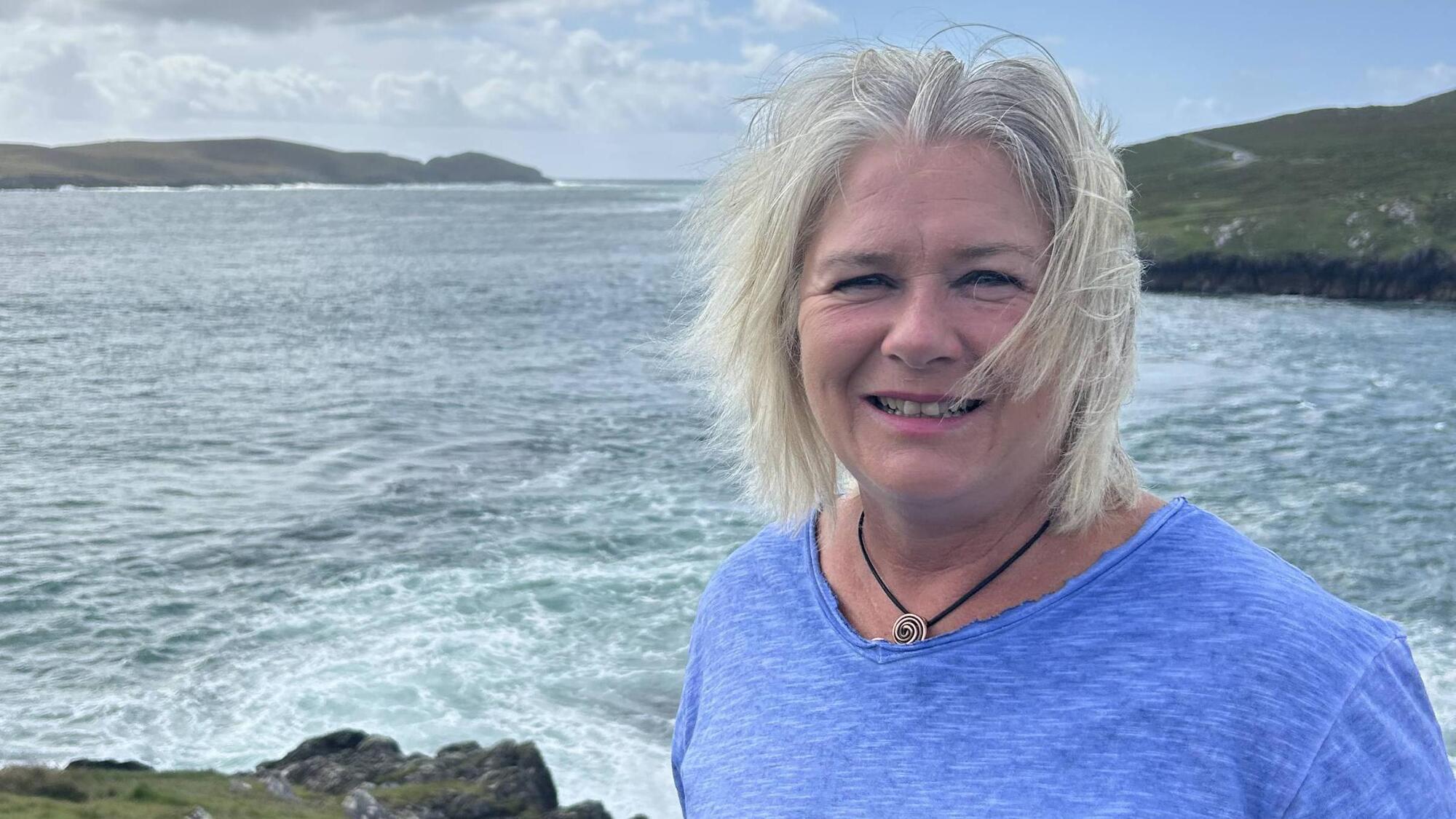
Carina McNally, with Crow Head and Crow Island in the background, in West Cork.
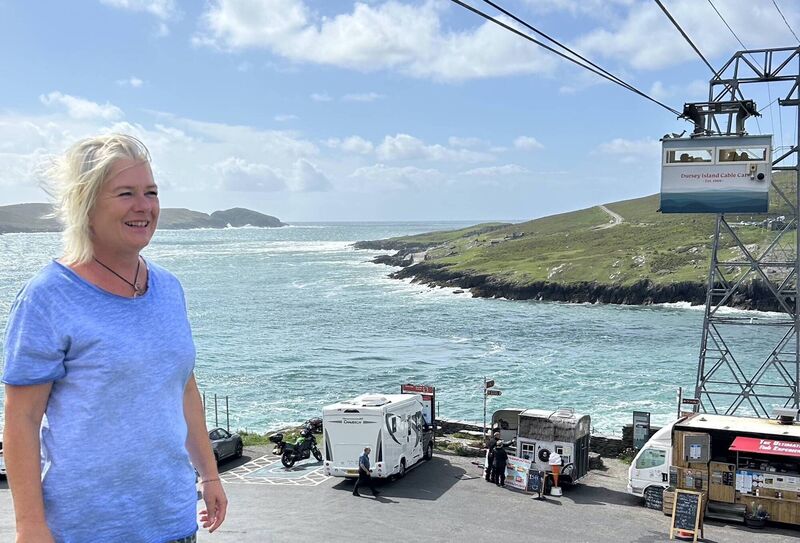
Every island around the Irish coast has some yarn attached to it, and Crow Island is no exception. The five-acre outpost at the end of Crow Head, at the tip of the Beara peninsula in West Cork, was made famous in the 1950s when a local farmer named Tadhg Roger O’Sullivan constructed a small cable car to carry his sheep back and forth across the chasm from the mainland. The contraption was featured on RTÉ and BBC television, and inspired the construction of the present cable car to nearby Dursey Island, which opened in 1969.
Crow Island also has a long association with a mysterious blacksmith known as the Goidhleann Gabha, the subject of Carina McNally’s first work for the stage, The play premiered at Lehanmore Community Centre in May, and features as part of Bere Island Arts Festival on Thursday September 18.
McNally is a writer, storyteller and historical tour guide who grew up in Garnish, less than a mile from Crow Island, where she still lives today. “As children,” she says, “we were always told stories of the ancient races, the Fir Bolg and the fairies, who lived here before. We heard of how Crow Island was haunted by the Goidhleann Gabha, and how anyone who went looking for his gold would come to a bad end. Their boat would capsize, or the shores would rise up against them. It was always bad luck to go out there.”
Today, Crow Island can only be accessed by a steep path up the cliffs, and those who have visited insist that the ruins of a stone dwelling can still be seen on top of it. “It’s known that there was an Iron Age settlement on Crow Head,” says McNally, “so there must have been some kind of activity out on the island too. There’s some grain of truth in every story.”
The Goidhleann Gabha is said to have had a magic cow, the Glas Goidhlinn, which gave an endless yield of milk and could leap effortlessly to the sweet pastures on Dursey Island or the mainland. “The Glas Goidhleann would follow the blacksmith everywhere. He would go to a well at a place named Kilkinnihan, on the way to Castletownbere, for water to temper his steel. And the cow would go too, to drink at the well and graze around it.”
There are various literary accounts of the Goidhleann Gabha and the Glas Goidhlinn, one of which McNally came across in a book called In Kerry Long Ago, published in 1960.
“In Kerry Long Ago was written by John O’Donoghue,” she says. “He was my father’s cousin from Kilgarvan, and a real character. Obviously, the book is mostly about Co Kerry, but he discusses the Goidhleann Gabha too. I was fascinated reading his version of the legend, and I started doing more research. When I dug deeper, I realised that the Goidhleann Gabha was the blacksmith who forged weapons for the Tuath Dé Danann, and he had his roots in the character of Guibniu, the blacksmithing god who was very important in our ancient belief systems. You can see how it all came down through the ages.
“It was such an interesting story that I decided I'd start writing about it myself. And between the jigs and the reels, I ended up producing a play.”
McNally made contact with Peter Prendergast, the Project Co-ordinator, Arts Officer for the West Cork Islands, and with his support, she developed her script with the dramaturg Éadaoin O’Donoghue. On completing the final draft, she submitted it to Strive Theatre Company in Cork, whose director, Ciarán MacArtain, was happy to bring it to the stage.
“Ciarán cast Damian Punch and Judith Ryan, and they began rehearsing in Cork. There’s a theatre stage in Lehanmore Community Centre, just up the road from where I live, and we were delighted to premiere it there. You can see Crow Island from the windows, and I was able to show them all around Garnish and Dursey Island.”
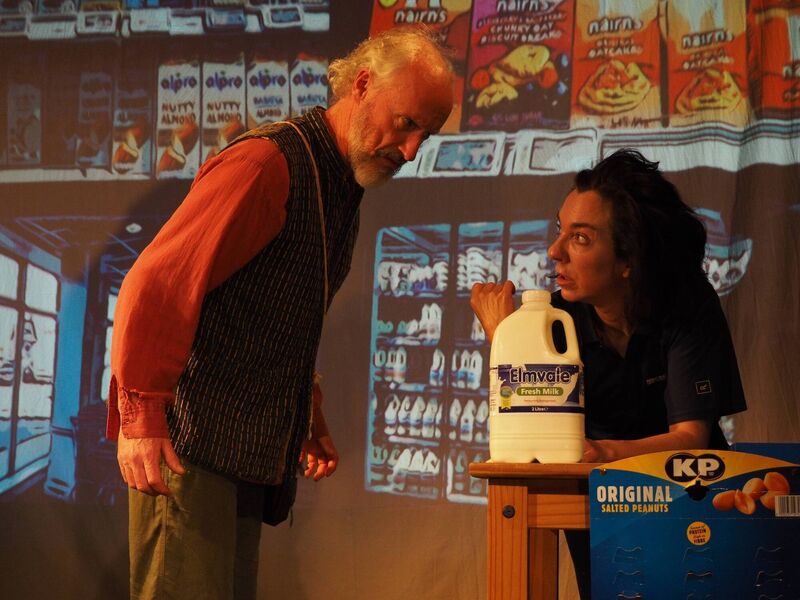
Punch plays the role of the Goidhleann Gabha, or Gavin, as he is known in the present day, while Ryan plays two roles, a shop assistant named Gráinne, and Maree, a woman who visits the area on a spiritual quest. The first two performances of the play at Lehanmore sold out, and it will now travel to Kenmare and the Electric Picnic before its performance on Bere Island.
“The reaction at Lehanmore was great,” says McNally. “Someone told me afterwards that they were so moved that they walked out to the end of Crow Head and left an offering for the fairies. I asked what it was, and they said, a banana. I’m not sure what the fairies might have made of that.”
McNally is currently finishing work on her first novel. “It’s set in the Ireland of the 17th century. It centres on a woman who retreats to the forests in Wexford after Cromwell’s men destroy her home. In Celtic mythology, every month of the year is associated with a particular tree, and she lives according to that calendar. The book is called and Mercier Press in Cork will publish it in April 2026.”
- The Crow’s Old Gold runs at Carnegie Arts Centre, Kenmare September 6; Bere Island Arts Festival September 18; and Allihies Autumn School October 11. Further information: strivetheatre.ie
11am: Oileán exhibition opening at the Community Centre
5pm Rachel Parry exhibition opening at the Naval Yard Shed
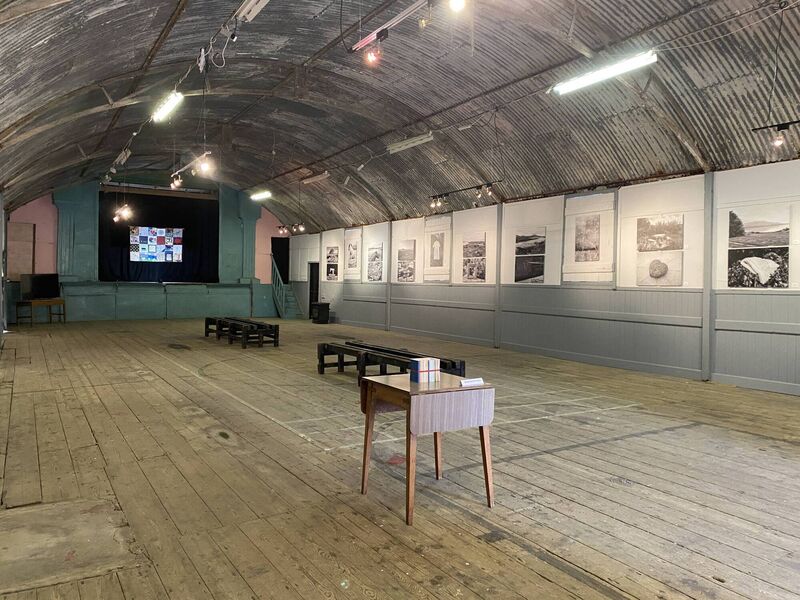
6pm West of Healy Pass: Beara Peninsula Artists exhibition opening at the Drill Hall
1pm Military History Tour 7.30pm
Culture Night Old Time Irish Dancing at the Drill Hall
1pm Celebration of the poet John O’Leary at the Drill Hall
3pm Amanda Coogan performance at the Drill Hall
8pm Stockton’s Wing with support act Torcán at the Lecture Theare
10am Island Voice Connect/Dr Eva McMullan Glossop choral performance at St Michael’s Church
2pm Long Table Lunch, Music & Storytelling at the Drill Hall
- Further information: bereislandartsfestival.ie