Tommy Tiernan Show recap: Cork jockey Davy Russell pays tribute to 'beautiful chap' Michael O’Sullivan
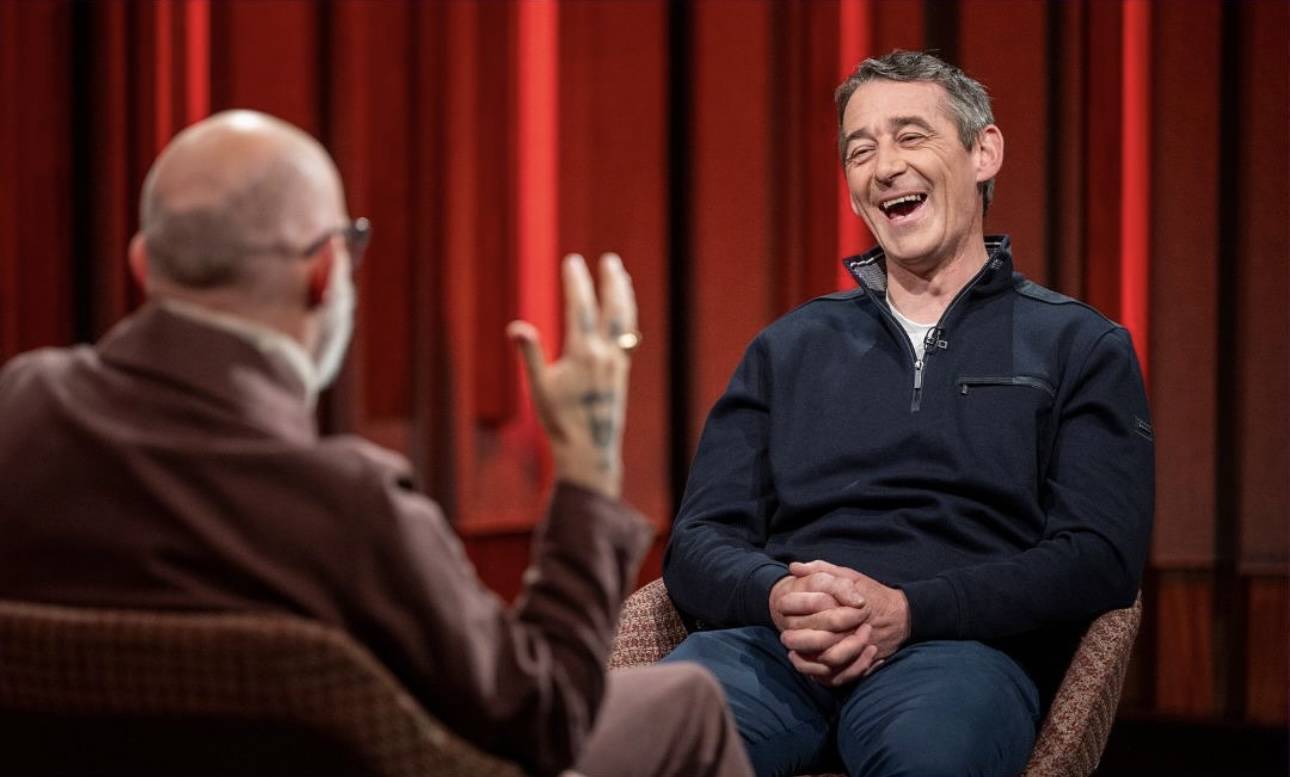
Cork jockey Davy Russell spoke to Tommy Tiernan about his career, losing those close to him in the sport, and his love for his family. Picture: RTÉ.
Saturday night’s Tommy Tiernan Show touched on navigating the limelight and intense commercialisation at an early age, reflected on one Cork man’s career in jockeying and explored what life is like for a gay man growing up in the Travelling community.
Tommy Tiernan’s guests included singer-songwriter and activist Charlotte Church, Cork jockey Davy Russell, and writer Oein DeBhairduin.
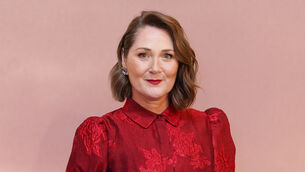
Tiernan’s first guest of the night was singer-songwriter and actress from Cardiff Charlotte Church.
Church discussed her journey from a 12-year-old singing sensation to a politically active mother of three.
She recounted her rapid rise to fame with her debut album , the intense commercialisation, and the cultural differences she faced, particularly in Japan.
Church highlighted her legal battle with her manager at 14 and the media's portrayal of her as an airheaded party girl, and shared her transition to motherhood, her activism on climate change, and her establishment of the Allen Project, a democratic school in the forest.
She recounted her rise to fame at the age of just 12, saying: “It went mental for me overnight. I feel like, literally, I was plucked from obscurity. It was like a proper fairy tale, in a way.” She said that someone has seen her perform and then one thing led to another and she was signed.
After that, she said there was a period of “hardcore commercialisation” where she said she was “properly commodified” and was right in the beating heart of the capability machine and that she and her family were naive as it was totally beyond anything they had known.
She spoke about travelling to Japan where the schedule she had was “insane” and spoke of her parents “impossible task” of protecting her and advising her.
When asked by Tiernan what was being sold, she responded: “Innocence was being sold”, which led Tiernan to sit back in his seat and respond: “That’s one of the most shocking things. Innocence was being sold. Because it was, wasn’t it? It was this beautiful young girl with this voice and presexual, whatever that phrase is, wow.”
She spoke about being embroiled in a court case with her manager at the time at only 14 and how her mother was portrayed in the media during that time.
She went on to talk about how the media portrayed her as she began to search for adventure in her teenage years and how it took a toll on her psychologically.
Church spoke of her decision to step away from the spotlight and focus on her personal life, including having children.
She spoke about meeting a “specimen of a human who was a rugby player” and that she followed her body and had two beautiful babies.
“I was just absolutely on cloud nine,” she said, describing the intense love and oxytocin she felt when she became a mother.
“I was high. I was high as balls when I was in that early mother world. I mean, I just loved it.” She touched on her family life, her husband Johnny and her kids, two teenagers and a four-year-old, and discussed her political awakening and activism, which was influenced by her husband's views.
She spoke of the various social and environmental issues she is passionate about, including climate change and human rights.
She spoke about how Palestine is “the biggest spiritual awakening of our time” and the catalyst for this “enormous world change”.
“The speed of what I would consider this sort of fascistic takeover that feels like it’s global is deeply unsettling,” she said.
She spoke about her involvement in setting up a charity called the Allen Project, a democratic school in the forest and explained the challenges of funding and the radical nature of the school, which focuses on young people's agency and creativity.
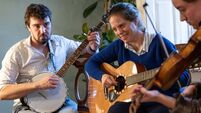
Church also touched on her Irish roots and her continued love for music, performing an Irish tune.
Tiernan thanked Church for coming onto the shoe, saying he had wanted to meet her for a long time.
Tiernan’s second guest of the night was Irish jockey Davy Russell.
During his career, the Cork-born jockey was a three-time Irish jump racing Champion Jockey, won the Grand National twice, won the Cheltenham Gold Cup and the Grand Steeple-Chase de Paris.
He shared with Tiernan his journey from a young athlete to becoming a champion jockey, recounted his first experience with ketamine after a fall, as well as his career highlights.
The conversation began humorously as Tiernan touched on an accident where Russell fell from a tree, which led him to experience ketamine for the first time.
Explaining to Tiernan how trippy it felt, he said it sent him "off on his pink unicorn up into the sky”.
"Oh, I could have driven the ambulance, so I could. It was an experience anyway," he said.
”I never drank; drugs never interested me. When I got a fall, a normal fall, and you got a good bit of a kicking and you were sore, I would hate taking painkillers because I didn’t want to mask something, I wanted to go through the pain. I’ve no problem with pain… I enjoyed going through the pain barrier.”
He reflected on his sports background, including running, hurling, and football, and his deep connection with his father's interests when growing up and spoke of how it was the joy of going to a Point to Point with his father that eventually developed and led him to pursue his career in jockeying.
“Every pursuit that my dad enjoyed, I enjoyed. I was a shadow of him. Everything he done. I would see the joy when he’d go into a hurling match, and the excitement, and even to this day now, the rearing I got with my father… no matter where he was doing I wanted to go with him," he said.
He spoke about his progression in his career and how in the early days he “just couldn’t get over the line to be Champion Jockey”.
He spoke of how he met trainer Michael O’Leary, who was building a team of horses and that he went on to become Champion Jockey twice.
Russell also spoke about a scary moment in his career when he fell in Limerick at the first fence of the Munster National, where he broke his neck.
He spoke about the medical procedure to realign his vertebrae and the reassurance from a particular surgeon who told him he would be able to ride again.
Russell went on to touch on the tough times in the sport, including the recent death of fellow jockey Michael O’Sullivan.
Paying tribute to O'Sullivan, who passed away just shy of his 25th birthday after a fall at Thurles Racecourse in February, he said: “It’s a tough one, and it’s still a bit raw. Michael O’Sullivan. Beautiful chap. The best compliment I could give is if I could rear my kids to be a version of Michael O’Sullivan, I’d be after doing a good job at rearing them.”
Now retired, Russell shared his excitement to spend more time with his family, touching on his love for his children.
“Oh Jesus, I love them. I never thought I could love anything as much as I love them all. Just the way they can do things. They can do things on a phone that I couldn’t do when I was 14. They’re extraordinary,” he said.
He spoke about his children’s involvement in horse racing and how they would go out riding together in the rain, snow, sleet and sunshine.
He reflected on the enjoyment of the wild and fun aspects of his career, including breaking bones, the people he has met down through the years, and the craic, and expressed gratitude for the opportunities in his career.
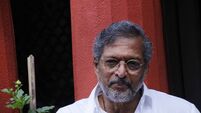
Tiernan’s final guest of the night was Oein DeBhairduin, a writer, collector of Irish Traveller folk tales, and an inclusive curator of Traveller history at the National Museum of Ireland.
He said he grew up a traveller and was born with nosines so loves “the idea that we have this whole collection of lore and understanding that we’ve inherited from people around us”.
Their conversation delved into the cultural and social dynamics of the Irish Traveller community, including the community's unique traditions, such as extravagant tombstones and the importance of collective expression of loss.
DeBhairduin spoke of his experience growing up in the Travelling community in Tirboy on the outskirts of Tuam in Galway and highlighted the challenges faced by Travellers, including high levels of trauma, low life expectancy, and systemic discrimination.
He spoke about being with his settled partner Dan and how different things in his partner’s life led him to think “settled people are mad”.
He shared a story about how he was the most upset person in the church when his partner’s grandmother passed away and said he had to process his partner’s way of going through grief and how it was so different to how he learned to process grief, touching on the the importance of living on the surface and the impact of loss on his community.
He explained the reasons behind extravagant tombstones, the collective funding of tombstones and their connection to the deceased.
Speaking about coming out as gay in the community, he said: “I grew up in a glass closet. People weren’t surprised I was gay; people were surprised I came out.”
He said his experience of coming out was similar to those of the wider community, including love and engagement, as well as rejection, but said his parents always deeply loved him.
“They want to wrap me in this kind of sense of protection and care,” he said.
“The most peculiar thing happens. It’s that being gay seems to cancel out the Traveller thing for people. I find it fascinating because I think in my mind, and all Travellers, I’ve never been not a Traveller. It’s who I am, but when these combine, a lot of people are going, ‘No, that doesn’t work. This is something peculiar, something queer, literally’. And I’m going, ‘I don’t have to pick one, I’m me’".
He spoke about the high levels of trauma in the Traveller community, systemic racism, how life expectancy for the average Travelller man is 61, and how one in 11 people in the community die by suicide.
DeBhairduin emphasised the need for systemic changes to address the widespread discrimination and racism faced by the traveler community, as well as the lack of services.
He said Travellers want what people want and need, including peace, safety, good education, housing, and health.
“We all want to be able to live the best life we can live,” he said.
Closing out the show on Saturday was Cork-based band The Cardinals with a performance of