How Hollywood's conquering generation of women in their 50s and 60s came for their due respect

Women in their 50s and 60s are dominating awards season. Could it be that Hollywood’s obsession with youth is starting to wane?
How Hollywood's conquering generation of women in their 50s and 60s came for their due respect

Demi Moore poses in the press room with the award for best performance by a female actor in a motion picture - musical or comedy for "The Substance" during the 82nd Golden Globes on Sunday, Jan. 5, 2025, at the Beverly Hilton in Beverly Hills, Calif. (AP Photo/Chris Pizzello)

In the 1996 film The First Wives Club, Goldie Hawn describes the three ages of women in Hollywood movies: “Babe, district attorney, Driving Miss Daisy.” 

Three decades later, three of this year’s five Oscar nominees for Best Actress are over 50 — Demi Moore, 62, in The Substance, Fernanda Torres, 59, in I’m Still Here, and Karla Sofia Gascon, 52, in Emilia Perez. Cynthia Aviro, nominated for Wicked, is 38; only the star of Anora, Mikey Maddison, is under 30.

Recent box office biggies featuring fifty something women include Nicole Kidman, 57, in Babygirl, Pamela Anderson, 57, in The Last Showgirl, and Renee Zellweger, 55, in Bridget Jones.

Other familiar female faces include Angelina Jolie, 49, Gillian Anderson, 56, Kate Winslet, 49, Tilda Swinton, 64, and on telly, Hannah Waddingham, 50, and Jennifer Coolidge, 63.

Could it be — whisper it — that older women are not quite as hideous as previously thought?

While we are accustomed to looking at the older faces of character actresses like Frances McDormand, 67, Viola Davis, 59, or the mighty Meryl Streep, 75, we have generally been spared older women in lead roles who might be deemed desirable or even, god forbid, fuckable; such casting has long been Hollywood’s definition of body horror.

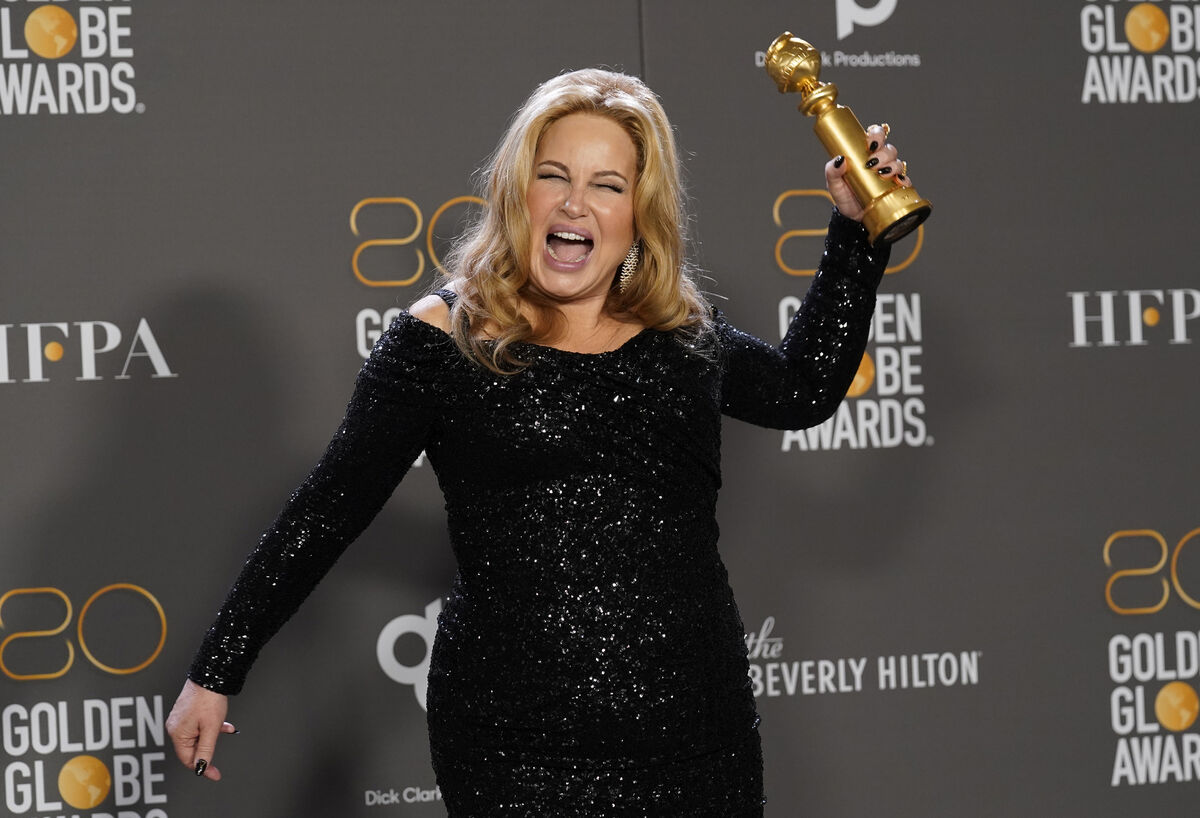
Jennifer Coolidge poses in the press room with the award for best performance by an actress in a supporting role in a limited series, anthology series or motion picture made for television for "The White Lotus at the 80th annual Golden Globe Awards at the Beverly Hilton Hotel on Tuesday, Jan. 10, 2023, in Beverly Hills, Calif.

Then along came Demi Moore, directed by Coralie Fargeat, repackaging the concept of body horror via her gorily allegorical The Substance

Admittedly, Moore is hardly an average representation of what 62 looks like, but until quite recently, her part would have gone to someone a generation younger.

Could it be that Hollywood’s doggedly unimaginative obsession with youth — along with its leading ladies — has finally started to get old? That a confluence of factors has merged to elevate the older woman towards equal billing with her more collagen-endowed junior counterpart?

Two things. Firstly, feminism — Gen X women, to which these actresses mostly belong, are refusing to go quietly, refusing to submit to what Susan Sontag termed in 1978 as “the double standard of ageing”.

Instead, Gen X are owning their ageing process, and in particular, owning menopause unlike any generation that came before them. And calling stuff out.

As Sarah Jessica Parker, speaking to Vogue, put it: “There’s so much misogynist chatter in response to us that would never. Happen. About. A. Man. I know what I look like. I have no choice. What am I going to do about it? Stop ageing? Disappear?”

Another factor — the only one that matters from the studios’ perspective — is the economic absurdity of excluding a fat swathe of the population from recognising their age bracket on the big screen.

Box office alienation makes no fiscal sense. Since the turn of this century, Hollywood has been slowly waking up to the fact that there’s gold in them there wrinkles, that studios need not always be in thrall to what it calls the Clearasil Crowd, the popcorn kids who cram into cinemas to  cwatch the latest Marvel franchise. 

No. Oldies go to the cinema too, and like to see themselves represented in actual roles, not just as background grandparents.

Audiences flocked to see two Nancy Meyers movies which cast 60-somethings as desirable lead women — Diane Keaton opposite Jack Nicholson in 2003’s Something’s Got To Give, and Meryl Streep opposite Steve Martin and Alec Baldwin in 2009’s It’s Complicated

These films did well enough at the box office to make the industry bean counters realise that there was an untapped market quite happy to see older women on screen, playing alongside the older men who had always been paired with far younger actresses. (Unlike actresses their own age, older male actors have always still had ‘it’. They were always still fuckable. Robert de Niro is 81. Harrison Ford is 82. Al Pacino is 84.)

Audiences were even willing to pay to see Meryl again in 2012’s Hope Springs opposite Tommy Lee Jones, a film about what Hollywood had always deemed the most hideously taboo subject of all — the sex lives of old people. 

In her 1972 book Old Age, Simone de Beauvoir points out how if older people show the same desires, feelings and needs at the young, they’re regarded with disgust; the sexuality of older people is seen as revolting, ludicrous, at best comical. And yet the film did well.

Female actors have always been aged in dog years. A classic example is Sally Field playing Tom Hanks’ mother in 1994’s Forrest Gump, despite being just 10 years older than him; six years earlier, in another film, Punchline, she’d been his co-star. 

The James Bond franchise has been normalising multiple-decade age gaps between middle aged men and very young women since the franchise’s inception: peaking with the 30-year gap between Roger Moore, 53, and Carole Bouquet, 23, in 1981’s For Your Eyes Only, to the most recent 17 year gap between Daniel Craig and Lea Seydoux in 2021’s No Time To Die. 

Casting a love-interest Bond Woman, rather than a Bond Girl, has never happened.

In 1950, Gloria Swanson played Norma Desmond in Billy Wilder’s classic Sunset Boulevard — a star of the silent era, Norma Desmond is finished, rattling around her mansion, discarded and insane. She’s 50. And yes, average female life expectancy in 1950 was 71 years, but male life expectancy was 65 and they were still casting Cary Grant, Clark Gable, Gary Cooper — all born around 1900 — as leading men in the 1950s.

In the 1960s, a subgenre of film — hagsploitation — presented older women as either mentally incapable or homicidal; while Whatever Happened To Baby Jane (1962) or Hush, Hush Sweet Charlotte (1964), made compelling by Bette Davis, were the best of a B-list bunch, they still depicted older women as mad hags. 

Glenn Close in 1987’s Fatal Attraction — a more recent example of hagsploitation — is the original bunny boiler, yet her cry of rage at Michael Douglas when he ghosts her — “I’m not going to be ignored!” — has clanging resonance.

“It’s a metaphor,” writes Victoria Smith in Hags: The Demonisation of Middle Aged Women. “It captures that feeling of having been fucked then ghosted by life itself… This active ignoring is not the same as the end of objectification. You’re still an object; you’ve just changed in status from painting or sculpture to, say, hat stand.”

As an older woman, you still exist, you are still seen — but as a Karen, a hag, a cougar, a joke.

Which is why the current crop of Golden Globes, Baftas, and Oscars appear to be breaking (slightly) free from Hollywood’s entrenched tradition of double-standard ageism. 

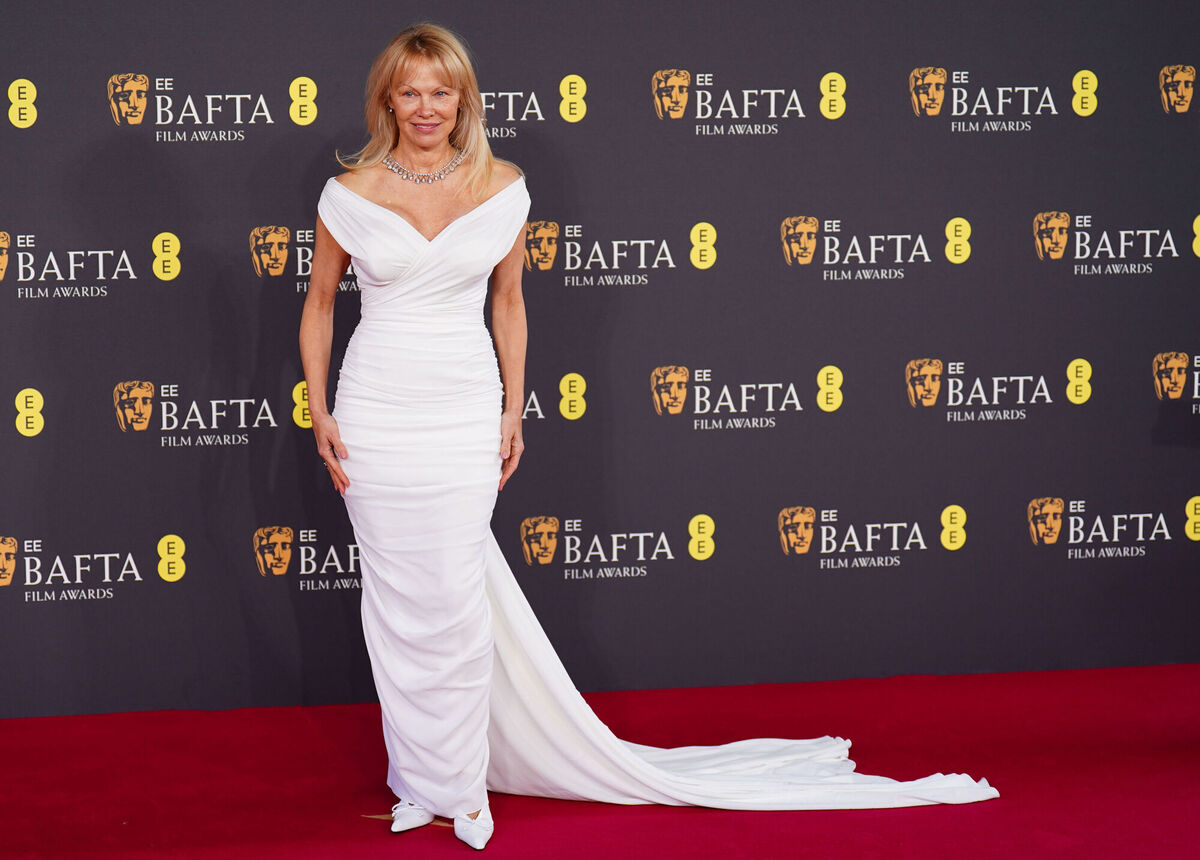
Pamela Anderson attending the EE Bafta Film Awards 2025, at the Royal Festival Hall, Southbank Centre, London.

Midlife women are reclaiming their existence, on their own terms, and it seems to be working (a bit). What seemed like a minor stance made by one individual has shown to be quietly revolutionary in our age of extreme artifice: Pamela Anderson, whose private life has been hijacked and objectified more than most, decided to throw away her make up in 2023 and appear in public naked-faced, something deemed far more radical than appearing in public naked-bodied.

“No stylist, no glam team, it’s just me,” she told Variety on a recent red carpet. At this year’s Baftas, she remained unadorned, unpropped. And it’s working — she just made the film of her career in an astonishing creative rebirth. 

A pivotal moment in The Last Showgirl is when she shouts in anger at someone judging her, “I’m 57 and I’m beautiful!” 

Demi Moore, in her own creative rebirth, turned the hag trope on its head in The Substance. 

She recently won a Golden Globe for Best Female Actor in her role as a ‘fading’ television star made redundant at 50: “People always ask for something new. At 50, it stops,” she’s told in the film.

In her Golden Globes acceptance speech, Moore said how “I’ve been doing this a long time, over 45 years, and this is the first time I have ever won anything as an actor… Thirty years ago, I had a producer tell me that I was a popcorn actress… that corroded me over time to the point that I thought a few years ago that this was it, that maybe I was complete, maybe I’ve done what I was supposed to do.” Turns out she hadn’t.

An almost comically ironic fact is that in real life, older women are not regarded by heterosexual men as hags. Far from it. MILF porn is the third most popular category on Pornhub — one third of straight men actively seek porn involving older women. Which makes it mainstream, rather than the perversion presented by Hollywood. 

Social psychologist Justin Lehmiller, in his book Tell Me What You Want, refers to a survey of 4,000 people which revealed 88% of straight men had MILF fantasies. Recent mainstream movies pairing older women with younger men — Babygirl, Bridget Jones, Lonely Planet, The Idea of You — reflect this common preference. 

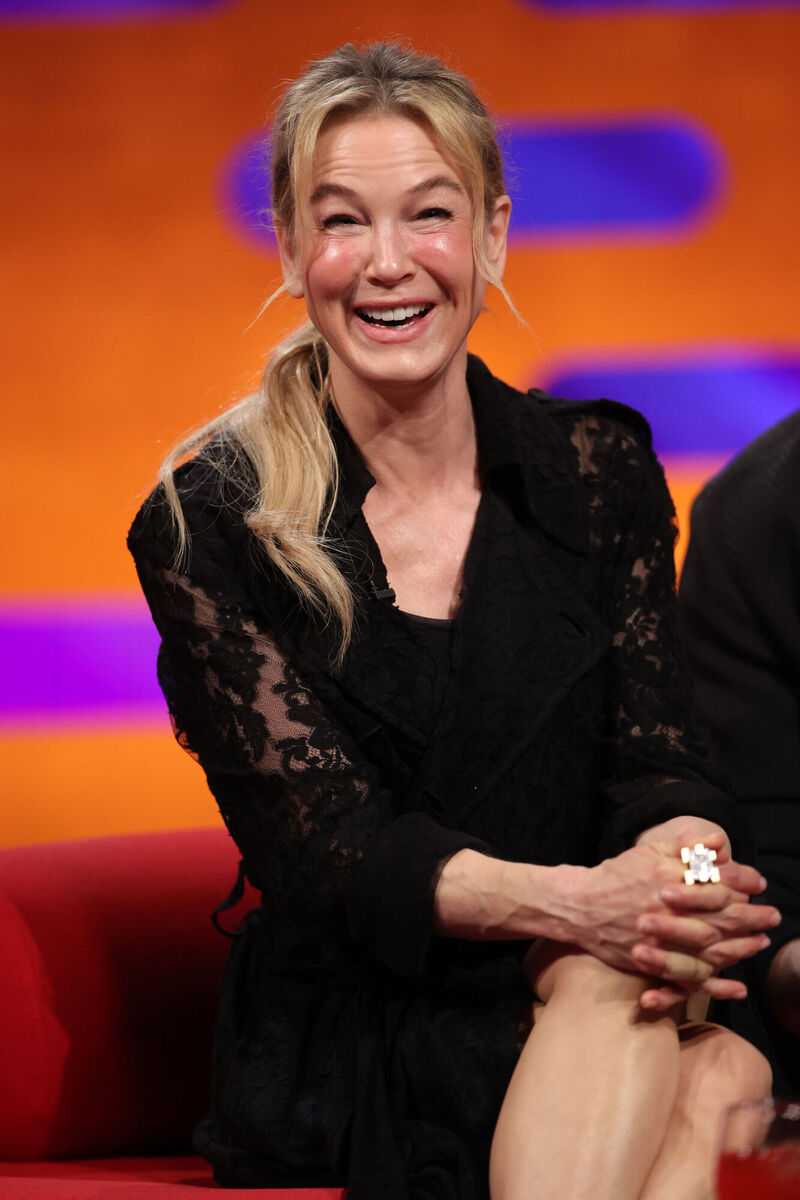
Renee Zellweger during the filming for the Graham Norton Show at BBC Studioworks 6 Television Centre, Wood Lane, London.

Older women refusing to be shamed into disappearing, plus the stupid economics of trying to disappear older women from the cultural landscape, has resulted in much increased visibility. Cosmetics multinationals have stopped trying to sell older women products marketed as ‘anti-ageing’, and stopped using young models to sell products aimed at older consumers. 

Thirty years ago, when Isabella Rossellini was 43, she was fired from her role as the face of Lancôme and replaced with someone 12 years her junior. “They told me I was too old,” she revealed in The Cut.

Twenty years later, aged 63, she was rehired by the cosmetics brand, who had since awoken to the fact that older women are not repulsed by being sold products using images of older women. 

Rossellini, now 72, is up for her first Oscar this year for her supporting role as a nun in Conclave – she basically stole the film.

But let’s not get too excited. Yes, some middle-aged and older women are being represented in non-grandma roles on our screens; it has only taken Hollywood the bones of a century to get this far. 

And it’s not just the big screen — 2018 BBC research found significant under-representation on the small screen too. While younger men and women were equally visible on telly, women over 55 (31% of the actual population) constituted just 18% of women on air — while men over 55 “appeared in equal proportion…as in the real world.” 

But, it’s a very specific type of midlife and older woman being portrayed in cinema. With a tiny handful of exceptions — Isabella Rossellini, Helen Mirren, Meryl Streep — most of the older women we see on screen have had their faces surgically frozen in time, so as not to frighten the horses.

We may now be allowing carefully selected hags to appear on our screens, but only those who have had so much work done that they bear no resemblance to their chronological age.

And it’s not down to the individual vanity of female actors and performers – it’s either fill your face and stretch your skin, or be forcibly retired. (And don’t be too sexy, like Madonna, that’s disgusting.)

Let’s stay optimistic, though. The current Hollywood anti-ageist trailblazers are still only in their 50s and 60s — perhaps by the time they reach their 70s and beyond, the culture will have shifted again, to accommodate older women without requiring them to present as tight-faced facsimiles of their former selves. To represent older women as they really are, because as Betty Freidan put it in 1963’s The Feminine Mystique, “Ageing is not lost youth, but a new stage of opportunity and strength.”

And a growing refusal to be sidelined.

More in this section

Scene & Heard

Newsletter

Music, film art, culture, books and more from Munster and beyond.......curated weekly by the Irish Examiner Arts Editor.

Cookie Policy Privacy Policy Brand Safety FAQ Help Contact Us Terms and Conditions

© Examiner Echo Group Limited