Book review: Explosive start leads to rich irony and compassion

'Sweet Vidalia' offers a compassionate portrayal of a laconic, tenacious protagonist as she tries to rebuild a shattered life
Book review: Explosive start leads to rich irony and compassion

Author Lisa Sandlin is a retired creative writing professor.

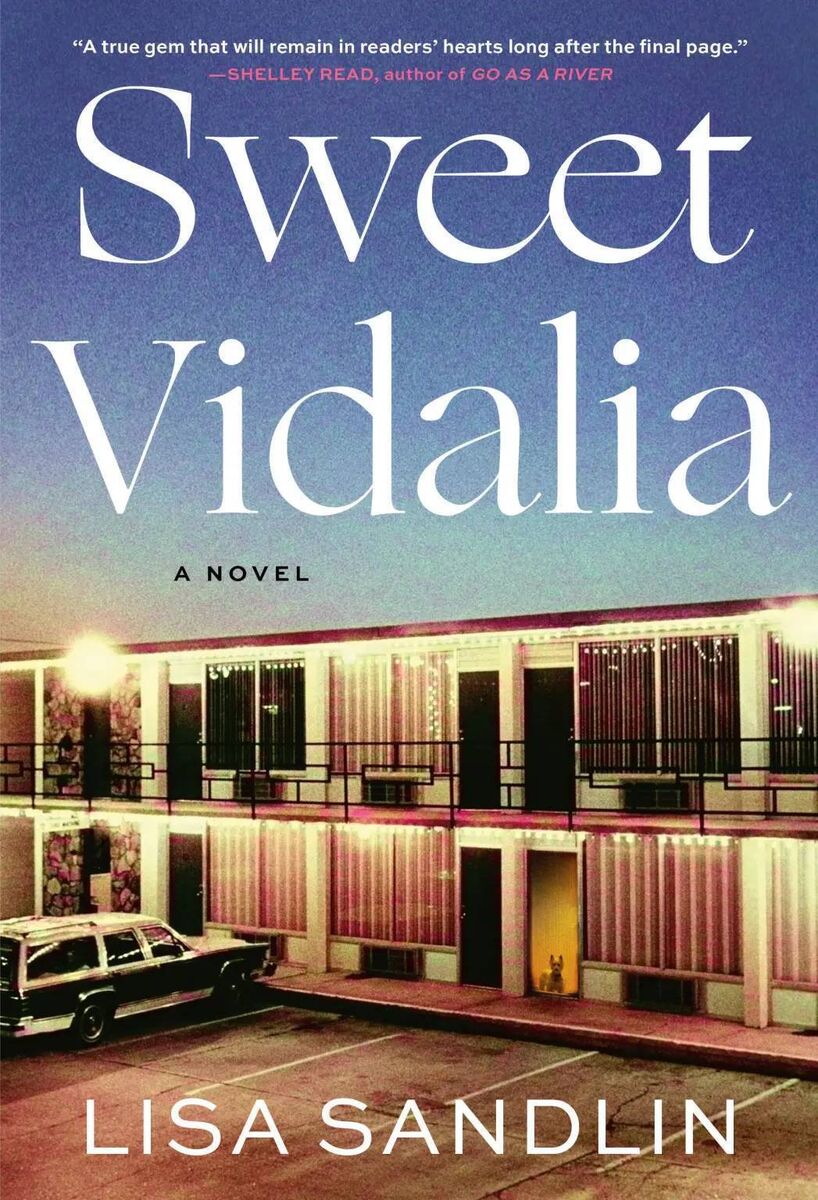
  • Sweet Vidalia 
  • Lisa Sandlin 
  • Abacus, €19.99 

“We need a story that starts with an earthquake and works up to a climax.”
That was the droll advice of film producer Samuel Goldwyn for writing a blockbuster.

Sweet Vidalia starts explosively, but what impresses most is how the author then changes key and shifts the narrative to a forensically-observed chamber piece.

In the first chapter of Lisa Sandlin’s novel, which opens in Texas in 1964, Robert Kratke is about to tell his wife, Eliza, a profound secret when he is pulverised by a heart attack (“There’s a hammer in my back and in my front”).

Rushing Robert to the hospital in their car, Eliza has an altercation with the police and her husband is dead by the time they get there. 

But her pain is soon supercharged: Eliza discovers that while married to her, Robert had another wife.

As she realises that her marriage was a sham, Eliza must confront the precariousness of her situation: At 57, she is ineligible for social security and has no savings because Robert covertly used them to fund his parallel life.

Her financial anxieties provoke childhood memories of her parents’ devastation when they lost their home during the Depression. 

So Eliza rents out her house, moves into The Sweet Vidalia hotel (the smell is “frying hamburger and cigarette smoke”) and enrols in a business college.

This introduces us to new characters, including fellow student Louise (“People tell me my mouth is like the Mississippi, wide and fast”) and Eliza’s neighbour Morton, a man who speaks in a singsong style and always refers to himself and his three dogs as “we”.

The chemistry of the novel is Eliza’s fledgling self-reinvention. Initially struggling with the consequences of the changes she makes, Eliza soon senses an “exhilaration” in the gap between her former and new lives.

Ordinary, chance interactions with her classmates help rejuvenate Eliza. Understanding a profit-and-loss statement in her book-keeping course encourages her “to believe she could make a new life out of nothing, out of a ruin”.

The transformation Eliza undergoes is subtly linked to the tumultuous broader social and political reconfiguration that the US is experiencing.

Significantly, thanks to an idea “strung with bunting, christened by champagne”, Eliza decides to legally change from her married to her maiden name.

But Sandlin also complicates this redemption narrative. When Eliza is humiliated by her naiveté in a new friendship, it triggers a tangle of barely-submerged anger and insecurity. 

As well as amplifying the wounds of Robert’s betrayal, Eliza reprimands herself for collaborating in the deceit of her marriage.


During the protagonist’s transformation, she acknowledges her pronounced loneliness.

The book’s most touching relationship is the one Eliza forges with a woman in the early stages of dementia. They bond through sharing memories of their younger selves.

“Friends in a disappeared world, a world they both knew, that hadn’t changed. A respite from Eliza’s relentless present, learning everything new.”

A Texas native, Sandlin is a retired creative writing professor whose best-known works are The Do-Right (2015) and The Bird Boys (2019), from the two-book series Delpha Wade and Tom Phelan Mysteries.

Unfolding over three years, Sweet Vidalia is franked by flashes of visceral prose (“Coughing out into a Kleenex the taste of Robert’s voice in her mouth”). 

Its appropriately restrained tone is alert to rich ironies. “You were loved, honey, you were loved,” Eliza tells her bigamist husband’s dead body.

Told in the third person, the novel offers a compassionate portrayal of a laconic, tenacious protagonist as she tries to rebuild a shattered life, without ever masking the low drumbeat of grief that rumbles beneath.

x

More in this section

Scene & Heard

Newsletter

From music and film to books and visual art, explore the best of culture in Munster and beyond. Selected by our Arts Editor and delivered weekly.

Cookie Policy Privacy Policy Brand Safety FAQ Help Contact Us Terms and Conditions

© Examiner Echo Group Limited