Book review: An appetite for the sinister

'The Lamb' is written in terse and pared back language then it bubbles like a simmering stove towards a memorable and nightmarish conclusion.
Book review: An appetite for the sinister

Lucy Rose uses cannibalism as a metaphor for familial dysfunction, female oppression, and much else besides in her debut novel.

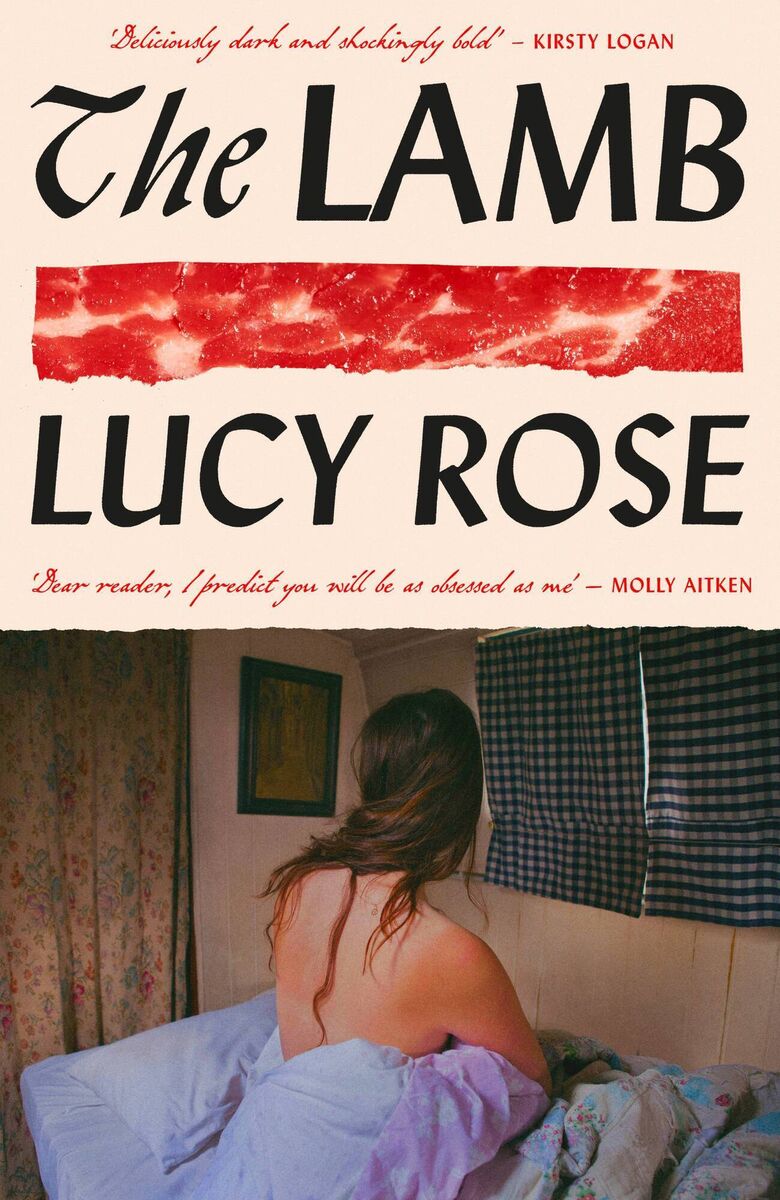
  • The Lamb 
  • Lucy Rose 
  • Weidenfeld & Nicolson, £16.99

Trouble comes early in Lucy Rose’s debut novel The Lamb, a dark neo-gothic fairy tale that uses cannibalism as a metaphor for familial dysfunction, female oppression, and much else besides.

In the opening sentence Margot, our glum narrator, recalls how at the age of four, she found human fingers in the shower drain. 

“I hadn’t quite finished my dinner,” she tells us a little later, “there were still bits of the nervous boy left at the edge of my plate.”
Margot, who is 12 or 13 now, lives with her mother Ruth in a quiet Cumbrian wood on the edge of the Pennines. 

Her father disappeared when she was small, and she has grown up accustomed to her mother’s gnawing need for human flesh. 

When unlucky hikers get lost in the woods, Ruth lures them to their cottage with promises of hot food and comfort. 

She makes a fuss of these ‘strays’, even seducing some, convinced that folk who die happy taste better.

Then, when they’ve been subdued by tea laced with hemlock, the dismemberment occurs in a back room, after which Ruth cooks up ‘rumps’ and ‘thighs’ with wild garlic, rosemary, and thyme, ‘breast’ with turnips, and so on. 

Fingers are an especial delicacy, sucked clean like chicken wings by young Margot, who’s never known any other life but is beginning to suspect that this one might be wrong.

Margot adores her mother, a handsome, witchy, and mercurial woman, and craves her affection, which is dangled and withheld. 

Her only hope of winning Ruth’s approval is by luring victims home herself. 

She’s just learning the ropes when a woman called Eden turns up at the cottage, and immediately makes it clear that she is no mere stray.

Beautiful and mysterious, Eden is more than willing to adapt to the household diet, and before you know it, she and Ruth are madly in love, pushing Margot further into the shadows.

Bullied at school and a social outcast, Margot’s only friends are a kindly bus driver who becomes concerned on her behalf after noticing signs of neglect, and Abbie, a pretty classmate on whom she has a crush. 

Her feelings might even be reciprocated, but there’s a problem — Margot ate Abbie’s missing father, who was having an affair with Ruth.

The Lamb is written in terse and pared back language, its style necessitated by the narrator’s age, and insularity. 

At first this seems like a potential impediment, but Lucy Rose is a skilful enough writer to turn it into a strength. 

Once Eden arrives in the story, it bubbles like a simmering stove towards a memorable and nightmarish conclusion.

Ruth is a particularly compelling character, empty, amoral, incapable of motherhood. “I was born this way, Little One,” she says blandly, and from her mouth tired parental clichés (“we are what we eat!”) acquire new and ghastly power. 

“I don’t tolerate that sort of behaviour under my roof,” she tells the headmaster after Margot is expelled for biting another student. “I didn’t raise her to be like this.”

Margot herself is a tragic character, an innocent raised in a charnel house who rebels too late against the insanity of cannibalism. 

“Humanity,” her mother tells her, “is made up. Our empathy is waning as every second passes…” 

But Margot rejects this thesis, and becomes quietly determined to expose her mother’s campaign of terror. 

She knows where all the bones are buried and agonises over her part in their consumption.

Guilt, she says, “felt like insects feasting on my chest”. But her lust for flesh will always reassert itself. “The skin,” she admits, “was always my favourite.”

x

BOOKS & MORE

Check out our Books Hub where you will find the latest news, reviews, features, opinions and analysis on all things books from the Irish Examiner's team of specialist writers, columnists and contributors.

More in this section

Scene & Heard

Newsletter

Music, film art, culture, books and more from Munster and beyond.......curated weekly by the Irish Examiner Arts Editor.

Cookie Policy Privacy Policy Brand Safety FAQ Help Contact Us Terms and Conditions

© Examiner Echo Group Limited