Book review: A portrait of a man of great lusts and many contradictions
Adrian Frazier’s biography is overly earnest and not always well written but it’s a reservoir of information about the John Montague’s long and eventful life
Book review: A portrait of a man of great lusts and many contradictions

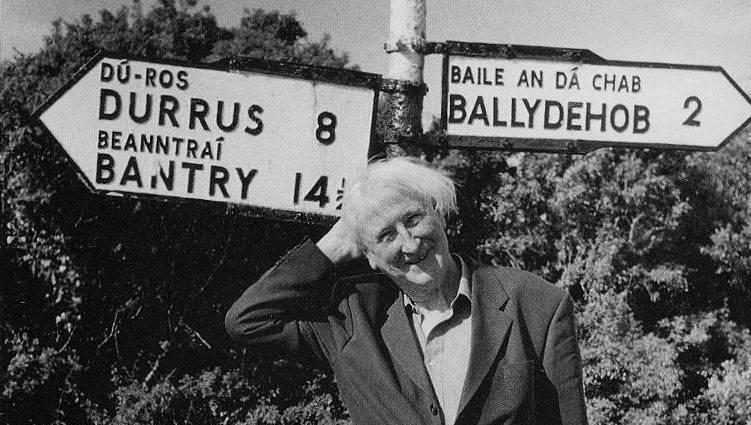
John Montague: His mother returned from America but didn’t bring him to live with her. This rejection, we assume, shaped his attitudes to women, informing his infidelities and the misogyny visible in some of his writing.

  • John Montague: A Poet's Life 
  • Adrian Frazier 
  • Lilliput Press, €24.95

Adrian Frazier’s biography of John Montague takes in the poet’s full life and career. 

A sweeping, comprehensive work, the book will primarily be of interest to researchers and those very familiar with Montague’s writing.

Frazier’s depth of research and command of detail is impressive. However, this obsession with detail is also the book’s greatest weakness. 

It’s as if every piece of information discovered had to be included regardless of whether or not it contributed to the narrative. 

As a result, we receive a huge bank of information but many chapters leave us feeling unable to get close to the poet in an emotional sense. 

Too often, the biography’s development is tangled up in long paragraphs describing minutiae (the proprietor of The Long Valley Bar “wore a tie”) or telling us who exactly said what to whom at a party.

The Montague portrayed here is a difficult man to warm to — drowning his anxieties with alcohol, unfaithful, and even, at times, violent to women.

Frazier’s biography is overly earnest and not always well written but it’s a reservoir of information about the poet’s long and eventful life.

A quintessentially Irish artist, John Montague was in fact born in Brooklyn in 1929. 

Financial necessity in depression-era America forced his parents to send him back to Garvaghy, Co Tyrone, at the age of four to be raised by aunts. 

It’s very clear that this formative period, particularly those long nights where the child lay awake and frightened for hours on end, had a huge influence on his later artistic development. 

This is well illustrated in the poem ‘Time Was Away’: “I looked up without knowing why … a hinge creaked … a shadow climbing a rickety stair … The dark things moved”.

Other traumatic experiences were to follow that would exert an even greater force in shaping him as a poet and a man. 

His mother returned from America but didn’t bring him to live with her. This rejection, we assume, shaped his later attitudes to women, informing his infidelities and the misogyny visible in some of his writing.

It was also in this period that he developed a stammer that would forever impair his ability to read his poems in public. 

Some nights, under the lights, he could perform his work untroubled; on others he could barely utter a word of poetry.

All-male environment would shape his later work

He moved on to Saint Patrick’s secondary school in Armagh. Academically outstanding but poor at sports, this unforgiving, all-male environment would shape his later work. 

Saint Patrick’s also enabled him to gain a scholarship to UCD where he first began to conceive of himself as an artist.

Initially, he appears to have been torn about his true path in life — academic or artist. His move to Yale as a Fulbright Scholar in 1953 and subsequent move to the University of Indiana settled the matter. 

In this period he came into contact with the Iowa City writers’ workshop where he encountered Robert Lowell and many others.

Montague was heavily influenced by Robert Graves’ theory of the muse as laid down in The White Goddess. This portrayed women as strange, otherly beings.

It was a sort of mystical “how to” for young poets (always male) wanting to write a great poem.

The trick was to fall in love with a woman “in whom the moon goddess had taken up residence”. Conveniently, the woman could not be a man’s actual wife or lover. 

This then, gave certain young (and not so young) men permission for all kinds of promiscuity, deceptions, and loutish behaviour.

Frazier states that in one of his last meetings with Montague the poet asked him how he intended to handle “the matter of sex”. 

He told him that he would do so “frankly” but “not as gossip”. We’re not offered gossip here but we see things mostly from Montague’s point of view. 

We’re told he would “sometimes propose to young male friends that they join him for a roll in the hay”.

A present-day reader can only wonder what the context for such propositions was. In the interests of being frank, Frazier could have delved further into the question.

Domestic violence is referred to on a number of occasions. When his first wife, Madeleine, visited him while he was poet-in-residence at Berkley we’re told that he “slapped his wife on the cheek”. 

Frazier describes the blow as “sudden, smartly given” but what has this got to do with anything? Montague, apparently, didn’t feel the need to apologise. We’re not told how Madeleine felt. 

Montague’s violence with his second wife, Eveyln, is generally described as being in response to violence or aggression initiated by her. 

This is deeply uncomfortable to read. Who did Frazier consult on this? Is he relying on Montague’s account? On such a serious matter he should have been clear on his sources.

A man of great contradictions

Montague was a man of great contradictions, something which Frazier illustrates well. In classic Irish style, he rejected his religion but tried consistently to be a good Catholic. 

When one of his affairs with an unnamed woman resulted in pregnancy, his religious convictions meant he couldn’t countenance abortion though he had no intention of helping to raise the child. 

We know from the book that the anonymous woman wasn’t Irish so, despite Montague’s views, it appears that she was able to access a legal abortion.

From his early days as a motherless schoolboy with a stammer and throughout his life, Montague seems to have considered himself an outsider wherever he went.

He appears to have been convinced that his work wasn’t given the acclaim it was due, particularly in Britain. 

This didn’t stop him publishing numerous volumes of poetry, memoirs and fiction; studying at UCD and Yale; teaching in UCC and UCD or writing newspaper columns. 

All this at a time when the majority of people on this island didn’t finish secondary school. For an outsider, he did a fine job of impersonating an insider.
Frazier’s best chapters come when he describes the period of Montague’s life from the 1980s onwards. 

His second marriage in pieces, we see him movingly portrayed as a somewhat tragic figure, a man increasingly out of step with the times who has no idea how to realign himself. 

In the end he seems to have found a certain amount of peace with a third marriage, his appointment as Ireland Chair of Poetry in 1998 and a last series of publications.

For some, Montague is a singular figure, towering over a period of unique excellence in Irish writing. For others, he’s an artist whose time has gone, his style and aesthetic no longer relevant. 

He is neither. Montague had a very sincere and lifelong commitment to his craft. 

There’s no denying his influence on at least two generations of Irish poets but he never matched the brilliance of Yeats or Wilde.

As Frazier shows, he was determined to tell the most intimate truths about his life through art but never did so with the fearlessness and verve of Plath or Sexton. 

At his best, particularly in earlier collections such as The Rough Field, he produced outstanding poems of sorrowful tenderness.

Whatever he was or was not, it’s here that the remnants of truth are best found.

x

BOOKS & MORE

Check out our Books Hub where you will find the latest news, reviews, features, opinions and analysis on all things books from the Irish Examiner's team of specialist writers, columnists and contributors.


More in this section

Scene & Heard

Newsletter

Music, film art, culture, books and more from Munster and beyond.......curated weekly by the Irish Examiner Arts Editor.

Cookie Policy Privacy Policy Brand Safety FAQ Help Contact Us Terms and Conditions

© Examiner Echo Group Limited