Nicole Kidman: 'I’ve made many sexual films, but this is different'

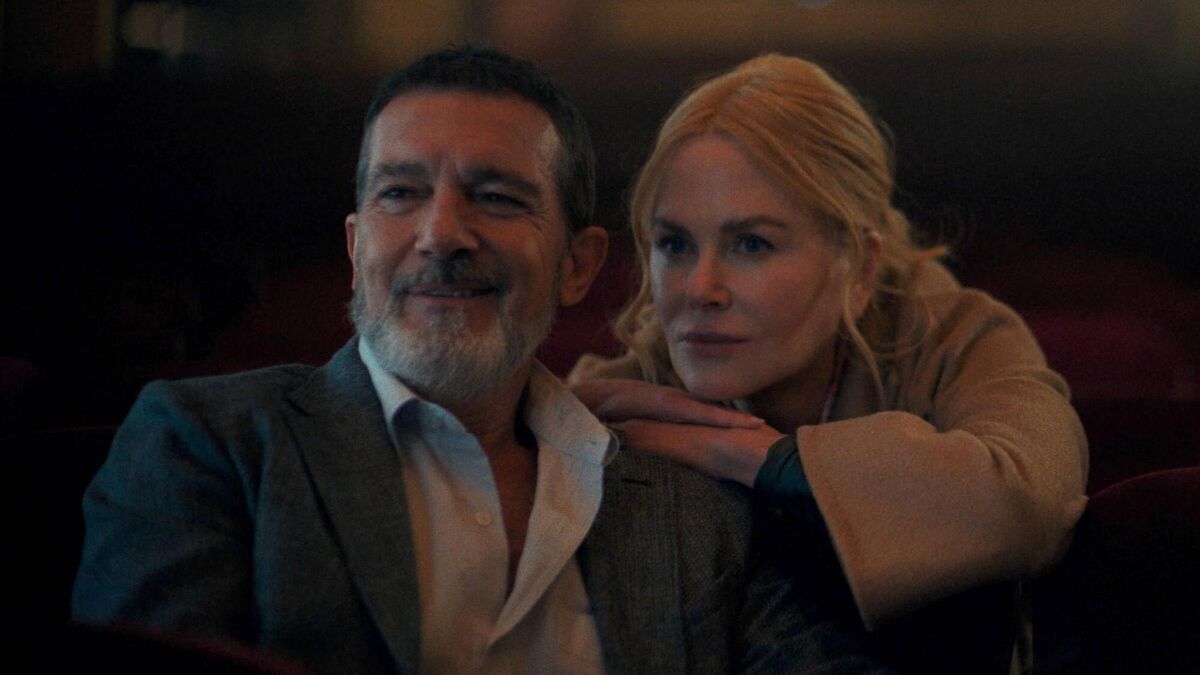
Nicole Kidman and Harris Dickenson in Babygirl.
Nicole Kidman has starred in films with sexual themes before, but for the 57-year-old, Babygirl is different. It’s why she felt shooting the film was akin to a fever dream she eventually had to wake up from.
“I’ve made many sexual films, but this is different,” says the Australian actress. “Doing this subject matter in the hands of the woman that wrote the script, who is directing it and is a really great actress herself – we became one in a weird way, which I’d never had with a director before. When you’re working with a woman on this subject matter, you can share everything with each other.”
A24’s erotic thriller Babygirl, written by filmmaker Halina Reijn, 49, follows Romy (played by Kidman), a polished CEO, mother and wife living in New York City, who exists in a world of careful control, tight scheduling, and an all-too-keen awareness of how she’s perceived at the heights of a male-dominated field.
But in her own long-term marriage, she has also never truly found pleasure with her sweet, caring, and artistically driven husband, Jacob, played by Cannes Film Festival Award-winning Spanish actor Antonio Banderas, 64.
The film explores the many contradictions that come with the sexuality impressed upon women in society – to be constantly sexualised and yet to never exercise agency. It also looks into the sensitive and unexpectedly romantic places that a certain kind of sexual repression – including never experiencing an orgasm with your husband can lead to – and where someone will go to find release.
In Romy’s case, she finds that in Samuel, played by English actor Harris Dickinson, 28, who previously starred in The King’s Man and Where The Crawdads Sing. Although she tries to suppress her persona, Romy is completely undone by the intern who immediately clocks her – her desire to finally lose control – and begins to peel back the surfaces she has so carefully constructed.
Before Babygirl was created, director Reijn was told by Dutch film director Paul Verhoeven, 86, that she could only make a movie if she had a specific question.
“I really decided in the beginning, [that] I want to make a sexual film, just as sexual as all these films that I’ve always admired so much, but now I’m going to do it completely through female eyes. What does that mean and what does that look like?” says Reijn.
“My question was about self-love. Mainly, how do I love all parts of myself?” says Reijn. “Paul Verhoeven always told me I could only make a movie if I had a specific question. For this story, I wondered: Are we animals or are we civilised? Can we make peace with the animal inside of us? Is it possible for the different parts of ourselves to co-exist and, in turn, for us to love our whole selves without shame?”
But for Reijn, the genre is heavily male-dominated, from Adrian Lyne’s 9½ Weeks to Paul Verhoeven’s Basic Instinct and Michael Haneke’s The Piano Teacher.
“Those movies, when I saw them, they were like, ‘Oh, actually, it’s not so crazy, all these things that are going on in my head. These movies are super dear to me, but of course, they are almost all directed by men, all written by men,” says Reijn.
“It’s not a documentary,” Reijn says. “It’s all fake. We’re all buying a ticket, we’re all going to experience this together. We can talk afterwards. I was very sure that it was needed, especially [after] moving to America, where sexual morals seem very suppressed. I wanted to explore that, but in a very human, warm way.
“This movie is absolutely a love story and absolutely full of passion and romance for me,” says Reijn about Romy and Samuel’s relationship. “I want the whole audience to fall in love with her, and I want the whole audience to fall in love with him and to be seduced by their love. To want them to be together even though you know it’s not the ‘right’ thing to want.” The film is essentially a reaction to Romy’s childhood spent in a cult and defined by chaotic freedom – something the film vaguely alludes to throughout.
It’s why “she’s not capable of being completely authentic with her husband or herself because she’s so frightened of revealing her innermost thoughts and desires and feelings and secrets, and what she considers shameful,” says Kidman.

“Her life is completely controlled,” Reijn says. “She wants to be a perfect mother, almost like Mary Poppins. And then at the same time, she’s a CEO of a company that does automation, which is a metaphor for her mind – that she wants to be controlling, everything’s organised,” Reijn adds.
“Being a child of the sexual revolution, she now decided, I’m going to be very structured. I’m going to live this very organised life. I can do it all. I’m perfect. And anything that is shameful or weird in me, I will do an ice bath, I will do therapy, Botox, and 600 other treatments.”
Meanwhile, Samuel, who is both sensitive and assertive, represents the many young men who are still grappling with and attempting to figure out who they are alongside their masculinity in an ever-changing world.
“If we go really deep, I would say he is a fantasy,” Reijn says. “He’s an angel who she created, or he’s a therapist, who does an exorcism with her.” Kidman agrees and adds: “They’re both damaged and both healing with each other, but in a very different way. And society would go, that’s not how you heal. But for me, the film is very provocative, yet it’s not unkind. I don’t think it’s judgmental.”
- Babygirl is in cinemas now