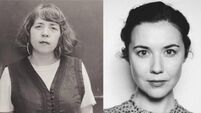
Remembering Annie Patterson, the trailblazer who was UCC's first female music lecturer 

As the anniversary of Dr Annie Patterson's death approaches, Pet O'Connell recalls the life of the incredible woman who also was instrumental in the creation of the Feis Ceoil and Oireachtas na Gaeilge
Remembering Annie Patterson, the trailblazer who was UCC's first female music lecturer 

Annie Patterson of UCC was the first woman in Ireland or Britain -  honorary recipients aside - to earn a doctorate in music.

She was UCC’s first female music lecturer and the first woman in Ireland or Britain to be awarded a non-honorary doctorate in music. A strident proponent of the development of Irish music and language side-by-side, in the 1890s she was instrumental in the foundation of two cultural institutions which flourish to this day: The Feis Ceoil and Oireachtas na Gaeilge.

Organist, composer, arranger, writer, choir leader, and radio broadcaster can be added to her long list of trail-blazing achievements. Yet in the 90 years since her death, the name of Dr Annie Patterson has largely slipped from public consciousness even in Cork, where she worked for almost half her life.

Her passing in 1934 was at the time “regarded as a severe loss to the growth and appreciation of Irish music”, the Cork Examiner noted, describing her as “perhaps one of the most outstanding figures in contemporary Irish musical circles”.

The page of the Cork Examiner which announced the death of Annie Patterson. 

During her lifetime Patterson “enjoyed a national reputation not only as an indefatigable propagandist on behalf of Irish music, but also as the principal influence behind the founding of Feis Ceoil in Dublin in 1897”, writes composer and lecturer Séamas de Barra in his study on one of Patterson’s former UCC students, Aloys Fleischmann (Field Day 2006).

A redoubtable campaigner for the establishment of a national school of composition based on Irish folk music, Patterson also believed Irish music and language to be intrinsically linked.

“She felt it a duty in her efforts to popularise the old music, to unite it… with the ancient language of Erin”, as she informed those attending a Gaelic League conference at the Lancasterian School on Cork’s Great George’s St on April 17, 1895.

“The old music, when it was powerful to move the minds of men, was sung in the ancient language,” the Cork Examiner reported the next day. “And she was fully convinced that the ancient melodies would only be powerful to draw smiles and tears when they found it wedded to the dear old Gaelic tongue.”

 Patterson had told her audience at the Assembly Rooms on Cork’s South Mall the previous day of her hopes for “the movement for the revival of Irish music and the feis or festival to be held in Dublin next November” and, the Cork Examiner noted: “If it was a success, there was no reason why a similar gathering should not be organised in Cork and other towns.” 

Dublin’s Feis Ceoil, established at Patterson’s instigation, still honours her 127 years later by presenting winners of its harp and singing competitions with gold medals in her memory. Patterson was an inaugural committee member and musical adviser to Oireachtas na Gaeilge, established in 1897 by Conradh na Gaeilge (Gaelic League) to promote Irish language and culture. 

A Lurgan-born Protestant of Hugenot descent, Patterson began learning Irish during the late 19th century cultural revival and embraced its promotion through music. She published a pamphlet of her compositions entitled ‘Six Original Gaelic Songs’, each dedicated to supporters of the Feis Ceoil, and conducted a choir at the first Oireachtas, for which she composed music for Dermot Foley’s “rallying song” of the Gaelic League, ‘Go mairidh ár nGaedhilg slán’.

Though she ceased her association with the Feis Ceoil when it failed to fulfil her aspirations for the promotion and preservation of Irish music, she dedicated her life to furthering cultural aims, including attempts to establish a Gaelic form of classical or Western art song.

The daughter of a bakery owner, she grew up in Dublin, studying at the Church of Ireland Alexandra College and under the auspices of the Royal University of Ireland. In 1889, just 10 years after the University Education (Ireland) Act sanctioned the awarding of degrees to women, she became the first woman in Ireland or Britain - and according to some sources the first woman in the world, honorary recipients aside - to earn a doctorate in music.

Patterson went on to break boundaries as an educator, being appointed the first ever female music lecturer at University College Cork in 1924.

Having conducted choirs in Dublin and London, she had moved to the city around 1904 to take up a position as organist in St Anne’s Church, Shandon, composing the choral work ‘The Bells of Shandon’.

An examiner at Cork Municipal School of Music from 1914, Patterson had initially been a candidate for the UCC role when her predecessor Carl Hardebeck was appointed in 1919.

Séamas de Barra writes that in a bid to encourage the study of Irish folk music, the Cork County Borough Technical Committee, which had responsibility for the school of music, approached musician and composer Hardebeck, offering him a combined position as headmaster and professor of Irish music. “As a further inducement to come to Cork, a chair of Irish music funded by Cork Corporation was to be created for him in University College,” he says.

Two other candidates — Patterson and head of department Frederick St John Lacy — applied for the post and Patterson, who “had impressive qualifications”, says de Barra, “was recommended for the post by the Academic Council of the University College”.

“This was an awkward development. But the appointment had a political dimension that overrode the matter of academic suitability, and the governing body of the college, sensitive to the wishes of Cork Corporation, resolved the issue by disregarding the views of the Academic Council and recommending Hardebeck.” 

According to de Barra, “from the outset, his appointment was beset with difficulties”, including regarding funding, and by 1923 Hardebeck had resigned. The post of chair of Irish music was scrapped and Patterson was appointed lecturer in 1924, funded by Cork Corporation.

Mary Mitchell-Ingoldsby, Traditional Irish Music Archivist at UCC.

UCC lecturer and manager of its traditional music archive Mary Mitchell-Ingoldsby, who wrote a history of the music department, marking its 2022 centenary, says Patterson was “an amazing woman”.

Patterson, who taught composition and Irish traditional music at UCC, “made an impact on her students, including the young Aloys Fleischmann, who would later become professor of music and head of the Department of Music,” says Mitchell-Ingoldsby. “Patterson gave Fleischmann an appreciation and understanding of the stylistic elements of Irish traditional music.” 

In addition to giving regular public performances and lectures on Irish music at UCC, Patterson was a broadcaster and author of 10 books and many articles on music. Among her compositions are two operas, The High King’s Daughter and Oisín, which “reflect her interest in fusing Western art music with the Irish cultural revival”, says Mitchell-Ingoldsby.

“Patterson was very active on the musical scene in Cork and indeed throughout Ireland up until her untimely death in 1934,” she adds.

Patterson, whose “wireless [radio] talks were amongst the most widely listened-to items on the Athlone programme”, according to the Cork Examiner, was forced to cancel a Dublin broadcast due to a cold, which developed into pleurisy and she died on January 16, 1934, at 43 South Mall, Cork, leaving a not insubstantial legacy of £1,632 to her sister Eveline.

“During the ten years of Miss Patterson’s lectureship at the University College, interest in Irish music showed first a gradual and then a rapid growth, which reflected the greatest credit on the lecturer,” added this newspaper’s report following her death.

At UCC, which in recent years paid tribute to Patterson by naming a seminar room in her honour, “her legacy is still felt, even though perhaps people don’t realise it”, says Mitchell-Ingoldsby.

“She was an academic, a promoter, and very important in the [cultural revival]. She was an amazing woman and seems to have had boundless energy; an important name in Cork and in Dublin and a real trailblazer,” says Mitchell-Ingoldsby. “Yet she has not really had her time in the limelight.”

  • Annie Patterson, October 27, 1868 – January 16, 1934

Dr Annie Patterson:  Selected works

Songs: ‘Go mairidh ár nGaedhilg slán’; Six Original Gaelic songs; ‘The Bells of Shandon’; ‘Ireland Forever’; ‘A Lay of Spring’; ‘Once in Olden Time’; ‘Brothers’.

Music: Ivernia (Irish airs for piano); Red Hugh, or Life and Death of Hugh Roe O’Donnell, Lord of Tyrconnaill (drama with music); Traditional Irish Airs; The Jolly Ploughboy (arrangement); King Cormac (Musical monograph on Irish Folk-Song from the O’Neill Collection). Operas: ‘The High King’s Daughter’; ‘Oisín’.

Writing: The Story of Oratorio; Chats with Music Lovers; Schumann; Beautiful Song and the Singer; An Appreciation of the Methods of Jenny Lind; How to Listen to an Orchestra; The Profession of Music and How to Prepare for it; Articles for The Girl’s Own Paper and Weekly Irish Times.

More in this section

Scene & Heard

Newsletter

Music, film art, culture, books and more from Munster and beyond.......curated weekly by the Irish Examiner Arts Editor.

Cookie Policy Privacy Policy Brand Safety FAQ Help Contact Us Terms and Conditions

© Examiner Echo Group Limited